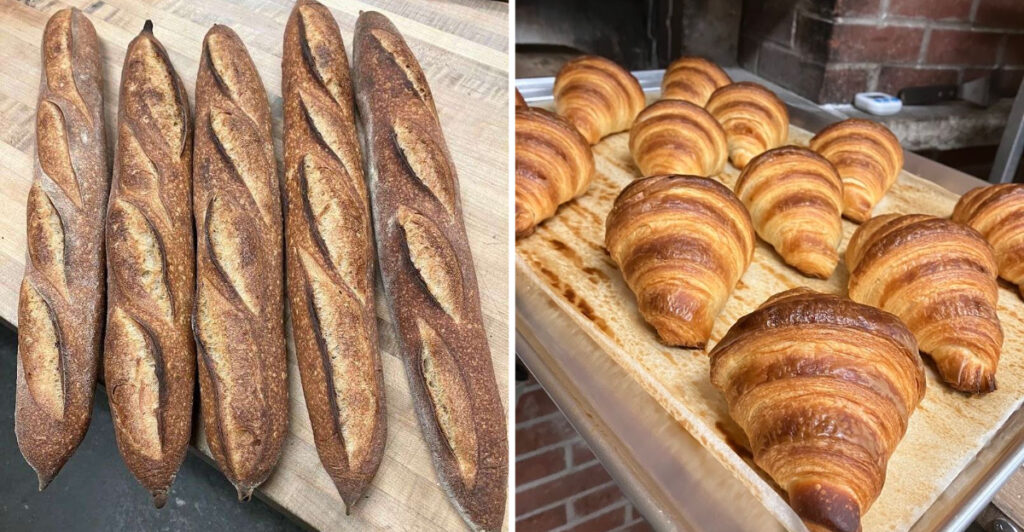
Great bread begins long before the dough reaches the oven. At Muddy Fork Bakery near Bloomington, organic grains are milled fresh on-site before being transformed into naturally leavened, wood-fired sourdough loaves that have earned a devoted following.
Powered by solar energy and committed to traditional baking methods, this small Indiana bakery focuses on quality over quantity, offering handcrafted breads, pastries, and seasonal treats during limited weekly hours. Whether you’re a dedicated sourdough enthusiast or simply appreciate food made with exceptional care, Muddy Fork Bakery proves that patience and craftsmanship are always worth the trip.
A Country-Road Bakery With Serious Point of View
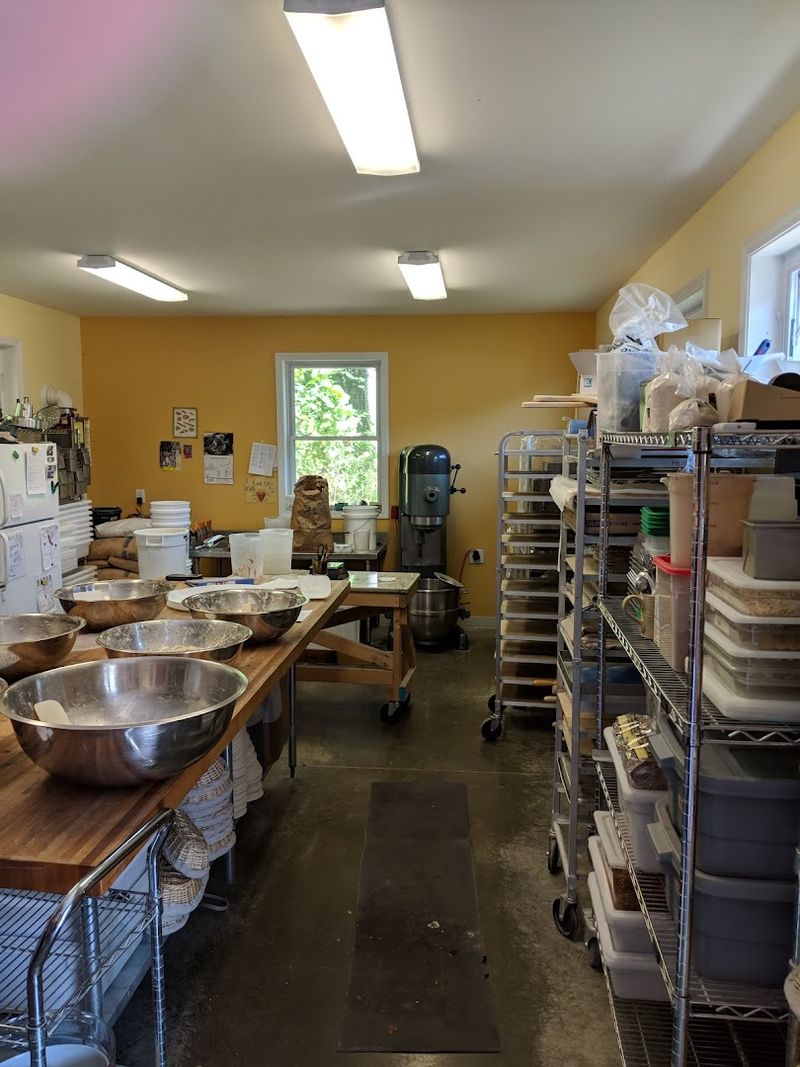
Head north of Bloomington and the setting shifts fast. Campus energy, city errands, and commercial strips give way to wooded roads, open patches of land, and the kind of landscape that makes a bakery visit feel more intentional.
Muddy Fork Bakery sits in that transition zone, where a loaf of bread starts to seem less like a grab-and-go purchase and more like the product of a whole place.
The location matters because the bakery is not chasing impulse traffic. Its limited public hours already suggest a different rhythm, and the road out to Earl Young Road reinforces it.
This is a destination built around baking rather than convenience, which changes how you approach the visit before you even see a crust crackle or flour dust a counter.
The title details tell you a lot about the bakery’s identity: solar-powered, fresh-milling organic grains, and baking sourdough in a wood-fired oven. Even before getting into individual pastries or loaves, that trio signals a point of view grounded in process.
Instead of treating bread as a neutral carrier for sandwiches, Muddy Fork frames grain, fermentation, and fire as flavor decisions.
That stance gives the place editorial weight. In a food culture crowded with vague rustic branding, this bakery stands out by centering methods that directly shape texture, aroma, and structure.
By the time you pull up, the appeal is not only that bread is sold here, but that the entire operation appears organized around making bread in a slower, more deliberate way, with the rural Indiana setting acting as part of the argument rather than a backdrop.
Why the Bread Tastes Bigger Than a Standard Loaf
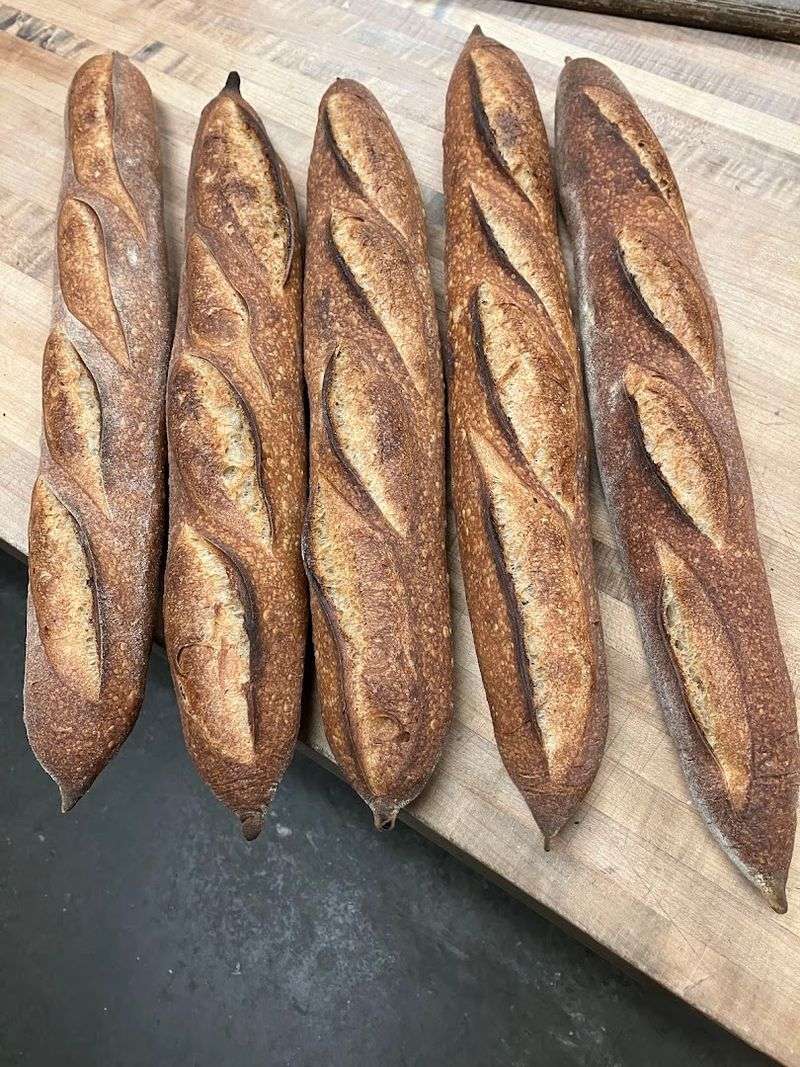
Muddy Fork Bakery’s core draw is bread with structure, not fluff. The clues are all there in the place information and customer notes: natural sourdough, wood-fired baking, and fresh-milled grain.
Those are not decorative talking points. They affect chew, crust, aroma, and the deeper grain flavor that can make a simple slice feel complete without much help from butter, jam, or anything else.
Fresh-milling matters because flour changes quickly once grain is broken down. A bakery that mills organic grains in-house is making a choice to bring grain flavor forward instead of flattening it into background starch.
That likely helps explain why comments about the whole wheat and Danish rye focus on quality and character, and why even plain bread gets talked about with unusual intensity.
Sourdough shifts the experience again. Natural fermentation often produces bread with more dimension than fast-risen loaves, and several notes point to freshness, excellent keeping quality, and satisfying texture.
One reviewer even called out stone-milled whole wheat as gentler on blood sugar, which hints at why some customers are not just shopping for taste, but for bread that aligns with how they want to eat week after week.
Then there is the wood-fired oven, which gives the bakery another layer of distinction. Wood heat can deliver strong crust development and a darker, more aromatic exterior, especially on loaves designed to thrive under bold baking conditions.
Put all of that together and Muddy Fork is not simply selling bread in Indiana. It is making a strong case that grain selection, milling, fermentation, and fire are inseparable parts of why the final loaf tastes so much more alive.
The Croissants That Turned a Bread Bakery Into a Pastry Destination
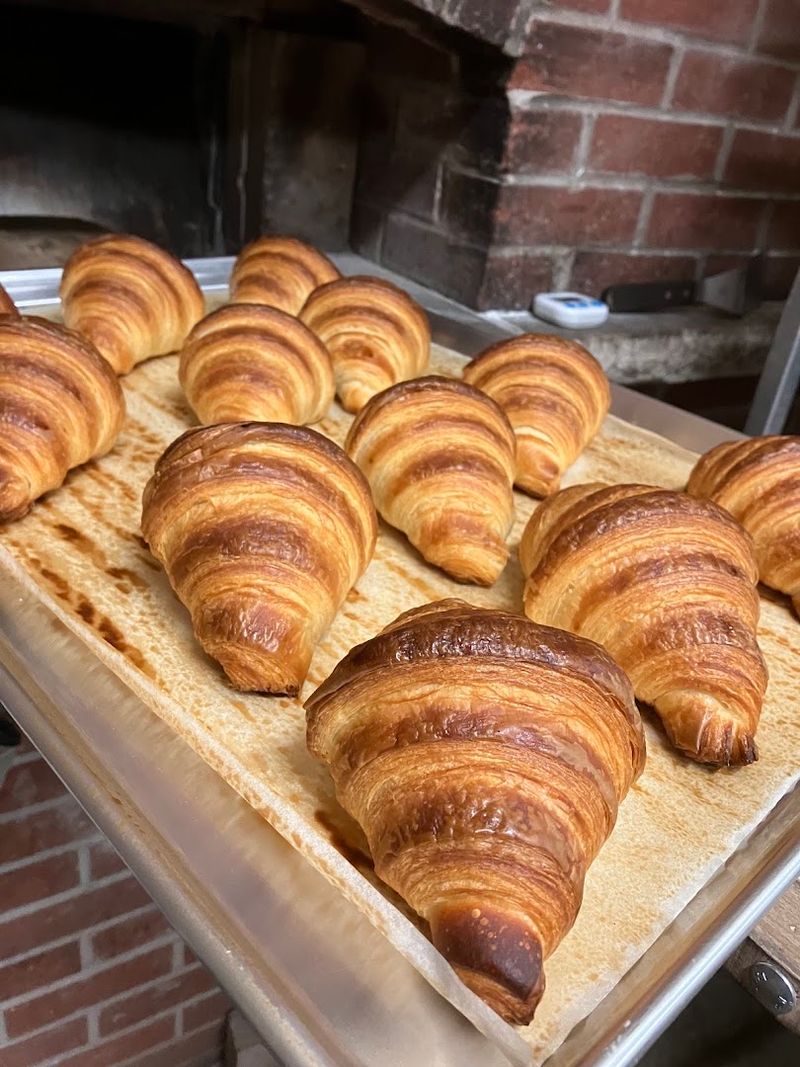
For a bakery so clearly rooted in grain and sourdough, Muddy Fork has also built a serious reputation on laminated pastry. The croissants come up again and again, and not in the polite, interchangeable way bakery pastries often do.
The language people use is sharper: flaky, crunchy, packed with flavor, and memorable enough to invite comparisons with trips abroad.
The recurring favorites sketch out the case. Almond appears repeatedly, chocolate gets singled out for both flakiness and generous chunks, and ham and Swiss or ham and cheese versions are praised for balancing crisp pastry with a filling that does not swamp the layers.
There is even mention of a rhubarb croissant, which suggests a seasonal sensibility rather than a static menu stuck on the same safe standards.
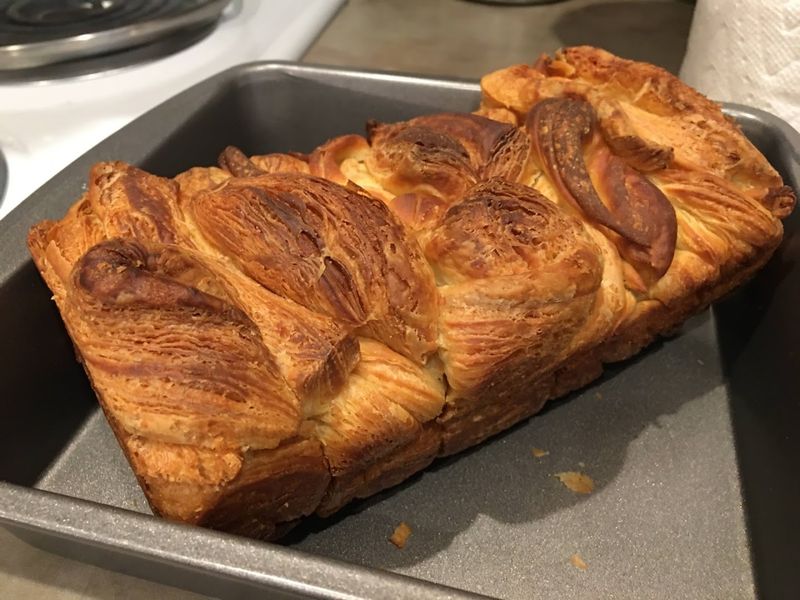
One of the more intriguing items mentioned is croissant bread or croissant loaf. That alone says a lot about how the bakery thinks.
Instead of limiting laminated dough to classic shapes, it seems willing to push technique into formats that blur bread and pastry, giving customers something richer, softer, and structurally different from an ordinary loaf while still practical enough to heat and slice at home.
The key point is that these pastries are not a side act added to broaden the display. They reinforce the same values seen in the bread: technical patience, ingredient quality, and a commitment to texture that holds up under scrutiny.
If you arrive expecting a worthy rural sourdough stop and discover one of Indiana’s most talked-about croissants sitting nearby, that surprise becomes part of Muddy Fork Bakery’s identity in a very satisfying way.
Bloomington Access Without Big-City Fuss
Muddy Fork Bakery operates differently from a typical storefront, and that is part of its appeal. Rather than keeping traditional daily retail hours, the bakery follows a more limited public schedule while also making its breads and pastries available through preorders, local markets, and select community outlets.
That approach reflects the priorities of a small-scale bakery focused on careful production instead of constant foot traffic. For visitors, that means planning ahead is often the smartest strategy.
Checking the bakery’s current ordering options or pickup schedule before making the drive helps ensure the breads or pastries you’re hoping for are available.
A bakery built around fresh milling, natural fermentation, and wood-fired baking is naturally producing in smaller batches, so availability can vary throughout the week.
The bakery’s connections throughout the Bloomington area also make it easier to enjoy its products without always driving directly to the rural location.
Depending on the season and current distribution schedule, Muddy Fork’s breads and pastries may also be available through local farmers markets and community food outlets, giving residents and visitors several ways to experience the bakery’s craftsmanship.
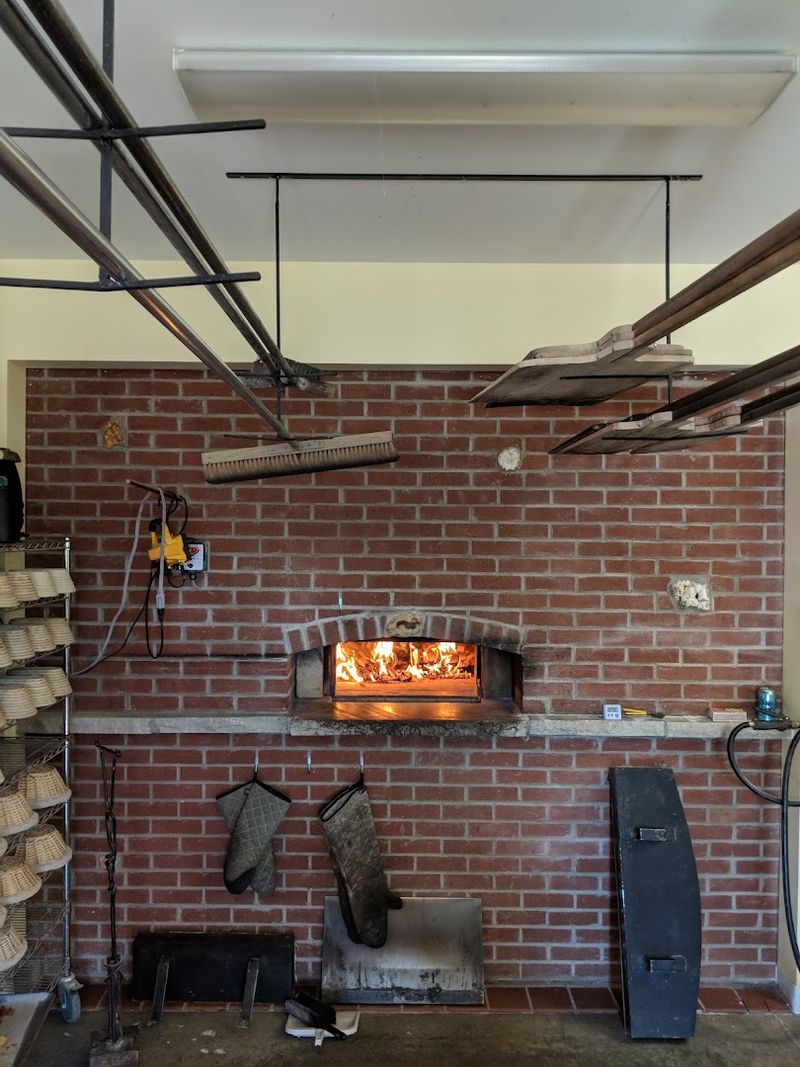
That flexibility gives Muddy Fork an appealing dual identity. For some, it’s a destination bakery worth seeking out for the full countryside setting and wood-fired atmosphere.
For others, it’s simply a trusted local source for exceptional bread picked up during a weekend market or a stop around Bloomington. Either way, the focus remains the same: thoughtfully crafted baked goods made with patience, skill, and an obvious respect for the process.
A Family-Scale Operation With Unusually Broad Range
One of the most compelling aspects of Muddy Fork Bakery is how much range appears to come from a small family operation. The place is repeatedly described in ways that emphasize scale, yet the product list hinted at through customer notes is strikingly broad.
Sourdough loaves, whole wheat, Danish rye, croissants, pretzels, pizza specials, and croissant bread do not read like the output of a bakery coasting on one hit item.
That range works because it still circles back to a coherent center: dough handled with intention. Rye demands a different approach than airy laminated pastry.
Pretzels ask for chew and a distinct crust. Pizza in a wood-fired setting brings heat management and timing into play.
Seeing all of those products mentioned positively suggests a baker’s skill set that extends across formats without turning the menu into a scattered identity exercise.
The family scale adds another layer. Smaller operations often have to be selective about where they spend effort, which makes the continued praise for both bread and pastry more notable.
Instead of flooding the case with filler, Muddy Fork seems to focus on items that reward attention, whether that is a carefully fermented loaf, a rich pastry, or a special night built around pizza coming out of the oven.
For readers scanning for a quick verdict, the takeaway is straightforward: this is not a one-note bread stop with a few obligatory sweets by the register. It is a bakery whose menu breadth appears grounded in technical confidence and disciplined production.
That combination is harder to find than trendy branding suggests, and it helps explain why Muddy Fork keeps surfacing in conversations about standout baked goods around Bloomington.
How to Plan Your Visit So You Get the Best of Muddy Fork
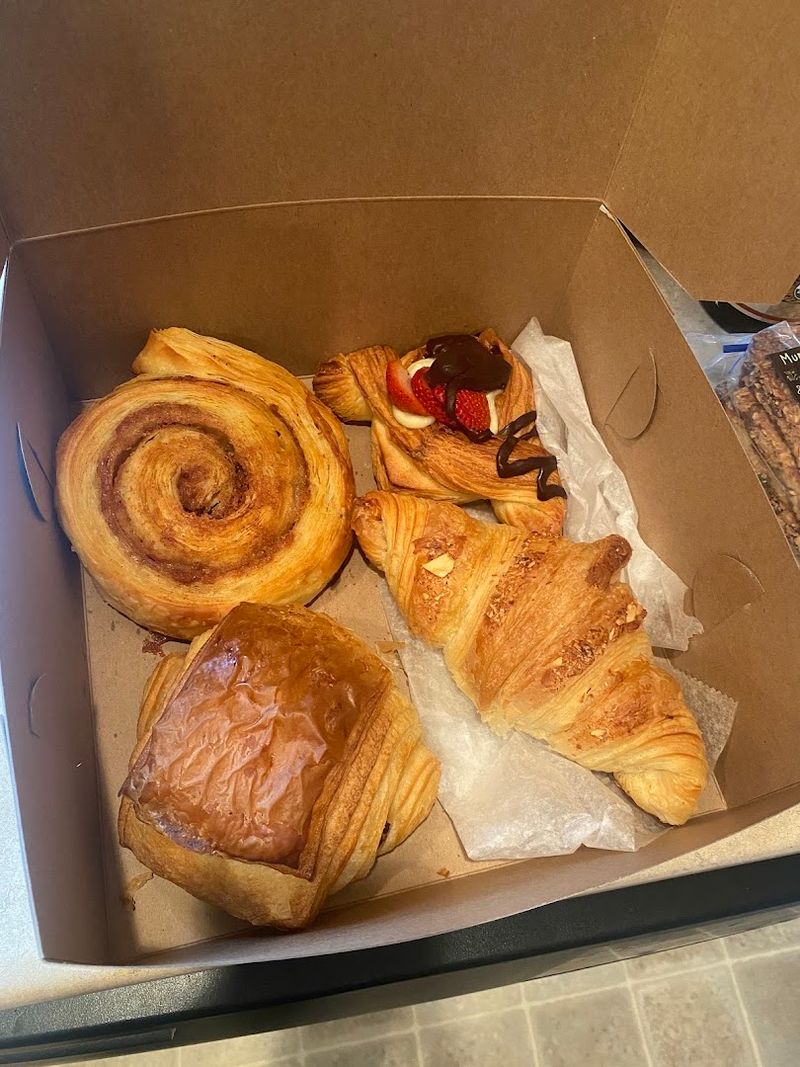
If you want the strongest version of the Muddy Fork Bakery experience, timing matters almost as much as appetite. This is not the kind of place to drift into late and expect a fully stocked shelf.
Between the once-a-week bakery hours listed on Friday evening and the bakery’s presence through markets and local distribution, a little planning gives you a much better shot at the breads and pastries you actually want.
The first decision is whether you want the bakery itself or the product with maximum convenience. Going out to Earl Young Road offers the full setting, which is part of the appeal if you are interested in the rural context behind the bread.
Choosing a preorder or a market pickup may fit better if you are building a weekend around Bloomington and want excellent bread without adding another dedicated drive.
The second decision is what category to prioritize. If your interest is in naturally leavened loaves, consider choosing one or two breads that can carry meals for days rather than overloading on pastry.
If croissants are the mission, early access becomes even more useful because laminated pastries have a way of disappearing fast when a bakery has this kind of reputation for flake, color, and flavor.
Finally, keep expectations aligned with the bakery’s scale. Limited hours are part of the model, not a flaw to work around.
Muddy Fork seems to operate best when customers meet it on its own terms: order thoughtfully, show up prepared, and treat the visit like a food stop with real production constraints. That practical mindset turns a potentially tricky schedule into one of the bakery’s more appealing signs of focus.
The Sharp Reason This Bakery Stands Out in Indiana
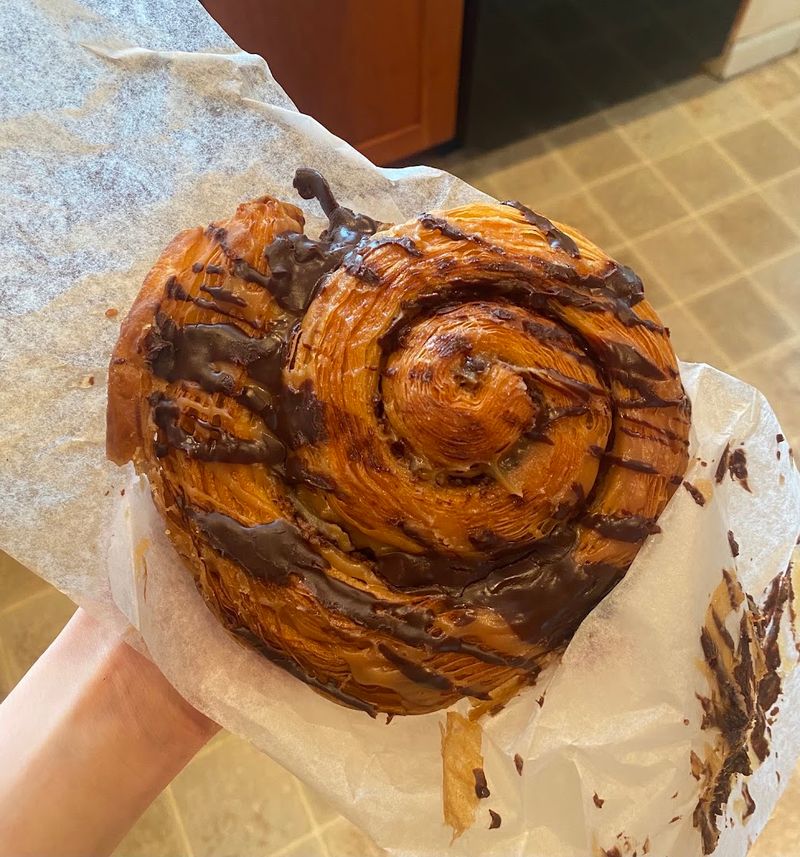
Muddy Fork Bakery stands out because it connects ideas that are often marketed separately and makes them function as one experience. Solar power, fresh-milled organic grain, natural sourdough, wood-fired baking, and meticulous pastry work could each headline a different business.
Here, they seem to reinforce one another, giving the bakery a clear identity that goes beyond trend language and lands squarely in the food itself.
That coherence matters in Indiana, where local food culture can be at its most exciting when craftsmanship and regional scale intersect. Muddy Fork is not trying to mimic a giant urban bakery with endless inventory and all-day foot traffic.
It leans into small-batch discipline, a countryside setting near Bloomington, and a production style that rewards people willing to plan ahead for bread that carries real personality.
The customer record supports that picture from multiple directions. Bread lovers focus on rye, whole wheat, and sourdough quality.
Pastry fans lock onto croissants with unusual intensity. Workshop participants highlight teaching skill and process.
Even mentions of pizza and special items suggest a bakery comfortable moving across categories because the underlying strengths remain the same: careful dough work, strong baking, and an obvious respect for ingredients.
If you are deciding whether Muddy Fork deserves a spot on your Indiana food list, the answer is yes for one simple reason. This bakery does not rely on nostalgia, hype, or convenience to create demand.
It builds interest through methods you can taste, whether that shows up in a dark, sturdy loaf, a deeply flaky croissant, or the satisfying knowledge that the bakery’s whole operation is shaped by purpose rather than volume.
Share this story