Route 66 has changed dramatically over the decades, but The Ariston Cafe in Litchfield remains a delicious connection to its earliest days. Serving travelers since 1924, this longtime Illinois institution has survived changing highways, dining trends, and generations of road trippers while holding onto the welcoming character that made it special.
Inside, vintage touches and a menu of familiar favorites create the feeling of a classic roadside meal rather than a manufactured throwback. History may bring curious visitors through the door, but the experience gives them a reason to linger. For Route 66 fans, The Ariston is an essential stop.
A Route 66 Landmark Hiding in Plain Sight
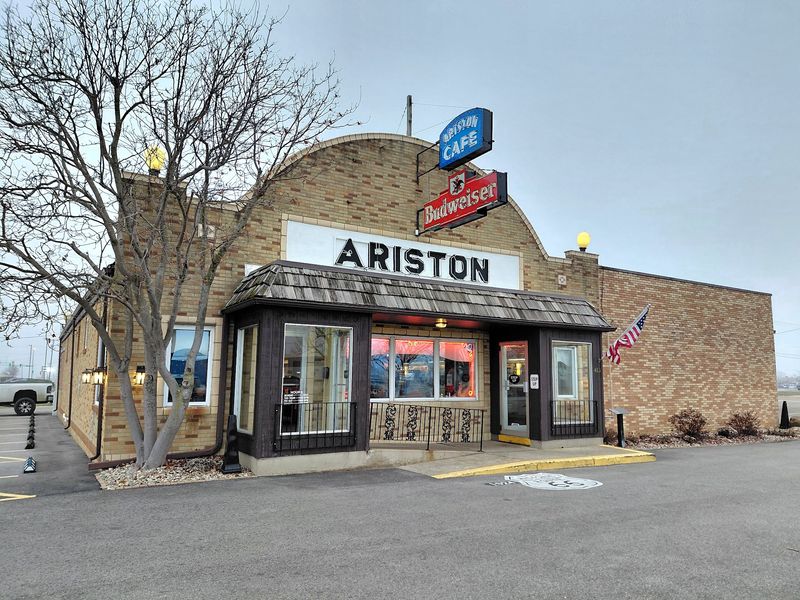
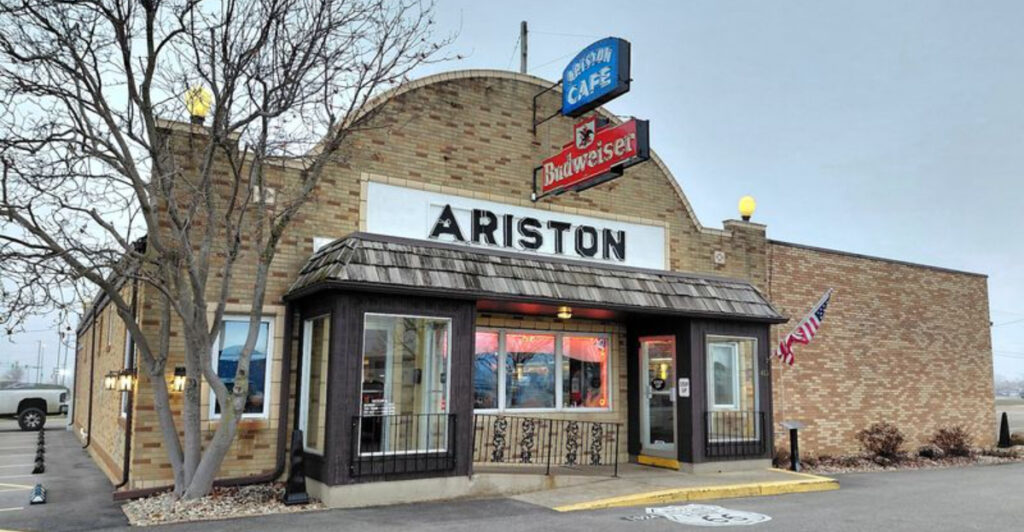
Roadside history can be easy to miss when it sits so casually beside the street. The Ariston Cafe does not tower over the road or try to look flashy, yet its place on old Route 66 gives it a quiet kind of weight.
For travelers heading through Litchfield, the building works like a marker that says the long story of American road trips is still alive here.
The setting adds a lot to the experience. Across from the Route 66 visitor center area, the cafe sits where a stop for lunch can also turn into a short history break, a photo stop, or the start of a downtown walk.
That makes it more than a place to grab a sandwich, because the meal connects to the road, the town, and the long line of drivers who have passed through for generations.
Its size is part of the charm. A huge tourist complex would change the mood, but a compact cafe fits Route 66 much better, where memorable places often came in small packages with strong personalities.
The Ariston’s modest footprint keeps attention on the details instead of distractions. That is useful for first-time visitors. Rather than rushing in and out, take a minute outside to notice the sign, the road alignment, and the feeling of a classic highway stop that has outlasted countless trends.
Seeing the cafe in context helps the visit make sense before the menu even opens. Old highway dining spots often survive by changing completely, but The Ariston Cafe still carries a clear link to the route that made it famous. In Litchfield, that connection is not background decoration. It is the starting point of the whole experience.
White Tablecloths, Vintage Walls, and a Surprising Sense of Occasion
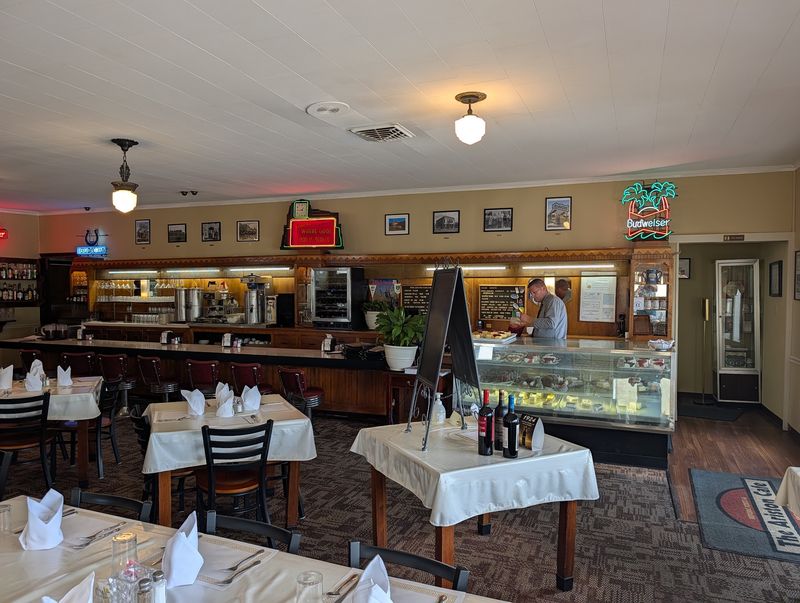
Plenty of old cafes lean hard on nostalgia, but The Ariston takes a slightly different path. Inside, the room pairs vintage character with a more polished dining style, creating a mix that catches many people off guard in the best way.
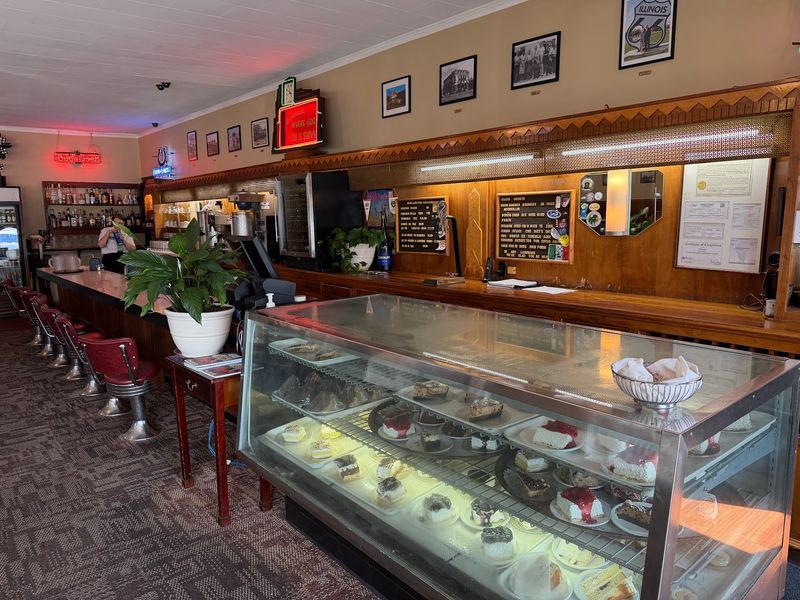
White tablecloths, neatly dressed staff, and historic design details give the place a sense of occasion without making it stiff.
That balance matters because it changes the pace of the meal. A quick roadside stop suddenly feels a little more special, as if lunch has been promoted into an event.
Yet the room still keeps enough warmth and familiarity to stay comfortable for families, road trippers, and regulars who just want a dependable dinner.
The visual details do heavy lifting here. Historic photos and older architectural touches help explain that the cafe has lived through many decades, while the clean setup shows that age does not have to mean worn out. Instead of looking frozen in time, the room looks cared for.
For anyone planning a stop, it helps to expect that blend of cafe and classic dining room. Walking in for a burger and seeing table linens, dessert displays, and staff in coordinated black and white can be a fun surprise, especially on a road trip packed with ordinary chain restaurants.
It gives the visit a distinct identity right away. Even the service style fits the room. Plates arrive with a touch of formality, and the meal can unfold at a comfortable pace rather than in a rushed blur.
That contrast between old-school presentation and easygoing Midwestern hospitality gives The Ariston Cafe much of its personality, and it is one of the clearest reasons the restaurant stands apart from standard highway food stops.
The Menu Goes Wider Than a Typical Small-Town Cafe
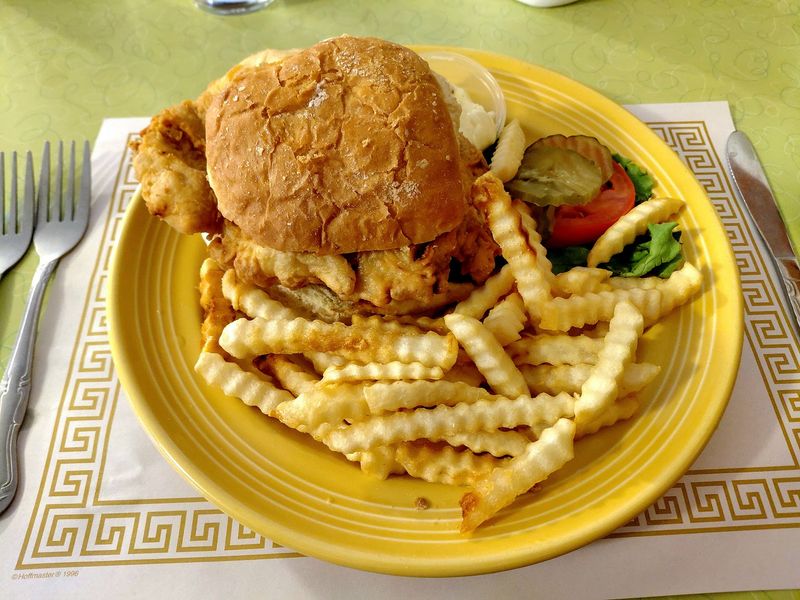
A menu can tell you what a restaurant wants to be, and The Ariston Cafe aims broader than a basic diner. While the setting is rooted in Route 66 history, the food selection reaches across familiar American comfort dishes, salads, sandwiches, pasta, and other options that give different kinds of diners room to choose what fits.
That variety is one reason the cafe works for both locals and travelers with mixed tastes. Comfort food appears to be the center of gravity.
Fried pork chops, catfish, prime rib, tenderloin sandwiches, and hearty plates with mashed potatoes all fit the kind of meal many people hope to find on a Midwestern road stop.
At the same time, Greek-style salads, manicotti, and other menu turns keep the lineup from feeling narrow or predictable.
There is a practical side to that wide range. Families rarely agree on one style of meal, and road trips often include one person craving a full dinner while another only wants soup, salad, or a lighter plate.
The Ariston seems built for that real-world problem, which makes it easier to stop with a group and know everyone can find something workable.
Still, a broad menu is best handled with a little strategy. First-time visitors may have the best luck choosing dishes that match the restaurant’s strongest lane, namely classic comfort food, homemade-style sides, and the long-running staples tied to its reputation.
That approach lets the setting and the food support each other instead of pulling in different directions. For a place that has stood since 1924, that flexibility matters. The cafe is not preserved like a museum piece with one fixed idea of dining.
It remains active by feeding different appetites, on different schedules, for people arriving from down the street or from hundreds of miles away.
The Salad Bar and Dessert Tray Add Extra Theater
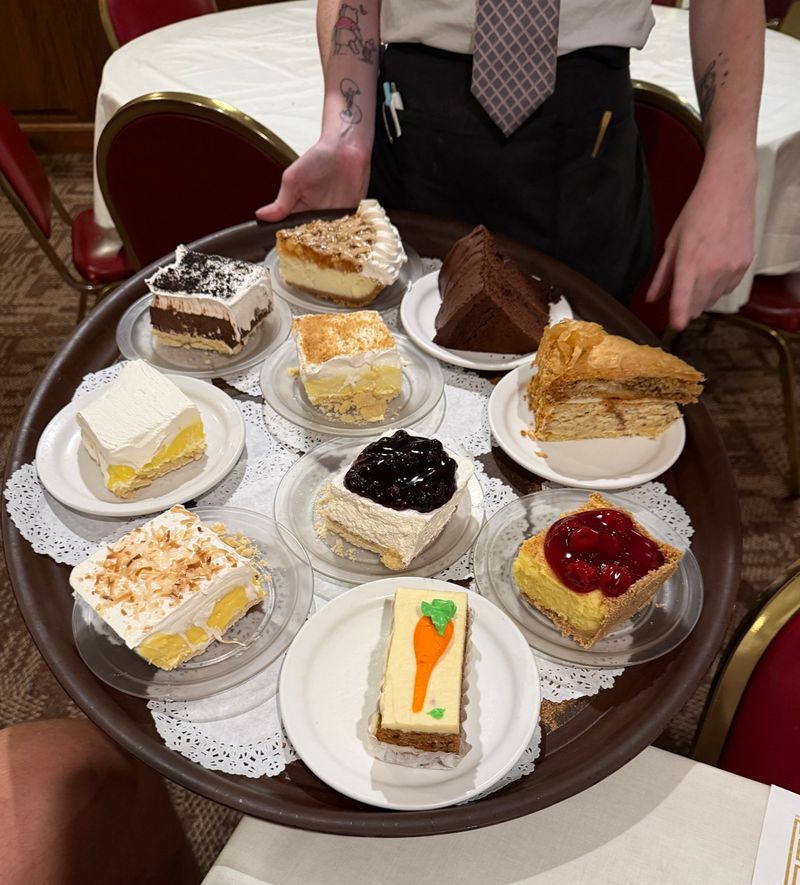
Some restaurants serve food. The Ariston Cafe also puts on a small performance. Two features shape that experience in a big way: the soup and salad bar, and the dessert selection that has become a destination of its own.
The salad bar gives diners a useful middle ground between starter and side dish. Instead of a token bowl of lettuce, it offers a more old-fashioned spread that fits the Midwestern style of the restaurant, especially for those who want variety with a heavier main plate.
Soups add another layer, making the opening part of the meal feel fuller and more generous than a standard order-and-wait routine.
Then comes dessert, and this is where the visit can shift gears completely. Cheesecake appears again and again in praise of the cafe, with flavors that sound more bakery counter than simple diner finish.
Cakes, pies, and other sweets turn the final part of the meal into an event, not an afterthought, and even travelers who stop only for coffee and dessert seem to treat it as a worthwhile break.
There is also a practical lesson here: save room. Ordering a huge entree and then realizing the dessert tray is still ahead can lead to regret, especially in a restaurant known for homemade sweets and generous slices.
A lighter lunch or a shared main dish can be a smart move if the goal is to sample more of what makes the place distinct.
That extra layer of choice matters because it gives The Ariston Cafe range. One table can come in for a full dinner with soup, salad, and dessert, while another can stop for cake and coffee during a road trip.
Few old highway restaurants manage both roles so smoothly, and that versatility helps explain the cafe’s long life.
Since 1924, the Story Has Stayed on the Plate and the Walls
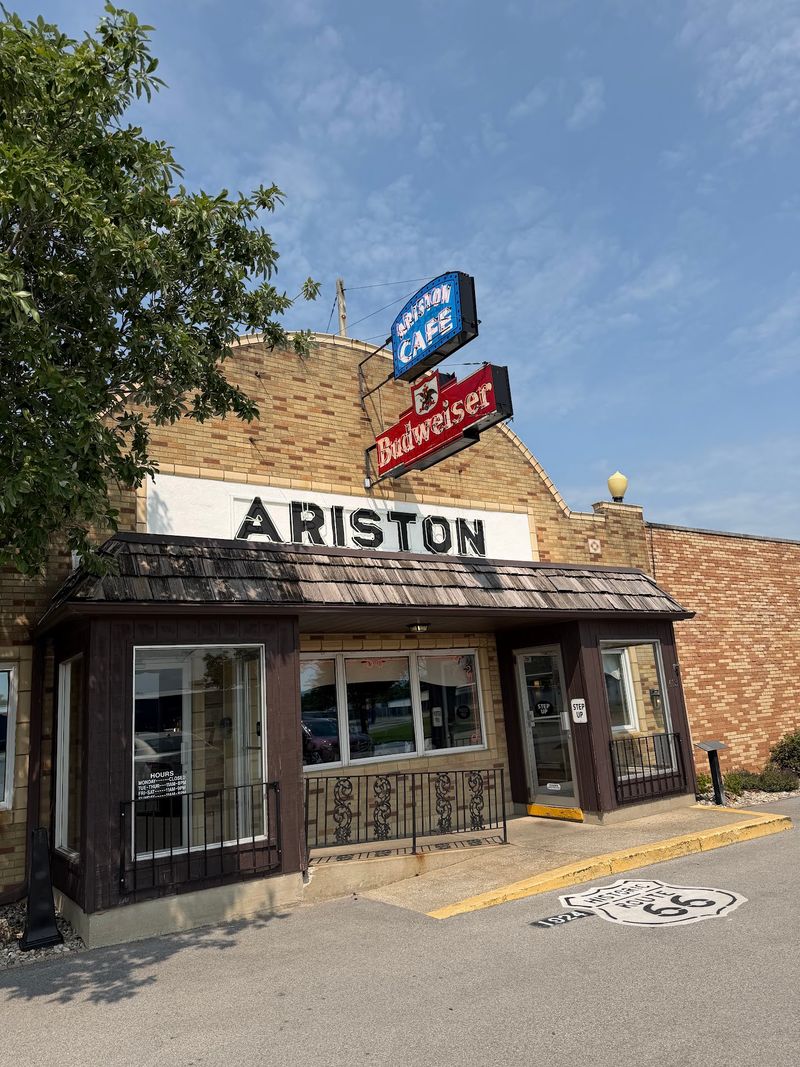
Age alone does not make a restaurant legendary. Plenty of old businesses survive only as names, with little left to connect the present to the past.
The Ariston Cafe avoids that trap by letting its long history show up in visible, usable ways, through the room, the menu, and the basic fact that meals are still being served in a place tied to 1924.
That date matters because it places the cafe inside a major slice of American travel history. Route 66 was built around motion, change, and movement across the country, but this restaurant became one of the fixed points along the way.
Over the decades, roads shifted, cars changed, and travel habits sped up, yet the Ariston remained a recognizable stop in Litchfield.
Inside, the history is not hidden in a separate exhibit. It shows up in photographs, old design touches, and the rhythm of a restaurant that still seems aware of its own past.
That approach works well because it keeps the story close to the meal. Reading a little, looking around, and eating in the same space all blend together.
For anyone visiting, it helps to treat the menu and walls as part of the experience rather than background. A few extra minutes spent noticing names, pictures, and layout details can turn a regular lunch into a stronger sense of place.
Kids, history fans, and road trippers especially get more out of the stop when they slow down for those clues. There is something steady about a restaurant that keeps its identity across a century without pretending time stopped. The Ariston Cafe does not need to shout about its age.
The years are already built into the setting, and that quiet confidence may be the strongest sign of all that its legend was earned slowly, one meal at a time.
How to Do The Ariston Cafe Right in Illinois
The best visit here is not always the fastest one. The Ariston Cafe rewards a little planning, especially for travelers moving along Route 66 or drivers making a meal stop between larger cities. Knowing how to approach the place can turn a simple break in the day into a fuller experience.
Start by deciding what kind of stop you want. A full meal works well if there is time to settle in, look around, and explore the wider menu, while a shorter dessert-and-coffee break still gives a good sense of the cafe’s character.
Both approaches make sense, but they create very different visits. Lunch and early dinner are practical choices for most travelers because the restaurant opens at 11 AM and keeps evening hours several days a week, with later closing on Friday and Saturday.
Monday is closed, so road trippers should not leave the stop to chance at the start of the week. That simple check can save an unnecessary detour.
Inside, the smartest move may be pacing. Consider splitting a larger entree, adding the soup and salad option, or leaving enough room for cheesecake or cake at the end.
The menu offers plenty, and trying to do everything at once can make the best part of the visit impossible by the time dessert appears.
The location also helps shape a good stop. Since the cafe sits near Route 66 attractions in Litchfield, pairing the meal with a short walk, visitor center stop, or photo break gives the visit a stronger sense of place.
That works especially well for families, history buffs, and anyone trying to break up a long drive with more than just fuel and fries.
Handled that way, The Ariston becomes part meal, part roadside lesson, and part reward for taking the slower road through Illinois.
Why a Tiny Cafe Can Still Carry Big Local Weight
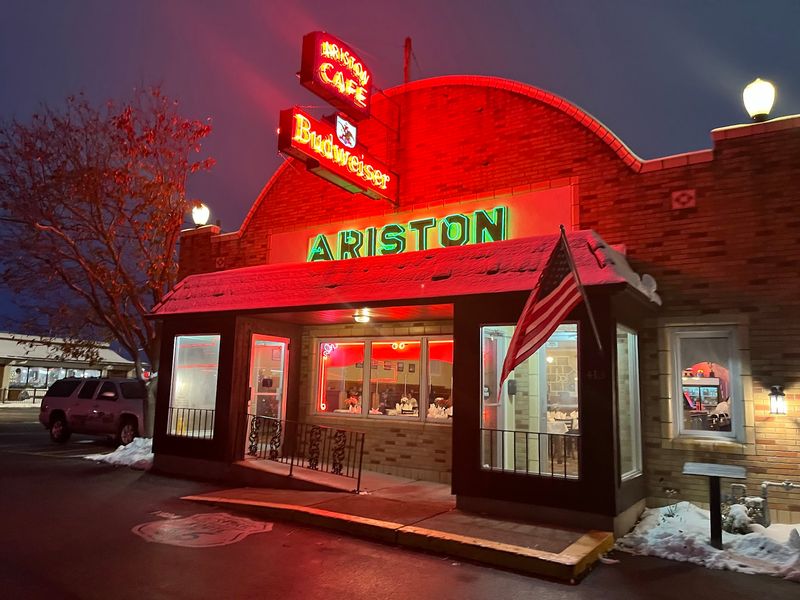
Big legends do not always come with big buildings. The Ariston Cafe has the scale of a local restaurant, yet it carries the kind of reputation usually tied to far larger places.
That contrast is a major part of its appeal, because the cafe shows how a modest setting can hold a century of routine, ritual, and regional pride.
Local weight comes from usefulness as much as fame. A place becomes woven into town life when it can serve a weeknight dinner, a family outing, a road trip lunch, and a dessert stop for passing travelers without losing its identity.
The Ariston appears to do exactly that, standing as both a landmark for outsiders and a familiar dining room for nearby communities.
Its legend also makes sense because it represents more than one story at once. There is the Route 66 story, full of movement and travel.
There is the Illinois small-town story, where long-running businesses become part of civic memory. Then there is the food story, where soup, salad, pork chops, sandwiches, and cheesecake give the history something concrete and repeatable.
Not every plate will land the same way for every diner, and no century-old restaurant escapes mixed reactions forever. Yet that is almost part of the point.
The Ariston is not remembered because it is polished into a flawless brand. It matters because it is still functioning as a real restaurant, open to the public, still asking people to sit down and take part in its long run.
That makes the cafe stand out in a landscape filled with fast, forgettable stops. In Litchfield, a small dining room on old Route 66 still carries the power to connect lunch with local history. For a restaurant that began in 1924, that is a serious accomplishment, and a pretty rare one too.
Share this story