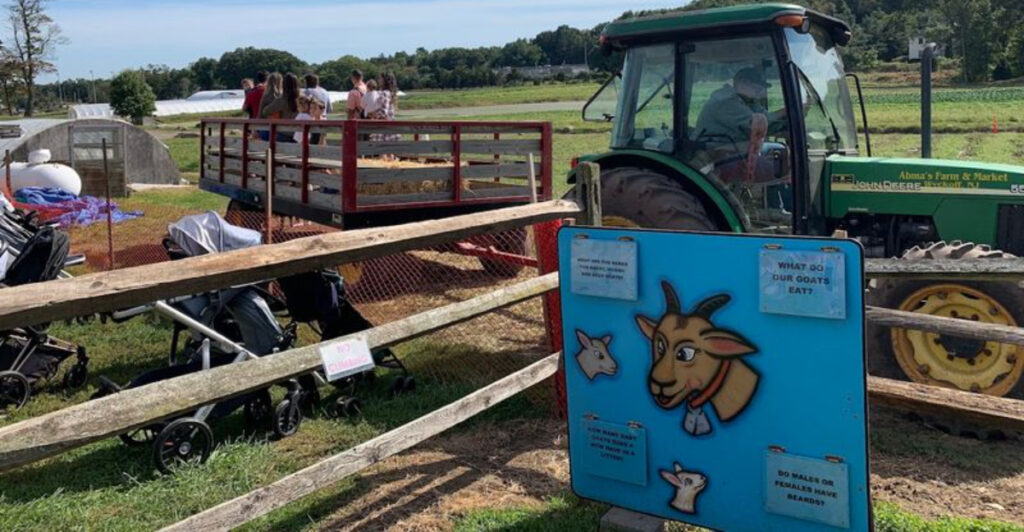
A goat pauses several feet above the ground, looks down at the people passing beneath it, and continues across a wooden bridge as though this is all perfectly ordinary. At Abma’s Farm in Wyckoff, it is.
The Golden Goat Bridge is only one surprise tucked into this 32-acre family farm, where visitors can also meet alpacas, feed carrot tops to rabbits in Bunnyville, and watch little ones take over a miniature playhouse village.
The experience feels wonderfully removed from suburban Bergen County, yet the farm sits at 700 Lawlins Road and has been part of the local landscape for more than 90 years.
Better still, the barnyard welcomes visitors throughout the year rather than disappearing when pumpkin season ends. Add a farm market inside a centuries-old Dutch barn, eggs collected twice daily, and a bakery turning out apple cider cinnamon donuts, and this becomes much more than a quick animal encounter.
It is an easygoing slice of country life hiding in one of New Jersey’s busiest counties.
Abma’s Farm Brings Country Charm to the Heart of Wyckoff
Bergen County has changed dramatically since Barney Abma purchased 50 acres in Wyckoff for $6,000 in 1931. Open farmland gradually gave way to suburban neighborhoods, shopping districts, and busy roads, but the Abma family held on to its agricultural roots.
More than nine decades and five generations later, the farm remains a working piece of the county’s past rather than a decorative recreation of one. Barney had arrived in America from the Netherlands as a teenager in 1917.
After returning home to marry Anna Vanderzee, he eventually settled with her on the property that would become Abma’s Farm. The couple raised cows and pigs, planted vegetables, and maintained an orchard while bringing up five sons who learned farm work early.
By the 1960s, the family’s poultry operation had grown from roughly 1,000 laying hens to 25,000, with eggs heading out on early-morning delivery routes across northern New Jersey. The operation evolved as the region changed, adding vegetable production, greenhouses, a market, a bakery, and family activities.
Today, the Wyckoff property covers 32 acres and is recognized as Bergen County’s only farm producing vegetables, eggs, and meat. That distinction matters in a county where finding a true working farm can feel like spotting a tractor in the middle of Route 4 traffic.
Seasonal traditions add another layer to the experience. U-pick events appear throughout the growing season, while autumn brings hayrides and pumpkin picking.
Easter activities, visits with Santa, and other special programs keep the calendar moving after fall. Through all those additions, the place has retained the personality of a family operation.
Eleven greenhouses continue a flower-growing tradition Barney started during his supposed retirement, and younger generations now oversee everything from vegetable fields and the CSA program to the barnyard. This is not a farm frozen in time.
It is one that has kept adapting without losing sight of how it started.
The Year-Round Petting Zoo Is Filled With Friendly Farm Animals
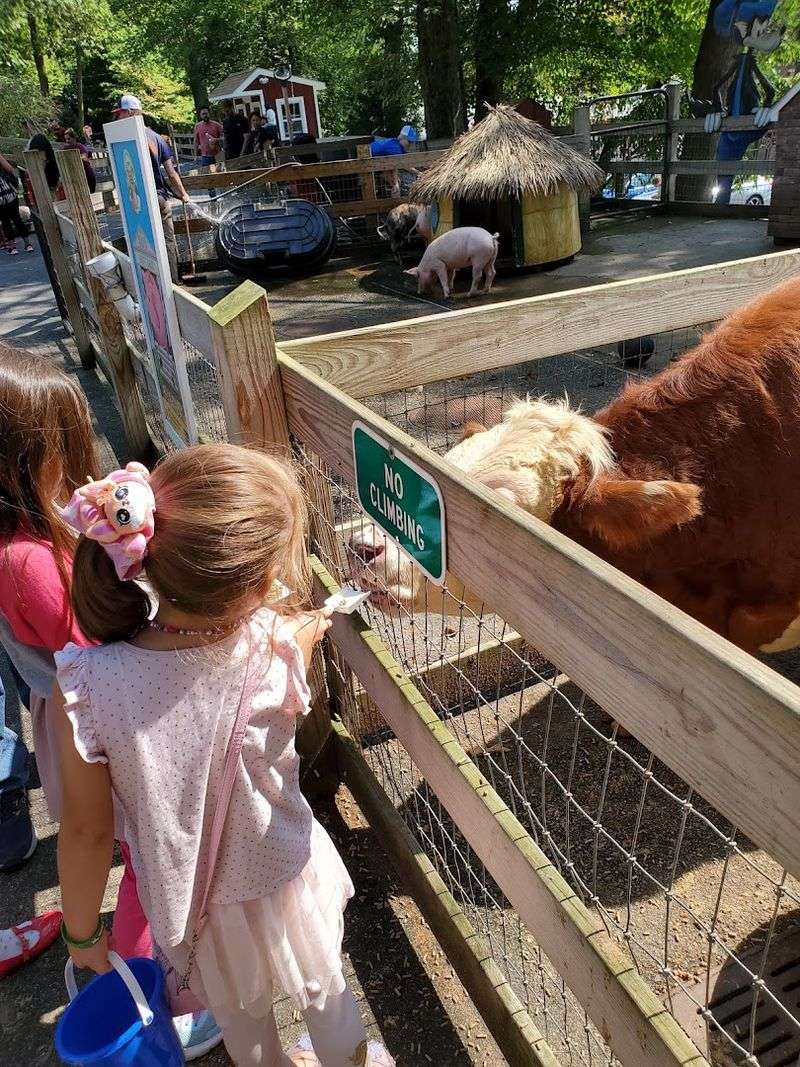
Most New Jersey petting zoos are closely tied to warm weather, but Abma’s barnyard keeps going well beyond summer and pumpkin season. Goats, sheep, alpacas, donkeys, ponies, pigs, cows, and rabbits live here throughout the year, making a January animal outing just as possible as one in June.
The barnyard generally stays open rain or shine, although thunderstorms, hurricanes, snow, or icy conditions can force a temporary closure. Timed tickets are the safest way to plan a visit.
Admission booked online is currently $5.50 for adults and children ages two and older, while children under 24 months enter free. At-the-door admission, when available, costs $7 and is cash only.
Saturdays in October require advance tickets, which is sensible considering how quickly the farm fills once pumpkin season arrives. Feeding the animals adds a little joyful commotion to the visit.
Animal crackers and pellets are sold for cash at the Barnyard Booth and may be given to the goats, sheep, pigs, cows, and alpacas. The remaining animals follow special diets, so whatever snack happens to be hiding in a stroller should stay there.
Rabbits have their own unusual arrangement. Visitors can buy carrots with leafy tops at the farm market, offer the green tops to the bunnies, and take the orange portions home.
Pony rides bring another seasonal option on Saturdays from May through October, weather permitting. Each $6 ticket includes two laps around the riding area, and children must be at least two years old and weigh no more than 80 pounds.
Both a pony-ride ticket and regular barnyard admission are required. Wednesdays are especially convenient for multigenerational outings because grandparents receive free barnyard admission when visiting with their grandchildren, though a timed reservation is still needed.
Between the animal feeding, donkey greetings, and alpacas observing everyone with their usual curious expressions, the barnyard delivers plenty of personality without requiring an elaborate day-long itinerary.
Goats Take the High Road Across the Golden Goat Bridge
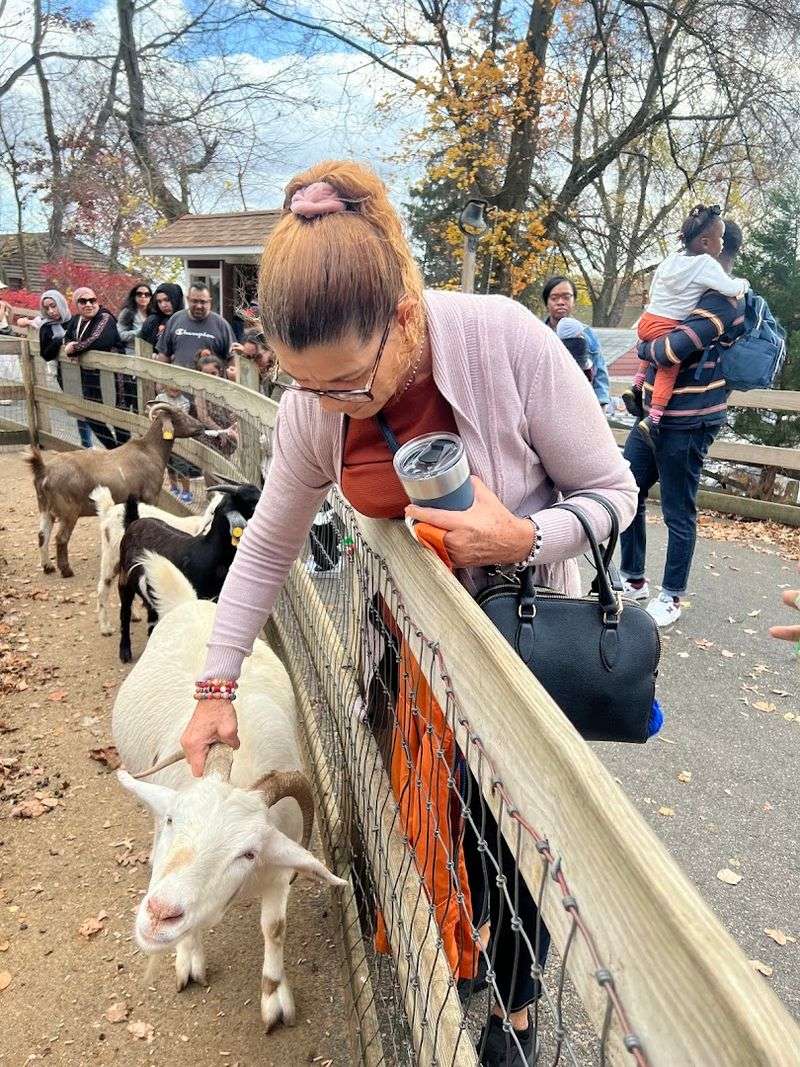
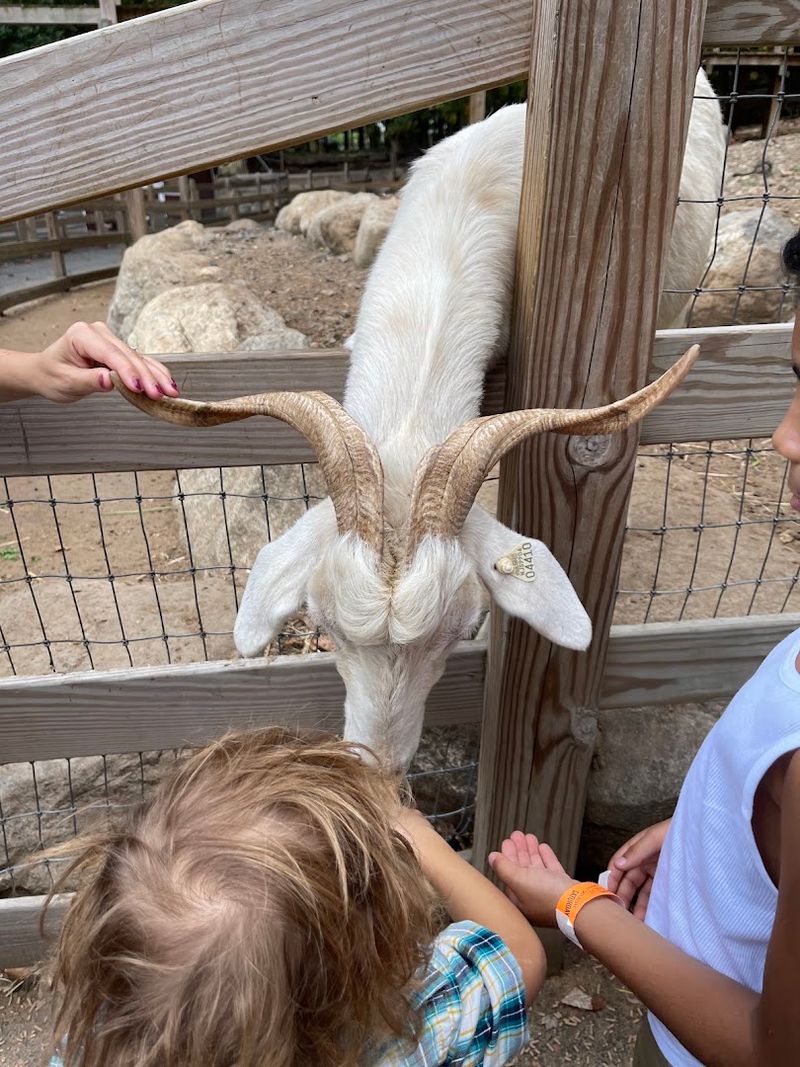
Look up at the right moment, and a set of hooves may be crossing overhead. The Golden Goat Bridge rises above part of the barnyard, giving Abma’s most confident climbers an elevated route and visitors one of the funniest sights on the farm.
Goats are naturally agile animals with an instinct for climbing, so the structure is more than a whimsical decoration. It gives them a chance to explore at different heights while turning an ordinary walk between pens into a small performance.
Of course, the goats decide when showtime begins. They may trot across in quick succession, stop halfway to survey the crowd, or linger elsewhere while everyone waits with cameras ready.
That unpredictability is part of the fun. Unlike a scheduled attraction, the bridge works according to goat logic, and goat logic rarely considers anyone else’s timetable.
The feature gained its current setting after Winter Storm Quinn damaged the petting zoo in 2018. Rather than simply repairing the previous layout, the Abma family rebuilt the barnyard from the ground up as a more interactive and educational space.
The Golden Goat Bridge emerged as one of its signature elements, along with the duck pond, Bunnyville, and a dedicated children’s play area. Those additions help the barnyard feel thoughtfully arranged instead of resembling a row of fenced enclosures.
There is always something to watch from another angle. Near the bridge, the duck pond brings the energy down a notch, with ducks paddling around while their more acrobatic neighbors command attention overhead.
Children tend to bounce happily between the two scenes, pointing upward at the goats and then racing over to see what is happening on the water. The bridge also makes an excellent reminder that farm animals are not interchangeable characters in a storybook.
Each species has its own habits, diet, movements, and preferences. At Abma’s, the goats just happen to express theirs several feet off the ground, usually with an audience gathered underneath.
Bunnyville Gives the Farm’s Fluffiest Residents Their Own Neighborhood
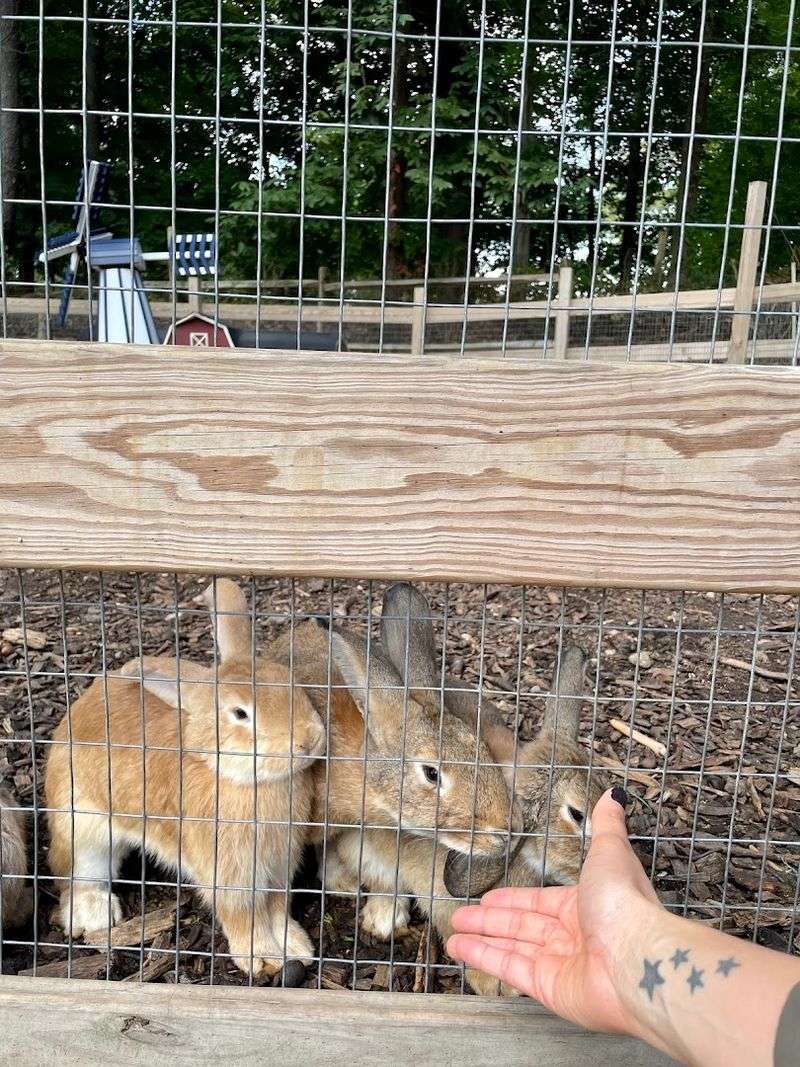
The rabbits at Abma’s do not merely occupy a pen. They preside over Bunnyville, a dedicated corner of the barnyard that gives the farm’s smallest residents a setting with an appropriately playful name.
After the boldness of the goats and the size of the cows, this little rabbit neighborhood changes the pace. Children lean in to spot twitching noses, long ears, and bundles of fur settling into quiet corners.
The bunnies are less likely to demand attention than the goats, which makes every small movement feel important to young visitors watching closely. Feeding time comes with one very specific rule.
Bunnyville residents may eat the leafy green tops attached to carrots sold at the farm market, but they should not receive the orange roots. That arrangement creates a tidy farm-to-family exchange: the rabbits get their greens, and visitors bring the carrots home.
Animal crackers and pellets sold inside the barnyard are reserved for goats, sheep, pigs, cows, and alpacas, while outside food should never be offered to any animal.
These guidelines may seem particular, but they help protect creatures whose digestive systems are not designed for random handfuls of snacks.
Bunnyville also sneaks a little education into an experience that mostly feels like fun. A child who arrives expecting cartoon rabbits munching whole carrots leaves knowing that real animals have carefully managed diets.
The dedicated habitat encourages visitors to pause rather than race from one large animal to another, and patient observers are rewarded with the small details that make rabbits so entertaining. One might stand upright to investigate a sound while another works methodically through a carrot top.
The name Bunnyville adds plenty of storybook charm, but the animals themselves remain the real attraction. They do not need tricks, costumes, or scheduled appearances.
A few floppy ears, a pile of fresh greens, and a neighborhood built just for them are more than enough to keep a row of fascinated faces pressed near the fence.
Pepper’s Play House Village Keeps Little Visitors Entertained
Eventually, even the most devoted junior farmer needs room to run. Pepper’s Play House Village gives younger children a spot to switch from watching animals to creating adventures of their own.
The small playhouses are scaled for little visitors, making the area feel like a miniature neighborhood dropped beside the barnyard. Toddlers can duck through doors, move from one structure to another, and burn off the kind of energy that no amount of standing beside an alpaca can contain.
It is especially useful for families with children of different ages. One child may still be studying the animals while a younger sibling is ready to move, climb, and pretend.
The village gives both a reason to stay a little longer. Pepper, the farm dog, lends the play area its name and also appears in one of its best photo opportunities.
A giant Adirondack chair offers enough room for children to clamber onto the seat and pose beside an oversized image of their canine host. The scale makes even adults look small, though getting a toddler to face the camera at the exact right moment remains a challenge no farm attraction has solved.
Families who want another activity can use the Farm Game app for an interactive scavenger hunt around the property. It encourages children to notice details rather than simply hurry toward whichever animal makes the loudest noise.
The combination of playhouses, photo stops, and searching turns the village into more than a holding area beside the petting zoo. It extends the visit in a way that works with young attention spans.
Pepper’s Play House Village is also included within the barnyard experience, so families do not need to juggle a separate attraction or move the car halfway through the outing.
Everything remains close enough for an easy flow from feeding goats to visiting Bunnyville and finally staging an imaginary move into a child-sized house.
For little visitors, the farm animals may be the headline, but this tiny village often becomes the place they are least willing to leave.
A Historic Barn Holds Fresh Produce and Scratch-Made Treats
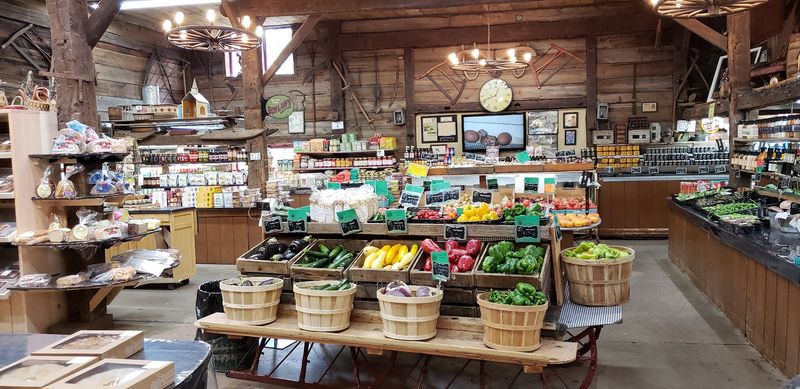
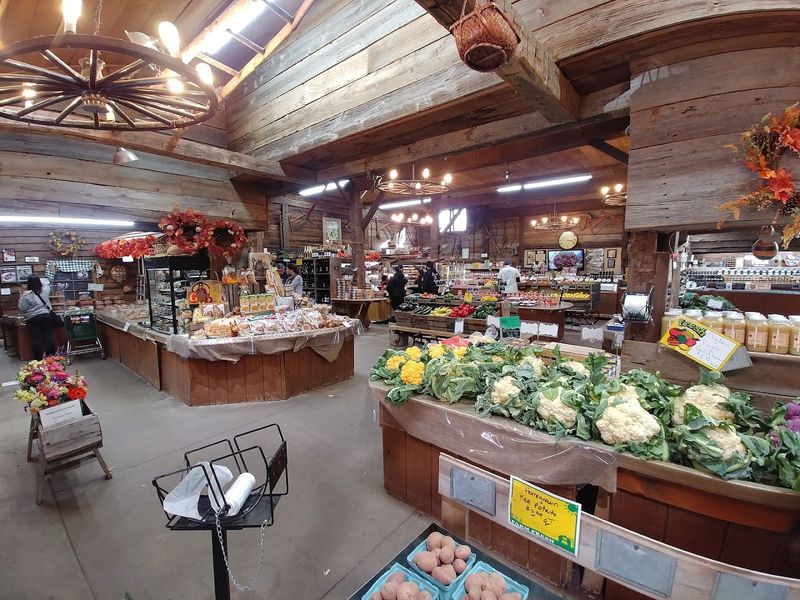
Long before shoppers carried pies through its doors, Abma’s late-18th-century Dutch barn served the practical demands of farm life. The post-and-beam structure is considered one of the country’s best-preserved Dutch barns and one of the few barns more than 200 years old still standing in Bergen County.
Its broad roof, low side walls, and cavernous central space reflect a style once common on Dutch-American farms. During Abma’s poultry years, the building even became a three-story chicken coop.
Today, those old timbers shelter a busy market, scratch bakery, and gourmet kitchen. The produce displays change with the fields.
Abma’s grows more than 90 varieties of fruits and vegetables during the season, ranging from familiar Jersey favorites such as corn, tomatoes, strawberries, bell peppers, cucumbers, zucchini, and eggplant to kohlrabi, garlic scapes, bok choy, Chioggia beets, purple cauliflower, and purple artichokes.
Eggs come from cage-free hens kept on the property, are collected twice daily, and reach the market less than a day after being laid.
Farm-raised beef and pork sit alongside raw honey harvested from local hives. The bakery provides the sort of aroma that can undo even the firmest plan to “just look around.”
Apple cider cinnamon donuts are a favorite, but the cases may also hold muffins, breads, Linzer tarts, brownies, Danish pastries, almond bars, cupcakes, and cakes.
Pie flavors shift with the harvest, moving through strawberry rhubarb, blueberry, Summer Smash, apple, cherry, and pumpkin. Savory options are equally practical.
The kitchen prepares sandwiches, salads, hot soups, Buddha bowls, chicken and turkey dinners, pasta dishes, pot pies, and quiches made with the farm’s eggs. Its chicken salad dates to 1988, when Pam Abma started the deli and kitchen, while the family bakery followed in 1990 under Kim Abma.
A visit that begins with goats walking overhead can therefore end beneath 200-year-old beams, with fresh eggs, a warm loaf of bread, and perhaps one more apple cider donut than originally planned.