You turn off Mettlers Road expecting ballfields, picnic shelters, maybe a jogger or two looping through a county park, and then suddenly New Jersey pulls a floral magic trick.
Tucked into the western side of Colonial Park in Somerset, beyond the everyday park stuff, there is a rose garden that feels way too elegant to be hiding in plain sight.
One minute you are in a 685-acre Somerset County park with ponds, lawns, a golf course, and a fitness path. The next, you are walking past trellises, fountains, formal beds, and thousands of roses arranged like somebody quietly decided Central Jersey deserved its own little storybook corner.
Colonial Park Gardens is not flashy about itself, which is part of the charm. It does not announce “major destination” from the road. It just waits there, blooming beautifully for anyone curious enough to wander in.
Colonial Park Gardens Feels Like a Secret Inside a Regular County Park
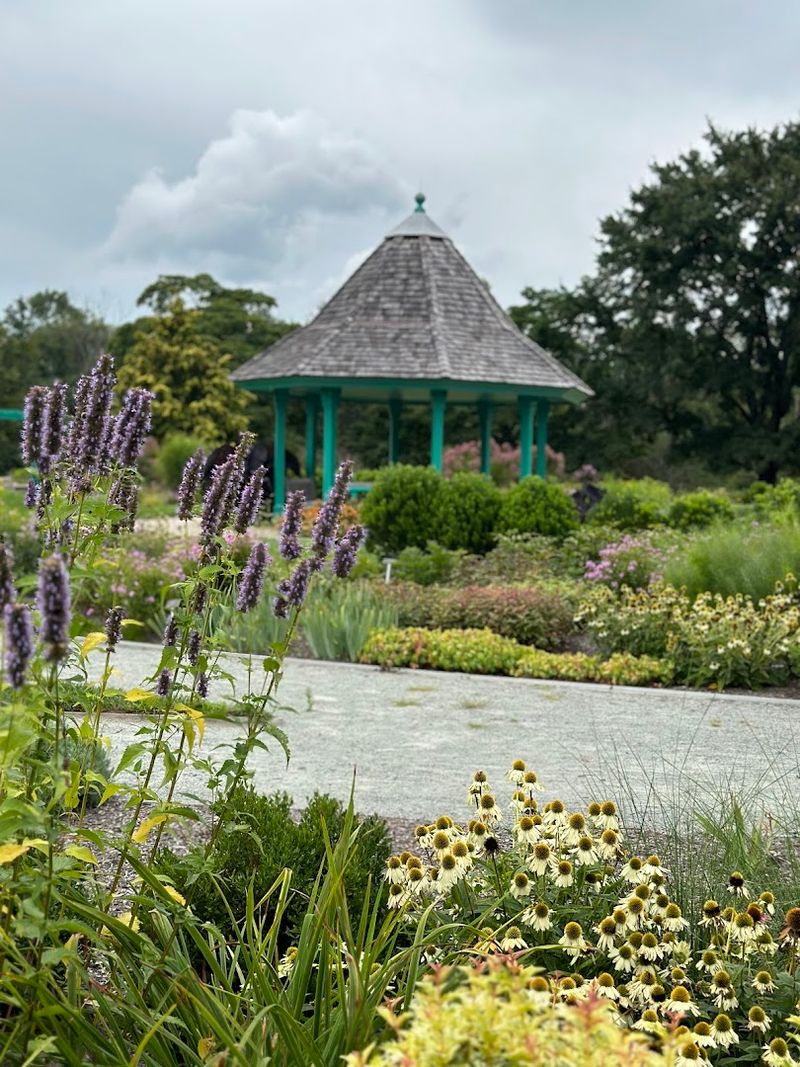
Here is the funny thing about Colonial Park Gardens: it is not hidden because it is hard to reach. It sits at 156 Mettlers Road in Somerset, inside Colonial Park in Franklin Township, with the rose garden right by Lot A.
That is about as practical and Jersey as it gets. No mountain road, no ferry, no dramatic entrance gate.
Just a Somerset County park that happens to contain one of the prettiest public garden spaces in the state. Colonial Park itself was acquired in 1965 and spreads across 685 acres, with frontage along the Delaware and Raritan Canal and the Millstone River.
It has the usual things locals actually use: walking and biking paths, ponds, picnic areas, athletic fields, Spooky Brook Golf Course, and enough open lawn to make a weekend afternoon feel pleasantly unplanned. Then, on the western side, the whole mood shifts.
Colonial Park Gardens gathers several botanical areas into one quietly impressive collection, including the formal rose garden, perennial garden, sensory garden, ornamental grasses, shrubs, and a nationally accredited arboretum. That mix is what makes the place feel like a secret inside something familiar.
You can bring someone here under the very boring promise of “let’s walk around the park,” then watch their face change when the roses come into view. It is not a manicured estate with velvet ropes and a hush over the whole place.
It is a public garden woven into everyday Somerset County life, which makes it more charming. People come for a stroll, a breather, photos, plant ideas, or just a few minutes away from errands on Route 27 or the buzz of nearby New Brunswick.
Colonial Park Gardens does not try to overwhelm you at the entrance. It lets the surprise do the work.
The Rudolf W. van der Goot Rose Garden Is the Blooming Showstopper
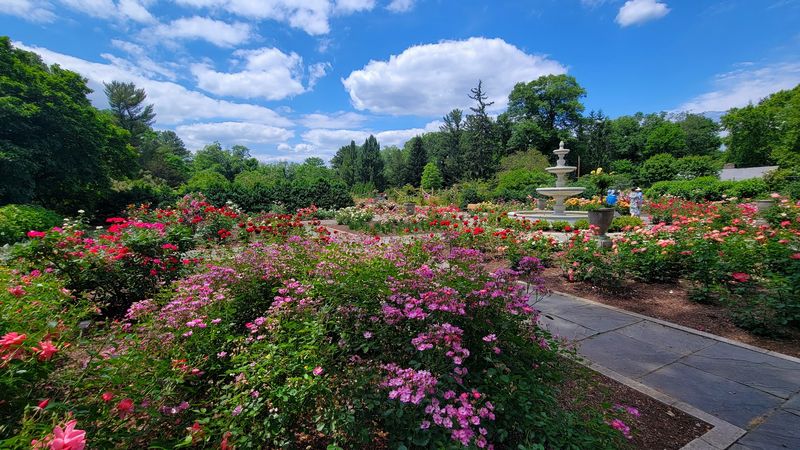
The one-acre Rudolf W. van der Goot Rose Garden is the kind of place that makes people slow down without realizing they are doing it. The paths pull you in, the beds keep unfolding, and before long you are comparing colors like a person who has suddenly developed very strong opinions about coral, cream, blush, and deep red.
Established in 1971, the formal rose garden was later named in 1981 for Rudolf W. van der Goot, the first horticulturist with the Somerset County Park Commission and the person whose work helped shape this garden into the local treasure it is now. That bit of history matters because the place does not feel thrown together.
It has structure, movement, and little moments that reward a slower walk.
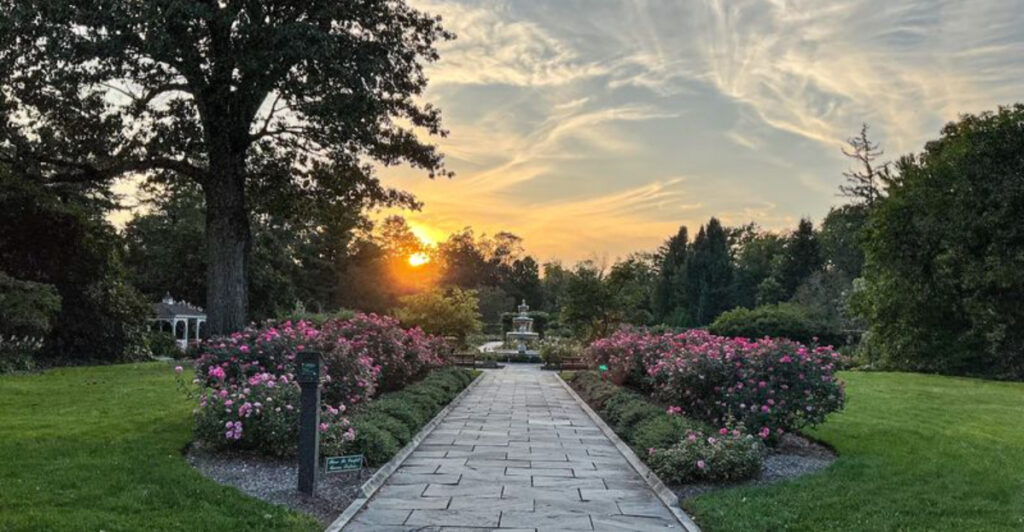
The front garden grew out of features from the old Mettler Estate’s formal garden, and today it includes modern hybrid roses, urns with tree roses, a fountain, and a sweetly nostalgic area called “The Grandmother’s Garden,” planted with roses that were popular through World War II.
The middle garden adds a rope trellis with climbing roses and clematis, while the perimeter brings in heirloom roses known for big blooms and strong fragrance.
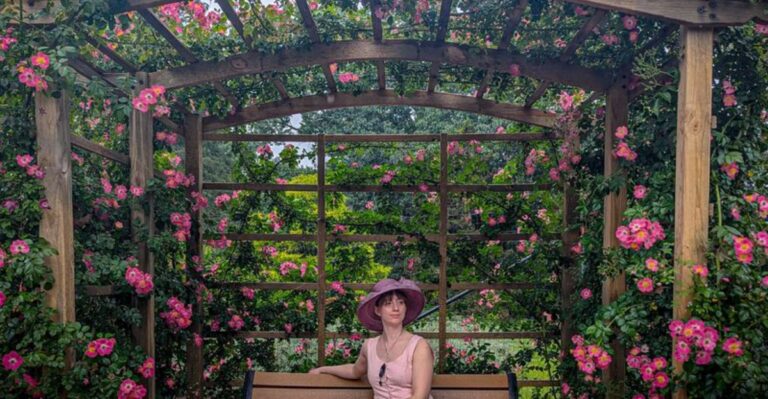
There is also a central walk honoring Millicent Fenwick, the four-term New Jersey congresswoman, with polyantha and miniature roses nearby and seating under a pergola covered with native wisteria and climbing roses.
Then comes the Dutch Garden, arranged with raised beds, low-growing flowering plants, more modern hybrids, heirlooms, native roses, species roses, and pergolas that practically beg for a second lap.
It is formal without being stiff, pretty without feeling fussy, and big enough to feel like a real destination without making the visit complicated.
More Than 3,000 Roses Make This Somerset Spot Feel Like a Fairytale
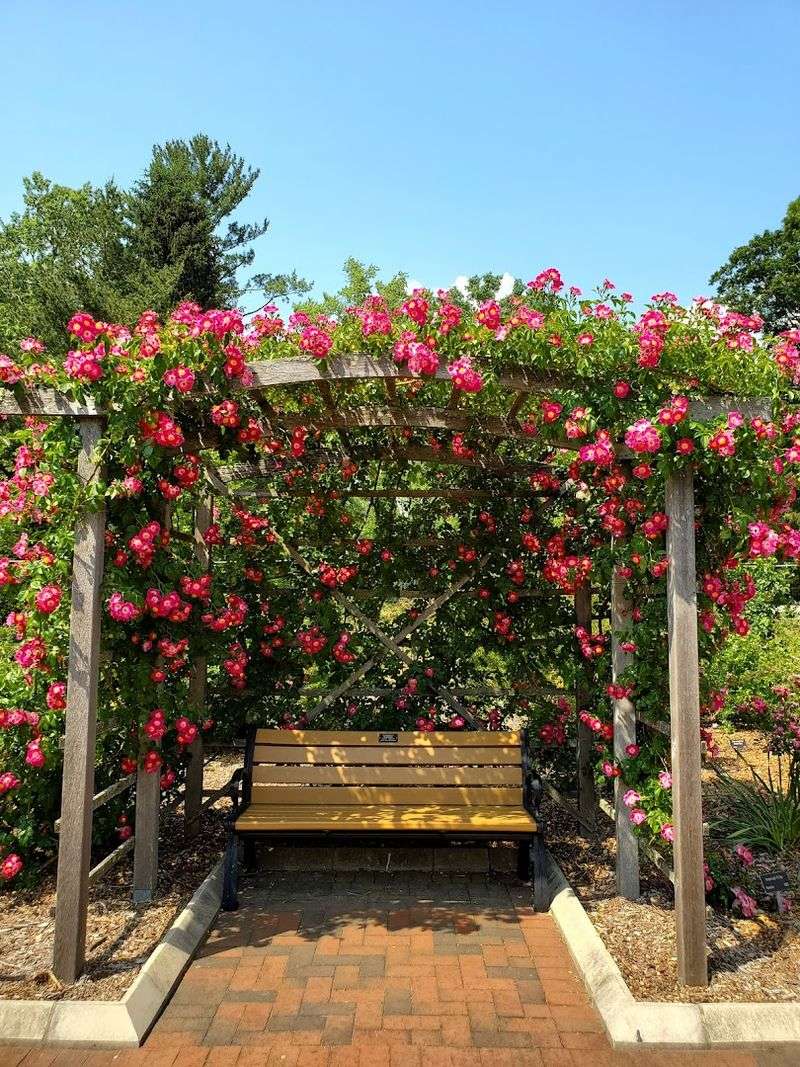
Numbers do not always make a garden feel more romantic, but more than 3,000 roses will absolutely do the trick. The Rudolf W. van der Goot Rose Garden contains more than 345 labeled varieties, which means this is not just a few tidy beds of the same red rose repeated for effect.
It is a full-on rose education disguised as a beautiful walk. You get modern hybrid roses, species roses, heirloom or “Old Garden” roses, climbers, ramblers, miniatures, and varieties with names you may forget two minutes later but colors you will remember all afternoon.
The best part is that the garden changes as you move. One section may lean crisp and formal, with carefully arranged beds and upright blooms.
Another feels softer and older-fashioned, especially where the heirloom roses bring that fuller, more fragrant look people associate with cottage gardens and old postcards. Peak bloom is usually celebrated in early June with the Rose Day Festival, but the rose season does not vanish the second June ends.
From late spring through fall, the garden keeps changing with waves of color, form, and scent, so a return visit later in the season will not feel like a rerun. That is one reason locals who know the spot tend to treat it like a repeat errand for the soul.
You do not need to make a whole production of it. You can stop by on a weekday morning, wander the beds, check which varieties are showing off, and be back in regular life before lunch.
The garden is free to visit, though suggested donations are posted for the rose garden, so it still feels accessible while reminding you that all this beauty takes real care. And honestly, once you see thousands of roses blooming in one Central Jersey park, a suggested donation starts to feel less like a fee and more like a polite thank-you.
The Perennial and Sensory Gardens Give Every Season Its Own Moment
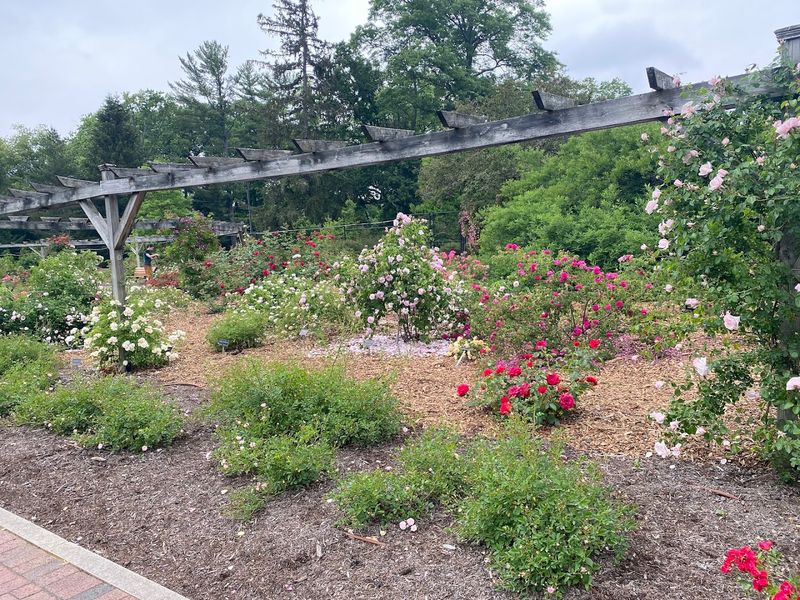
Roses may grab the spotlight, but the surrounding gardens are what make Colonial Park Gardens feel like more than a one-hit wonder.
The Perennial Garden and Fragrance and Sensory Garden give the place texture beyond peak rose season, which is important in New Jersey, where spring arrives dramatically, summer gets bold, fall sneaks in with gold edges, and winter insists on making everyone work a little harder for beauty.
The Perennial Garden is open daily from sunrise to sunset, making it one of the easiest parts of the gardens to enjoy without checking a tight schedule.
It brings the softer rhythm of bulbs, annuals, perennials, and seasonal plantings, the kind of space where a gazebo, a patch of daffodils, or a sweep of color can be just as satisfying as the biggest bloom in the rose garden.
It is the garden equivalent of a friend who does not need to be the loudest person in the room to be the one you want to sit near. The Fragrance and Sensory Garden is more intimate and especially thoughtful.
Developed in 1981 with help from the Franklin Lion’s Club, it was designed to be of special interest to visitors with visual or physical impairments. That purpose shows in the way the garden invites more than just looking.
It features plants that engage one or more senses, including medicinal and culinary herbs, tropical plants, fragrant shrubs, tender perennials, vines, and unusual annuals. In other words, it asks you to slow down differently.
Instead of rushing from one big photo moment to the next, you notice scent, texture, leaf shape, and small details that might otherwise get skipped. Together, these gardens make Colonial Park feel layered.
The roses might be the big reveal, but the supporting cast keeps the visit interesting long after the first “wow” wears off.
The Arboretum Turns a Simple Stroll Into a Shady Escape
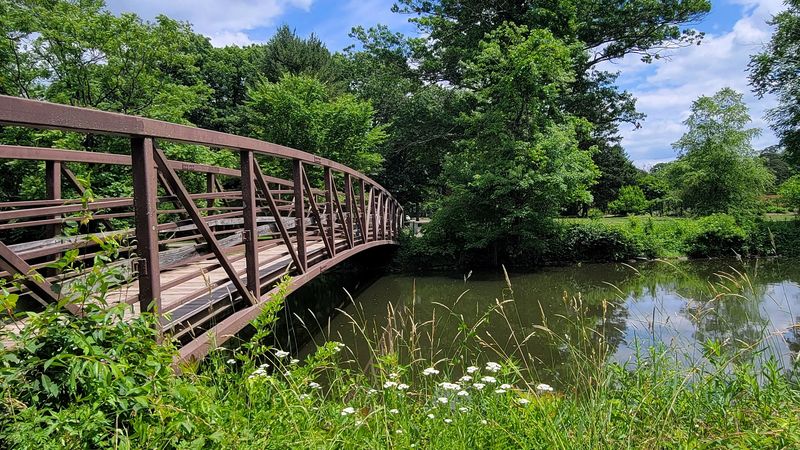
Step away from the formal beds and the mood changes again, this time into something quieter and leafier. The Arboretum at Colonial Park Gardens is not just a patch of nice trees around the edges.
It includes more than 500 labeled specimens of woody plants, with trees and shrubs arranged for education, beauty, and the very underrated pleasure of walking under shade on a warm Somerset County afternoon. This is where the garden becomes less about bloom-counting and more about wandering.
You might pass flowering trees and shrubs in spring, deep green canopies in summer, rich color in fall, and exposed branches or evergreens in winter. That four-season interest is a big reason the arboretum works even when the roses are not at their peak.
It gives the whole property a backbone. The official address for the arboretum is listed around Colonial Park Lots A and F, and unlike the rose garden’s April-through-October schedule, the arboretum is open daily from sunrise to sunset with no admission.
Leashed dogs are permitted here, and small picnics are allowed, which makes this the more casual side of the garden experience. That distinction matters because the rose garden has stricter rules: no pets apart from service animals, no picnicking, and no plant picking, which is fair enough when thousands of roses are involved.
The arboretum, meanwhile, feels like the place to stretch the visit. You can start with the formal rose beds, then drift into the shade, read a few plant labels, sit for a minute, and let the garden loosen up around you.
It is still curated, but it feels less dressed-up. For plant lovers, the labels are a bonus.
For everyone else, it is simply a peaceful, pretty walk that makes Colonial Park feel bigger, deeper, and much more interesting than a quick glance at the map would suggest.
Why This Free Central Jersey Garden Deserves Way More Attention
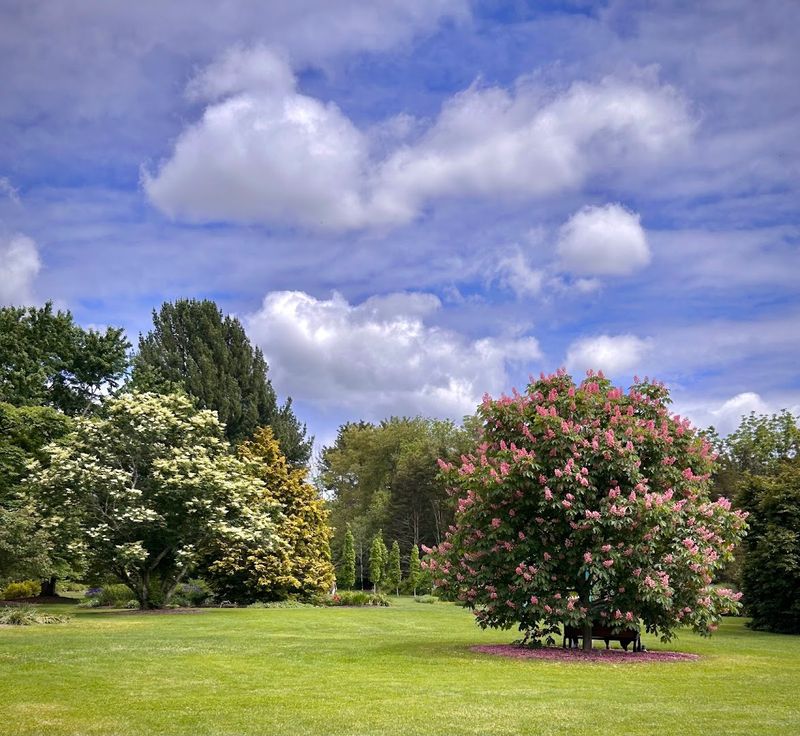
Plenty of New Jersey places get attention because they are loud, famous, expensive, or conveniently located near something else everyone already knows. Colonial Park Gardens deserves attention for almost the opposite reason.
It is generous without making a fuss. The gardens are public, easy to reach, and woven into a county park that many people already pass without realizing what is tucked inside.
The rose garden is open April through October, closed Mondays, and generally runs from morning into early evening, with later Thursday hours during part of the season. The Perennial Garden and Arboretum are even easier, open daily from sunrise to sunset.
That means this is not some precious, hard-to-plan outing where one missed reservation ruins the day. It is the kind of place you can fit into a Central Jersey afternoon with coffee in the cup holder and comfortable shoes in the car.
The details make it feel special: more than 3,000 roses, 345 labeled varieties, a formal Dutch Garden, a fountain, a trellised middle garden, heirloom roses, a sensory garden built with accessibility in mind, and an arboretum with more than 500 labeled woody plants. The setting adds another layer.
You are in Franklin Township, not far from New Brunswick, Bridgewater, and the Rutgers orbit, but the garden has a way of making that nearby busyness feel very far away.
It is polished enough for engagement photos, relaxed enough for a weekday walk, and specific enough that garden people can geek out over labels and rose classifications while everyone else simply enjoys being surrounded by color.
That is the beauty of Colonial Park Gardens. It does not need a grand entrance or a famous zip code to feel memorable.
It just needs a good bloom day, a little sunlight, and someone willing to follow the path past the ordinary part of the park.
Share this story