Millions of tiny lights pour down a gorge here every winter, forming a twinkling waterfall about 100 feet tall. Santa climbs a chimney every 15 minutes. And yes, that’s the same spot where a water-powered mill still grinds flour.
The first mill on this site went up in 1802. It even supplied corn meal for troops during the War of 1812. Five neighboring mills once operated within a mile, and only this one is still standing.
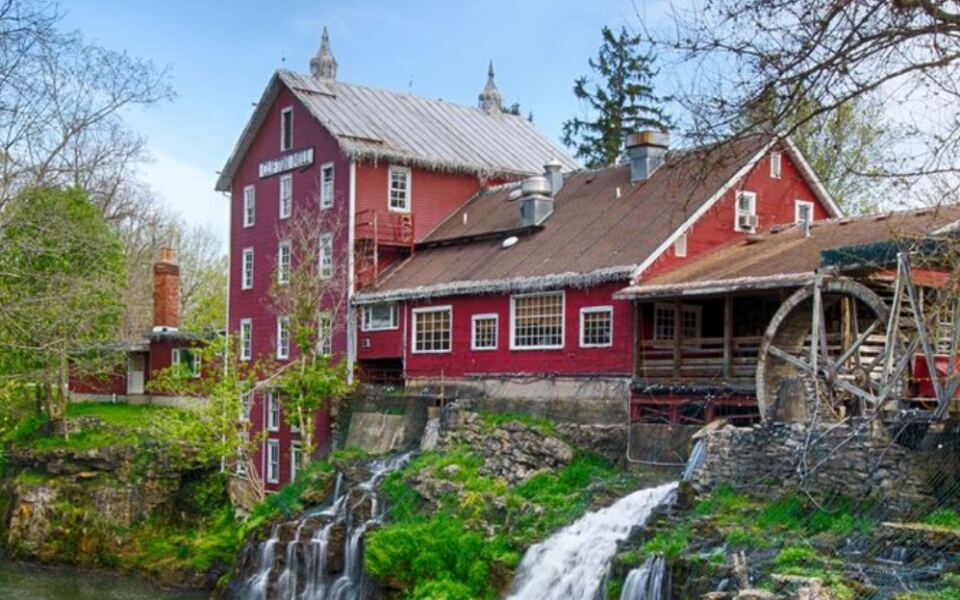
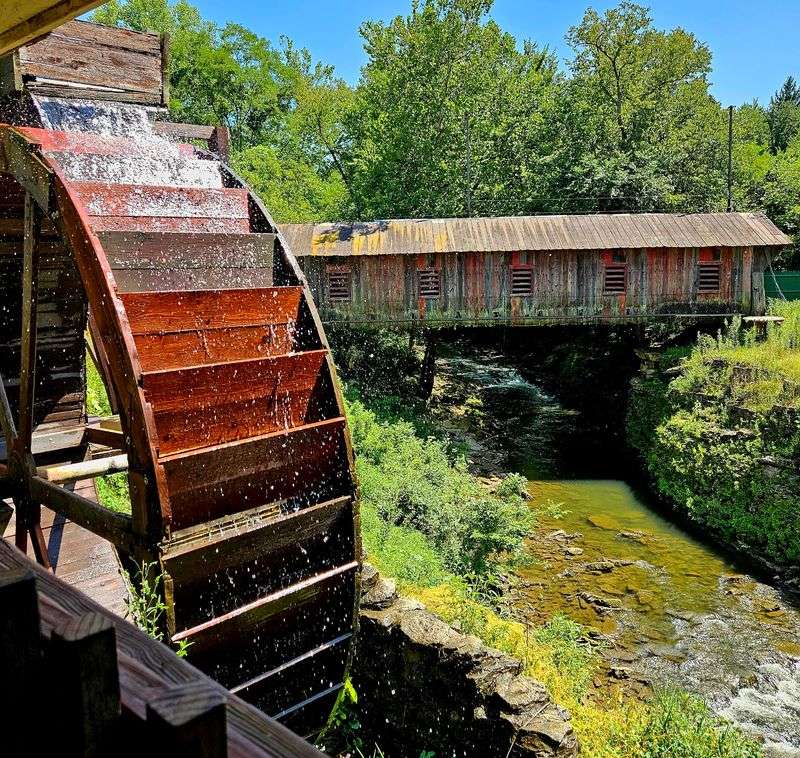
I like how this Ohio landmark feels pulled from a storybook. A red mill, a rushing river, and a wooden covered bridge all share one small frame.
Then there are the pancakes, made with flour ground right on site. I can’t imagine a better reason to skip a boring breakfast. The thought of enjoying a stack of fresh pancakes while looking out at the old mill, rushing water, and covered bridge makes this sound like the kind of morning I’d want to stretch out as long as possible.
1. A Working Mill That Still Grinds Like It’s Storytime
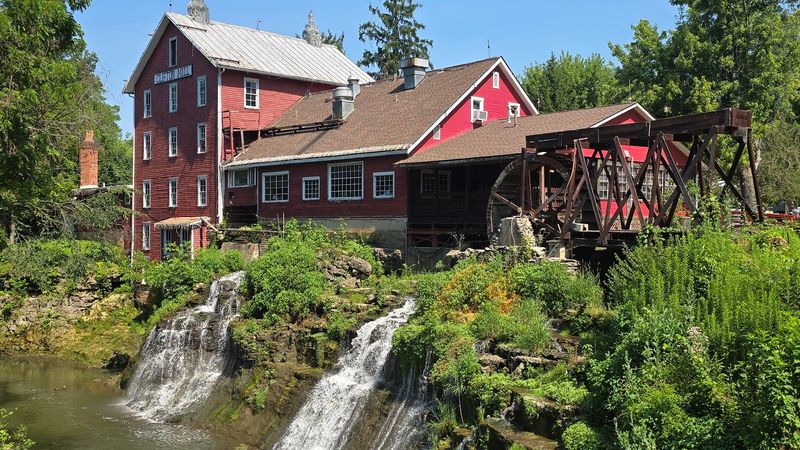
Real flour still comes out of Historic Clifton Mill, which is wild for a building with roots in 1802. It’s one of the largest water-powered grist mills still in existence.
The setup is beautifully simple. Water from the Little Miami River turns into energy, and that energy turns stones that grind grain.
During spring and summer, visitors can tour the mill’s inner workings on weekdays from 10 a.m. to 2 p.m. Tours cost $5 per person, and visitors should call ahead to arrange their visit. Seeing the historic machinery up close offers a fascinating look at how early American mills operated.
The location wasn’t random either. Owen Davis picked this spot to harness water rushing into the gorge.
He was a Revolutionary War soldier and frontiersman miller. That’s quite the resume for one guy with a big wheel.
The mill even shaped the town’s name. The village began as Davis Mills, then became Cliff Town, and finally Clifton.
Five other mills once worked within a mile, including woolen, saw, and paper mills. Only this one survived, which feels a little like the last character standing in a long tale.
The Satariano family bought the mill in 1987. They’ve kept it running and preserved ever since, so the story still has fresh chapters.
2. Your Pancakes Might Be Bigger Than Your Plans For The Day
Breakfast runs all day inside the restaurant, and that alone deserves a little applause. Nobody should have to race the clock for pancakes.
The pancakes here are famously thick. They’re made with flour ground at the mill, so the trip from grain to griddle is impressively short.
The menu goes well beyond flapjacks. Cornmeal mush, biscuits and gravy, and omelets all hold their own spots.
Fresh whole grain breads come out of the kitchen daily. Pies and cookies get the same fresh-baked treatment.
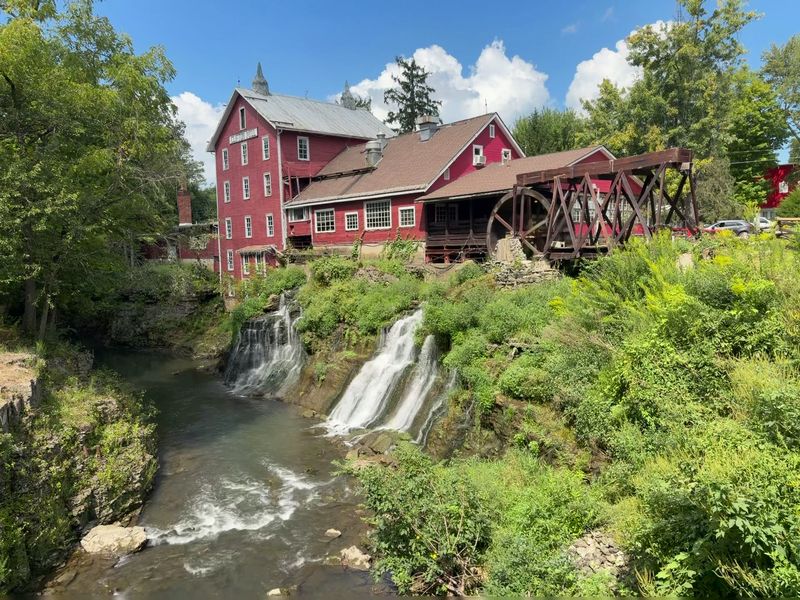
Then there’s the scenery. Dining room windows look out toward the mill wheel, the waterfalls, and the covered bridge.
That’s a pretty strong argument for asking about a window seat. Syrup just tastes better with a waterfall nearby, at least in theory.
Plan around the hours, since the restaurant serves breakfast and lunch only. It opens earlier on weekends than on weekdays.
Weekend mornings also tend to stay busy, so an early start helps. If there’s a wait, the grounds outside give you plenty to explore.
Honestly, walking off a stack of mill-made pancakes across a covered bridge sounds like an excellent plan.
3. That Covered Bridge Basically Begs For A Slow Stroll
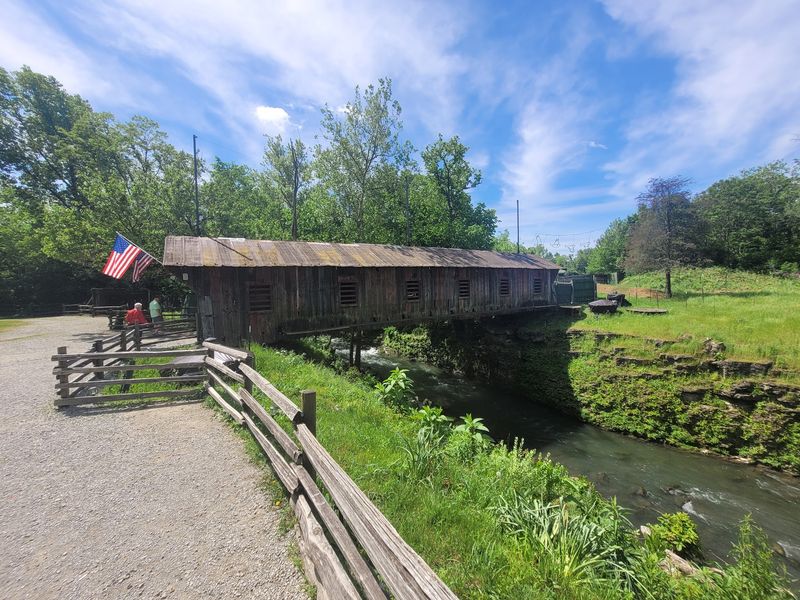
Ninety feet of authentic wooden covered bridge stretches across the Little Miami River here. Few things look more storybook than that.
The bridge isn’t just for photos, though it’s great for those too. It gives you views of the mill, Clifton Gorge, and the waterfalls from one spot.
Stand in the middle and you get the full scene. Water moves below, the mill sits nearby, and the gorge rises around you.
This makes a smart stop after a meal. It’s an easy way to slow down and actually notice where you are.
Families will find it simple to enjoy together. Kids can spot the waterfalls while adults chase the perfect picture.
Bring a camera or a fully charged phone. Golden light near sunset can make the whole river glow, weather permitting.
The bridge plays a bigger role during the holidays too. That’s when it hosts the synchronized lights and music show.
So the same wooden span does double duty all year. Calm and quiet in summer, wildly sparkly in December. Not bad for one bridge.
4. Millions Of Lights Turn The Gorge Into Pure Holiday Magic
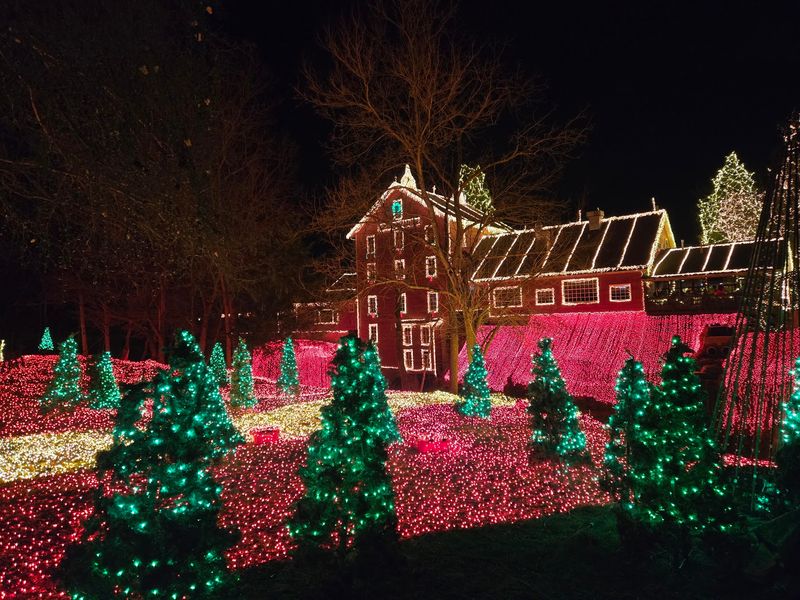
Back in 1988, the holiday display started with 10,000 lights. Today, the Legendary Lights of Clifton Mill shine with millions of them.
That glow covers the mill, gorge, falls, riverbanks, trees, and bridges. Nothing seems safe from sparkle.
The headliner is a 100-foot waterfall of twinkling lights. It spills down the gorge like something from a winter fairytale.
The covered bridge also gets a starring role. A synchronized lights and music show plays there throughout the evening.
The season begins the day after Thanksgiving. It runs nightly through December 30, with early closings on Christmas Eve and Christmas Day.
The display has earned plenty of attention over the years. Midwest Living, Ohio Magazine, USA Today, and ABC’s The Great Christmas Light Fight have all recognized it.
Timing matters if you want more elbow room. Mondays through Thursdays are generally less crowded than weekends.
Dress warmly and wear sturdy shoes. You’ll be outside, wandering, and probably stopping every few steps to stare.
This event is a big reason Ohio families mark it on their calendars every year.
5. Santa Climbs The Chimney Here Every Fifteen Minutes
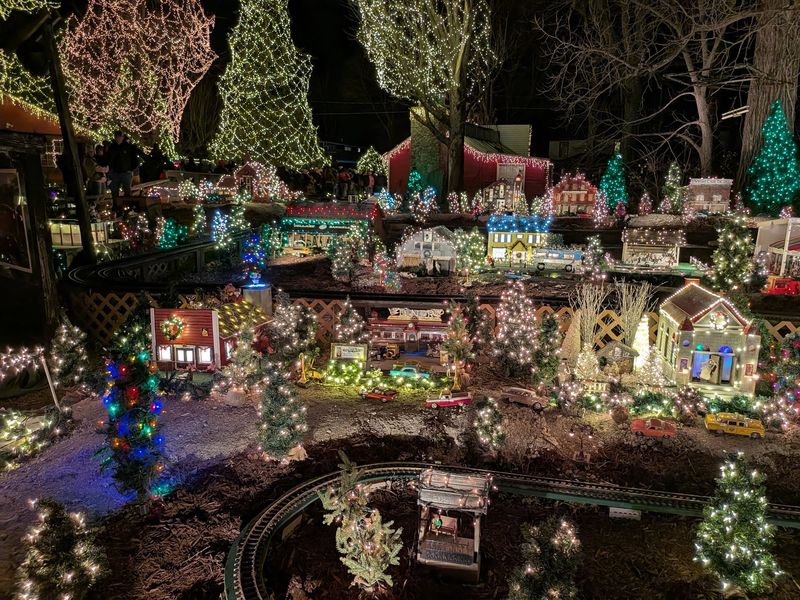
Kids, take note. A live Santa works in his workshop during the Legendary Lights celebration every evening through December 23.
He isn’t just sitting around either. Santa checks his list and heads up the chimney every 15 minutes.
That schedule makes him the busiest guy on the property. It also means nobody has to wait long for the big moment.
The fun keeps going indoors. A Santa Claus Museum shows off Santas in all sorts of styles.
There’s also a Toy Collection to explore. Grownups may find themselves pointing at toys from their own childhood.
Little ones will love the Miniature Village too. It’s packed with tiny details worth leaning in to see.
Together, these pieces make the holiday visit feel like a full adventure. You get outdoor lights plus indoor charm in one evening.
A quick tip helps here. Map out a loop so you catch the chimney climb, the museum, and the bridge show without rushing.
Honestly, watching Santa disappear up a chimney never gets old. Kids get magic, and adults get a reason to grin.
6. Three Hundred Flour Bags Tell A Surprisingly Great Story
Flour bags might not sound thrilling at first. Then you see more than 300 of them filling the inside of the mill.
These bags come from mills across the country. Many are over 100 years old, which makes them tiny time capsules.
Old flour sacks often carried bold logos and colorful designs. Looking at them is a bit like reading a history book through packaging.
Each one hints at a mill that once fed a town. Plenty of those mills are long gone, which makes this collection feel extra special.
The display fits Historic Clifton Mill perfectly. A building still grinding grain is the right home for a tribute to milling.
Take your time while touring the mill. It’s easy to rush past details that reward a closer look.
Ask kids to find the oldest-looking bag or the funniest name. Suddenly it becomes a scavenger hunt instead of a museum stop.
Paired with the early machinery and grinding stones, the collection gives real context. You leave knowing how flour reached kitchens long before grocery stores.
7. Fill Up Your Pantry Before You Head Back Home
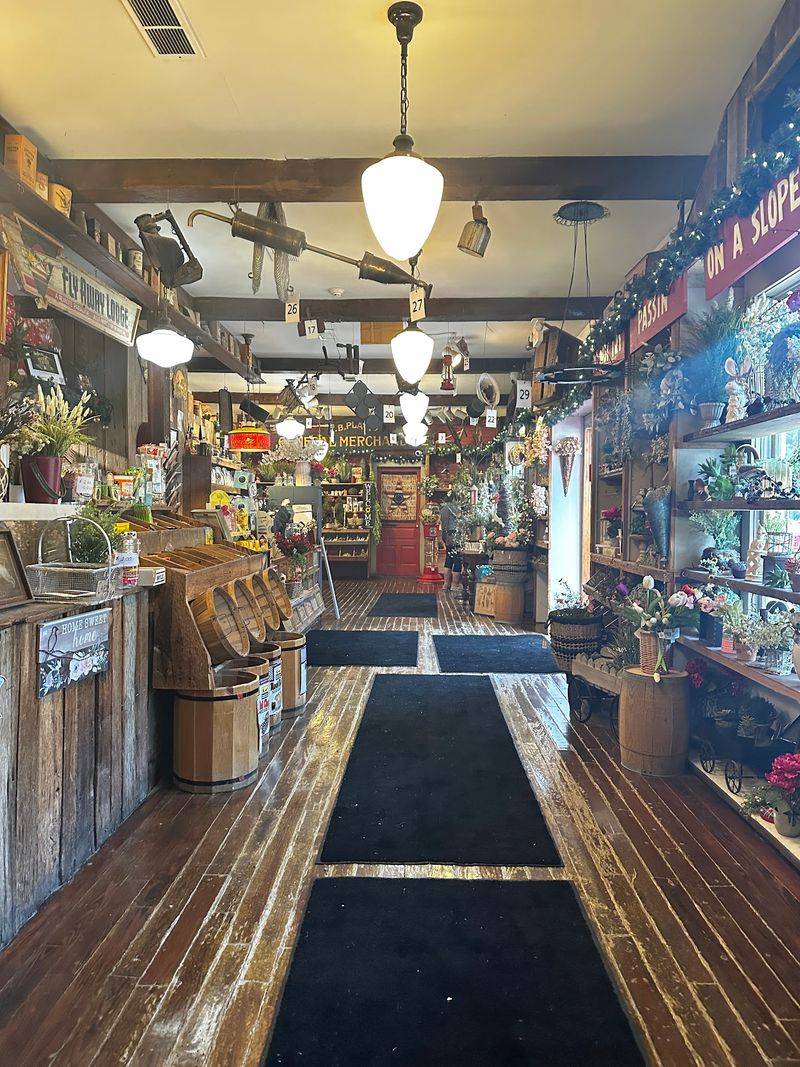
Leaving empty-handed feels almost impossible once you step into the gift shop and country store. It’s attached right to the mill.
Freshly milled flour sits on the shelves. So do Clifton Mill Pancake Mixes, which let you recreate breakfast at home.
That’s a pretty clever souvenir. A magnet can’t make Saturday morning pancakes, but a mix can.
Jams and jellies make great partners for those pancakes. Candles, cards, cookware, and candy round out the selection.
The shop also offers unique gift ideas. It’s handy if you’re visiting before a birthday or the holidays.
Antiques decorate the space, adding to the old-time feel. Browsing becomes part of the fun instead of a quick errand.
A smart move is shopping after your meal. You’ll know exactly which flavors you want to take home.
Gifts from here carry a real story too. Flour ground at a mill with roots in 1802 beats a generic store-bought present.
Just leave some room in the car. Pancake mix has a sneaky way of multiplying in your shopping basket.
8. A 1940s Gas Station Is Waiting Right Next Door
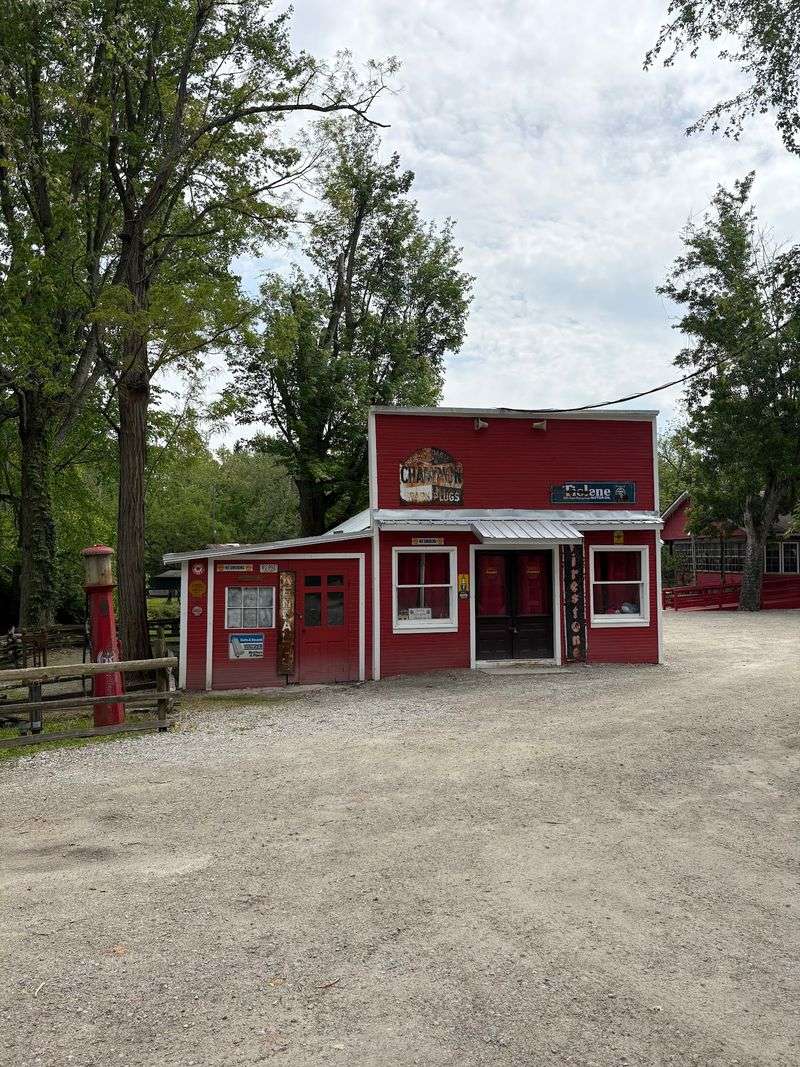
Right beside the mill sits a 1940s Gas Station Museum, which feels like a fun plot twist. One minute it’s 1802, and the next you’re in the mid-1900s.
The museum features original products and signs from that era. Bold logos and retro designs make it a great photo backdrop.
Car fans will enjoy the details most. Still, you don’t need to know engines to appreciate the vintage style.
It also adds variety to the visit. Families can bounce between milling history and roadside history in a few steps.
That vintage vibe ties nicely into summer events here. The mill hosts an annual car cruise-in, typically in June.
Motorcycle cruise-ins usually roll in during August. Shiny chrome and an old gas station make a pretty perfect pairing.
Check event dates before you plan a trip around them. Schedules can shift from year to year.
Either way, the museum is worth a quick stop. It’s small enough for a short visit and charming enough to make you linger.
Grandparents might even have stories to share about stations like this one.
9. Steps Away, The Gorge Adds Even More Wonder
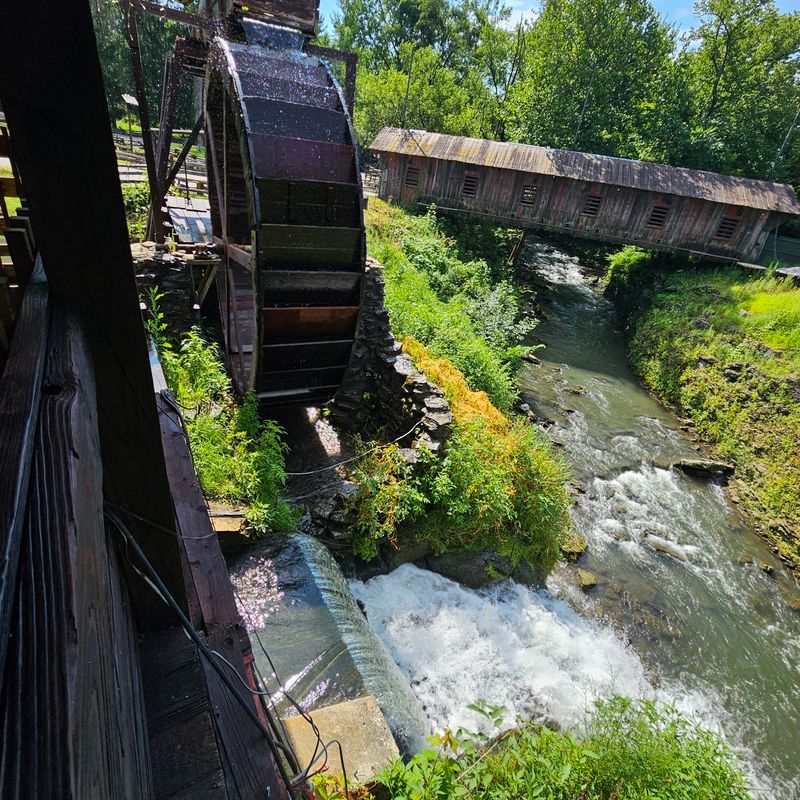
Nature handles a big part of the fairytale here. The mill sits along the Little Miami River with views of Clifton Gorge and its waterfalls.
Better yet, Clifton Gorge State Nature Preserve is a short walk away. That makes it easy to turn breakfast into a full day outdoors.
Wear comfortable shoes if you plan to explore. Natural paths call for good footing, especially after rain.
The gorge helps explain why the mill exists at all. Concentrated water flowing into it gave Owen Davis the power he needed.
So the scenery isn’t just pretty. It’s the reason this whole story began more than two centuries ago.
Finding the mill is simple once you’re nearby. Historic Clifton Mill sits at 75 Water Street, Clifton, OH 45316.
Clifton is a small village in Ohio, which suits the storybook mood. It feels peaceful without being hard to reach.
A great day here could include pancakes, the bridge, the mill tour, and a gorge walk. Add the holiday lights in winter, and you’ve got a fairytale with several happy endings.
Share this story