
Grissom Air Museum is one of Indiana’s most impressive aviation attractions, giving visitors the rare opportunity to walk among nearly 30 retired military aircraft spanning decades of American aviation history. Located near Peru on the grounds of the former Grissom Air Force Base, the museum features massive bombers, fighter jets, tankers, helicopters, and engaging indoor exhibits that bring military aviation to life.
Whether you’re fascinated by Cold War history, engineering, or the stories behind the aircraft, the museum offers an up-close experience that’s difficult to find elsewhere. If you’re planning an Indiana road trip, Grissom Air Museum deserves a place on your itinerary.
A Runway-Side Entrance With Instant Impact

The approach to Grissom Air Museum does not build slowly. One minute you are driving through north central Indiana, and the next you are face to face with aircraft shapes that look oversized even before you step out of the car.
Long wings, pointed noses, and tall tails rise above the grounds in a way that immediately changes your sense of scale.
That first visual hit matters because this museum is strongest when seen at ground level. Instead of compressing aviation history into display cases alone, it spreads much of the experience outdoors, where you can walk the perimeter of retired military aircraft and understand their size in your own body.
A bomber fuselage reads differently when its shadow reaches the pavement beside you. The layout also works in the museum’s favor.
The indoor exhibits introduce context, but the outdoor collection is where the place opens up, giving you room to circle aircraft, read the plaques, and notice how different each design looks from one era to the next. Sleek interceptor lines sit in contrast with broader, heavier frames built for entirely different jobs.
Even if you arrive with only a casual interest in aviation, the setting helps pull you in fast. The grounds are tidy, the displays are easy to navigate, and the open-air arrangement keeps the museum from feeling cramped or overly formal.
Before you have covered much distance at all, Grissom already makes its central promise clear: this is a place where retired military aircraft are not background scenery, but the main event, parked close enough to study from every angle.
The Outdoor Aircraft Yard Is the Main Attraction

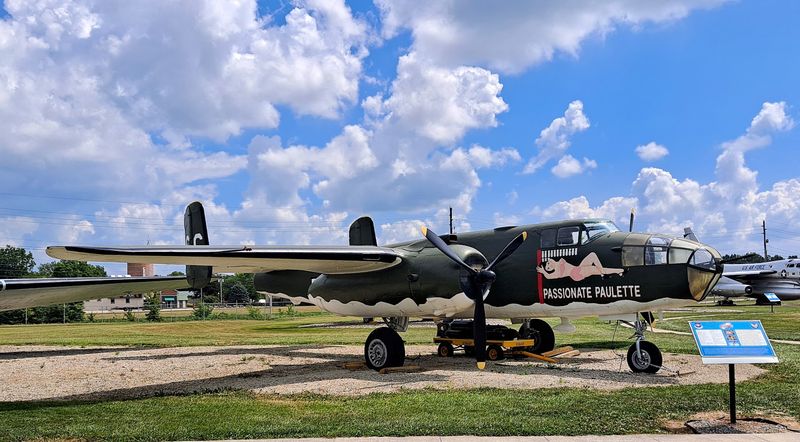
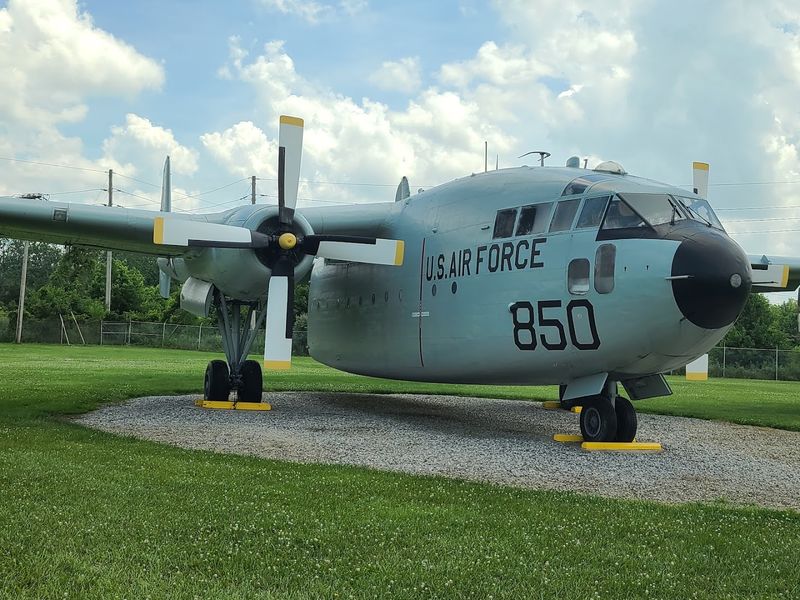
The outdoor aircraft yard is where Grissom Air Museum turns from interesting to engrossing. Nearly 30 retired military aircraft are arranged so you can move between them at your own pace, stopping for broad overview shots one minute and then leaning in to inspect intakes, landing gear, rivets, and cockpit shapes the next.
It is less like looking at a distant collection and more like entering an open catalog of military aviation design. Variety keeps the walk engaging.
You are not seeing one repeated form in different paint schemes, but a mix of bombers, tankers, fighters, transports, and helicopters that reveal how many different jobs aircraft were built to do. The contrast between bulkier airframes and sharper, more aggressive silhouettes gives the route its rhythm.
Several aircraft on site have a reputation for stopping people in their tracks, including the B-58 Hustler and the F-14 Tomcat.
Even without pretending to be an expert, you can tell which machines were built to intimidate, which were built to endure, and which seem almost improbably narrow or fast just standing still.
The museum benefits from those moments of recognition, when a familiar shape from documentaries, books, or old news footage suddenly exists at eye level.
Because the displays are outside, the light changes everything. On a bright day the metal surfaces sharpen, shadows fall hard beneath wings, and the scale becomes especially photogenic from a short distance away.
Instead of rushing through a sealed gallery, you are moving through weather, space, and silence, with aircraft lined up across the grounds like a retired squadron waiting for inspection.
Inside, You Get the Close-Up Moments
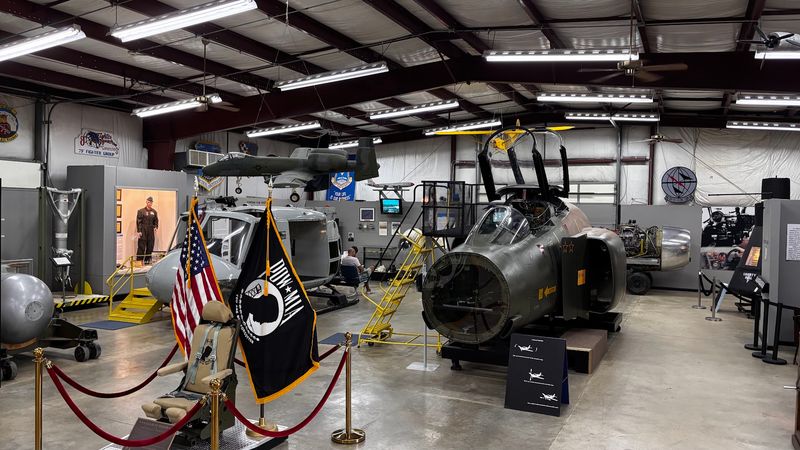
After the outdoor spectacle, the indoor museum adds a different kind of pull. This is where Grissom shifts from large silhouettes to tighter details, giving you the chance to look at artifacts, exhibits, and aircraft components without sun glare or long viewing distances.
The change in pace is useful, because the museum is not only about scale but also about how these machines were built, used, and remembered.
Among the strongest indoor features are the hands-on or close-access elements that make the visit more tactile. A Phantom cockpit has been a standout for many visitors, and that sort of access changes the experience from passive observation to physical understanding.
Seats, controls, framing, and visibility all become easier to appreciate once you are no longer imagining them from outside the glass.
The indoor exhibits also appear to balance aircraft-focused displays with material tied to the base and its history. That combination gives the museum a more grounded identity than a generic collection hall.
You are not simply looking at military hardware in isolation, but at objects connected to a real Indiana installation and the service culture around it.
Smaller details matter here too. A cutaway engine section, interpretive panels, and compact displays create useful pauses between the larger visual moments outdoors, especially if you are visiting with kids or anyone whose attention works better in shorter bursts.
Instead of exhausting the subject, the indoor space acts like a zoom lens, tightening the frame after the big sweep of the aircraft yard and preparing you to head back outside with fresher eyes.
The Observation Tower Adds a Whole New Perspective

One of the smartest features at Grissom Air Museum is not an aircraft at all. The observation tower changes the visit by lifting you above the collection, turning what seemed like a scattered set of displays into a clearer composition of wingspans, fuselage lengths, pathways, and open ground.
It is a simple addition, but it gives the museum a second viewpoint that many larger attractions skip. From above, the outdoor arrangement becomes easier to read.
You can trace the spacing between aircraft, compare dimensions without guessing, and appreciate how the museum uses its former base setting to create room around the displays instead of crowding them together.
That breathing space is part of the appeal, especially when you want photos that show more than one aircraft at once.
The tower also connects the museum to its wider aviation surroundings. Depending on timing, you may catch activity in the area beyond the static collection, which adds a small sense of live motion to a place built around retired machines.
Even when nothing is moving, the elevated perspective reinforces the museum’s relationship to runways, open air, and the working geography of military flight.
Practically speaking, the tower is a great reset point during the visit. If you have already spent time reading plaques or circling individual aircraft, climbing up gives you a quick overview before deciding where to head next.
In a museum that can be explored in a couple of hours or stretched longer by aviation fans, that shift in angle keeps the experience dynamic and prevents the outdoor walk from feeling visually flat.
Why the Base Connection Gives the Collection Weight

Grissom Air Museum would still be interesting if it were only a collection of impressive aircraft, but the site’s connection to a real military base gives it more gravity than that.
The name carries aviation and space history, and the museum’s displays are tied to a place that served generations of personnel rather than to an abstract theme parked in a warehouse. That local anchor changes the tone of the visit.
You can sense that difference in the way base history and aircraft history overlap. A jet is not presented as a floating object disconnected from people, but as part of a larger story involving service, maintenance, missions, training, and everyday life on an installation that mattered to Indiana and beyond.
Even for visitors who arrive mainly for the planes, that context broadens the experience. The museum also appears to benefit from a strong volunteer spirit, which fits the subject well.
Aviation museums often depend on people who care deeply about preserving machines that cannot explain themselves, and that effort shows up in clean grounds, readable displays, and the practical welcome that keeps the place approachable.
Here, the mood seems less theatrical than dedicated, with a sense that preservation is an active job rather than a decorative gesture. That human layer is important because military aircraft can otherwise become pure shape and spectacle.
At Grissom, the aircraft remain the stars, but the setting encourages you to think about who served around them, who maintained them, and why these retired machines were worth saving in Peru instead of letting them disappear into storage. The result is a museum with both visual punch and a clear reason for existing exactly where it does.
How to Time Your Visit for the Best Walkaround
Grissom Air Museum is especially good at accommodating different attention spans, which makes timing less stressful than at many larger attractions. If you want a focused stop, a couple of hours can cover the highlights indoors and outdoors without feeling rushed.
If aviation is your thing, the same grounds can easily hold you longer once you start reading plaques, comparing aircraft, and revisiting favorites from different angles.
Because so much of the museum unfolds outside, weather matters. A dry day with moderate temperatures will give you the best version of the experience, since the aircraft yard invites slow walking, frequent stops, and plenty of looking upward.
Bright conditions also help with photography, especially when you want full-body aircraft shots that capture wing shape and stance against the sky.
Arrival time plays a role too. The museum opens at 10 AM daily, and getting there earlier in the day gives you softer crowds and fresher energy for the outdoor portion before afternoon heat or fatigue starts flattening the pace.
Families with kids may appreciate that the site is manageable enough to stay interesting without becoming overwhelming, which is not always true of transportation museums.
The route is easy to personalize. You can begin inside for context, then head out for the large displays, or flip that order and let the aircraft yard provide the hook before filling in details under cover.
Either way, the museum’s compact scale is an advantage: it lets you build a satisfying visit without excessive planning, while still offering enough variety to make a return trip plausible once you realize how much there is to inspect up close.
The Sharp Reason This Indiana Museum Stands Out
Plenty of museums display aircraft. Far fewer let you experience them in a way that feels this direct, this readable, and this grounded in place without demanding an entire day or a specialist’s patience.
Grissom Air Museum stands out because it compresses a lot of visual drama and historical substance into a format that is easy to enter and hard to shrug off.
The key difference is proximity. Here, the aircraft are not reduced to distant trophies, and the museum does not rely on oversized multimedia effects to manufacture excitement.
The machines themselves do the work, whether you are looking up at a bomber, stepping into a cockpit, or climbing the tower to see how the collection spreads across the grounds.
There is also a welcome sense of proportion. The museum is substantial enough to reward curiosity, yet compact enough that you can actually absorb it rather than racing through acres of hangars.
That balance makes it especially appealing for road trippers, families, aviation fans, and anyone who likes attractions that deliver a strong central idea without burying it under unnecessary sprawl.
If you are choosing one reason to stop in Peru, Indiana, make it this: Grissom offers the rare chance to walk among nearly 30 retired military aircraft and come away with more than photos.
You get scale, texture, engineering, local history, and a clearer understanding of how different these machines look when they are no longer abstract symbols in a book. In a state full of worthwhile side trips, this is one that earns attention through sheer physical presence.
Share this story