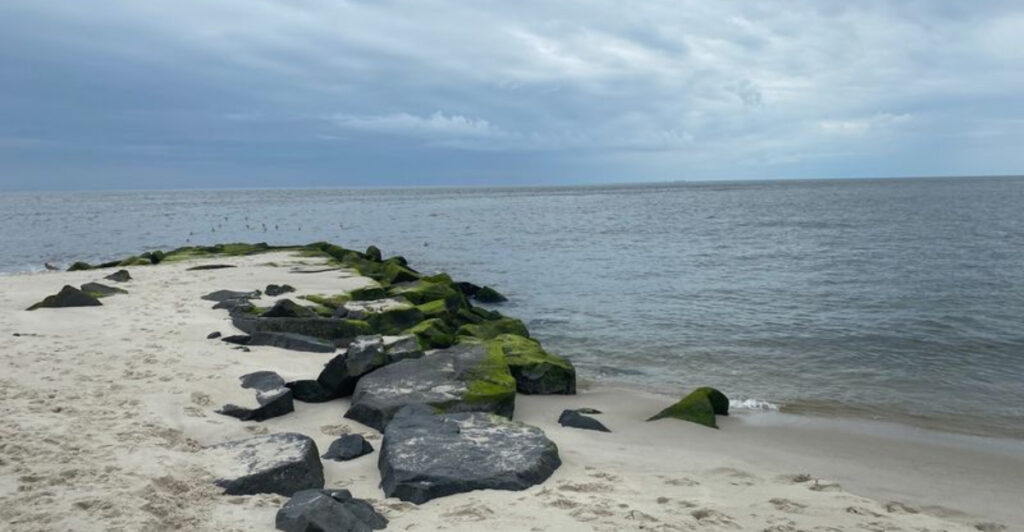
The first glimpse of Pearl Avenue Beach does not come from a boardwalk, a parking lot, or a row of oceanfront hotels. It appears at the end of a shaded path, where the trees suddenly give way to pale sand, open sky, and a broad sweep of blue water.
That reveal is enough to make even longtime Jersey Shore regulars pause. Tucked into tiny Cape May Point at the state’s southwestern tip, this peaceful strand feels remarkably removed from the crowds and commercial bustle found elsewhere along the coast.
There are no arcades chiming behind the dunes and no amusement rides breaking the horizon. Instead, visitors get soft sand, passing dolphins, migrating birds, and sunsets that glow directly over the water.
Pearl Avenue Beach is not tropical in the literal sense, of course, but catch it on a clear summer afternoon and the resemblance becomes surprisingly convincing. It is one of those rare places that makes New Jersey feel entirely new.
Pearl Avenue Beach Feels Worlds Away From the Usual Jersey Shore
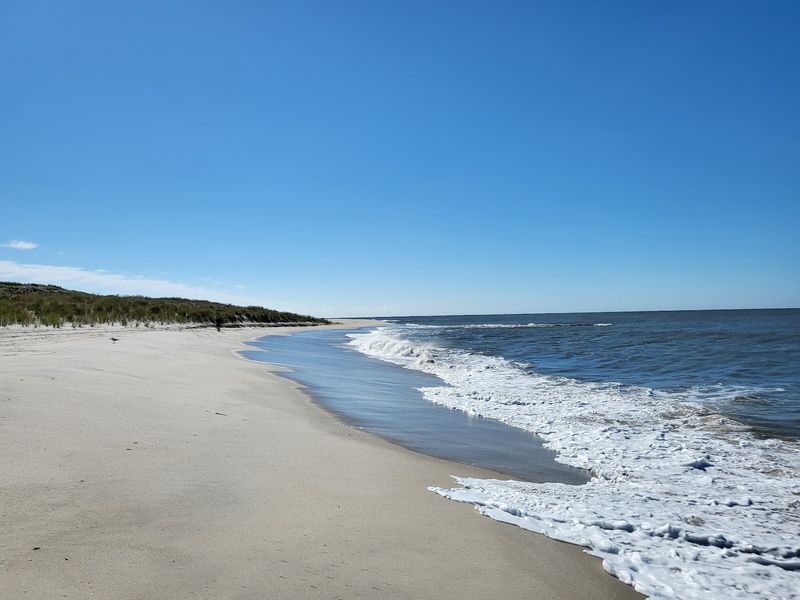
Cape May Point occupies a quiet corner of the peninsula where the Delaware Bay meets the Atlantic Ocean, just a few miles from the restaurants, Victorian houses, and busy promenade of Cape May. Yet those few miles create a dramatic change in mood.
Pearl Avenue Beach sits along the borough’s shoreline with no boardwalk, beachfront bars, souvenir stands, or high-rise hotels competing for attention. The soundtrack is mostly wind, surf, gulls, and the occasional excited voice announcing a dolphin offshore.
That simplicity is the attraction. A day here revolves around spreading out a towel, watching boats move across the horizon, and walking the waterline without navigating a maze of beach chairs.
Even during summer, Pearl is one of the quieter guarded beaches in Cape May Point. The borough itself has fewer than 300 year-round residents, and its small scale carries right down to the sand.
Streets are residential, traffic is relatively light, and the Cape May Lighthouse often appears above the surrounding greenery as the clearest reminder of where you are. This is still a managed municipal beach rather than a completely undiscovered patch of coast.
During the 2026 season, lifeguards are on duty from June 20 through September 7, and the borough advises visitors to swim near a guard. Beach tags are required for guests age 12 and older while guards are working from the Saturday of Father’s Day weekend through Labor Day.
Current rates are $10 for a day, $25 for a week, and $50 for the season. Those practical details do little to disturb the sense of escape.
Pearl Avenue offers the safety and upkeep of an established Jersey beach while preserving the uncluttered scenery that makes it feel so far away. It is less a secret in the map-and-compass sense than a place many Shore visitors simply pass without realizing what they have missed.
A Pine-Covered Path Makes the Walk to the Water Unforgettable

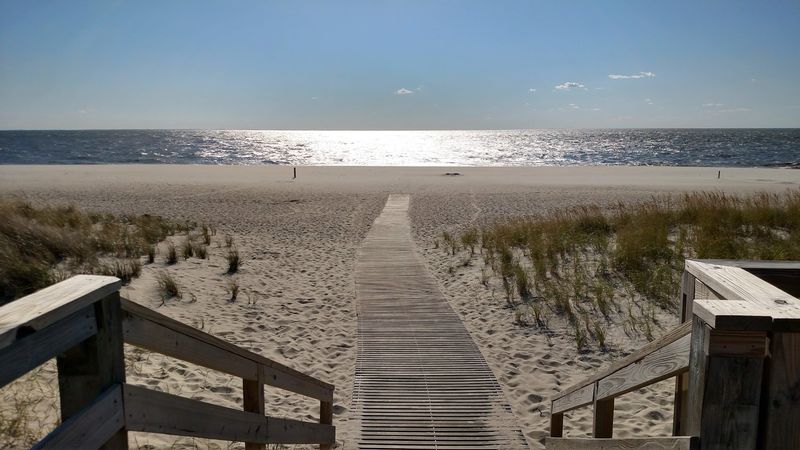
Arrival is part of the experience here. From Pearl Avenue, the beach access leads through coastal vegetation that conceals the ocean just long enough to build anticipation.
Pine branches and leafy growth frame the route, shade falls across the sandy ground, and the water announces itself first through sound. The path feels more like the beginning of a nature walk than the entrance to a municipal beach.
Then the greenery opens. Bright sky replaces the shade, the horizon stretches from side to side, and the Atlantic seems to arrive all at once.
The transition takes only a short walk, but it gives Pearl Avenue Beach one of the most memorable entrances along the southern Jersey Shore. Instead of seeing the entire scene from the car, visitors discover it in stages.
The path also reflects the larger landscape around Cape May Point. This is a coast shaped by dunes, maritime plants, freshwater wetlands, and woods rather than dense oceanfront development.
Nearby Cape May Point State Park protects 244 acres surrounding the lighthouse, with trails passing ponds, marshes, wooded areas, and dune habitat. Even when Pearl Avenue is the only destination on the schedule, that wild setting remains visible around its edges.
Visitors should not expect a large dedicated parking facility at the beach entrance. Parking is found along local streets and can become scarce on sunny summer weekends, so an early arrival makes the day considerably easier.
Everything needed on the sand must also be carried down the access path. Packing light pays off when the return walk includes chairs, towels, and a cooler that somehow feels twice as heavy as it did that morning.
That small amount of effort helps preserve the beach’s low-key character. There is no grand entrance and no commercial strip waiting at the end of the block.
Just follow the path until the trees part, and one of Cape May Point’s loveliest coastal views provides the welcome.
Soft Sand and Gentle Waves Create a Caribbean-Like Escape

On a clear, calm day, the palette does most of the convincing. Pale sand runs beside blue-green water, dune plants add a ribbon of deep color behind the beach, and uninterrupted sky fills the view ahead.
With no boardwalk or hotel towers intruding on the scene, Pearl Avenue can look less like the New Jersey people expect and more like a quiet island shoreline. The sand is comfortable enough for a barefoot walk and broad enough to create breathing room between groups when conditions cooperate.
At low tide, a wider strip of wet sand appears near the water, reflecting the sky and making the beach feel even more expansive. It is an especially pleasant time for strolling, searching for shells, or simply letting the shallow wash run over your feet.
The ocean deserves more respect than the tropical comparison might suggest. Waves can be gentle on settled summer days, but this remains an open stretch of coast where currents, winds, and surf conditions change.
Pearl is guarded during the main season, and swimming near the lifeguard stand is the sensible move. Cape May Point Beach Patrol specifically warns visitors not to enter unguarded water.
Families looking for calmer conditions should check the flags, listen to guards, and treat the sea like the Atlantic rather than a resort pool. Beachgoers should also arrive self-sufficient.
Pearl Avenue does not come with a snack bar, rental counter, or line of shops immediately behind the dunes. Water, food, sunscreen, and shade need to come along for the walk.
The borough asks visitors to position tents at least 20 feet from the high-tide mark so guards retain a clear view of the shoreline, and umbrellas should be properly secured against shifting coastal winds. None of that diminishes the illusion when the weather aligns.
Sunlight dances on the surface, the water settles into rolling bands, and the horizon remains wonderfully empty. Pearl Avenue’s Caribbean-like quality comes not from palm trees or bathwater temperatures, but from color, space, and the rare luxury of seeing almost nothing built between yourself and the sea.
Cape May Diamonds Turn Every Beach Walk Into a Treasure Hunt
Local treasure hunters are not searching for gemstones worth a fortune. Cape May diamonds are clear or translucent quartz pebbles polished by water and time, and their sparkle has made them one of the peninsula’s most charming natural curiosities.
Hold a wet one toward the sun and the nickname begins to make perfect sense. According to the traditional explanation, pieces of quartz enter the Delaware River far upstream and travel toward Delaware Bay, becoming smoother as currents move them against sand and other stones.
Some eventually wash onto beaches around Cape May Point. They are not geological diamonds and should not be mistaken for anything valuable in the conventional sense.
Their appeal lies in the journey, the local folklore, and the thrill of finding a clear pebble among hundreds of ordinary ones. Pearl Avenue gives visitors a chance to look while walking, although nearby Sunset Beach is more famous for the hunt and often has heavier concentrations of pebbles.
At Pearl, the best strategy is wonderfully uncomplicated. Scan the damp shoreline as the tide retreats, look between darker stones and shell fragments, and pay attention to pieces that gleam while wet.
A recent storm may rearrange the beach and reveal fresh material, though rough conditions are a reason to search from a safe distance rather than approach pounding water. The activity changes the rhythm of an ordinary stroll.
Progress slows to a shuffle as everyone studies the ground, stoops to inspect a promising glint, and debates whether the latest discovery qualifies. Children tend to understand the assignment immediately, but adults can become just as competitive once the first clear pebble appears.
Some Cape May diamonds are polished, cut, and mounted in jewelry by local artisans. Others leave the beach in a pocket and end up in a dish at home, still mixed with grains of sand.
Either way, finding one provides a more personal souvenir than anything pulled from a boardwalk gift-shop rack. It is a tiny piece of Cape May Point that required attention rather than a credit card.
Dolphins and Migrating Birds Bring the Quiet Shoreline to Life
Look beyond the breakers for a few minutes and the apparently empty horizon may begin moving. Bottlenose dolphins regularly travel through the waters off Cape May, sometimes surfacing one at a time and sometimes appearing in small groups.
A dark fin, a smooth arc, and a flash of sunlight can turn an otherwise lazy afternoon into the moment everyone on the beach starts pointing in the same direction. The skies can be equally busy.
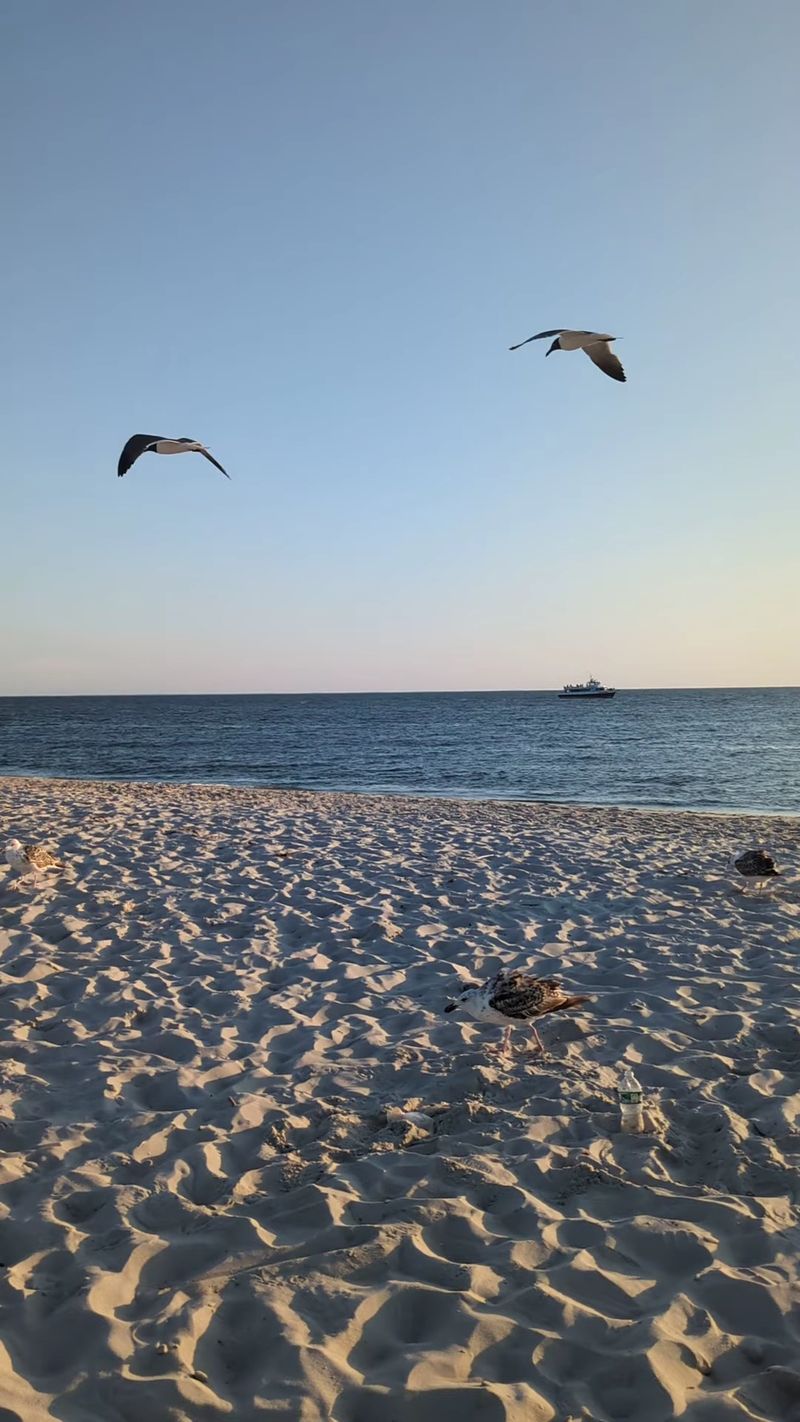
Cape May sits along a major migration route at the tip of a peninsula that funnels birds southward, giving the region an international reputation among birdwatchers. Shorebirds work the waterline, terns plunge toward the surface, and gulls patrol for unattended snacks.
During migration seasons, the surrounding area can also produce impressive numbers of songbirds, hawks, and other raptors. Pearl Avenue benefits from that natural traffic without feeling like a formal wildlife preserve.
Visitors do not need binoculars or a field guide to appreciate the show. Sitting quietly may reveal tiny crabs near the surf, butterflies crossing the dunes, or a formation of birds moving overhead.
The beach rewards anyone willing to look up from a phone for more than a few seconds. For a deeper view of the region’s ecology, Cape May Point State Park is close by.
Its trails circle ponds and pass through several coastal habitats, while observation platforms provide places to watch wildlife without disturbing it. The park is also home to the 157-foot Cape May Lighthouse, which has guided ships since 1859.
Lake Lily, a freshwater pond in the borough, creates another valuable habitat within this remarkably compact community. The variety explains why the beach feels alive even when relatively few people are present.
Quiet does not mean empty here. The action simply comes from wings, fins, tides, and grasses shifting in the wind rather than rides and loudspeakers.
Some visits may produce a full dolphin display; others might offer only a distant fin or an unfamiliar bird. The uncertainty is exactly what keeps every afternoon interesting.
Waterfront Sunsets Make the Perfect Ending to a Peaceful Beach Day
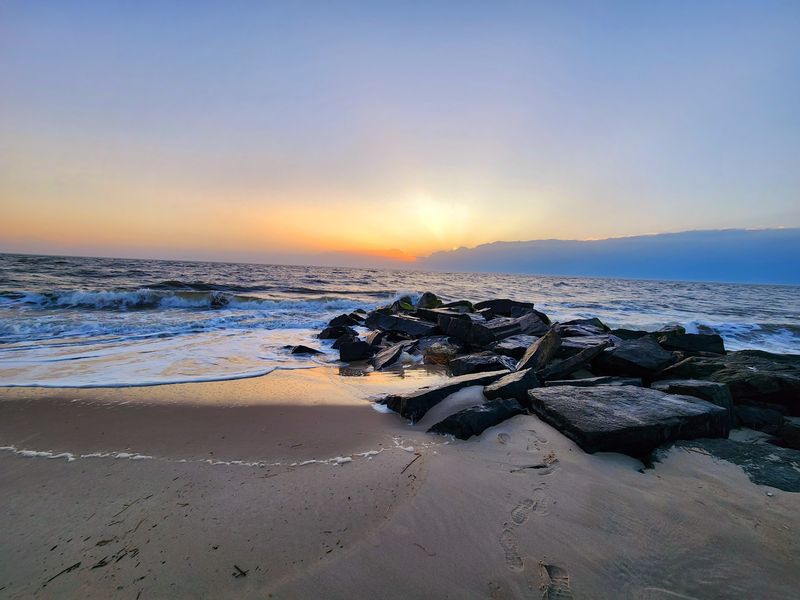
Most New Jersey ocean beaches face east, making sunrise their signature performance. Cape May Point enjoys a geographical advantage.
Its position near the meeting place of the Atlantic Ocean and Delaware Bay opens views toward the west and southwest, allowing evening color to spread across the water instead of disappearing behind beachfront buildings. The change begins well before the sun reaches the horizon.
Harsh afternoon light softens, the sand takes on a warmer tone, and the water shifts from blue to silver and gold. Boats become dark silhouettes in the distance.
On especially clear evenings, the sky moves through orange, coral, pink, and violet while the wet shoreline mirrors the colors below. Pearl Avenue is a particularly peaceful place to watch that transformation because there is so little visual clutter.
No Ferris wheel flashes on behind the dunes. No tall condominium casts a growing shadow over the sand.
People lower their voices almost instinctively, and even children seem to understand that the last few minutes deserve attention. Sunset time changes throughout the season, so arriving an hour beforehand leaves room for a final walk and avoids the rushed feeling of reaching the beach as the sun disappears.
Late-day visitors should remember that lifeguard coverage ends before the light does. The ocean may look inviting under a glowing sky, but swimming after guards leave is not worth the risk.
Remaining on the sand provides the best view anyway. The evening also reveals what makes this beach special more clearly than any tropical comparison.
Pearl Avenue does not need palm trees, cabanas, or imported island style. Its beauty comes from Cape May Point itself—the open horizon, protected coastal landscape, migrating wildlife, and unusual westward light.
When the sun finally slips away and the first cooler breeze moves over the dunes, the beach feels neither Caribbean nor conventionally Jersey. It feels entirely its own.