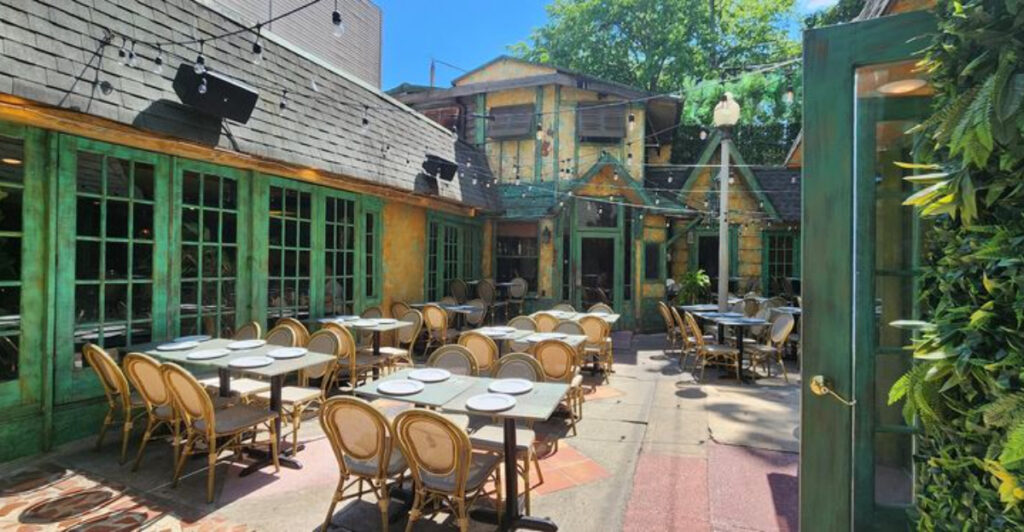
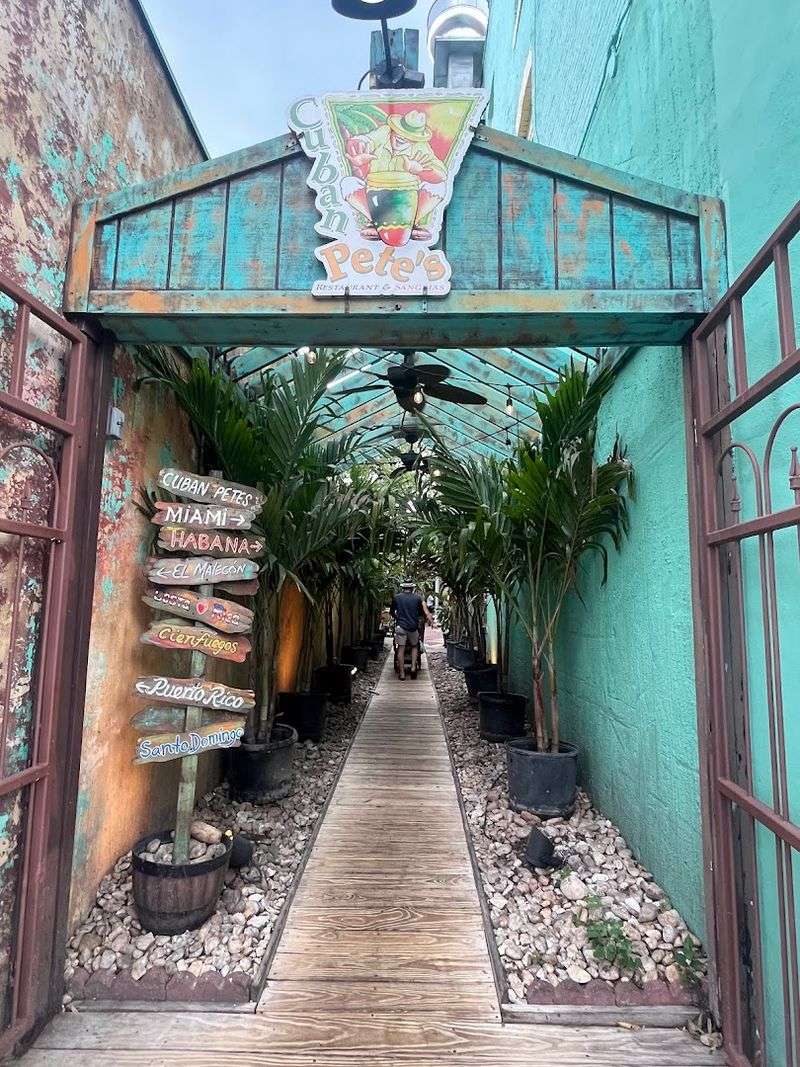
A pair of palms, peeling turquoise paint, and a weathered wooden sign make Cuban Pete’s look wonderfully out of place on busy Bloomfield Avenue. One minute, you are walking through downtown Montclair; the next, you are staring at a restaurant that appears to have spent several decades baking in Caribbean sunshine.
The effect is playful, but the food behind that colorful entrance is taken seriously. Tables quickly fill with crisp plantains, garlicky shrimp, shredded beef, roasted pork, and enough small plates to turn a simple dinner into a full-table operation.
Music and conversation bounce through the dining rooms, while the courtyard glows beneath strings of lights when the weather cooperates. Located at 428 Bloomfield Avenue, Cuban Pete’s is not the place for a hushed meal involving tiny portions and whispered opinions.
It is loud, colorful, generous, and built for sharing—a Montclair institution where dinner tends to become an occasion before the first entrée even arrives.
The Weathered Turquoise Entrance That Sets the Island Mood
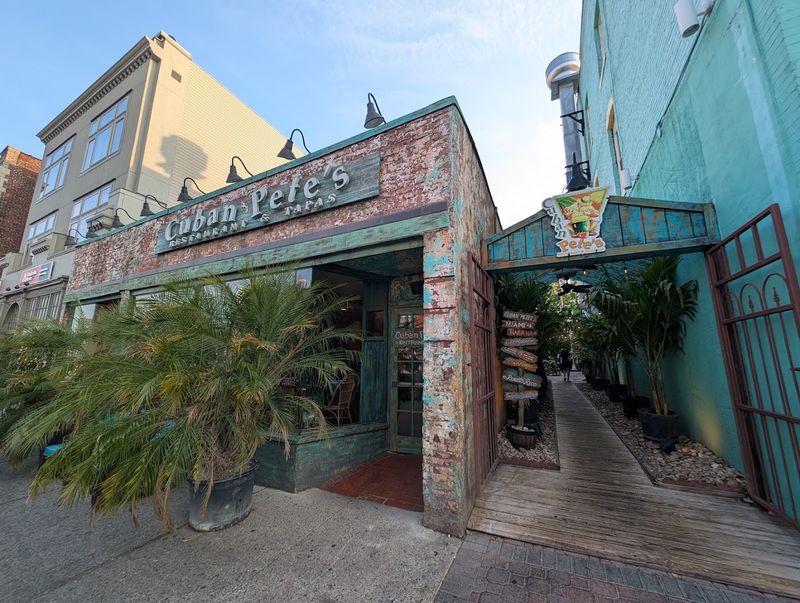
On a downtown block packed with polished storefronts and busy restaurants, Cuban Pete’s makes its entrance with considerably more personality. The facade combines distressed turquoise paint, exposed brick, dark wooden trim, and broad palm fronds that soften the sidewalk edge.
Even the restaurant’s sign looks sun-faded and seasoned, as though it has been hanging above a seaside café rather than an Essex County dining room. That slightly rough-around-the-edges appearance is important.
A glossy tropical theme could easily feel like a chain restaurant’s idea of Cuba, but Cuban Pete’s leans into texture, age, and mismatched details. The result feels less designed by committee and more like a place that has accumulated character one scuff, sign, and coat of paint at a time.
It also creates an effective buffer between the restaurant and the pace of Bloomfield Avenue. Montclair traffic may still be rolling past a few feet away, but the palms and weathered wood make the front door feel like a dividing line.
This is one of those rare entrances that tells you exactly what kind of meal lies ahead: casual, colorful, and not remotely interested in behaving like every other downtown dining spot. There is usually activity around the doorway, particularly on weekend evenings, and the facade makes even a short wait feel like part of the scene.
You can study the layered paint, peek through the windows, and watch plates pass through the dining room while deciding whether the table needs one order of plantains or several. The correct answer, as it turns out, is usually several.
A Colorful Dining Room That Feels Far From Montclair
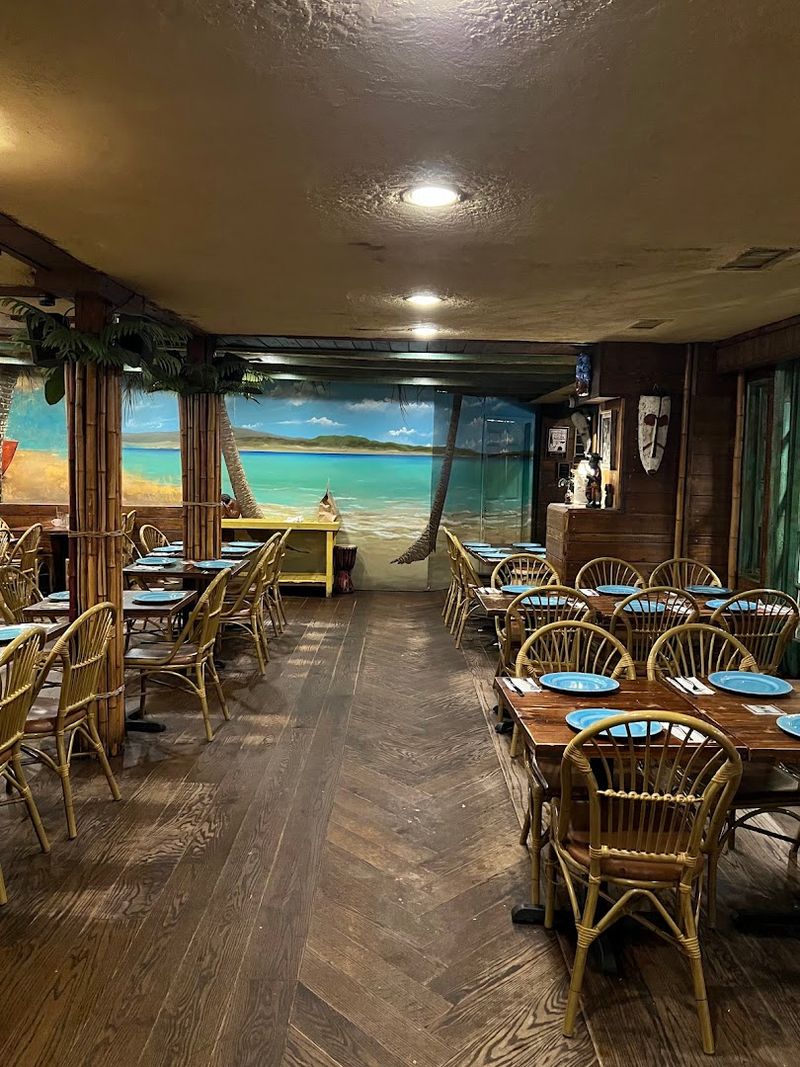
Step through the front door and the restaurant unfolds in a mix of warm yellow walls, dark wood, bamboo-style chairs, old photographs, murals, and bits of tropical memorabilia. Nothing is restrained.
Directional signs point toward island destinations, artwork fills blank spaces, and decorative details seem to appear wherever your eyes land. Rather than relying on one large dining room, Cuban Pete’s feels like a collection of spaces stitched together, giving the restaurant a slightly rambling quality that adds to the fun.
The courtyard is the showpiece when temperatures cooperate. Wicker café chairs sit around small tables beneath string lights, while weathered green walls, plants, and old-fashioned lamps give the space the feel of a backstreet patio that has been hosting long dinners for years.
It is particularly appealing around sunset, when the lights begin to glow and the hard edges of downtown Montclair fade into the background. Indoors, the energy is more concentrated.
Music, clattering plates, and overlapping conversations can push the volume upward, especially once larger groups settle in. That means Cuban Pete’s works better for a spirited birthday dinner than a meeting requiring detailed note-taking.
Live music is also part of the restaurant’s identity, adding another layer of movement to a room that rarely feels still. The atmosphere never asks guests to dress up or behave formally.
Families, couples, and groups of friends all fit comfortably into the mix, and the menu encourages the entire table to stay involved. Someone is always passing a plate, reaching for a sauce, or negotiating for the final bacon-wrapped date.
Shareable Tapas That Make Ordering Half the Menu Tempting
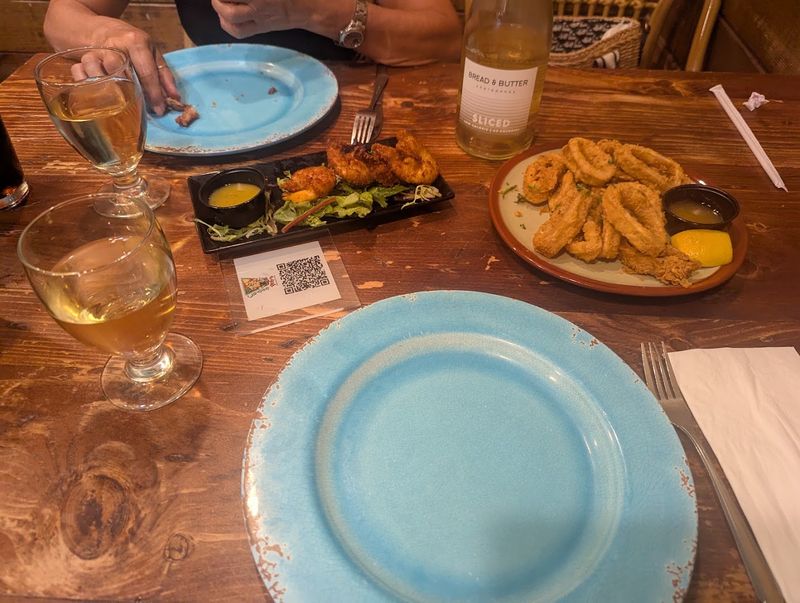
The smartest way to approach Cuban Pete’s is to treat the tapas list as a group project. Most of the small plates fall between roughly $7 and $14, making it easy to build a spread without committing everyone to the same flavors.
Start with the bocaditos de sandwich Cubano, priced at $6.95, which turn the restaurant’s Cuban sandwich into shareable bites. The standard empanadas are $7.25, while papitas rellenas—beef-filled potato dumplings—cost $7.50.
Those are sensible opening moves, but the menu becomes more interesting when sweet, salty, and garlicky elements begin colliding. Almond-stuffed dates wrapped in bacon are $6.95, and goat cheese fritters with hazelnut and honey vinaigrette come in at the same price.
Pernil con tostones pairs crisp pork with fried plantains and garlic mojo for $8.95, while sautéed shrimp prepared with double garlic or coconut sauce costs $10.95. A table that prefers crunch can add chicharrón de pollo, crispy chicken lollipops served with cilantro mojo, for $8.95, or fried calamari with pineapple salsa for $13.50.
Ordering three plates for two people gives everyone a taste without spoiling dinner. A group of four can comfortably push that number to five or six, especially when the dishes cover different lanes: one fried, one cheesy, one pork-heavy, and one brightened with fruit or herbs.
For anyone unwilling to negotiate, the $25.95 Chichi’s platter bundles chicken lollipops, pork chunks, stuffed plantains, dates, and an empanada onto one plate.
It is an efficient way to sample the menu, though it does remove the theatrical pleasure of pointing at nearly every tapas description and saying, “That one too.”
Ropa Vieja, Churrasco, and the Cuban Classics Worth the Trip
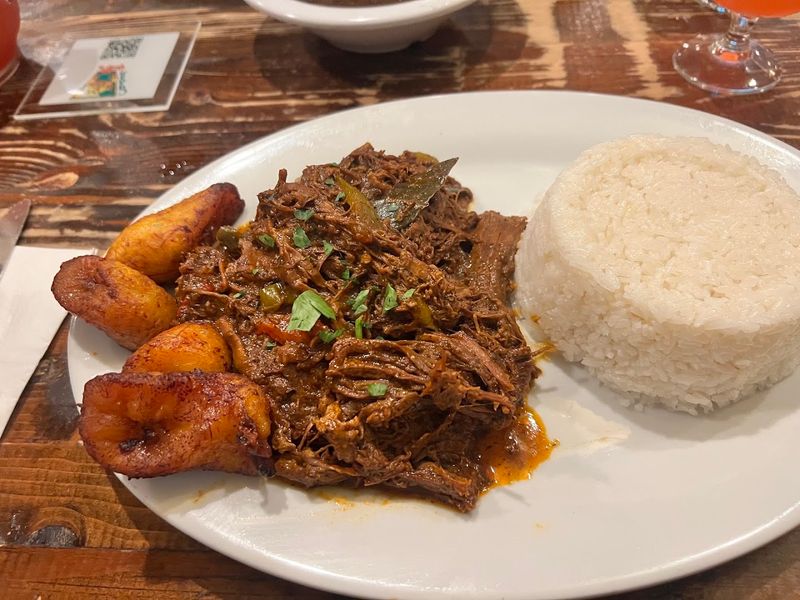
For a first full-size entrée, ropa vieja is the order that explains the restaurant most clearly. Cuban Pete’s version, currently listed at $20.95, offers traditional shredded beef or chicken and delivers the slow-cooked, sauce-friendly comfort expected from the dish.
The strands of meat are built to mingle with rice, beans, and whatever spoonful of garlic mojo remains nearby. Diners who prefer crisp edges should look toward vaca frita, priced at $21.95, which combines shredded beef with onions and lime.
It is a sharper, more textured counterpoint to ropa vieja’s softer consistency. The churrasco Guarapo sits at the top end of the regular classics at $34.95.
This skirt steak is marinated and served with chimichurri, making it a strong choice for the person who planned to share tapas but has no intention of sharing the main course. Lechón asado keeps things more traditional and affordable at $18.95, pairing roasted pork with onions and garlic mojo.
The same price gets you arroz con pollo, prepared with bone-in chicken, yellow rice, sofrito, peas, and roasted peppers. Then there are the dishes that reward a larger appetite.
Rabo encendido brings braised oxtail in a spicy tomato broth for $29.95, while Cuban Pete’s paella combines shrimp, mussels, clams, scallops, and squid with saffron rice for $33.95. The menu also leaves room for less conventional combinations.
Churrasco Mambo Kings swaps traditional chimichurri for a mango version, and Africano Cubano salmon arrives glazed with mango purée. Those dishes give the kitchen permission to play without pushing the classics off the page.
The best table strategy is to mix one familiar anchor—ropa vieja, lechón, or arroz con pollo—with something less predictable. That way, everyone gets the Cuban comfort food they came for, plus at least one plate that starts a debate.
Crispy Plantains, Garlic Mojo, and Sides That Steal Attention
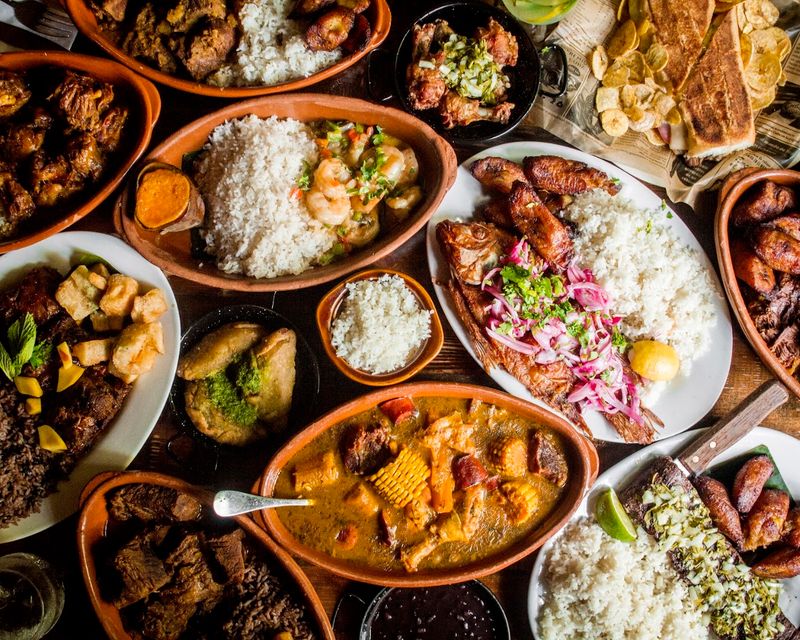
A Cuban meal can rise or fall on what surrounds the meat, and Cuban Pete’s gives the supporting dishes plenty of room to work. Tostones and maduros may begin with the same ingredient, but they do completely different jobs.
Tostones are fried green plantains with a firm, savory crunch that makes them ideal for dragging through mojo or catching bits of shredded beef. Maduros use ripe plantains, developing caramelized edges and a soft sweetness that works particularly well beside salty pork or spicy oxtail.
Both are currently listed at $4.50, which makes ordering one of each a low-risk decision. The rice selection is equally useful.
White rice, yellow rice, coconut rice, congris, and arroz con gandules are all $4.50. Congris folds black beans into white rice, creating a hearty side capable of soaking up tomato broth, chimichurri, and meat juices without disappearing beneath them.
Yuca, also $4.50, brings a denser texture and becomes considerably more exciting once garlic mojo enters the picture. That sauce is the quiet force running through much of the menu.
It appears with roasted pork, fried plantains, chicken, and seafood, tying dishes together with garlic, citrus, and enough punch to make plain rice feel like part of the main event. Extra mojo, chimichurri, mango salsa, or the hotter Gaucho sauce can be added for $1.50 per side.
The mariquitas are another smart table order. These thin, crisp plantain chips cost $5.95 and arrive with Pete’s mojo, giving everyone something to pick at while the larger plates make their way across the dining room.
By the end of the meal, the side dishes tend to blur into the entrées in the best way possible—rice beneath ropa vieja, maduros beside churrasco, and one final tostone used to collect whatever sauce the spoon missed.
Why Cuban Pete’s Remains One of Montclair’s Most Memorable Restaurants
Montclair has no shortage of stylish places to eat, but Cuban Pete’s occupies a category of its own. The restaurant does not depend on white tablecloths, minimalist décor, or a tightly edited menu.
Its appeal comes from abundance: more color, more music, more garlic, more plates, and more opportunities for the table to order something nobody planned on trying. The practical details help explain why it remains such a reliable group-dinner choice.
Cuban Pete’s is open daily at noon, with posted hours running until 11 p.m. Sunday through Thursday and midnight on Friday and Saturday.
It offers indoor and outdoor seating, and the BYOB policy means guests can bring a bottle to pair with the restaurant’s nonalcoholic sangrias. Current online ordering also notes a 3 percent credit-card processing charge, a small detail worth knowing before the check arrives.
Dessert keeps the same straightforward, generous spirit as the rest of the menu. Flan Cubano, mango flan, tres leches, and churros are each listed at $8, while mango-guava cheesecake costs $8.95.
After several rounds of pork, plantains, and garlic sauce, sharing one dessert may sound sensible. In practice, the table often ends up with two.
What makes Cuban Pete’s stick in the memory is the consistency of its personality. The turquoise facade prepares you for a restaurant that is lively rather than polished, and the dining rooms follow through with crowded tables, busy walls, music, courtyard lights, and food that demands to be passed around.
By the time the last spoonful of flan disappears, Bloomfield Avenue feels less like the setting and more like the place waiting outside.