Not every museum needs dinosaur skeletons or famous paintings to keep you wandering for hours. Across Indiana, lesser-known collections dive into subjects as varied as vintage automobiles, medical history, comic art, glassmaking, comedy, and the people who shaped local communities.
Some occupy historic buildings that add another story to the visit, while others focus on objects you would rarely encounter anywhere else. Their smaller scale often means getting surprisingly close to the exhibits instead of viewing everything from across a crowded gallery. These 10 Indiana museums reward curiosity with the kind of discoveries that can completely reshape a weekend itinerary.
1. Hall of Heroes Superhero Museum (Elkhart)

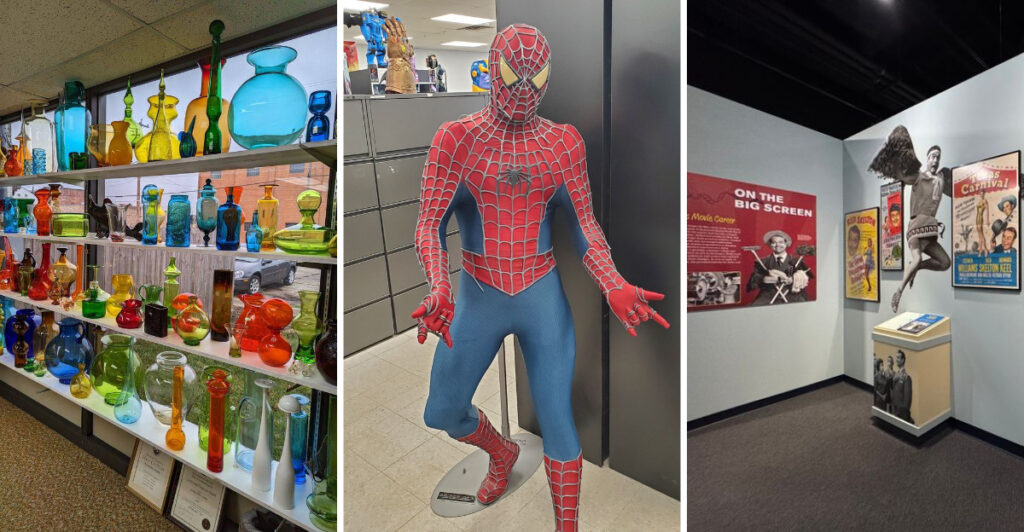
Comic-book history can look a lot bigger in person than it does on a page. At the Hall of Heroes Superhero Museum in Elkhart, visitors step into a world built around superheroes, but the real draw is how much material has been gathered under one roof.
Collections tied to comics, television, movies, toys, and original artwork give the place the energy of a time capsule with capes.
Expect a wide mix of objects rather than a single narrow theme. Memorabilia connected to more than 80 years of superhero history helps show how characters changed across generations, from printed adventures to screen appearances and collectible culture.
That range can make the museum fun for kids who know current heroes and adults who remember older versions from comics or Saturday morning shows.
One smart way to enjoy a visit is to slow down and notice how many forms superhero storytelling can take. A prop, a sketch, a toy package, and a comic cover can all tell different parts of the same character story.
Looking for those links turns the visit into more than a quick walk past display cases. Families may want to ask younger visitors which hero they recognize first, then compare that answer with older items nearby.
That simple game helps make the museum feel less overwhelming, especially because there is so much to see. It also gives everyone a reason to pay attention to details in costume design, logos, and character poses.
Elkhart is not the first place many people expect to find a superhero archive, and that surprise is part of the appeal. For travelers who like pop culture with a strong sense of history, this stop offers color, nostalgia, and plenty to talk about on the drive home.
2. Indiana Medical History Museum (Indianapolis)
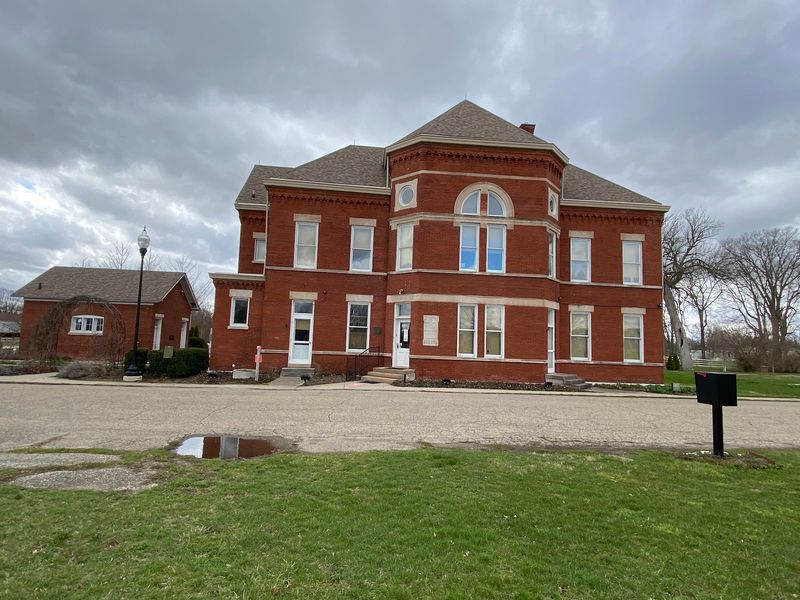
Some museums entertain with bright colors, while others grab attention by showing how people once tried to understand the human body. The Indiana Medical History Museum in Indianapolis belongs to the second group.
Set inside the 1896 Old Pathology Building, it offers a rare look at early scientific medicine and psychiatry through preserved spaces and objects that are both fascinating and serious.
Instead of modern gallery design, the building itself does much of the work. Original laboratories, an autopsy room, anatomical specimens, and period medical equipment help visitors picture a time when doctors were still building the methods that later became standard practice.
Walking through rooms like these can make medical history feel immediate rather than distant. A guided tour appointment is currently required, and that structure may actually improve the experience.
Places with sensitive material often make more sense when a knowledgeable guide provides context, explains older practices, and helps visitors understand why certain tools or rooms mattered. It is wise to check scheduling details before heading out, especially for families or small groups.
Younger visitors may not connect with every display, so a practical approach is to frame the visit around big questions. How did doctors learn from observation?
What did a laboratory look like before modern machines? Why did mental health treatment change over time? Those questions can help turn unfamiliar equipment into part of a clear story.
Because the subject matter includes pathology and anatomy, visitors should prepare for a thoughtful, educational visit rather than a light stop between snacks and shopping.
That said, anyone curious about science, public health, old buildings, or the history behind today’s hospitals will find plenty to study. Indianapolis has many major attractions, but this one offers a very different window into the past.
3. Auburn Cord Duesenberg Automobile Museum (Auburn)
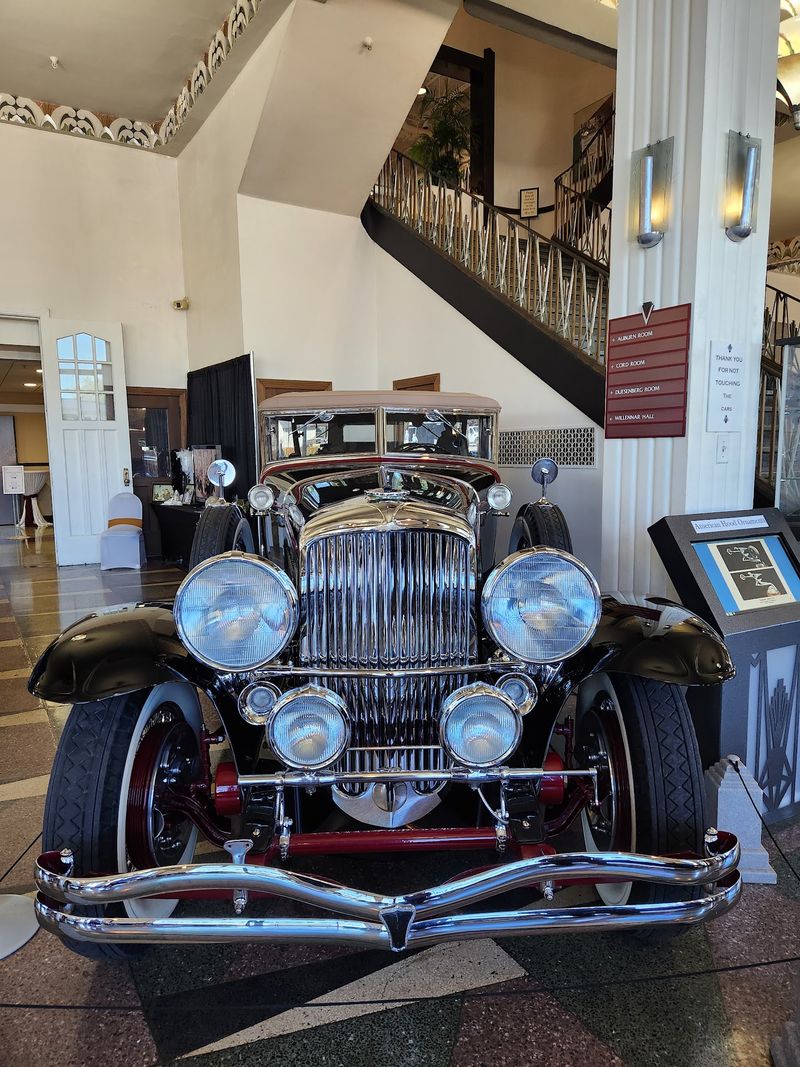
Polished chrome, long hoods, and elegant lines set the mood fast at the Auburn Cord Duesenberg Automobile Museum. Housed in the former Auburn Automobile Company headquarters, this museum connects visitors to a period when car design could be bold, glamorous, and proudly experimental.
The setting matters almost as much as the vehicles, because the building helps place the collection inside its original industry story.
Roughly 120 historic automobiles create plenty to explore, but the museum does more than line up old cars in neat rows.
It highlights design choices, engineering ideas, and the legacy of Auburn, Cord, Duesenberg, and other classic marques that shaped American automotive culture. Even people who cannot name engine parts often notice the craftsmanship right away.
A good visit starts by comparing styles across different models instead of trying to memorize facts. Notice how grilles changed, how dashboards were arranged, or how luxury details signaled status in another era. Those visible differences help explain why classic cars still attract devoted fans today.
Travelers with children can turn the museum into a spotting game. Look for the fanciest hood ornament, the most unusual steering wheel, or the color that seems least likely on a modern car. That keeps younger visitors engaged while adults take in the historical side of the exhibits.
Auburn has long been linked with automotive history, so this museum works especially well as a destination rather than a quick add-on. Give it enough time to appreciate both the cars and the headquarters building itself.
For anyone interested in machines, industrial history, or American style, the experience offers a clear reminder that transportation history is also design history, business history, and cultural history rolled into one impressive stop.
4. James Dean Gallery (Fairmount)
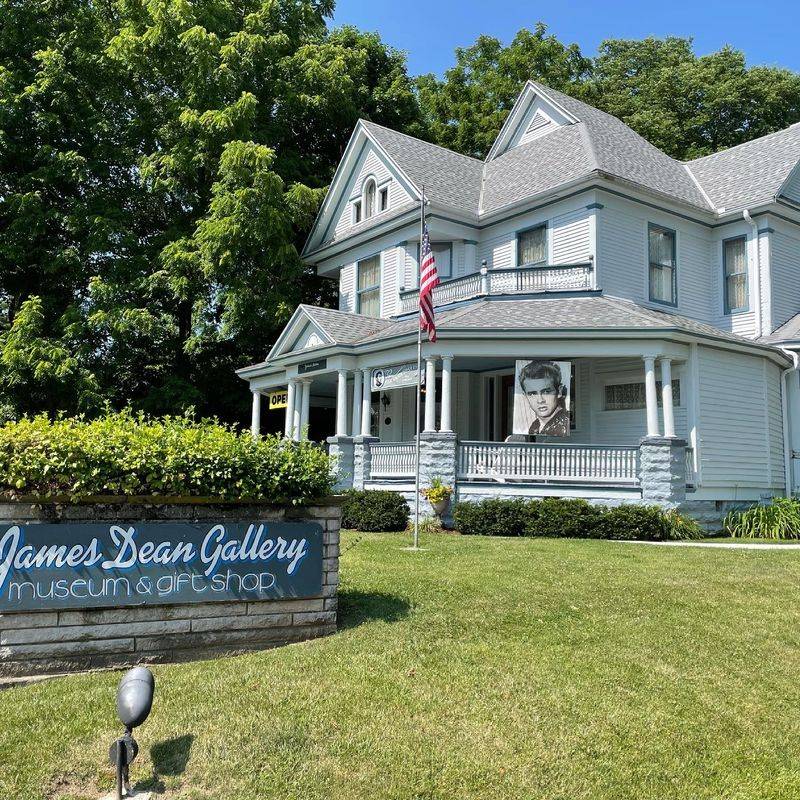
Movie stardom can burn bright and fast, and few names show that better than James Dean. In Fairmount, the James Dean Gallery keeps attention on the Indiana-born actor through photographs, memorabilia, artwork, movie-related items, and personal pieces tied to his life and legacy.
The setting is privately operated, which gives the place a more personal character than a large institutional museum.
Even visitors who only know a little about Dean often recognize his image right away. That familiar face opens the door to a bigger story about fame, youth culture, style, and the way a short career can leave a lasting mark.
Instead of treating him as only a film star, the gallery encourages people to think about why his image still appears on posters, shirts, and pop culture references decades later.
Fairmount adds another useful layer to the visit because it connects the celebrity to a hometown. Seeing material in the place associated with his Indiana roots can make the story more grounded. It shifts attention from legend alone to the person behind it.
For the best experience, spend time with the photographs instead of rushing toward the most famous images. Photos often reveal small details about posture, clothing, expression, and public image that movie clips can miss.
Visitors interested in film history may also enjoy noticing how studios once shaped stars through publicity materials and carefully chosen visuals.
Because the gallery also functions as a gift shop, it can be an easy stop for casual visitors as well as serious fans. A short visit still offers plenty to see, while a longer one rewards people who enjoy old Hollywood history.
Fairmount may be closely linked to Dean in public memory, but many travelers still overlook this museum when planning an Indiana road trip.
5. Dunkirk Glass Museum (Dunkirk)
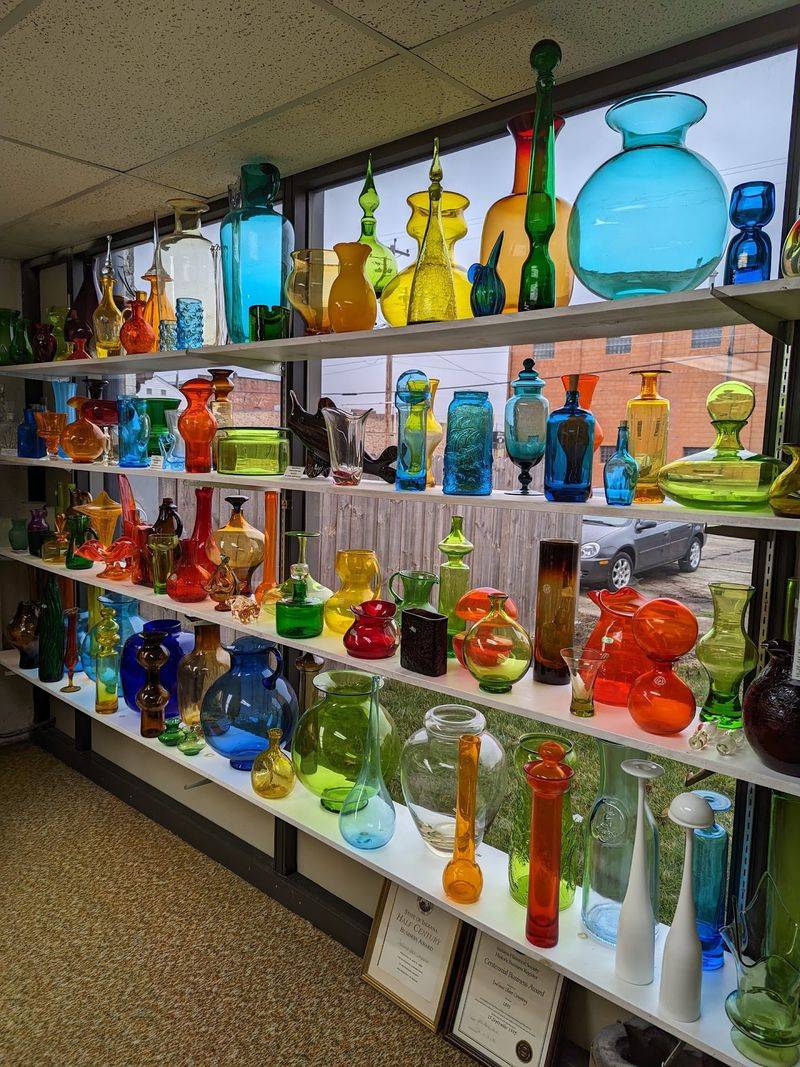
Light bounces around differently when a room is filled with glass, and that visual sparkle is a big part of the Dunkirk Glass Museum’s charm.
Tucked into a city with deep glassmaking roots, the museum preserves local and regional history through a collection that includes more than 20,000 pieces from 110 factories. That scale gives visitors a strong sense of how important glass once was to Dunkirk’s identity.
The variety matters as much as the quantity. Displays may include carnival glass, pressed glass, lead crystal, lamps, windows, tools, and other decorative or practical pieces that show how broad the craft could be.
Instead of thinking of glass as one thing, visitors get to see it as art, industry, tableware, home decor, and skilled labor all at once.
People who are new to glass museums should start by looking at color and texture. Some pieces catch light with rainbow-like shine, while others stand out through patterns, weight, or the precision of their shapes. Paying attention to those differences can make even a large collection easier to appreciate.
There is also a hometown story running through the exhibits. Museums like this help explain how a factory town developed, what kinds of jobs supported families, and why certain products still matter to collectors today. That social history gives the cases extra meaning beyond their beauty.
A practical tip is to take photos only where allowed and then zoom in later on details that may be hard to see during a visit. Glass often rewards a second look.
For travelers interested in decorative arts, manufacturing history, or small-town Indiana stories, Dunkirk offers a museum that is colorful, specific, and full of objects many people would otherwise never think to notice.
6. Eugene V. Debs Museum (Terre Haute)
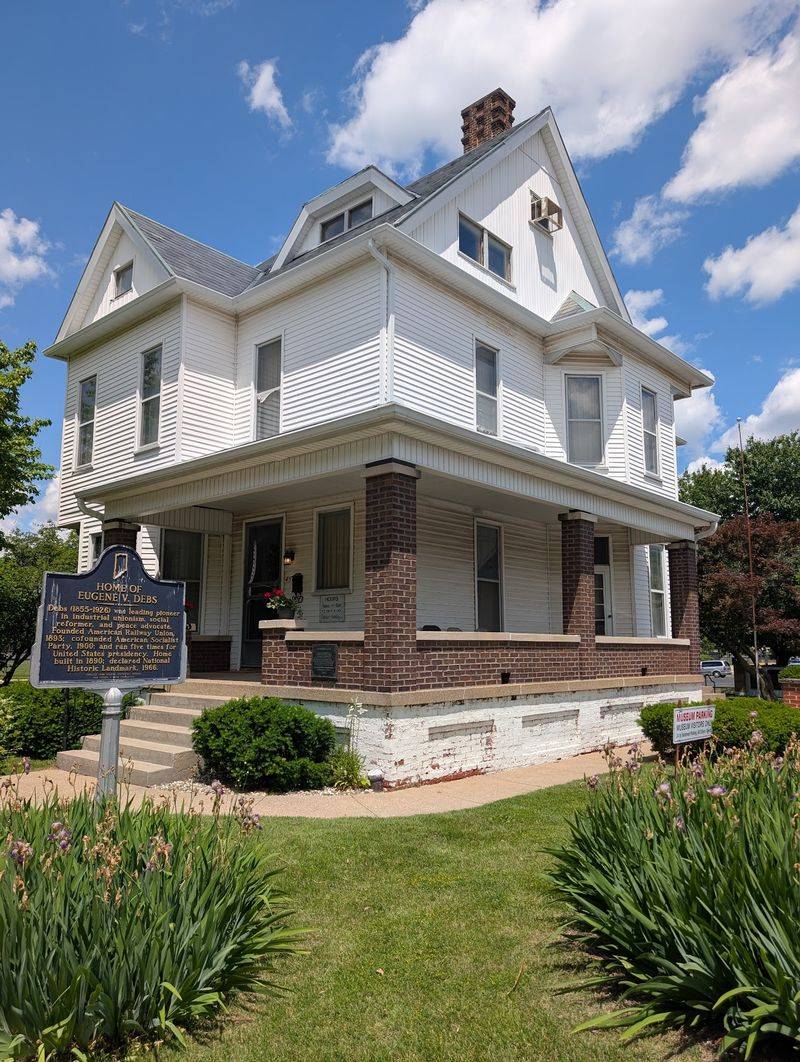
History can become much easier to understand when it is tied to a home instead of a textbook chapter. In Terre Haute, the Eugene V.
Debs Museum preserves the former house of the labor leader and five-time presidential candidate, using personal belongings, period artifacts, and interpretive exhibits to explore his life and role in American labor and political history. The museum is free, which makes it an inviting stop for students, families, and curious travelers.
Debs is one of those figures many people have heard of without fully knowing why he mattered. A house museum helps answer that by bringing together the personal and the political in the same space.
Rooms, objects, and historical context can show how ideas about workers’ rights, public life, and reform were connected to everyday experience.
Visitors do not need to arrive with deep knowledge of labor history to get something useful from the museum. One helpful approach is to focus on a few clear questions while walking through.
What problems were workers facing at the time? How did political movements try to respond? Why would one person become such a major public voice on those issues?
Because the museum is located in Debs’s former home, the setting can make large national topics feel more human in scale.
Instead of seeing history only as speeches and elections, visitors can think about the routines, relationships, and local roots behind public action. That shift often makes the subject easier to remember.
Terre Haute has several sites tied to history and education, but this museum stands out for its focus on labor and politics, subjects not always given much room in vacation plans. Anyone interested in civic life, social change, or the stories behind American reform movements will find a visit here thoughtful, specific, and rewarding.
7. International Monster Truck Museum & Hall of Fame (Butler)
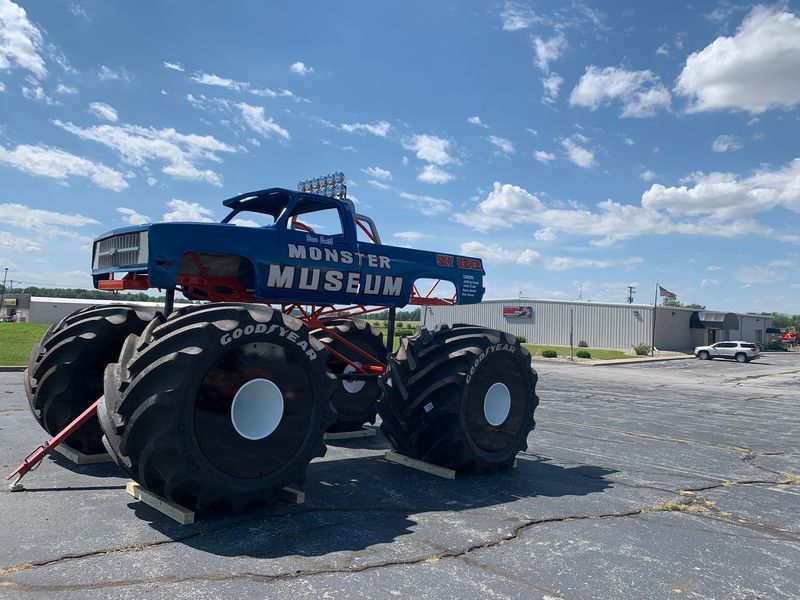
Huge tires have a way of making everything else in the room look small. At the International Monster Truck Museum and Hall of Fame in Butler, that larger-than-life scale is part of the fun, but the museum also tracks the history of a sport that developed its own machines, personalities, and devoted fan base.
It is an unconventional stop, which is exactly why it stands out on an Indiana museum list. The rotating lineup of classic trucks gives repeat visitors a reason to come back, while trophies, fire suits, photographs, videos, and memorabilia help explain the people behind the vehicles.
That mix prevents the museum from being only a visual spectacle. Instead, it shows monster trucks as a full motorsports culture with engineering choices, competition stories, and memorable public events.
Families can get a lot from this museum by treating it as both a sports museum and a design museum. Oversized tires are the most obvious feature, but younger visitors may also notice suspension parts, paint schemes, driver gear, and sponsor graphics.
Those details reveal how trucks are built not just to perform, but to entertain. Another good strategy is to compare older displays with more recent expectations of motorsports.
Media coverage, branding, safety gear, and fan experience have changed over time, and museums like this make those shifts easier to see. A photo or trophy can tell as much about an era as a truck body can.
Butler is not a place many travelers would immediately connect with museum-going, which adds a nice sense of surprise.
People interested in racing, mechanical history, roadside Americana, or unusual collections will likely enjoy the visit most. It is loud in spirit even when the engines are off, and that energy gives the museum a personality all its own.
8. Wilbur Wright Birthplace Museum (Hagerstown Area/Henry County)
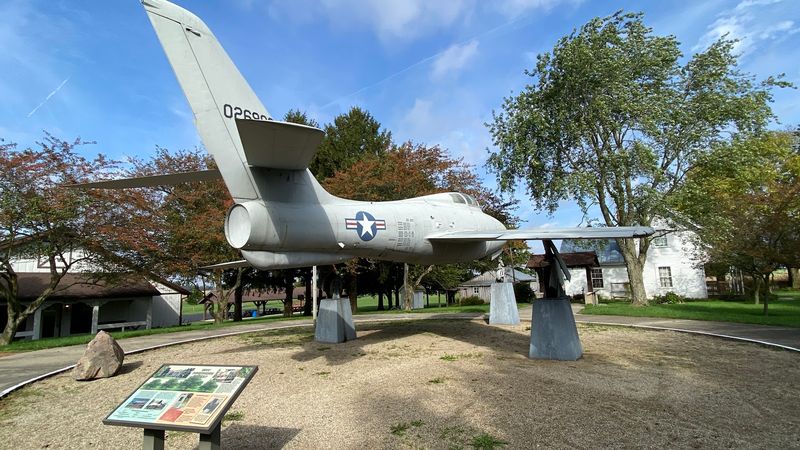
Open land and big skies make a fitting backdrop for a museum connected to early flight. In the Hagerstown area of Henry County, the Wilbur Wright Birthplace Museum celebrates aviation pioneer Wilbur Wright through a rural museum complex that includes a reconstructed birthplace, a Wright Flyer replica, an early research wind tunnel, a recreated bicycle shop and hangar, historic artifacts, and even an F-84 jet.
That combination gives the site a nice sense of range. Visitors can move from the modest setting of Wilbur Wright’s early life to hands-on ideas about experimentation, mechanics, and later aviation history.
It helps show that flight did not appear all at once as a finished miracle. It came from observation, practical skill, testing, and steady problem-solving.
Children often connect quickly with the wind tunnel and bicycle shop because both make invention easier to picture. Instead of thinking only about airplanes in the sky, they can see how tools, trial and error, and workshop thinking contributed to major breakthroughs.
Adults may appreciate that same link between everyday work and world-changing ideas. Because the museum complex includes outdoor elements, checking weather conditions before visiting is a smart move.
Comfortable shoes also help, especially for travelers who want time to move around the grounds instead of rushing from one display to the next. A slower pace usually rewards visitors here.
Henry County is not the first destination most people name when talking about aviation history, yet that is part of what makes this museum memorable. It places an internationally important story in a local landscape.
For road trippers, school-age kids, and anyone curious about invention, the site offers a clear reminder that major advances often begin in quiet places with simple tools and persistent minds.
9. Studebaker National Museum (South Bend)
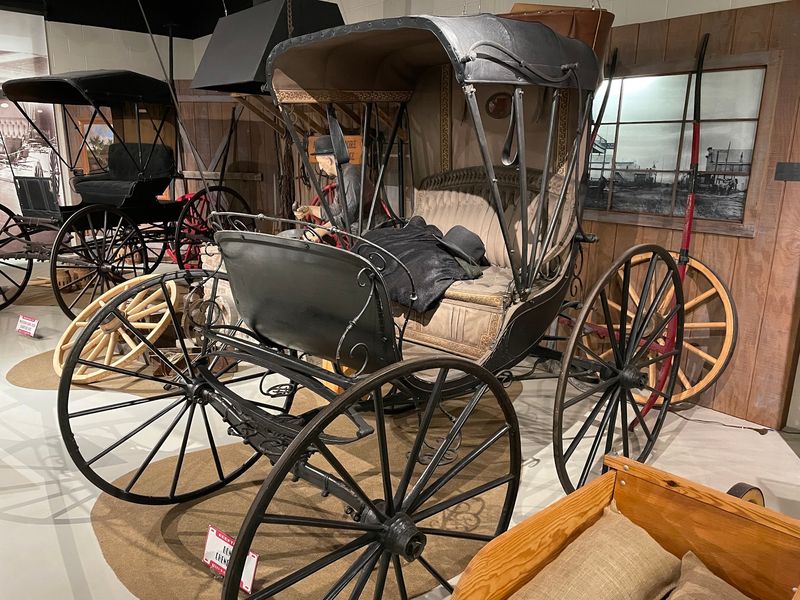
Few museums tell the story of transportation on such a broad scale as the Studebaker National Museum in South Bend. Spread across three levels, it explores Studebaker and the city’s industrial history through automobiles, wagons, military vehicles, archives, and a remarkable collection of presidential carriages.
The result is a museum that can interest car fans, history buffs, and visitors who simply enjoy seeing how technology changes over time.
One reason the museum works so well is that it does not treat transportation as a single chapter. Visitors can trace movement from horse-drawn travel to motor vehicles, while also seeing how manufacturing, business growth, and national events shaped that path.
South Bend’s local story is woven tightly into the displays, giving the museum a strong sense of place. The presidential carriage collection adds another layer that many people do not expect.
Seeing ceremonial vehicles alongside practical transportation highlights how objects can carry political meaning as well as passengers.
The carriage Abraham Lincoln used on the night of his assassination gives the museum one of its most striking historical connections, and it deserves a slower, more thoughtful look.
To make the most of a visit, it helps to move by theme rather than trying to absorb every detail at once. Spend one stretch focusing on design, another on industrial history, and another on presidential or military connections.
That approach keeps the experience organized, especially in a museum with so much material. South Bend has a rich manufacturing past, and this museum presents that legacy in a way that is accessible without being overly simplified. Families, students, and road trippers can all find entry points here.
Whether the draw is classic cars, national history, or the rise of an Indiana company, the museum offers depth without losing its sense of visual impact.
10. Red Skelton Museum of American Comedy (Vincennes)
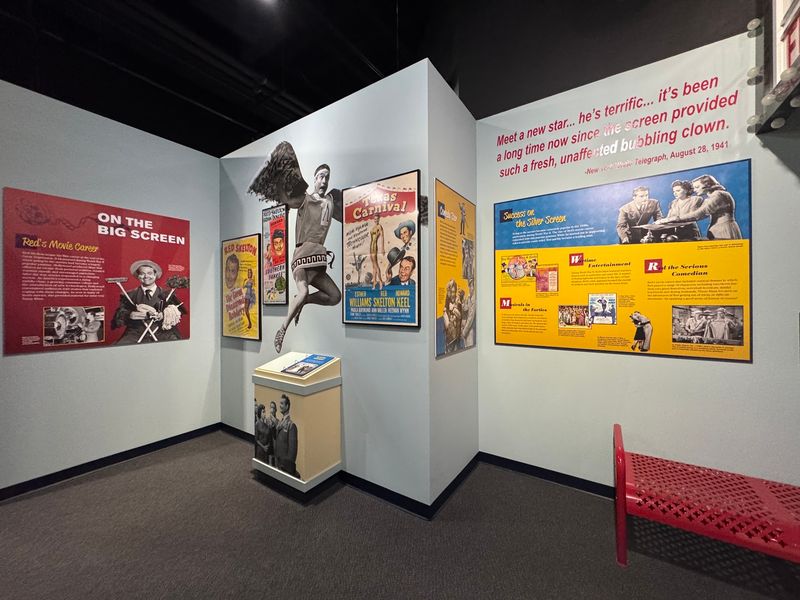
Laughter has a history, and the Red Skelton Museum of American Comedy in Vincennes gives that idea a full museum treatment.
Dedicated to the Vincennes-born entertainer, the museum uses memorabilia, artwork, photographs, audiovisual material, performance spaces, and interactive exhibits to explore both Red Skelton’s career and the wider story of American comedy.
That broad approach helps the museum appeal beyond fans who already know his name well. Skelton worked across radio, film, television, and live performance, so his career offers a useful path through changing entertainment styles.
Visitors can see how comedy moved through different media and how performers adapted their timing, characters, and visual style for each one. That makes the museum especially interesting for students of performance, not only nostalgia seekers.
Interactive elements can be a major plus for families because comedy is easier to understand when it is seen and heard, not just described in labels.
A clip, a costume, or a recreated performance setting can explain timing and character work far better than a paragraph on the wall. Younger visitors often respond quickly when a museum invites participation.
Another smart way to explore the museum is to pay attention to the craft behind being funny. Comedy may look effortless on stage or on television, but strong performers rely on voice, movement, rhythm, writing, and repetition.
Looking for those skills can turn the visit into a lesson in performance as much as entertainment history. Vincennes is already rich in historical sites, so this museum adds a different kind of cultural story to the city. It brings humor into the conversation alongside politics, war, and settlement history.
Travelers wanting a museum with energy, media variety, and a strong connection to an Indiana-born entertainer will likely find this stop lively, memorable, and easy to recommend.
Share this story