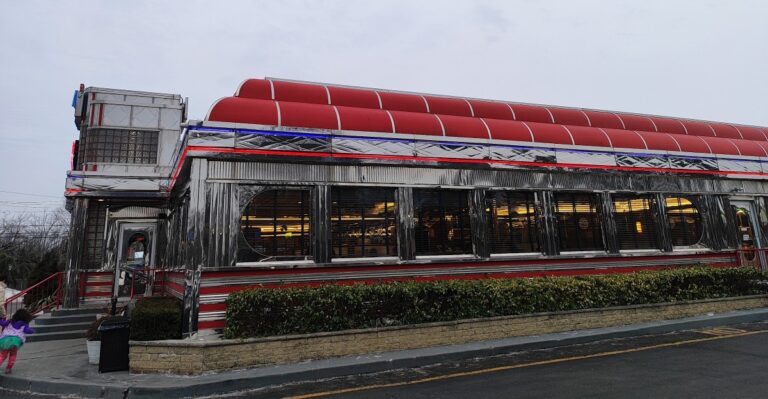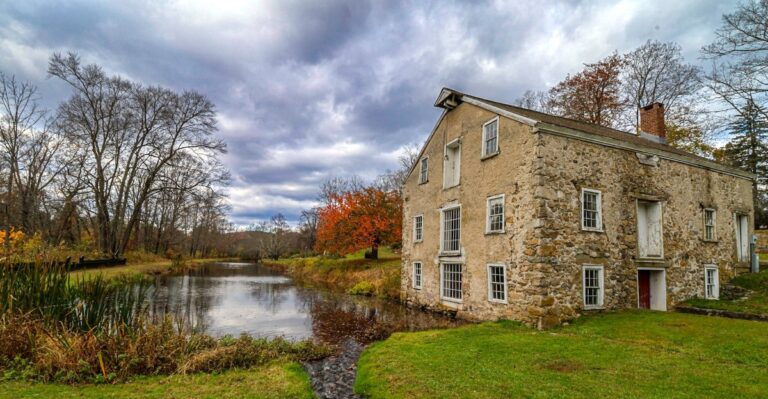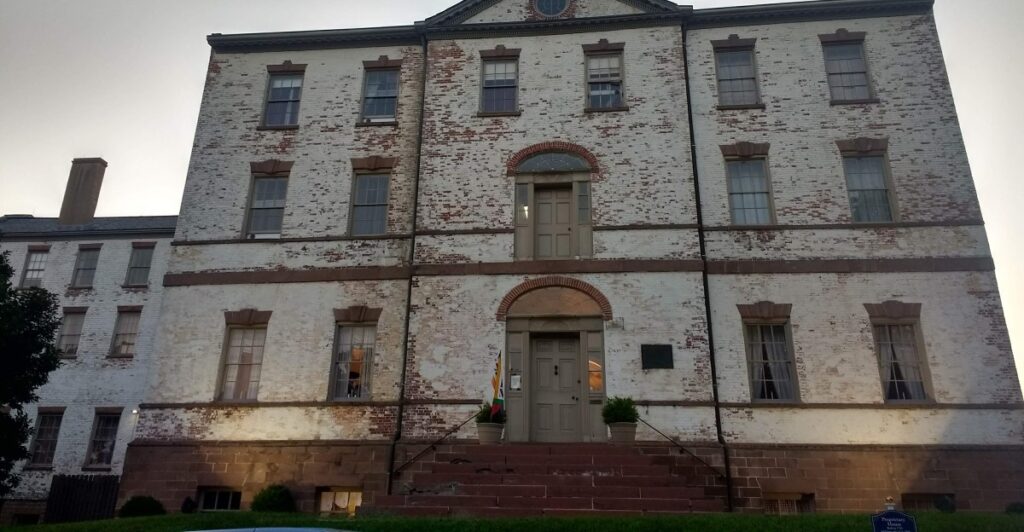
A road called Shades of Death hardly needs help setting the mood. Neither does a former prison where visitors trade stories about a condemned inmate who supposedly never left.
But New Jersey’s unsettling side also turns up somewhere less obvious: inside a handsome Cape May mansion, beside a postcard-perfect mill, and among the quiet buildings of an old ironmaking village. That contrast makes these places interesting.
You can admire the architecture, learn something about local history, and still find yourself giving an empty doorway a second look. The hauntings belong to folklore and reported experiences, rather than established fact, but the settings have plenty of real history behind them.
Some welcome visitors on ordinary museum tours; others offer ghost walks or scheduled paranormal investigations. A few are simply public roads with reputations far stranger than their scenery suggests.
Here are ten places where the stories might follow you home afterward.
1. Burlington County Prison Museum, Mount Holly
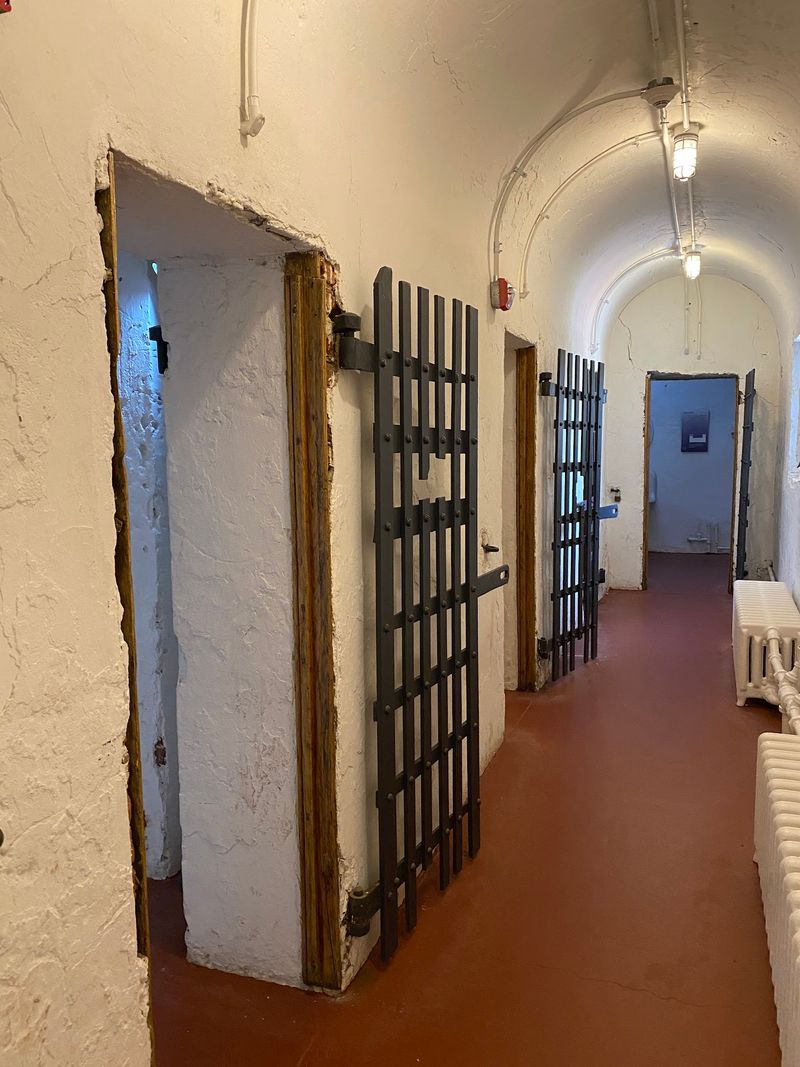
An empty prison cell has a way of making even a chatty group lower its voice. At this Mount Holly landmark, the stone walls and barred doors supply that reaction before anyone mentions a ghost.
Designed by architect Robert Mills and completed in 1811, the prison held inmates until 1965. Today, its exhibits explain the people, routines, and punishments behind more than 150 years of confinement.
The best-known haunting story concerns Joel Clough, a convicted murderer executed in 1833 whose spirit supposedly remains associated with the building. Reports of unexplained sounds, shadowy figures, and moving objects have helped turn the museum into a regular subject of paranormal investigations.
These are accounts and legends, but they gain an unsettling backdrop from the actual cells surrounding you. Take time to read the historical material rather than rushing through in search of something spooky.
Understanding who lived here makes the building more affecting than any whispered ghost story on its own. For a visit with a stronger paranormal focus, the county offers reserved evening investigations on designated nights, along with seasonal programming.
Those require advance planning; a regular museum ticket does not automatically include an after-hours ghost hunt. Located at 128 High Street, the prison also puts you within easy reach of downtown Mount Holly when you’re ready to trade the cellblock for lunch and daylight.
2. Seabrook-Wilson House, Port Monmouth
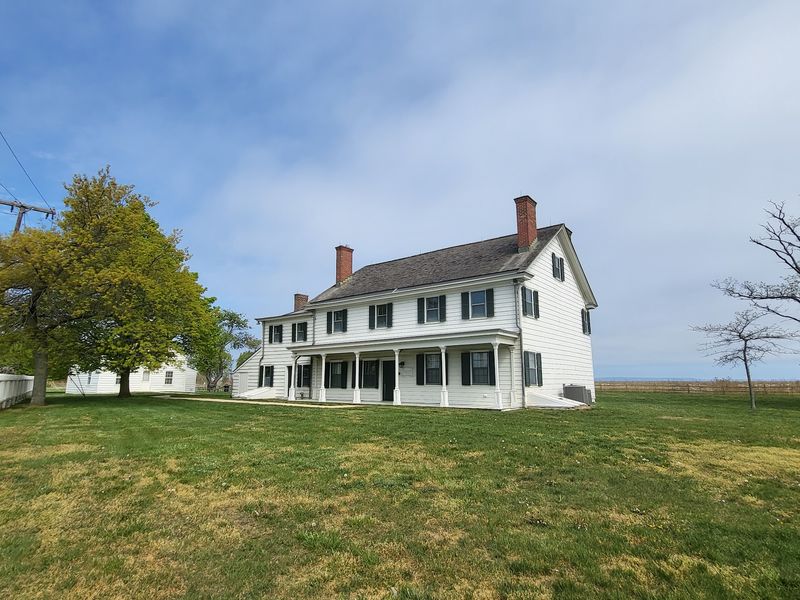
Sandy Hook Bay makes an unexpectedly cheerful backdrop for a house with such a spooky nickname. In Port Monmouth, the white Seabrook-Wilson House stands within Bayshore Waterfront Park, where visitors come for fishing, beach walks, and views across the water.
You could spend an entirely pleasant afternoon here without realizing you were beside the so-called Spy House. Its ghostly reputation grew during its years as a local museum, when stories of spectral residents and mysterious happenings became part of its identity.
The famous Revolutionary War espionage tale needs a little care, though: the claim that patriots used the house as a tavern to spy on British soldiers lacks supporting evidence. That distinction matters because the documented history is interesting enough.
Generations of the Seabrook and Wilson families lived here, and the property later accommodated visitors as an inn and boarding house. Today, the restored building serves as the park’s activity center, with exhibits covering local history and the surrounding coastal environment.
Visit during a scheduled public opening if you want to explore inside, since access is more limited than access to the park itself. Then walk along the bay and look back toward the house.
The appeal lies in that collision between an ordinary waterfront outing and decades of eerie storytelling. The nickname has stuck, even when the historical record tells a quieter story.
3. Clinton Road, West Milford
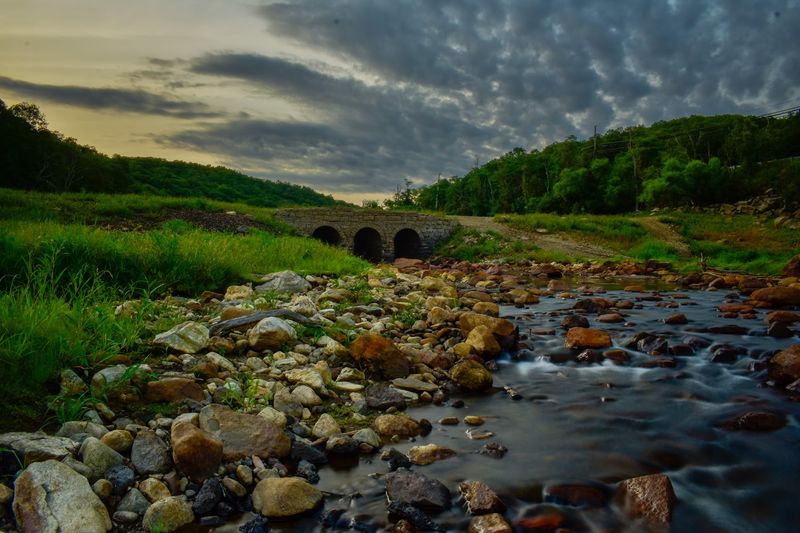
Ten miles of wooded roadway can feel considerably longer once somebody in the passenger seat starts talking about phantom headlights. That is the particular talent of this West Milford road, whose reputation draws on stories of ghostly vehicles, strange figures, and a boy supposedly lingering near a bridge over Clinton Brook.
In one familiar version of the boy’s legend, coins thrown into the water mysteriously come back. Other versions change the details, which is typical of a story passed between generations of curious drivers.
The surroundings do much of the work: bends in the pavement, stretches of undeveloped woodland, and views near Clinton Reservoir create a sense of separation from the busy North Jersey roads you probably used to get here. Even in daylight, it is easy to see why the setting became fertile ground for local folklore.
Treat the trip as a scenic drive with a strange backstory. The roadway carries traffic, and bridges are poor places to stop for an impromptu experiment with pocket change.
Nearby woods and ruins also should not be mistaken for unrestricted visitor attractions. A daytime drive lets you appreciate the landscape while keeping the legends firmly in the conversation.
You don’t need to arrive at midnight to understand the appeal. Tell the ghost-boy story before a wooded bend, and watch how quickly everyone becomes interested in the road ahead. www.newjerseyhauntedhouses.com
4. Shades of Death Road, Warren County
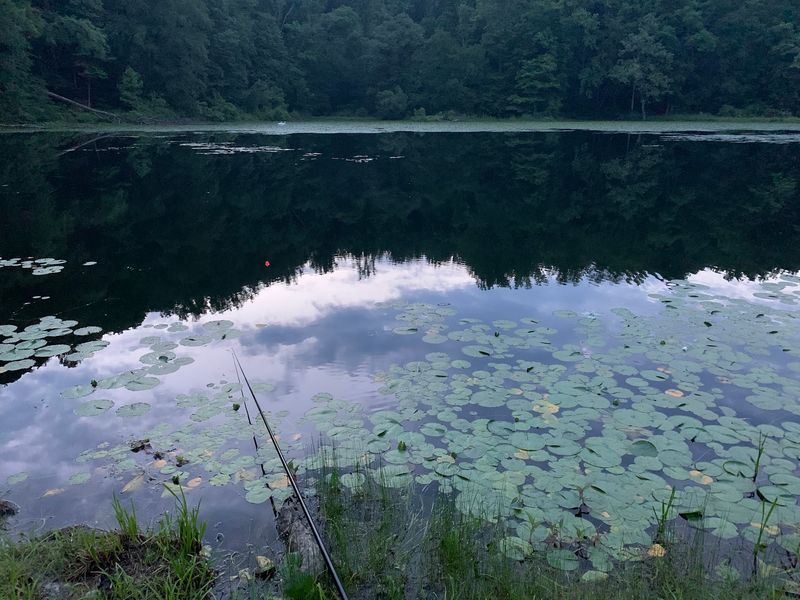
The street sign delivers the first chill, and the scenery immediately complicates it. This roughly seven-mile Warren County road passes through a landscape that can look downright lovely, with wooded slopes and rural views replacing the horror-movie setting its name promises.
Then you hear the stories. Local lore includes highwaymen, violent deaths, and apparitions, while competing explanations connect the ominous name to dense shade or historical disease outbreaks.
There is no single tidy account that settles every version. Nearby Ghost Lake adds another layer, especially when mist hangs over the water and makes an otherwise ordinary landscape look temporarily unfamiliar.
The lake is associated with Jenny Jump State Forest, giving visitors a legitimate outdoor destination alongside the road’s reputation. Build your visit around daylight, a walk where permitted, and an appreciation for how a landscape acquires its stories.
The contrast is the attraction: a pretty country road carrying a name that sounds like somebody lost a very serious argument with the naming committee. It is also worth remembering that people live along this route.
Use designated places to park, leave the signs alone, and enjoy the setting without treating someone’s driveway as part of the adventure. You may leave with a photograph of peaceful water and autumn trees.
Once you tell friends where you took it, though, the picture will probably get a second look.
5. Emlen Physick Estate, Cape May
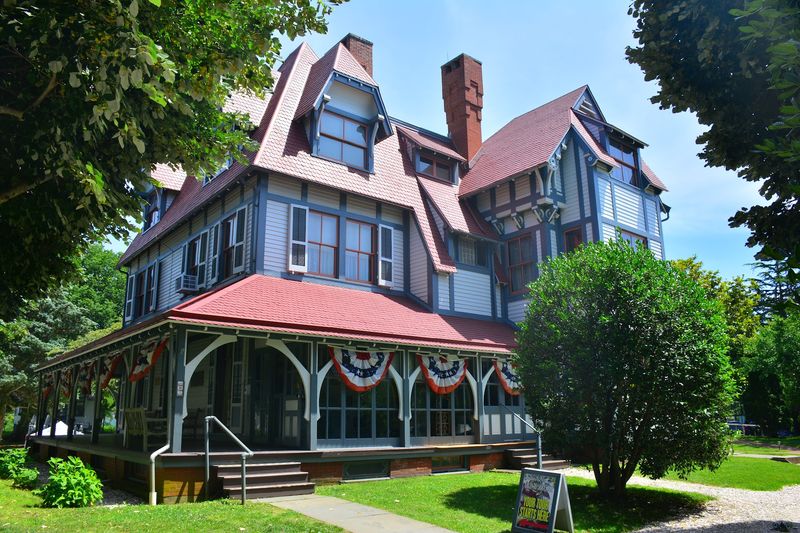
Eighteen rooms, oversized chimneys, and an angular Victorian exterior give this Cape May mansion plenty of personality before the paranormal stories enter the conversation. Architect Frank Furness designed the house, completed in 1879, and its distinctive Stick Style appearance stands apart from the frillier seaside homes many visitors expect.
Inside, guided tours introduce the Physick household and the daily routines of a prosperous Victorian family. That domestic detail makes the haunting reputation more personal: these were rooms where people ate, entertained, worked, and slept.
The estate’s paranormal programming explores reported voices and images that staff interpret as possible evidence of unexplained presences. On the Voices From Beyond tour, visitors hear recordings and see photographs while learning about methods used in paranormal research.
You are invited to draw your own conclusions, which leaves room for the curious skeptic as well as the committed ghost enthusiast. Choose your tour carefully because the standard house tour and the paranormal experience have different focuses.
Both give you something more substantial than a quick glance through a spooky window. The property at 1048 Washington Street also has gardens, a carriage house, and free on-site parking, making it an easy addition to a Cape May visit.
Arrive with time to study the exterior. Those projecting bays and dramatic rooflines deserve attention, even if the only voice you hear inside belongs to your guide.
6. Proprietary House, Perth Amboy
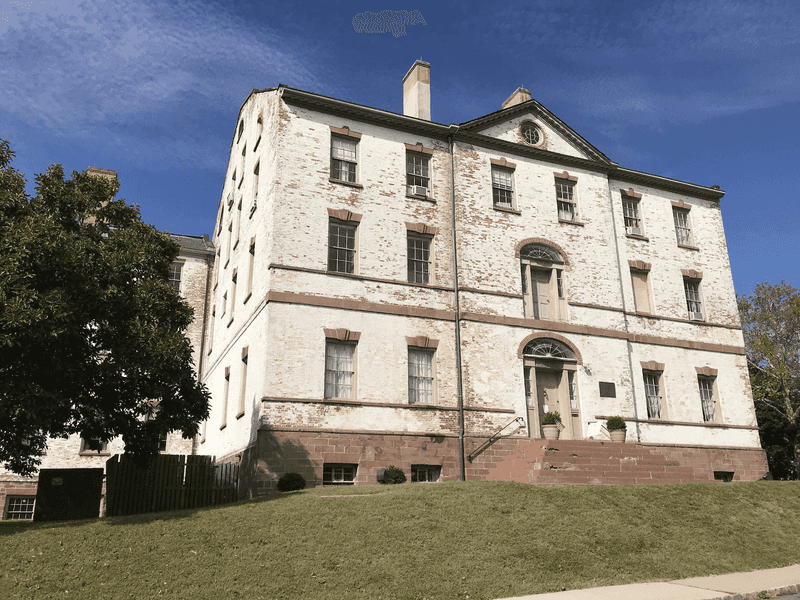
Benjamin Franklin’s son chose the British crown, and the consequences reached right into this Perth Amboy mansion. William Franklin, New Jersey’s last royal governor, lived here before being placed under house arrest in 1776.
Completed in 1764, the building survives as the only remaining official royal governor’s mansion from the original thirteen colonies. That alone makes it worth a visit, but its long history has also accumulated a collection of ghost stories.
Reported apparitions include a boy dressed in colonial clothing and a woman in white, while other accounts describe unexplained footsteps and sudden cold spots. None establishes who, if anyone, is haunting the place.
They do give the formal rooms and passageways an extra layer of intrigue. Over the years, the property served several purposes, including periods as a hotel and boarding house, so its history stretches well beyond one governor’s dramatic departure.
A guided visit helps connect those chapters instead of reducing the building to a single Revolutionary War scene. The museum also hosts ghost-themed events and storytelling programs, with offerings that vary through the year.
Located at 149 Kearny Avenue, it is a manageable stop for anyone exploring Perth Amboy’s historic waterfront area. Start with the real family conflict and political upheaval.
By the time the conversation turns to an unfamiliar child in the hallway, the house has already earned your full attention.
7. Red Mill Museum Village, Clinton
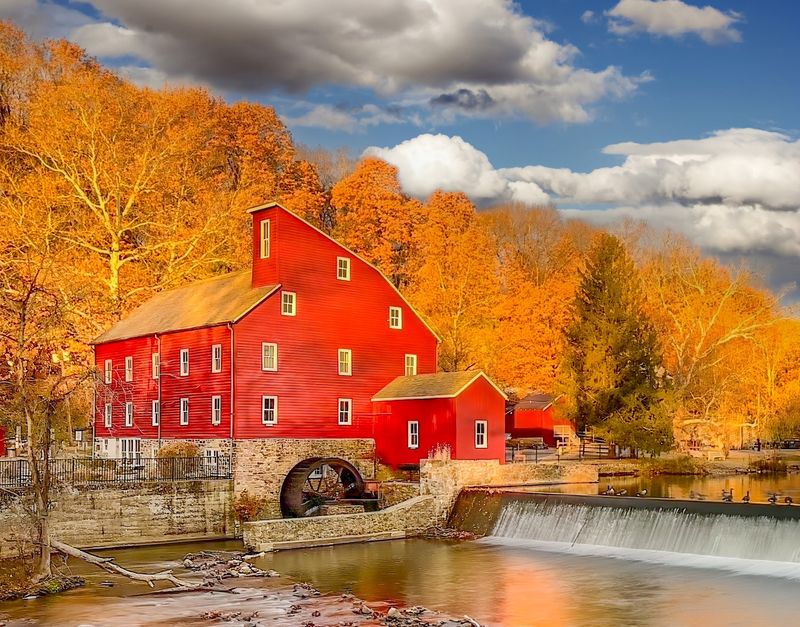
That red building beside the South Branch of the Raritan River looks ready for a calendar cover. In Clinton, the mill’s cheerful color and waterside setting make it one of those landmarks people photograph before deciding what to do next.
Its haunting reputation gives you a reason to linger. Stories associated with the property include spectral figures and unexplained activity, and the site has attracted paranormal investigators.
Keep those reports separate from the seasonal Haunted Red Mill attraction, which deliberately supplies theatrical scares as a museum fundraiser. The historic complex has plenty to explore on its own: the mill dates to around 1810, and the ten-acre property includes quarry buildings, a schoolhouse, a log cabin, and a blacksmith shop.
Those structures help explain how work and community life developed around the site. During an ordinary museum visit, the contrast between the beautiful exterior and the machinery and labor represented inside gives the ghost stories a more grounded setting.
If you want the Halloween experience, book that specifically and check the event’s age guidance. October programming can also replace regular museum access, so confirm the schedule before making the drive.
The address is 56 Main Street, close enough to Clinton’s shops and restaurants to build an afternoon around it. Take the familiar riverfront photo, certainly. Then allow time for the less polished history behind the view.
8. Historic Village at Allaire, Wall Township
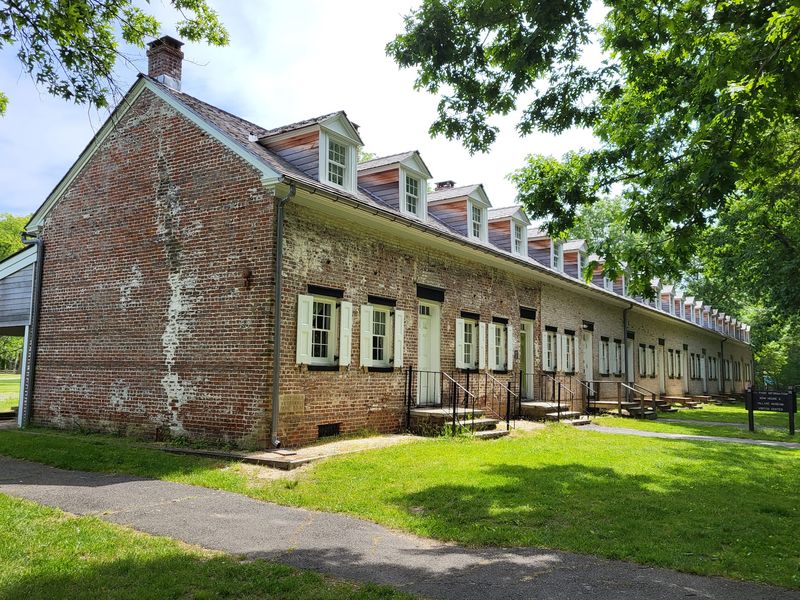
A blacksmith’s tools and an old furnace tell you what once kept this Wall Township community busy. James P.
Allaire purchased the property in 1822 and developed the Howell Works into an ironmaking village whose products supported his steam-engine business in New York. At its height, the community had around 400 residents.
Today, thirteen original buildings help visitors picture that working world, with interpreters and artisans bringing parts of it back into motion. The ghost stories often focus on Hal Allaire, James’s son, whose supposed presence has been linked to objects moving and other mischievous happenings.
One detail deserves correcting whenever the tale comes up: despite versions that describe a child ghost, Hal lived into adulthood. That small correction makes the person behind the story more interesting than the simplified legend.
For the haunting angle, look for scheduled ghost tours, which explore stories associated with the village and may include areas outside an ordinary visit. These are guided historical walks rather than an automatic invitation to conduct a paranormal investigation.
A daytime trip offers a different pleasure: watching a preserved industrial community function as a living history museum. Plan enough time to notice the relationship between homes, workshops, and communal spaces.
The village’s busiest days ended long ago, but the buildings still make the lives of its residents easy to imagine. Occasionally, the folklore suggests a few never quite moved out.
9. Batsto Village, Washington Township
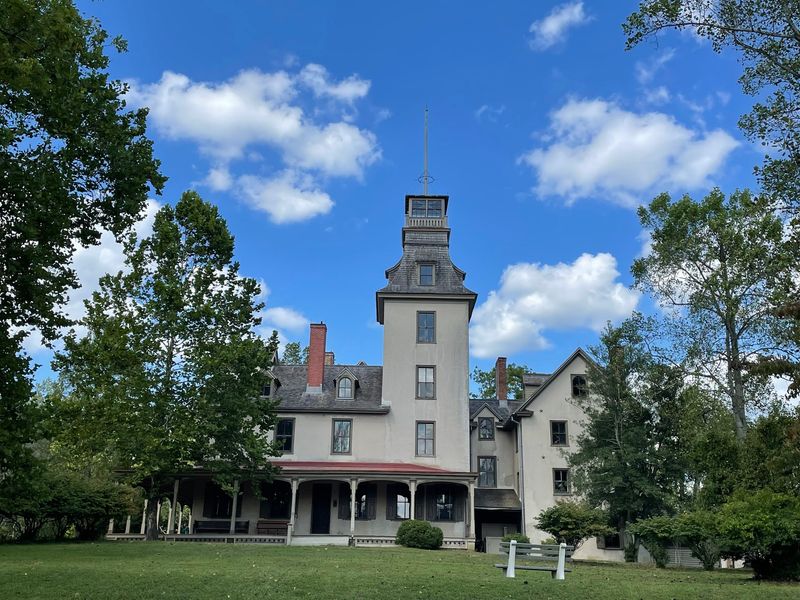
The mansion gets your attention, but the smaller buildings make this Pine Barrens village feel like a place people might return to after work. Workers’ houses, industrial structures, and community buildings spread around a settlement whose ironmaking roots reach back to 1766.
Charles Read established the ironworks here, and the village later supplied materials to the Continental Army. Its preserved landscape now sits within Wharton State Forest in Washington Township, Burlington County, despite the Hammonton address commonly used for visits.
Ghost stories describe figures roaming the grounds, adding another layer to a place already steeped in Pinelands folklore. The most rewarding approach is to learn the village’s actual history first.
The 32-room mansion, once home to generations of ironmasters, provides a striking contrast with the more modest structures nearby. Together, they reveal a community organized around demanding work and considerable differences in wealth.
When evening Folklore Lantern Tours are offered, they provide a guided way to experience the village’s stories after dark. Reserve for one of those rather than assuming ordinary daytime access extends into the evening.
Comfortable shoes are useful here; this is a spread-out historic landscape rather than a single building you can finish in ten minutes. Give yourself room to wander along the designated routes and study the details.
The spooky appeal comes partly from recognizing the shape of a functioning village while knowing its working days are over.
10. Absecon Lighthouse, Atlantic City
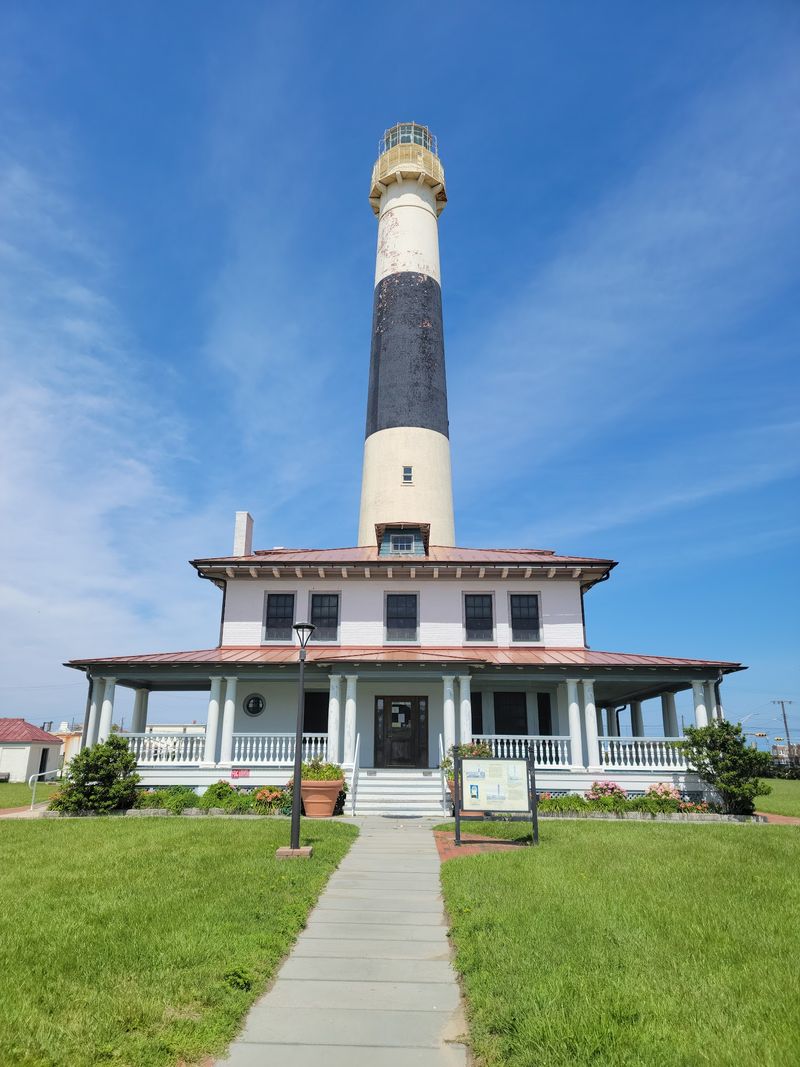
Two hundred twenty-eight steps give you plenty of time to think about whatever story you heard downstairs. At Atlantic City’s tallest lighthouse, the climb is a major part of the experience, winding upward toward views of the surrounding city and coast.
The 171-foot tower was first lit in 1857, and its original first-order Fresnel lens remains an impressive piece of maritime engineering. Before the casinos and boardwalk entertainment became the city’s defining images, guiding ships past dangerous waters was serious business.
That maritime background gives the lighthouse’s ghost stories a setting with real stakes. Accounts of unexplained presences have helped establish its paranormal reputation, and scheduled haunted walks and investigations let interested visitors explore that side of the property.
Those experiences are separate from a standard climb, so reserve the appropriate event if ghost hunting is your main reason for coming. During a regular visit, leave time for the keeper’s-house exhibits, which introduce the lighthouse’s history and restoration.
They give the tower a human story beyond its height and step count. You’ll find the property at 31 South Rhode Island Avenue, offering a change of pace from Atlantic City’s busier attractions.
Take the staircase steadily and enjoy the engineering along the way. Whether the chill comes from a ghost story or simply the thought of climbing all those stairs, this landmark makes a memorable final stop.
Share this story