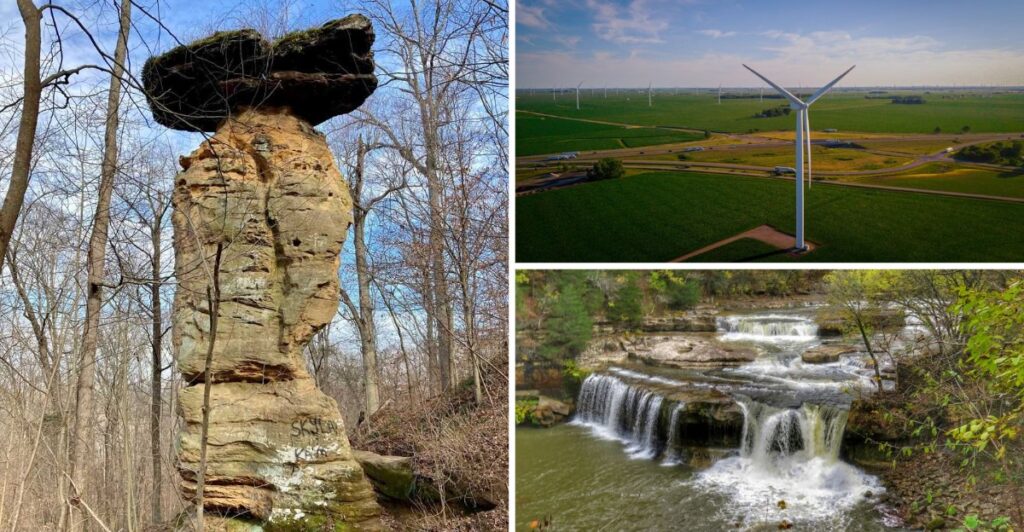
Indiana is not usually the first place that comes to mind when someone mentions otherworldly landscapes—and that makes these places even more surprising. Giant dunes rise beside Lake Michigan, underground caves disappear beneath the surface, waterfalls tumble through rocky gorges, and ancient fossils cover stretches of exposed riverbed.
Together, they reveal a wilder side of the state that looks remarkably different from its familiar farms and small towns. No spaceship or cross-country flight is necessary to find scenery that feels completely removed from the everyday. These 10 stunning Indiana spots might have you wondering whether you somehow crossed a state line—or landed on another planet.
1. Indiana Dunes National Park (Porter)
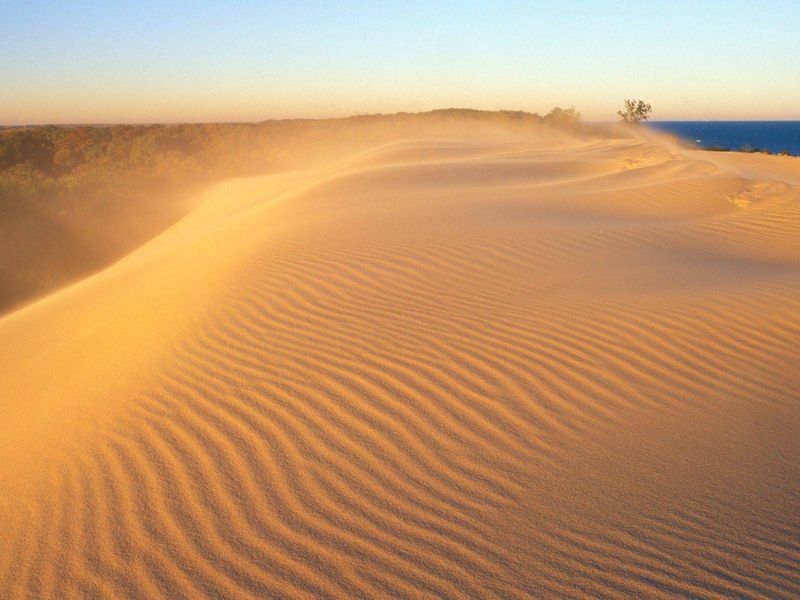
Lake Michigan changes the whole mood here. One minute the view looks like a beach vacation, and the next minute the land turns into steep dunes, quiet woods, or marshy wetlands filled with birds and tall grasses.
That mix gives Indiana Dunes National Park a wild look that seems far removed from the usual picture of northern Indiana.
The sand hills are the stars of the show, especially when wind carves ripples across their slopes. Climbing them can be tiring, but the payoff is huge, with broad views of water, shoreline, and layers of changing plant life.
On clear days, the open blue horizon makes the lake look more like an ocean than an inland shore. Trails thread through several different settings, so a visit rarely looks the same from start to finish.
One path might lead past beach grass and loose sand, while another moves through shady forest or prairie filled with summer color. That variety is part of the fun, because the park never settles into one single look.
Photographers usually have the easiest time early or late in the day, when the light gives the dunes more shape and contrast. Families often prefer shorter walks near the shoreline, while hikers who want bigger scenery can pick trails with overlooks and dune climbs.
Comfortable shoes help a lot, since sand can make even short distances feel longer. Weather changes the scene quickly here.
Strong wind, rolling clouds, and choppy water can make the coast look dramatic, while calm conditions bring softer colors and wide reflections. Either way, the park has a scale that surprises first-time visitors.
Pack water, allow extra time for walking in sand, and do not rush from one stop to the next. The most striking part of Indiana Dunes is how many landscapes fit together in one place, each one adding another strange, beautiful layer.
2. Marengo Cave U.S. National Landmark (Marengo)
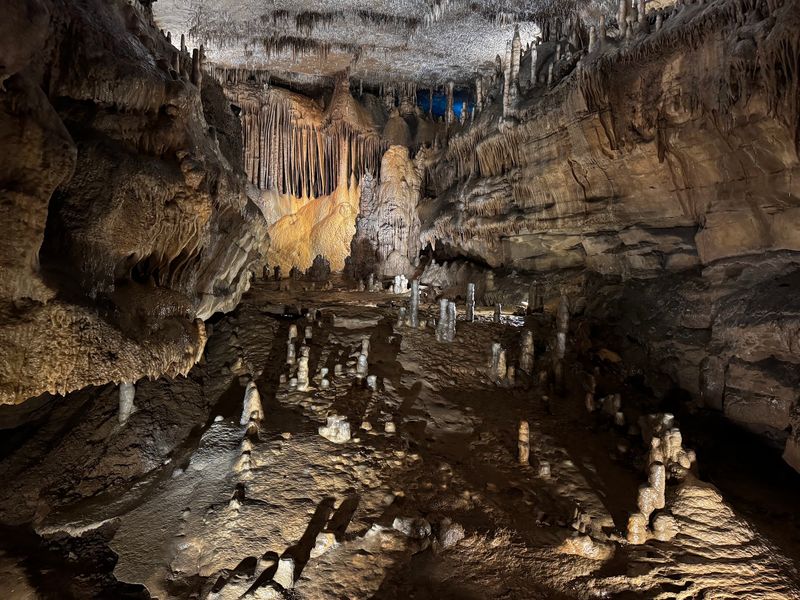
Sunlight disappears fast once the cave tour begins. Down below, the world shifts into stone drips, narrow passages, and chamber walls covered in patterns that took ages to form. Marengo Cave has the kind of underground scenery that makes familiar surface life seem very far away.
Stalactites hang from the ceiling like rows of mineral icicles, while stalagmites rise from the ground in thick, uneven shapes. Flowstone adds another layer, spreading across rock like frozen liquid.
When tour lights hit those surfaces, the cave takes on textures and shadows that look almost designed for a science fiction movie.
Guided walking tours make the experience easier to understand because cave spaces can feel confusing at first. Different chambers show off different features, and each turn reveals a new shape or a new ceiling height.
Some areas seem tight and quiet, while others open into much larger rooms that feel surprisingly grand. The temperature stays cool, which can be a relief in hot weather. A light jacket is smart even in summer, and shoes with grip are helpful because cave walkways can be damp.
Visitors who bring patience usually get more out of the tour, since the details become more interesting the longer they are noticed.
Kids often like trying to spot shapes in the stone, and adults tend to notice how long natural change must have taken to build such a place. That slow work of water and minerals is part of the cave’s power. Nothing looks rushed, smooth, or ordinary.
Outside, southern Indiana returns with trees, roads, and daylight, but the contrast makes the cave stand out even more.
Marengo Cave works so well on this list because it trades open skies for underground drama, replacing familiar scenery with a rocky maze full of strange forms, cool air, and a deep sense of distance from everyday life above.
3. Cataract Falls State Recreation Area (Spencer)
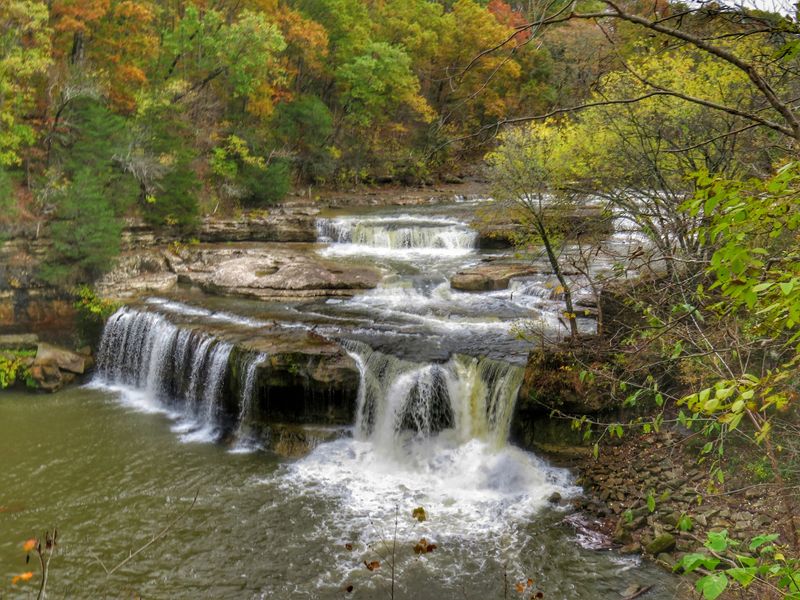
Water does the hard work here, and it shows. Cataract Falls spreads across wide limestone shelves instead of dropping in one narrow ribbon, so the scene looks rougher, broader, and more dramatic than many people expect in Indiana.
After rain or during stronger flow, the rocky steps and rushing water create a landscape with serious presence. The falls move over layered stone in a way that gives the whole area texture from top to bottom. Some sections churn white and fast, while others slide over rock in thinner sheets.
That contrast makes the water look busy and powerful at the same time. Forest wraps around the cascades, which adds a darker backdrop and lets the pale water stand out even more.
In warmer months, leaves frame the scene with thick green color. During cooler seasons, bare branches and gray skies can make the ledges look even more rugged.
One of the best things about this stop is that the reward comes quickly. Visitors do not need a huge hike to enjoy the main views, which makes Cataract Falls a good pick for families, casual explorers, and anyone who wants impressive scenery without a long trek.
A camera or phone is useful here because the patterns in the water change second by second. Paths and overlooks make it easier to view the falls from different angles, and that matters. From one side, the ledges look broad and layered.
From another, the channels between rocks become more noticeable, showing how the water splits, rushes, and reconnects.
Good shoes are a smart call, especially when the ground is damp. The area is best enjoyed slowly, with time to watch the movement instead of snapping one quick photo and leaving.
Cataract Falls stands out because it turns stone, water, and woodland into a scene that looks older, wilder, and more remote than many travelers would guess from the map alone.
4. Brown County State Park (Nashville)
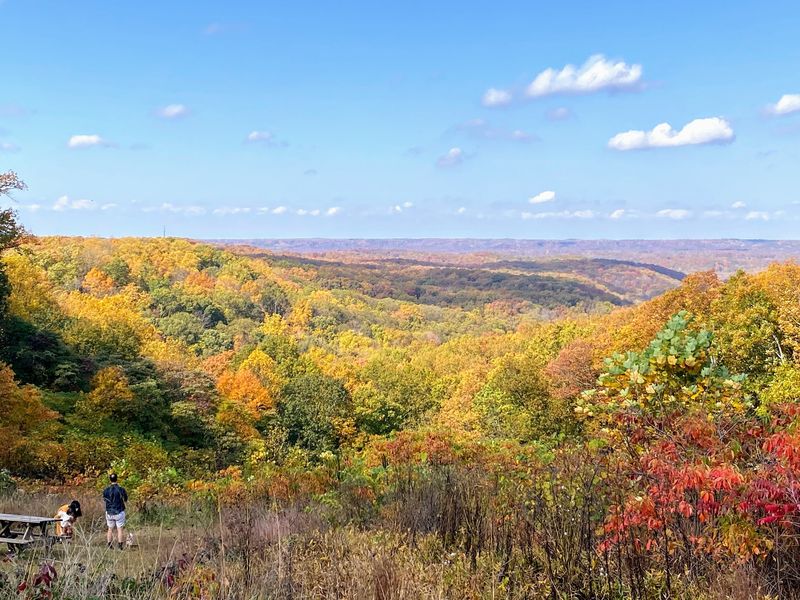
Wide views steal the show in Brown County State Park. Instead of flat fields or short tree lines, the land rolls outward in long ridges covered with forest, creating layers that seem to keep going.
Seen from a high overlook, those hills can look more like a painted backdrop than a typical Indiana scene. Season matters here, and each one changes the park’s personality. Fall gets the most attention for obvious reasons, with red, orange, and gold spreading across the hills in stacked bands of color.
Summer is dense and green, winter exposes the shape of the ridges, and spring adds fresh leaves that soften every view.
Because the park is large, visitors can choose their own style of adventure. Some come for scenic drives and easy overlooks, while others head onto trails to catch the hills from quieter angles. Even a short walk can lead to a view that feels far bigger than expected.
Photographs usually work best when there is a little haze or angled light, since that helps separate one ridge from the next. Midday can flatten the landscape, but morning and late afternoon often bring more depth. During peak fall color, arriving early is a smart move because popular spots fill up fast.
The park also rewards patience. A windy day can send waves through the treetops, and moving clouds can shift the color of the hills every few minutes. That constant change keeps the scenery lively rather than static.
Comfortable shoes, water, and a paper map or charged phone help, especially for longer exploring. Brown County earns its place on this list through scale more than strangeness underground or along water.
The repeated ridges, huge sky, and seasonal color combine into a view that feels almost endless, giving central southern Indiana a look that can surprise even people who have lived in the state for years and thought they already knew it well.
5. Indianapolis Public Library – Central Library (Indianapolis)
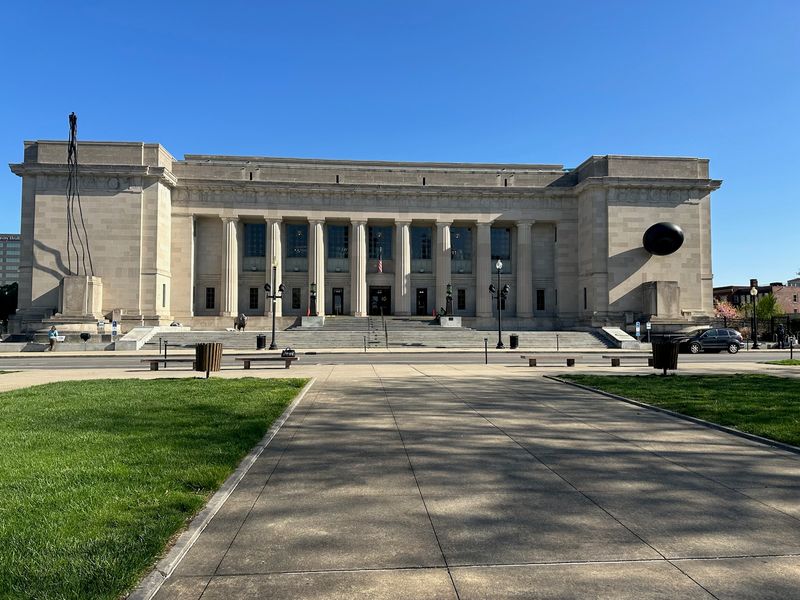
Not every otherworldly stop has to be wild nature. In downtown Indianapolis, the Central Library stands out through scale, symmetry, and a dramatic blend of old and new architecture.
Massive columns and carved stone give the exterior a serious, almost movie-set presence before anyone even steps inside.
The historic building has a formal look that feels bigger than everyday city life. Straight lines, tall windows, and broad stairs create the kind of entrance that makes people slow down for a second. Against the motion of traffic and sidewalks, the library can look almost frozen in time.
Then the indoor contrast changes the experience completely. Grand historic rooms bring warmth, detail, and a sense of age, while the modern atrium opens up with glass, light, and cleaner lines.
That meeting point between classic stone architecture and a brighter modern addition gives the space an unusual energy.
Visitors do not need to be architecture experts to enjoy it. Looking up is half the fun, whether that means noticing high ceilings, long sightlines, or the way daylight moves through open interior spaces. For photos, wide angles work best because the building’s power comes from size and proportion.
This is also one of the easiest locations on the list to pair with other city stops. A visit can fit into a downtown afternoon without special gear, long hikes, or weather planning.
Even so, spending a little extra time helps, since quick walk-throughs can miss the details that make the building memorable.
Quiet behavior is part of the setting, and that actually adds to the effect. The library does not rely on noise, motion, or dramatic terrain.
Instead, it uses stone, space, and contrast to create a place that feels slightly removed from the ordinary rhythm outside. Among Indiana’s surprising sights, Central Library proves that another-world quality can come from design as much as dunes, cliffs, waterfalls, or caves.
6. Meadow Lake Wind Farm (Chalmers)
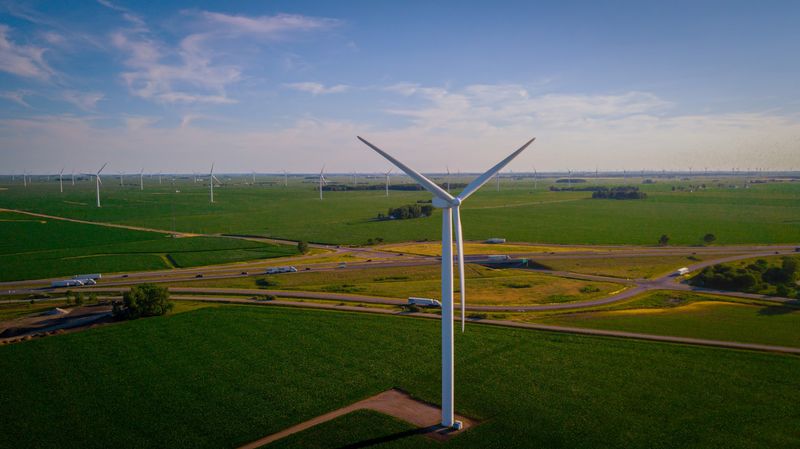
Flat farmland gets a science fiction twist at Meadow Lake Wind Farm. Across the horizon, huge white turbines rise from the fields in repeating lines, turning ordinary open country into a scene that looks engineered for another era.
On the right day, the scale alone is enough to stop a car and grab attention. The visual effect comes from repetition and contrast. Cornfields, roads, and wide sky are familiar Midwestern elements, but the towering turbine blades change the whole picture.
Instead of barns or grain bins leading the eye, giant structures march into the distance with a clean, almost futuristic rhythm.
Clouds make a big difference here. A plain blue sky can look crisp and simple, while dark storm clouds or glowing sunset color can make the turbines appear even more dramatic.
Early evening often gives the strongest photos because the white towers catch warm light so well. There is also a strange calm to the landscape.
Even when the blades are moving, the farm can seem quiet and spacious because the land around it stays so open. That combination of motion above and stillness below gives the area a look that feels unusual for rural Indiana.
Roadside viewing is often the easiest way to take it in, and patience helps more than rushing. Seeing one turbine up close is impressive, but seeing many in sequence is where the place really becomes memorable. The farther the rows stretch, the more surreal the geometry becomes.
Visitors should stay aware of traffic and respect private property, since this is a working landscape rather than a formal park setting. Meadow Lake earns a spot on this list by turning flat ground and open sky into a giant pattern of rotating shapes.
It is one of those places where modern technology changes the mood of the countryside so completely that the view can seem less like Indiana and more like a scene from a distant planet with excellent road access.
7. Jug Rock Nature Preserve (Shoals)
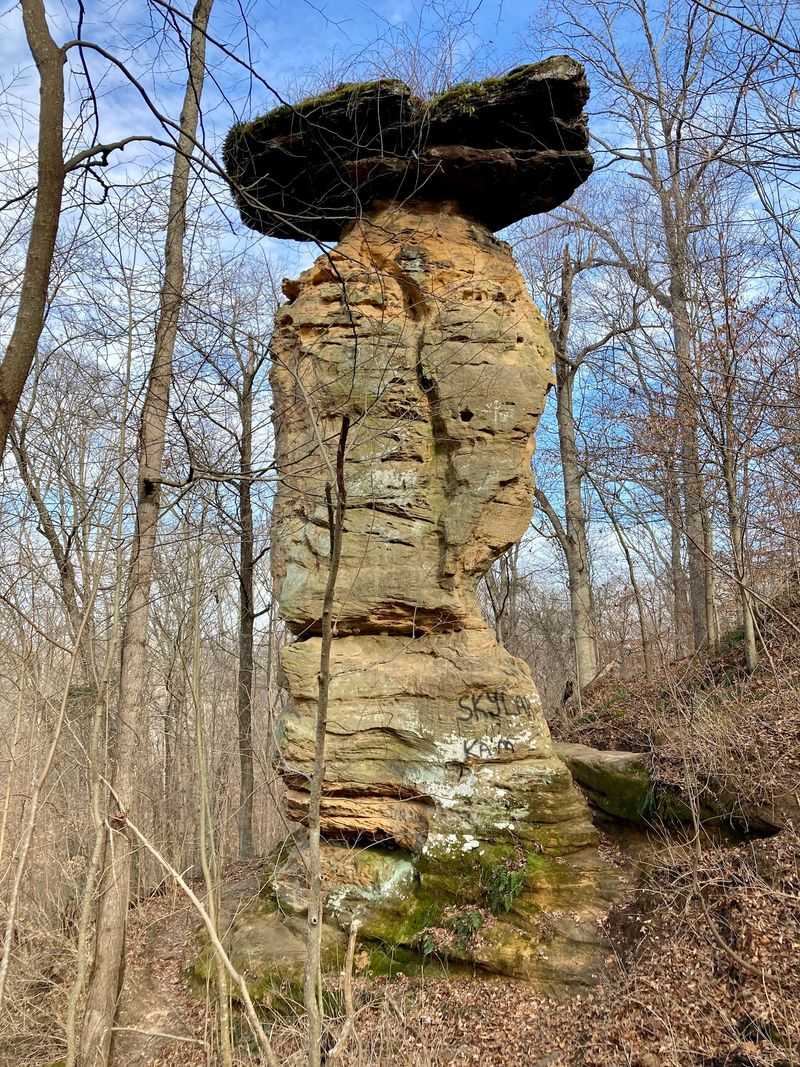
Jug Rock looks almost impossible at first glance. Rising above the woods near Shoals, the giant sandstone formation has a top-heavy shape that seems as if it should not be standing there at all. That odd balance is exactly why the site leaves such a strong impression.
Unlike cliffs that stretch across a whole valley, this landmark is a single standout form. It appears suddenly, separated from the surrounding forest in a way that makes it look transported rather than naturally placed. The more it is viewed from different angles, the stranger its shape becomes.
Natural erosion did the sculpting over a very long time, cutting away softer material and leaving behind the distinctive rock tower seen today. Knowing that makes the formation even more interesting, because the result is not random chaos.
It is a slow geological process frozen into a bold, memorable silhouette. The preserve setting adds to the effect. Trees frame the rock, which makes the sandstone mass feel even larger and more dramatic.
On gray days, the contrast between stone and woodland can give the scene a moody edge, while brighter light brings out warmer colors in the rock surface.
This stop is especially satisfying for travelers who enjoy unusual landmarks without needing a full-day outing. It offers a clear visual reward fast, and it photographs well because the shape is so recognizable. A short visit still feels distinct, which is not always true with smaller natural attractions.
Comfortable walking shoes are enough for most visitors, and taking time to notice the surrounding terrain helps put the formation in context. Jug Rock belongs on this list because it turns one piece of sandstone into a real visual surprise.
There are bigger parks in Indiana and longer trails elsewhere, but few sights in the state match the sheer oddness of this freestanding rock, which looks sculpted for a fantasy landscape instead of tucked into southern Indiana woods near an ordinary road.
8. Bluespring Caverns Park (Bedford)
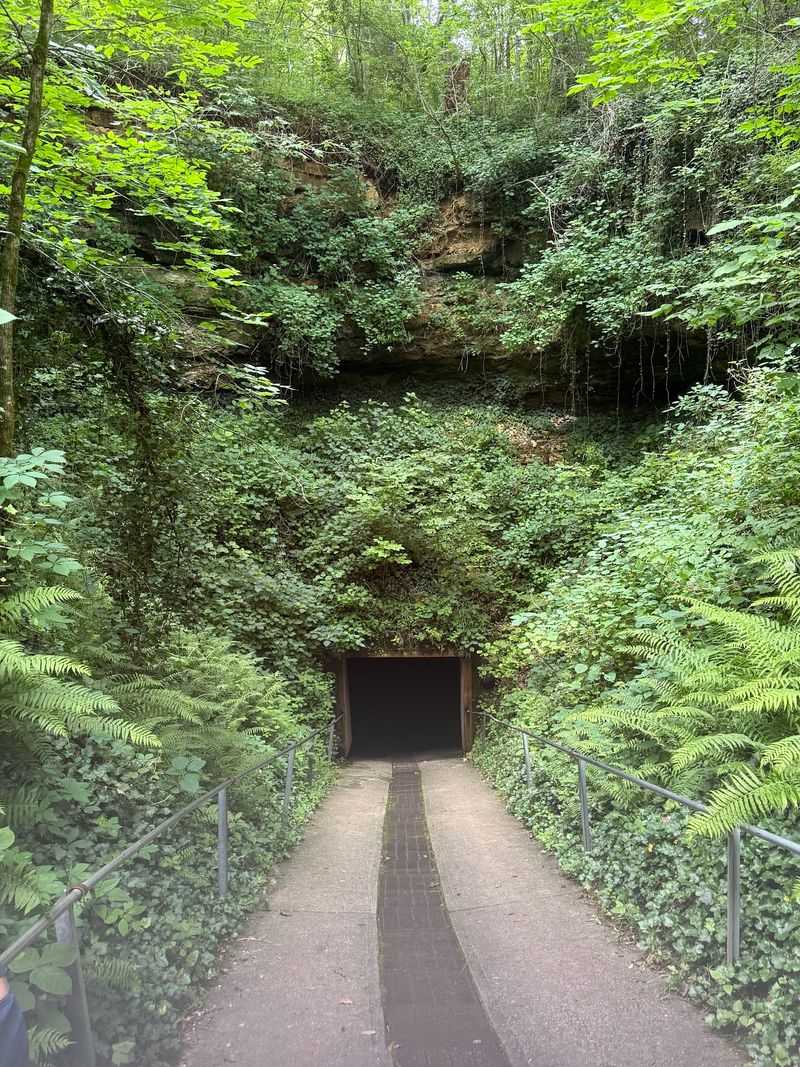
A boat ride underground already sounds unusual, and Bluespring Caverns delivers on that promise fast. Visitors glide along an unseen river beneath southern Indiana, passing through dark passages where rock walls, still water, and limited light create a scene that feels far removed from the surface world.
It is one of the state’s most memorable cave experiences. The water changes everything. Instead of walking through chambers, people move quietly through them, which makes the cave seem larger and more mysterious.
Reflections on the river can double the shapes overhead, turning ordinary rock edges into shadowy patterns that are hard to judge at first glance.
Guided boat tours help explain the setting while also making the darkness easier to appreciate. Some sections open into bigger spaces, while others feel enclosed and narrow.
That shifting size keeps the trip interesting, because the cave never settles into one predictable rhythm. Lighting is part of the drama here. When formations are illuminated against a mostly dark background, the cave can look eerie in the best way.
Bright spots pull attention to textures in the stone, while the black water beyond them suggests more space continuing out of sight.
A light jacket is useful because underground temperatures tend to stay cool. Visitors should also expect a different pace than a typical outdoor attraction.
This is not a place for rushing or loud movement. The best moments often come during quieter stretches, when the river and cavern walls do most of the work.
For families, the boat format can make cave scenery more approachable than a long underground walk. For photographers and curious travelers, the reflections and rock shapes provide plenty to study.
Bluespring Caverns stands out because it combines darkness, water, and hidden space in a way few Indiana attractions can match. The result is a subterranean journey that trades ordinary landmarks for silence, shadow, and a river that seems to disappear straight into the unknown below the hills.
9. Hemlock Cliffs (English)
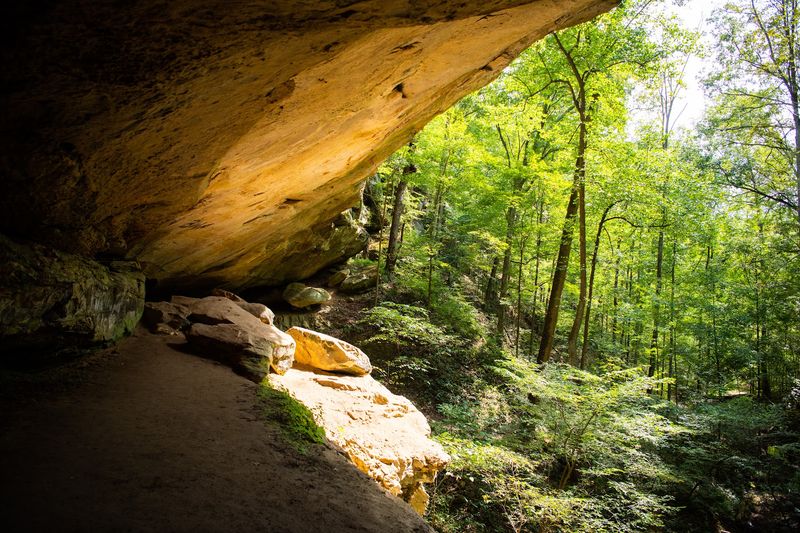
Deep in Hoosier National Forest, Hemlock Cliffs shifts Indiana into canyon mode. Sandstone walls, overhangs, ravines, and seasonal waterfalls gather in one compact area, creating a cool, shaded landscape that looks very different from open roads and farm country.
The setting has a hushed, enclosed quality that makes it stand apart right away. Moss and ferns soften the rock while also making the scene look older and wetter than many people expect from the state.
In damp weather, the green colors become richer and the cliff surfaces appear darker and more textured. Even when waterfalls are light, the terrain still has strong visual character.
Walking here is part scenery, part discovery. One bend reveals a rock shelter, another opens to a ravine, and another brings a view of stone walls rising above the trail. Because the path keeps changing, the area feels more adventurous than its modest scale might suggest.
The preserve is especially appealing in warmer months when shade matters. Cool air often lingers near the cliffs, and the vegetation makes the route feel sheltered and close.
That closeness is a major reason the place lands on a list like this one. The landscape surrounds visitors instead of just sitting at a distance.
Shoes with grip are a good idea, since damp ground and uneven surfaces can be part of the experience. Patience helps here too.
Hemlock Cliffs is better enjoyed at a slower pace, with time to notice stone textures, small drops of water, and the way plants cling to cracks and ledges.
For people expecting one dramatic overlook, the preserve may surprise them by working differently. Its power comes from detail, shape, and enclosure rather than giant distance.
Hemlock Cliffs earns its place because it compresses cliffs, plant life, and hidden-feeling terrain into a small forest pocket that looks more like a secluded sandstone gorge than the Indiana many travelers think they already know from highways, towns, and open fields.
10. Falls of the Ohio State Park (Clarksville)
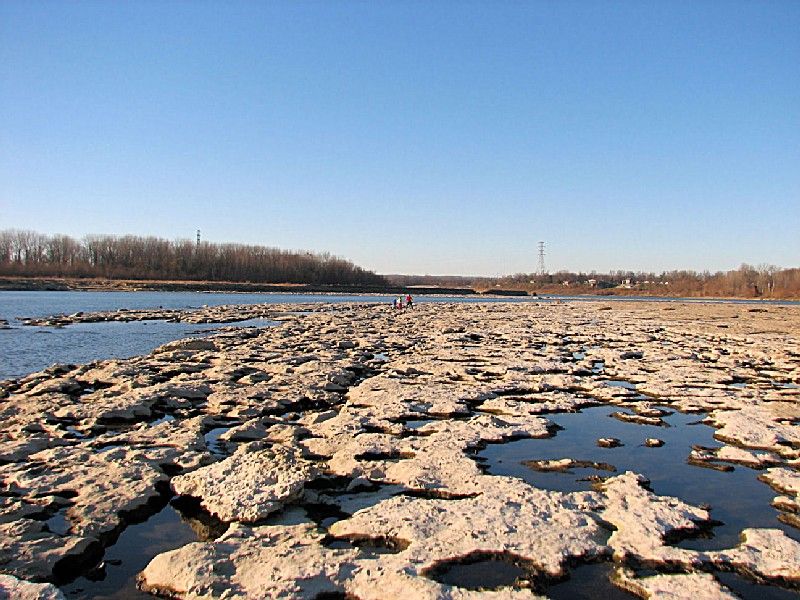
Prehistory sits right out in the open at Falls of the Ohio State Park. Along the river, broad limestone beds exposed at lower water levels reveal an ancient seafloor packed with visible fossils, giving the landscape a look that is less typical park scene and more time-warped stone plain.
Few places in Indiana appear this old at a glance. The rock surface is the main event. Instead of soft trails or dense forest, visitors find wide slabs marked by patterns, shallow pockets, and fossil traces from long ago.
The result can look almost extraterrestrial, especially when the river pulls back and leaves a large area uncovered.
Late summer into early fall is often best for seeing more of the fossil beds because lower river levels usually expose more stone. That timing matters.
Water can hide much of the feature, while drier conditions reveal the scale that makes the park so striking. Checking conditions before a visit is a smart move.
The open setting adds to the unusual look. Sky, river, and flat rock meet in broad layers, with fewer visual distractions than many parks have.
In photographs, that simplicity works well because the fossil beds become the clear focus instead of blending into thicker vegetation.
Walking carefully is important since limestone can be uneven or slick in spots. A slow pace pays off anyway, because the surface rewards close attention. Shapes, textures, and fossil details can be easy to miss when moving too fast across such a wide area.
The interpretive side of the park also helps visitors understand what they are seeing, which makes the experience richer than a simple scenic stop. Falls of the Ohio earns its place on this list by presenting Indiana as a place with a visible ancient past underfoot.
Standing on a fossilized seafloor beside a major river creates a rare kind of perspective, where time, geology, and open space combine into a landscape that looks startlingly unlike the modern world built around it today.