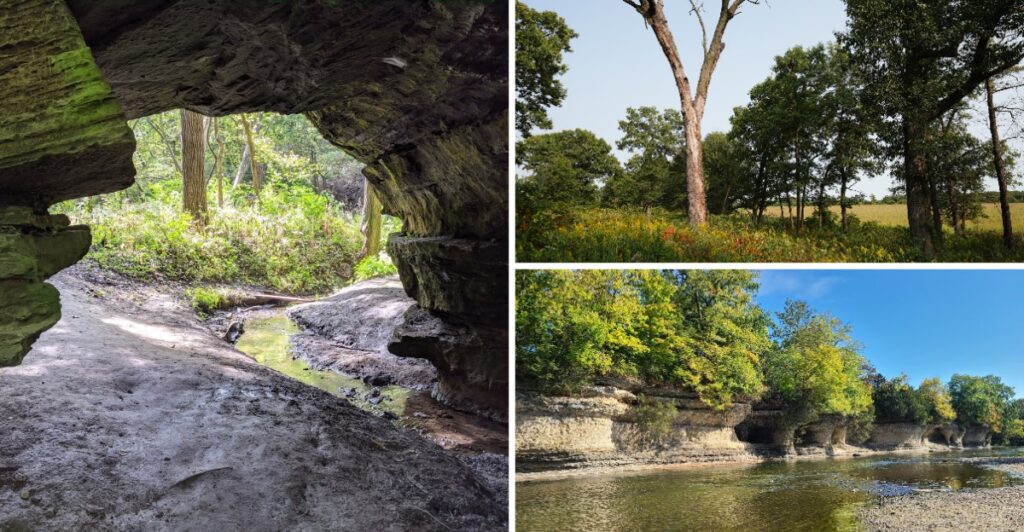
Leave Indiana’s busiest trails behind and the landscape starts revealing some impressive surprises. Quiet nature preserves and stretches of national forest hide rocky canyons, sandstone formations, waterfalls, wooded ravines, and winding paths that feel far removed from the state’s familiar farmland.
Because many sit beyond the headline state parks, hikers can find more solitude and a better chance to notice wildlife along the way. Some trails make an easy afternoon escape, while others reward anyone willing to tackle a longer adventure. These 11 lesser-known Indiana hikes offer plenty of reasons to lace up your boots and discover just how wild the Hoosier State can get.
1. Hemlock Cliffs Main Trail (English)
Picture a canyon in southern Indiana. Most people laugh at the idea, and then they walk down into Hemlock Cliffs and stop laughing fast.
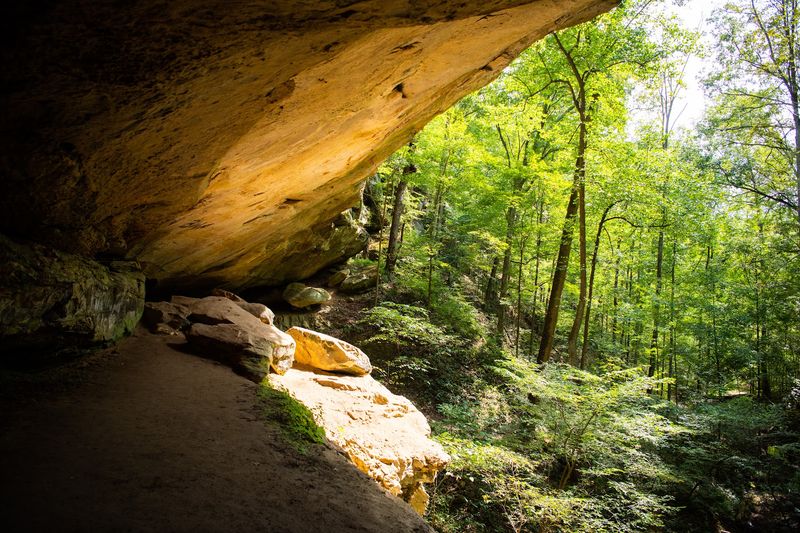
Tucked inside the Hoosier National Forest near the small town of English, this short loop drops you into a box canyon lined with tall sandstone walls.
Rock shelters bulge out from the cliffs, forming shallow caves where you can stand under a stone ceiling and look out at the trees. Moss and ferns cling to every damp surface, so the whole place glows green in spring and summer.
Timing matters here. After a good rain, or during the wetter months of late winter and spring, thin waterfalls spill over the cliff edges and splash onto the rocks below. Come in a dry August and those same spots might be little more than a dark stain on the stone.
The trail itself is short, usually taking an hour or so if you stop to gawk, which you will. Still, short does not mean easy. Stone steps, roots, and muddy stretches make some sections steep and slick, especially near the water.
Here is one of the few tips worth repeating in this whole article: wear shoes with real grip. Smooth sneakers and wet sandstone are not friends, and a twisted ankle in a canyon is no fun for anybody.
Kids tend to love this hike because it has so many things to climb near, peek into, and explore. The rock overhangs make great spots for a snack break, and the cool air inside the canyon is a relief on hot days.
Photographers should bring a camera that handles low light well. The canyon floor stays shaded, and the contrast between bright sky and dark rock can be tricky.
For such a small loop, Hemlock Cliffs packs in a surprising amount of drama. It may be the easiest way to convince a skeptical friend that Indiana has serious scenery.
2. Portland Arch Nature Preserve (Covington)
Stone arches belong in Utah, right? Not always. West-central Indiana has its own, and it has been quietly carved by water over thousands of years in a ravine near Covington.
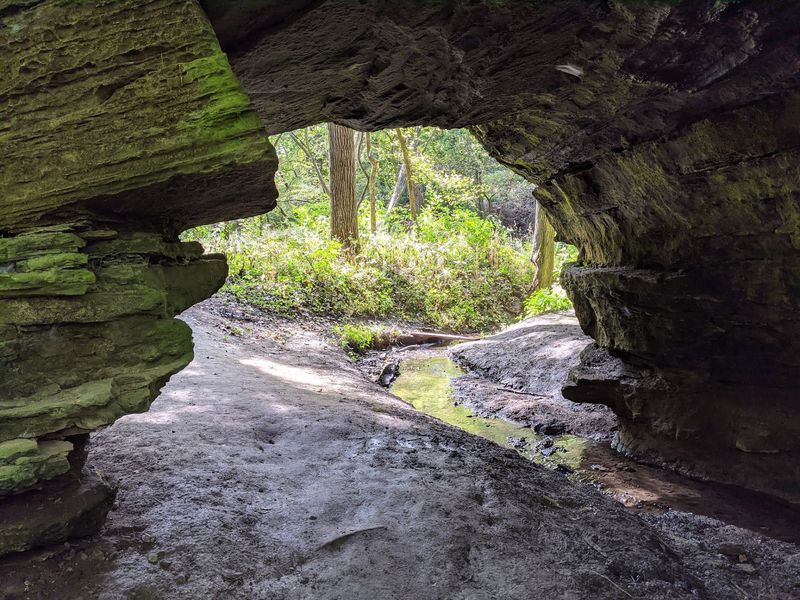
Portland Arch Nature Preserve protects wooded ravines, sandstone cliffs, and small streams that tumble through the forest. The star is the arch itself, a natural bridge of rock that a creek has cut through. Seeing it in person is a strange moment, because the setting looks nothing like the farmland you just drove past.
Two main trails split the preserve. The North Trail heads toward the famous arch, although that section has sometimes been closed, so check the current status before you go. Nobody wants to drive an hour and find a rope across the path.
Meanwhile, the South Trail offers a quieter walk. It loops through shady woods and along rocky slopes where the land dips and rises more than you might expect. Fewer visitors tend to take this route, which means more chances to hear woodpeckers and rustling squirrels instead of chatter.
The ravines stay cool even in summer. Hemlocks and other plants that prefer chilly, shaded spots grow here, giving parts of the preserve a northern forest look. In fall, the hardwoods turn orange and gold against the tan sandstone.
The town of Portland that once stood nearby has largely faded away, but the name lives on through the arch. It is a neat reminder that the rocks have outlasted the settlement by a long shot.
Trails can be steep in spots, and the stream crossings get muddy after rain. Stick to marked paths, since the preserve protects rare plants and fragile rock.
Pair a visit with a picnic along the Wabash River or a stop in Covington for lunch. The arch may be the headliner, but the whole ravine system deserves an unhurried afternoon.
3. Green’s Bluff Nature Preserve (Spencer)
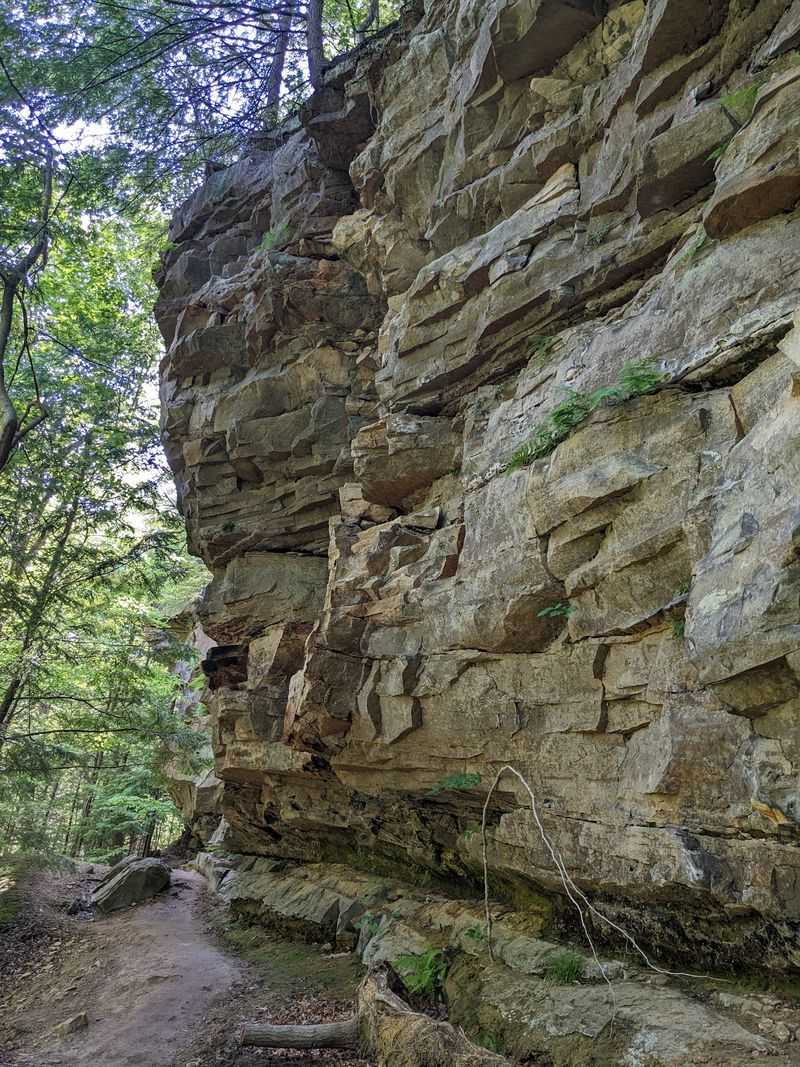
Owen County does not get much hiking hype. Green’s Bluff is a strong argument that it should. Located near Spencer, this preserve covers rugged bluffs, deep hardwood forest, and spring-fed creeks that trickle down toward Raccoon Creek.
The land has real ups and downs. You will climb, you will descend, and your legs will notice. From the high ground, you can look out over the surrounding valley, especially once the leaves drop in late fall and winter.
Those cold-season views stretch farther than you might think possible in this part of the state. Summer brings a thick green canopy instead, which trades long views for deep shade.
Hikers can choose between trail systems, each with a slightly different personality. One side focuses on rocky, uneven terrain where roots and stones keep you watching your feet. The other wanders through mature forest with big trees and softer footing, plus calm stretches near the creek.
Water is a big part of the experience. Small springs seep out of the hillsides and feed clear streams, and the sound of running water follows you along many sections. After heavy rain, some crossings can get tricky, so expect wet boots.
Wildflower fans should aim for April and early May. The forest floor fills with spring blooms before the trees fully leaf out, and the bluffs look especially lively.
Deer, wild turkeys, and a variety of songbirds are common sights. Early mornings bring the best odds, since the woods are quiet and animals are moving.
Services are limited nearby, so pack water and snacks before leaving town. Spencer has spots to grab supplies, and McCormick’s Creek State Park is close enough for a two-stop day if you have the energy.
Green’s Bluff rewards anyone willing to trade a paved path for a bit of scrambling. The wild feel comes from actual rough ground, not marketing.
4. Pine Hills Nature Preserve Trail (Waveland)
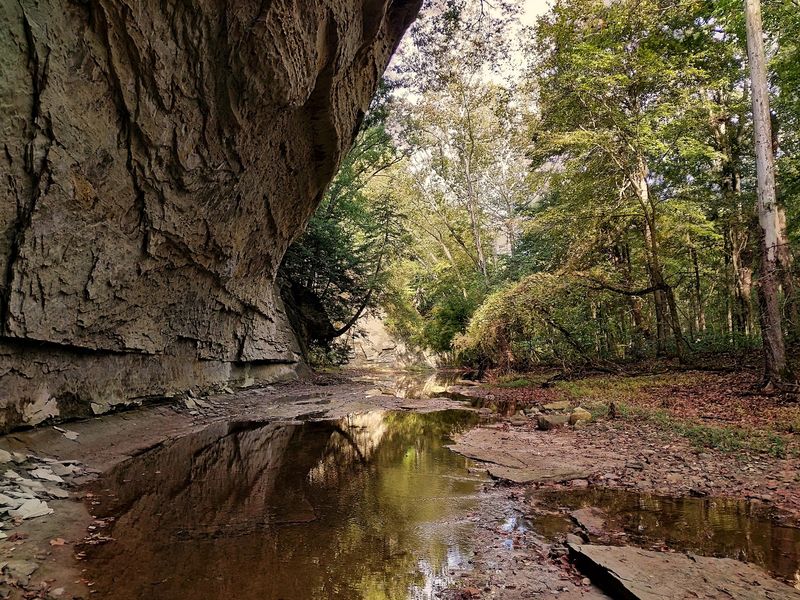
Indiana does not hand out many views that make you nervous about stepping too close to the edge. Pine Hills is one of the exceptions.
Tucked inside Shades State Park near Waveland, this nature preserve trades gentle woodland paths for narrow ridges, sandstone bluffs, deep ravines, and some surprisingly rugged terrain.
It was Indiana’s first dedicated nature preserve, and once you get beyond the entrance trail, it becomes easy to understand why this landscape earned protection.
The memorable names start appearing quickly. Turkey Backbone follows a narrow ridge with steep slopes dropping away on either side, while Devil’s Backbone, The Slide, and Honeycomb Rock add even more character to the route. Parts of the preserve feel much wilder than the surrounding farmland suggests.
This is not the place to wander off trail looking for a shortcut. Some sections are steep, footing can be uneven, and the rocky terrain deserves extra caution when conditions are wet. Take your time and let the scenery provide the excitement.
The forest adds another layer to the hike. Hardwoods mix with evergreens along the ridges and ravines, creating plenty of shade during warmer months and beautiful color once fall arrives.
Reaching Pine Hills also requires a little effort, which helps it feel removed from the busier parts of Shades State Park. That extra distance is part of the appeal for hikers who would rather earn their scenery than step out of the car beside it.
For dramatic Indiana terrain without the name recognition of the state’s biggest hiking destinations, Pine Hills delivers. The ridges and sandstone formations make this one of those trails that can completely change someone’s idea of what hiking in Indiana looks like.
5. Fern Cliff Nature Preserve (Greencastle)
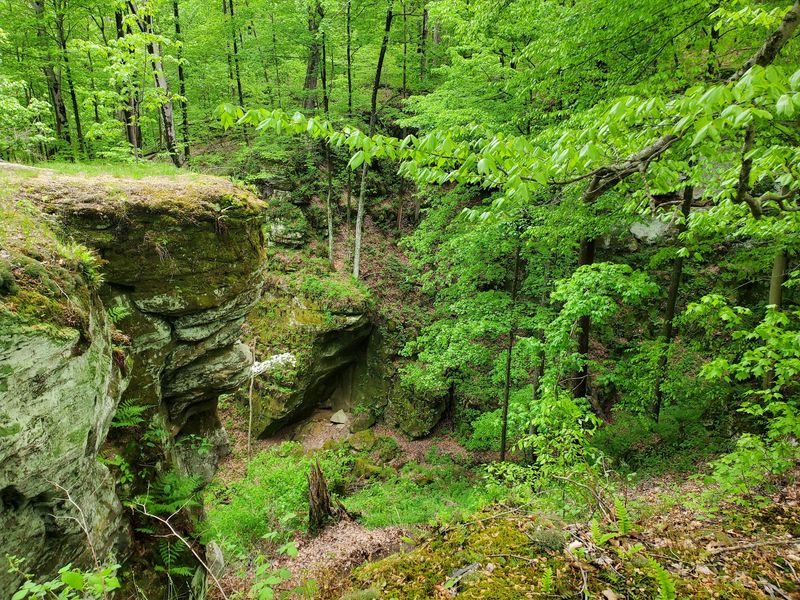
Green on green on green. That is the color scheme at Fern Cliff, and it is hard to overstate how much of it there is. Near Greencastle in Putnam County, steep sandstone cliffs rise above narrow, wooded ravines.
The shade and constant moisture create cool, damp pockets where ferns, mosses, and liverworts spread across nearly every rock face. After a rain, the whole ravine seems to soak up the light and glow.
Botanists have long valued this spot for its plant life. Many different fern species grow here, some of which are uncommon in Indiana, making the preserve a living classroom for anyone curious about the plant world.
You do not need a science degree to enjoy it, though. Simply walking beneath the cliffs, with drips of water falling from overhangs, is a treat for the senses. The air smells earthy and fresh, and it stays several degrees cooler than the open fields nearby.
The terrain ranges from moderate to rugged. Some paths are narrow and hug the edges of slopes, and wet rock can turn slippery in a hurry. Hiking poles help on the steeper climbs.
Visit in late spring through early fall for the fullest greenery. Winter has its own appeal, with icicles hanging from the cliffs during cold snaps, but the ferns lose much of their punch.
Since the plants here are delicate, stay on the trail and resist the urge to touch or pick anything. Mosses can take years to recover from a single careless step.
Greencastle is home to DePauw University, so grabbing coffee or a meal in town after your hike is easy. The downtown square has an old-fashioned small-town look that pairs nicely with the quiet of the preserve.
For a short outing, Fern Cliff delivers a big dose of secluded scenery. Bring a camera with a good close-up setting.
6. Oriole Trail East (Derby)
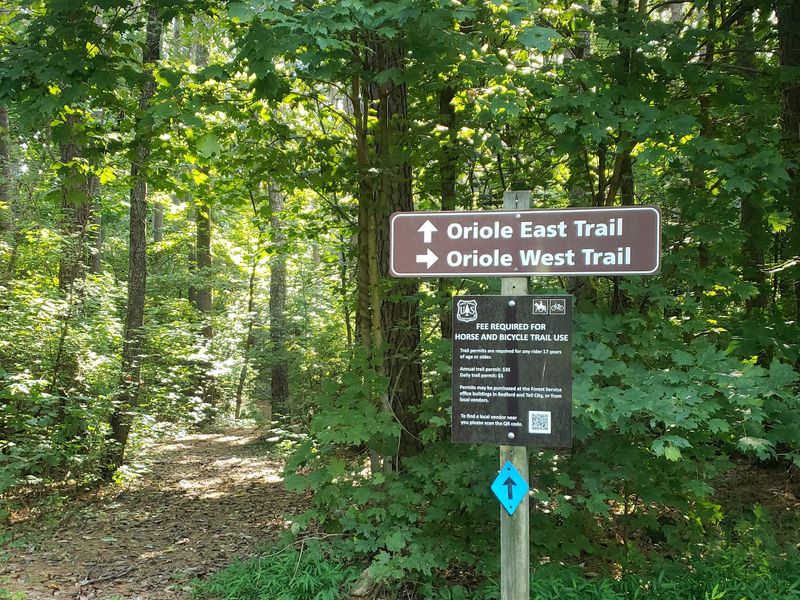
Ready to earn your snacks? Oriole Trail East is not a stroll, and it does not pretend to be one. Found in the Hoosier National Forest near Derby in Perry County, this route skips the smooth gravel and handrails.
Instead, you get a narrow path that rolls up and down wooded hills, crossing ridges and dipping into hollows over and over again.
The forest here is thick with oaks, hickories, maples, and other hardwoods. In summer, the canopy closes overhead like a green tunnel. In October, it transforms into a patchwork of red, yellow, and brown, and the crunch of leaves underfoot follows every step.
Backcountry is the right word for the mood. Signs of civilization fade quickly, and you may go long stretches without passing another hiker. That solitude is a big draw for people tired of packed parking lots at the famous parks.
With solitude comes responsibility. Bring plenty of water, a map, and a basic first aid kit, since help is not right around the corner. Trail markers can be faint in spots, especially after storms knock down branches.
The Ohio River flows nearby, and the region has a long history of river towns and small farms. Derby itself is tiny, so do your supply shopping before you arrive.
Wildlife sightings are common for quiet hikers. White-tailed deer bound across the trail, wild turkeys scratch in the leaf litter, and hawks circle over the ridges.
Hunters also use national forest land during certain seasons. Wearing a bright orange hat or vest in fall and early winter is a smart move.
Some hikers treat Oriole Trail East as training for bigger adventures out west, and the steady climbs make sense for that. Others simply want a hard, quiet day in the woods. Either way, the hills deliver.
7. Conrad Station Savanna Trail (Lake Village)
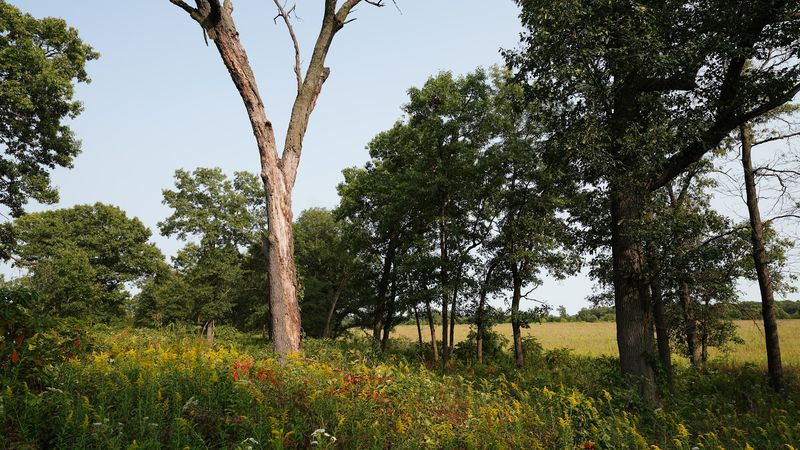
Forget the tree tunnels for a minute. Conrad Station, in Newton County near Lake Village, opens the sky wide and swaps dense woods for rolling grass and scattered oaks.
This corner of northwest Indiana was once part of a huge wetland and prairie region around the old Kankakee Marsh and Beaver Lake. Most of that landscape was drained for farming long ago. Conrad Station protects a slice of what remains, including open savanna, prairie grasses, wetlands, and sandy soil.
Walking the trail is a totally different experience from hiking in southern Indiana. Instead of climbing ridges, you move across flat and gently rolling ground where the horizon stretches out in every direction. Black oaks stand alone or in small groups, their twisted branches reaching over the grass.
Wildflowers steal the show from late spring through fall. Purple, yellow, and white blooms pop up in waves, and each month brings a new cast of colors. Butterflies and bees keep busy among the flowers.
Birders, pack your binoculars. Migrating birds pass through in spring and fall, and the wetlands attract herons, ducks, and other water-loving species. Hawks often hunt over the open grass, and sandhill cranes gather in the broader region during migration.
Did you know? A little town called Conrad once stood here, founded in the early 1900s. Little remains of it today, but the preserve’s name keeps the memory alive.
Shade is limited, so summer afternoons can get hot fast. Sunscreen, a hat, and extra water go a long way. Ticks also enjoy tall grass, so check yourself after the hike.
Nearby, the Kankakee Sands area offers even more prairie to explore, including a bison viewing spot. Combining both makes a full day of open-country wandering. Conrad Station proves Indiana hiking is not only about forests. Sometimes the best view is simply a lot of sky.
8. Seven Pillars Nature Preserve (Peru)
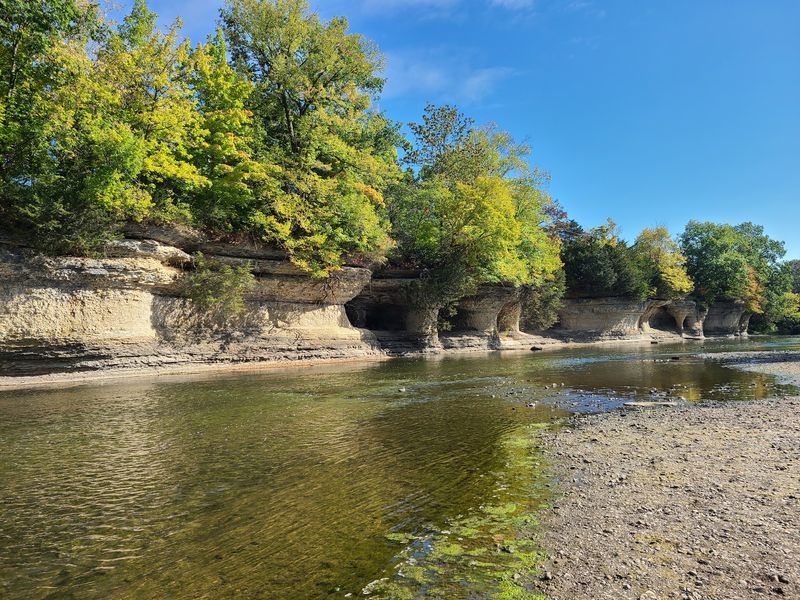
Along a quiet bend of the Mississinewa River near Peru, the water has carved a row of limestone columns into the riverbank. Stand across from them, and it looks like the entrance to an ancient stone temple.
These are the Seven Pillars, and they are among the strangest natural features in the state. Arched hollows sit between the columns, formed as the river slowly wore away the softer rock over thousands of years.
The formations have long held meaning for people in the area. The Miami people lived along the Mississinewa for generations, and the site is tied to their history. Treat it with respect, both as a geological wonder and as a place with deep cultural roots.
The preserve itself is small, so this is more of a scenic walk than an all-day trek. Trails pass through surrounding woods and along the river valley, where tall trees frame views of the water.
Here is the key rule: stay within designated public areas. Some land nearby is private, and barriers protect the formations from damage and keep visitors safe from crumbling rock and steep drops. Climbing on or into the pillars is not allowed.
The best views of the pillars often come from across the river, so plan your route accordingly. Paddlers sometimes glide past on the Mississinewa, getting an up-close look from the water.
Visit in fall for bright leaves reflecting on the river. Spring brings high water and wildflowers along the banks.
Peru is also known as the Circus Capital of the World, thanks to its history as a winter home for traveling circuses. The International Circus Hall of Fame makes a fun and quirky add-on to a day trip.
Seven Pillars may take only an hour to explore, but the view of those columns rising from the riverbank sticks around much longer.
9. Pate Hollow Trail (Bloomington)
Seven miles. That number alone sorts out who is really ready for Pate Hollow and who should stick to a shorter walk.
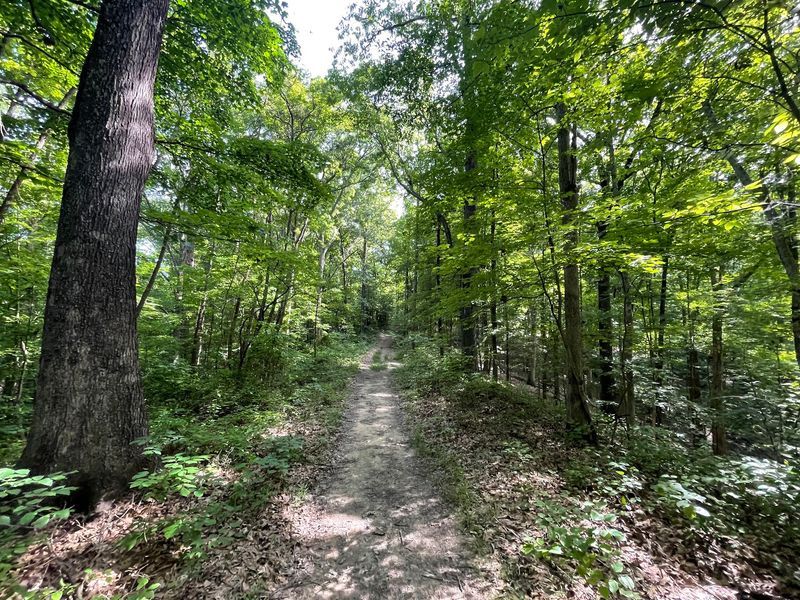
Located in the Hoosier National Forest near Monroe Lake, just outside Bloomington, this loop winds through mixed hardwood forest and rolling terrain. It is long enough to feel like a true outing, yet close enough to town that you can be back for dinner.
The trail starts near the Paynetown area and quickly leaves the busy lake scene behind. Boats, beach crowds, and campground noise fade away as you head into the trees. Within the first mile or so, the woods take over completely.
Expect plenty of ups and downs. The hills are not massive, but they add up over the full distance, and your calves will feel it by the end. Several creek crossings and ravines break up the rhythm.
Monroe Lake is the largest lake entirely within Indiana, and glimpses of water sometimes appear through the trees, especially in leaf-off months. Those peeks at the lake make a nice reward on a winter hike.
Wildlife is plentiful. Deer are common, and lucky hikers might spot a fox or hear barred owls calling in the late afternoon. The forest also shelters a wide range of songbirds in spring.
Plan for about three to four hours depending on your pace and how often you stop. A packed lunch makes a great midpoint break.
Some sections can get muddy after rain, and the trail is shared with other users at times, so stay alert. Trail etiquette goes a long way on narrow paths.
Bloomington is a lively college town, home to Indiana University, with plenty of food options for a post-hike meal. Few things taste better than a big plate of something hearty after seven miles of hills. Pate Hollow offers distance and quiet in one package, a combination that is harder to find than it should be.
10. Leonard Springs Nature Park (Bloomington)
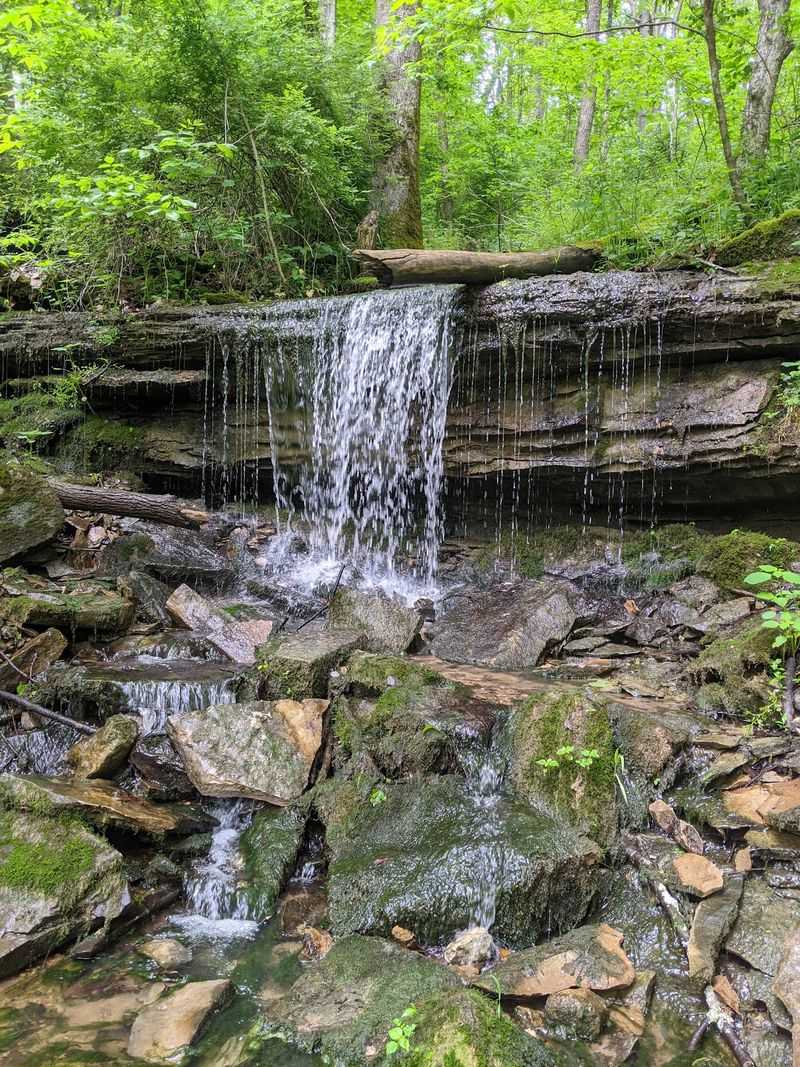
Short on time but craving variety? Leonard Springs Nature Park squeezes springs, wetlands, forest, and karst features into one compact spot just southwest of Bloomington.
The park’s trails and boardwalk sections guide you through changing habitats in a surprisingly small area. One minute you are under tall trees, and the next you are crossing a marshy wetland where cattails sway and frogs call out.
Springs bubble up from underground in this area, fed by water moving through the limestone below. Southern Indiana sits on karst terrain, a type of landscape full of sinkholes, caves, and hidden streams. Leonard Springs gives visitors a chance to see some of those features up close without crawling into a cave.
Boardwalks keep your feet dry over the wettest areas. They also make the park easier for families with young children or anyone who prefers smoother ground.
Slow down here. This is a great place to linger, watching for turtles sunning on logs, dragonflies zipping over the water, and herons stalking fish in the shallows. Spring brings loud choruses of frogs, while fall adds colorful leaves reflecting on still pools.
Fun detail: parts of the area were once used as a water source for Bloomington. Today the land serves as a public nature park, with the old history adding an extra layer to the scenery.
The trails are fairly short and mostly easy, so it works well for a lunch break walk or a quick evening outing. Some paths do include hills and rocky stretches, which keeps things interesting.
Leashed dogs are generally welcome, but check park rules before you go. Bug spray is helpful in summer, since wetlands tend to attract mosquitoes.
Leonard Springs may not be a long-haul adventure. Instead, it offers a layered sampler of Indiana’s natural features, packed into one peaceful loop.
11. Hathaway Preserve at Ross Run (Wabash)
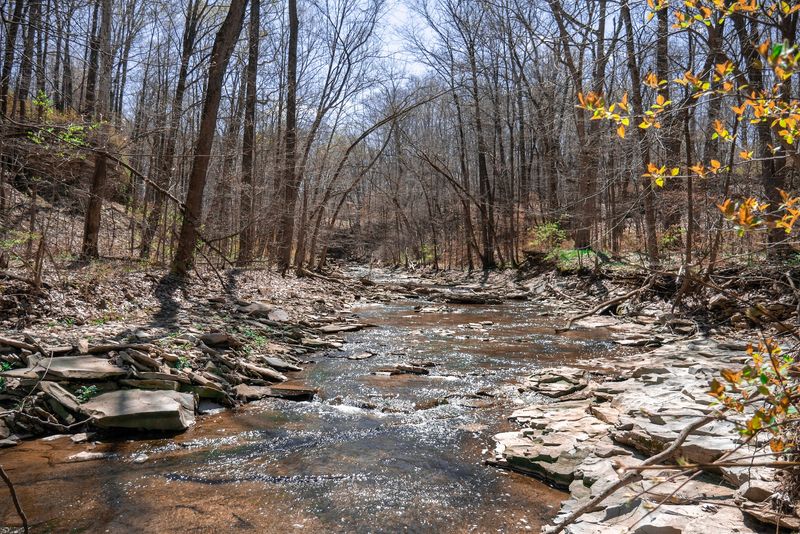
Northern Indiana is supposed to be flat. Somebody forgot to tell Ross Run. Hathaway Preserve, managed by ACRES Land Trust near Wabash, surprises visitors with deep ravines, small waterfalls, rocky cliffs, and mature woods.
The creek called Ross Run cuts through the land on its way toward the Wabash River, carving a landscape that looks far more rugged than the farm fields surrounding it.
The trail network covers roughly two miles, making it approachable for most hikers. Families, casual walkers, and trail runners can all find a pace that works. Still, the ravines add enough climbing to give your legs a light workout.
Waterfalls are the highlight for many visitors. They are small, not towering, but watching water spill over rocky ledges in a quiet ravine is a treat. Like most falls in Indiana, they look best after rain or snowmelt.
Old trees tower over the trails, some wide enough that it would take a couple of people to wrap their arms around them. Those big trunks give the woods a sense of age and calm.
ACRES Land Trust protects natural areas across northeast Indiana and nearby states, relying on donations and volunteers. Visiting their preserves is free, and following their rules, like staying on trails and leaving no trace, helps keep these places open.
Spring wildflowers carpet the ravine slopes in April and May. Winter can be striking too, with ice forming along the cliffs and snow outlining every ledge.
Wabash is famous for being one of the first electrically lighted cities in the world, a fun claim that dates back to 1880. The historic downtown makes an easy stop for food after your walk.
Compact but full of character, Hathaway Preserve rounds out any list of Indiana trails that fly under the radar. Two miles have rarely held this much scenery.
Share this story