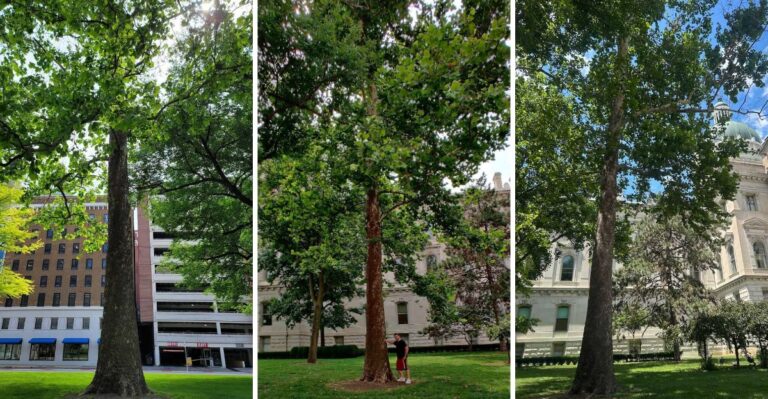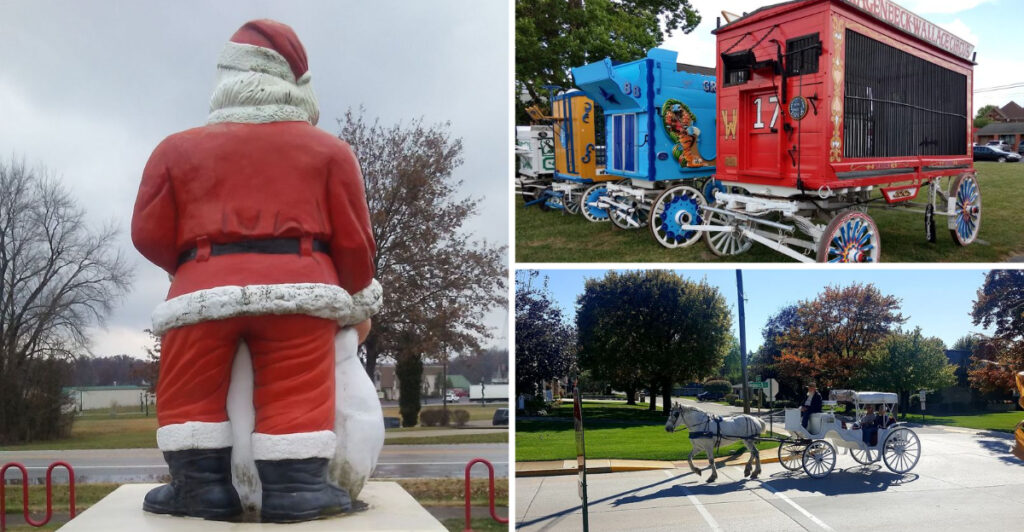
A quiet Main Street does not always reveal what happened there a century ago—or what unusual landmark might be waiting a few blocks away. Across Indiana, seemingly ordinary towns hold stories involving circus performers, historic jails, enormous roadside curiosities, famous residents, and traditions that have shaped entire communities.
Some histories are proudly displayed, while others take a little wandering to uncover. That contrast makes exploring them especially fun, because the most interesting discovery may come where you least expect it. These 11 Indiana towns prove that looking ordinary from the highway and having an ordinary story are two very different things.
1. Kokomo
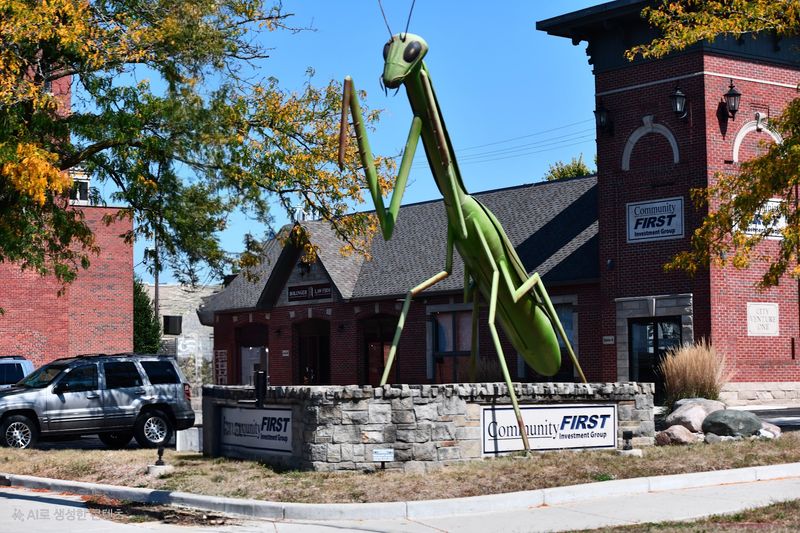
At first glance, Kokomo seems built from the usual Indiana ingredients: factories, busy roads, and practical neighborhoods. Spend a little time here, though, and the city starts showing off a wonderfully offbeat collection of giant sights.
One of the standouts is KokoMantis, a towering sculpture made from recycled materials. It turns scrap into public art, which gives the city a playful edge and reminds visitors that industrial places can also be creative places.
Then there is Old Ben, the massive steer statue that has become one of Kokomo’s best-known landmarks. Nearby oddities such as the giant sycamore stump and Willie the Whale add to the sense that Kokomo enjoys being a little unexpected.
That mix matters because it changes how a town is read. Instead of moving through without a second thought, people slow down, look around, and start noticing the personality tucked between ordinary blocks and everyday routines.
Families can turn the landmarks into an easy afternoon challenge by seeing how many they can spot in one trip. Kids usually connect with oversized animals and unusual sculptures faster than they do with museum labels or long historical markers.
Photographers also get plenty to work with here. A huge bug made of recycled metal or a giant steer against an Indiana sky gives every picture a sense of scale and a story to tell later.
Kokomo’s strange side does not cancel out its manufacturing identity. Instead, the landmarks sit beside it, proving that a city shaped by work can still leave room for humor, imagination, and local pride.
That is why Kokomo stays memorable. Beneath the straightforward surface, it delivers the kind of roadside surprise that makes a regular town feel much bigger in the mind.
2. Greencastle
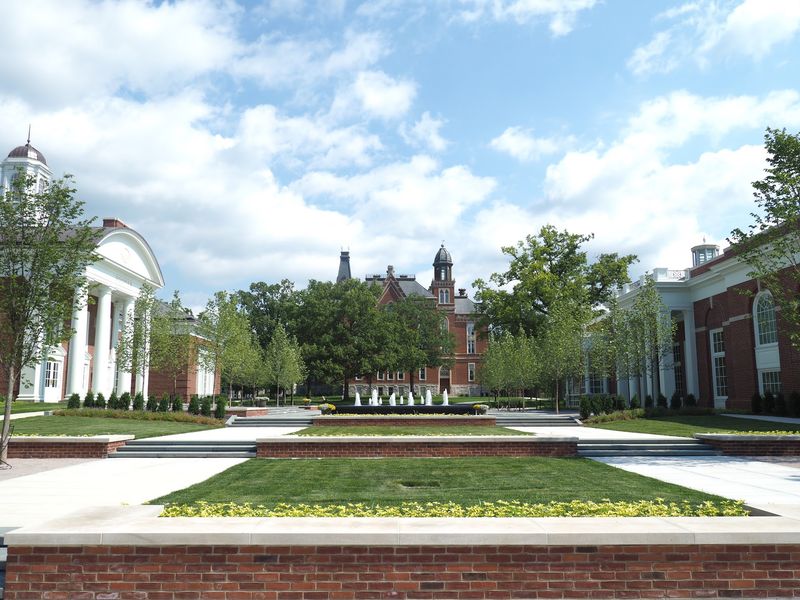
Greencastle has the calm look of a classic college town, with brick buildings, student traffic, and familiar small-city rhythms. Then a giant painted boulder enters the picture and quietly steals the show.
Known simply as the Boulder, this rock on the DePauw campus has been painted again and again for generations. Every new layer adds student jokes, celebrations, rivalries, club messages, and flashes of late-night creativity.
That is part of its appeal. A plain chunk of stone becomes a running record of campus life, and each coat of paint covers older stories without fully erasing them.
People who visit for the first time might wonder why a rock matters so much. Once the history of repainting is explained, the Boulder starts reading less like scenery and more like a student-made monument.
It also says something useful about traditions. Not every meaningful landmark has to be grand, old, or expensive. Sometimes a community picks an ordinary object and fills it with years of shared attention.
For visitors, the best approach is simple: stop and really look. Colors drip over old layers, sharp slogans sit beside careful designs, and the surface shows how many hands have claimed the space over time.
Greencastle gains character from that ongoing act of repainting. The town may seem orderly and conventional at first, yet the Boulder introduces a streak of rebellion, humor, and student energy that keeps the setting from feeling too polished.
By the time people leave campus, the rock usually lingers in memory more than expected. It proves that even a silent boulder can carry decades of competition, expression, and local legend.
3. Bedford
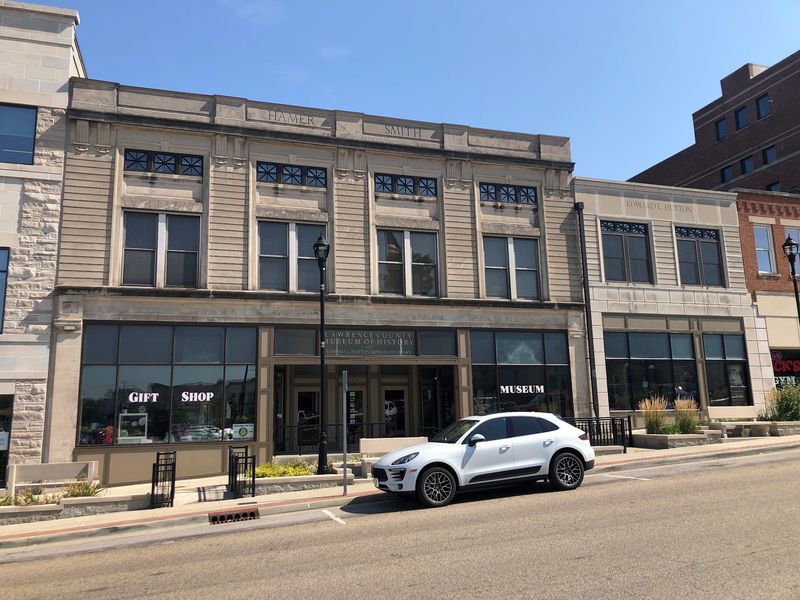
Bedford can look quiet and practical until the land itself starts giving away the plot. Around town, limestone is not just part of the scenery. It is the reason the place carries such a strong identity.
Often called the Limestone Capital of the World, Bedford sits in a region shaped by quarrying. Huge cuts in the earth, old stone works, and pale rock faces reveal how deeply local history is tied to what lies underground.
Some former quarries have filled with water, creating lakes that seem almost surprising against the hard stone edges. That contrast between carved rock and still blue water gives the area a striking look that many first-time visitors do not expect.
The story here is bigger than pretty views. Limestone from southern Indiana became important in architecture, which means Bedford’s local landscape connects to buildings far beyond the town itself.
Even without turning the visit into a geology lesson, travelers can appreciate how work changed the land. The cut walls, the color of the stone, and the unusual shapes all make the area feel crafted as much as natural.
Bedford also offers a good reminder that industry leaves marks people can still read. Old quarries are not random holes in the ground. They are clues to jobs, skills, and generations of labor.
For families, the easiest way to connect with the town is to notice textures and scale. Kids often respond to giant stone faces and quarry lakes because they look dramatic, almost like scenes from another region.
Bedford stays with visitors because its story is written directly onto the terrain. A seemingly ordinary community turns out to be a place where rock, water, and hard-earned history are all speaking at once.
4. Peru
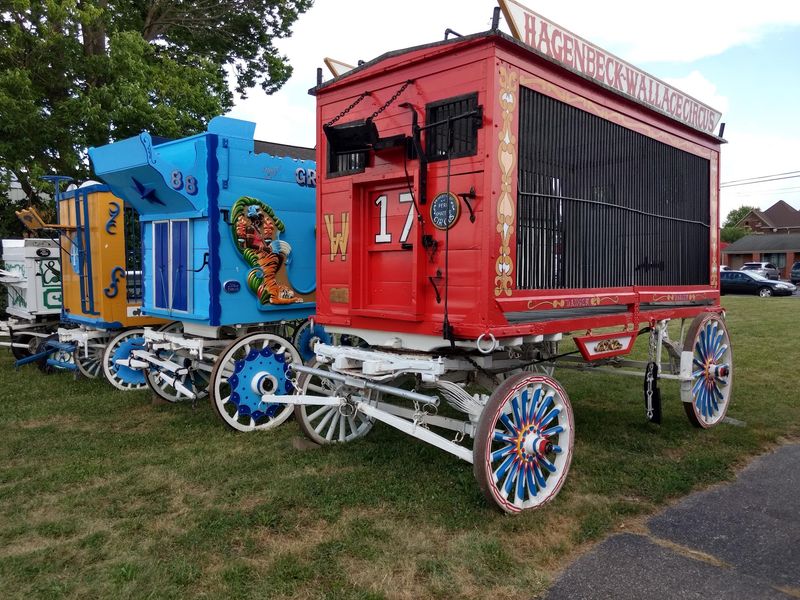
Peru looks like the sort of river town a traveler might pass through without much suspense. Then the circus history appears, and suddenly the place gets a lot more colorful.
For years, Peru was known as a winter home for major circuses. That means the town was connected to a world of elephants, acrobats, trainers, performers, wagons, costumes, and the huge behind-the-scenes effort needed to keep a circus running.
It is a wonderful contrast. Quiet streets and ordinary storefronts do not immediately suggest a past filled with spectacle, yet that unusual history still shapes how the community is remembered.
The circus connection matters because it turns Peru into more than a stop along the Wabash River. It links the town to a national entertainment tradition that once traveled from place to place and brought amazement to huge crowds.
Visitors do not have to be circus experts to enjoy the story. Even simple details about winter quarters help people picture animals being cared for, equipment being repaired, and performers practicing long before opening day.
That practical side is easy to miss, but it is one of the most interesting parts. Big shows depended on ordinary work, and Peru became one of the places where that work happened.
Families can use the town’s circus past as a way to spark curiosity in kids. It opens the door to questions about travel, training, performance, and how different entertainment used to look before screens took over daily life.
Peru stands out because it holds two images at once: a calm Indiana town and a former circus center with a bigger-than-life past. That combination gives the community a story unlike almost anywhere else in the state.
5. Vincennes
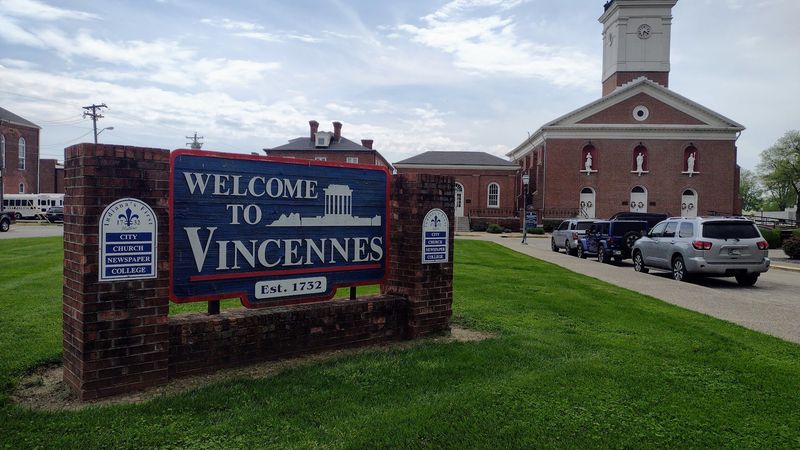
Some towns reveal their history in small hints, but Vincennes carries it right on the surface. A quiet walk here can pass through layers of time that stretch back far before Indiana became a state.
Founded as a French trading post in 1732, Vincennes is recognized as Indiana’s oldest European settlement. It later served as the capital of Indiana Territory, which gives the city a political and cultural role far larger than its present size might suggest.
That long timeline changes the way the streets are read. Buildings, markers, and old sites are not isolated attractions. Together they point to trading networks, territorial government, and the slow shaping of the region.
History can sometimes feel distant to younger visitors, so Vincennes works best when people imagine real daily life. Picture traders arriving, goods changing hands, officials making decisions, and families building routines in a place still taking shape.
The city also helps explain that Indiana did not appear all at once as a finished state. Before modern borders and highways, places like Vincennes were already active centers where power, business, and culture met.
For travelers, that makes even a simple downtown visit richer. A calm block or older structure may sit on ground that has seen dramatic changes in language, rule, economy, and identity.
Vincennes does not need oversized statues or oddball roadside attractions to be fascinating. Its strength comes from age, continuity, and the fact that so much state history can be traced back to one community.
That is why the city deserves patience. Slow down, read the clues, and the seemingly ordinary setting starts opening into a much larger story about how Indiana began and how the Midwest developed.
6. Wabash
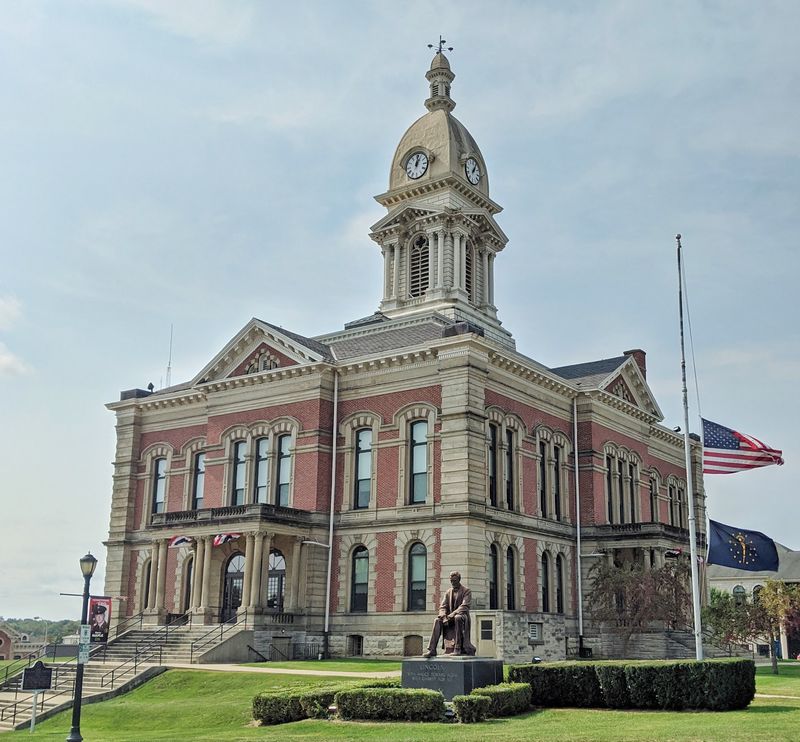
One spring night changed Wabash from a standard courthouse town into a place with a famous link to electric light. That single event still gives the city a special spark in Indiana history.
On March 31, 1880, four enormous carbon-arc lamps were installed above the courthouse. The experiment produced a brilliant glow that drew attention and became one of Wabash’s best-known claims to fame.
Today, the story works because it mixes science, spectacle, and local pride. People can easily imagine residents gathering in the square, looking up, and seeing nighttime transformed by a technology that still felt new and almost unbelievable.
Modern lighting is so normal that the excitement can be hard to picture at first. Streets, porches, schools, and stores all depend on electric light now. In 1880, seeing a public space flooded with brightness would have felt startling and memorable.
Wabash benefits from that contrast between ordinary present-day life and a dramatic past moment. A courthouse square that seems calm in daylight once stood at the center of an experiment that pushed the future into public view.
Visitors can make the story come alive by focusing on scale and reaction. Four huge lamps above a courthouse were not subtle. They were meant to astonish, and by all accounts, they did exactly that.
The city also offers a useful lesson in how innovation spreads. Big changes are not only born in giant metropolitan centers. Sometimes a smaller community becomes part of a turning point that echoes far beyond its borders.
Wabash may still look traditional, but that famous evening keeps it from blending into the background. Beneath the courthouse-town image sits a story about brightness, curiosity, and a public glimpse of a new era.
7. Santa Claus
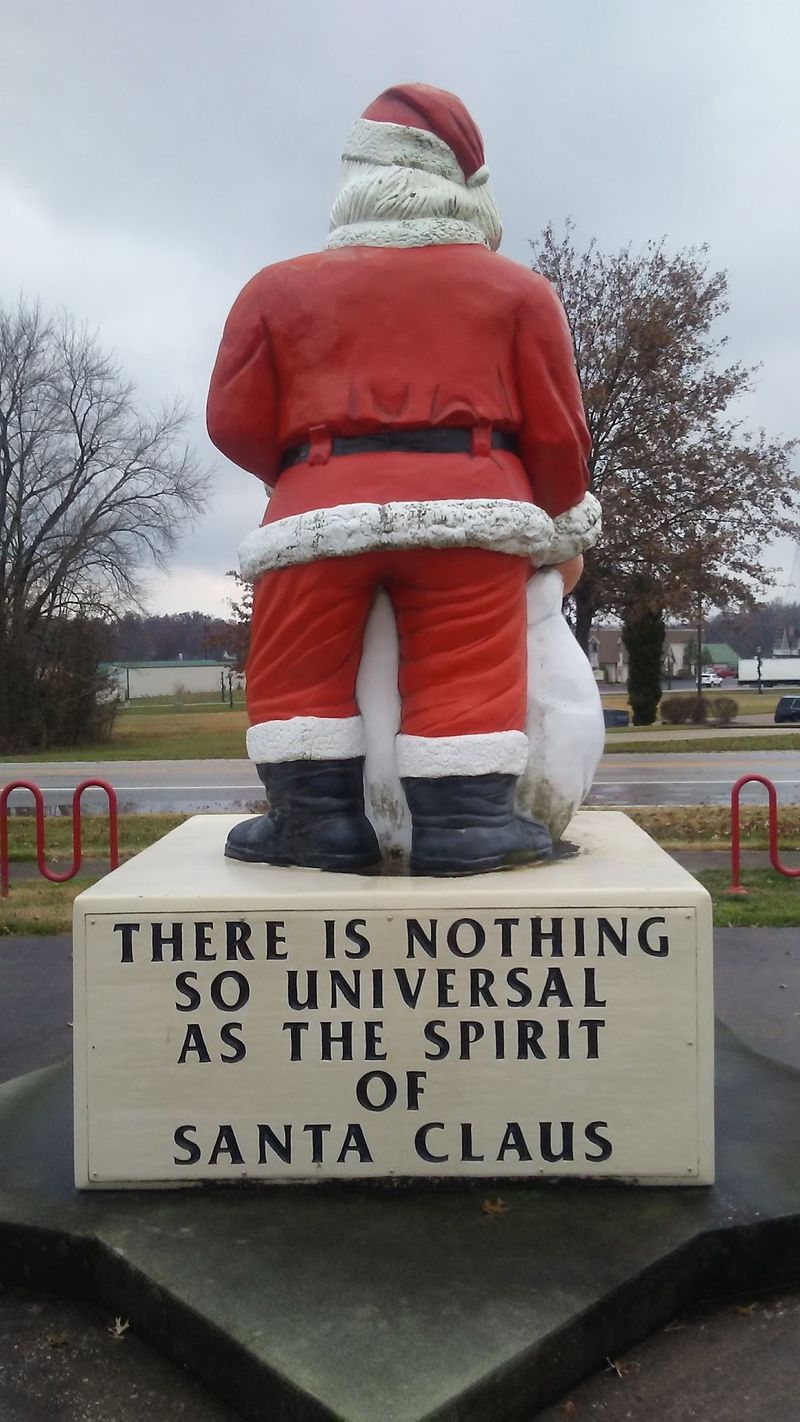
Daily life gets a little funnier in Santa Claus, where even the address sounds like part of a holiday card. The town turns a familiar season into a year-round identity, and that changes the mood right away.
Christmas themes appear across the community, from signs to attractions to playful local details. The best-known piece may be the post office, which receives thousands of letters addressed to Santa from around the world.
That fact alone gives the town a story few places can match. A post office is usually one of the most ordinary buildings around. Here, it connects local workers and residents to children’s wishes, family traditions, and global curiosity.
The name Santa Claus could have become a simple joke, but the town has clearly built a whole character around it. Instead of treating the theme as a one-note gimmick, the community uses it to create a setting that is cheerful, memorable, and easy for visitors to grasp.
Families often enjoy the contrast most. You can be in southern Indiana, going about a normal trip, and then suddenly pass holiday-themed touches that seem borrowed from December.
There is also a practical side to the appeal. Kids understand the concept instantly, adults appreciate the novelty, and the post office gives everyone a real-world anchor for the story.
Santa Claus stands out because the unusual name never stays only on the map. It spills into daily life and makes routine places, especially the mail system, part of the town’s identity.
For a traveler, that means the visit is easy to remember. Plenty of towns have seasonal events. Much fewer have managed to make Christmas part of ordinary Tuesday afternoon life all year long.
8. Shipshewana
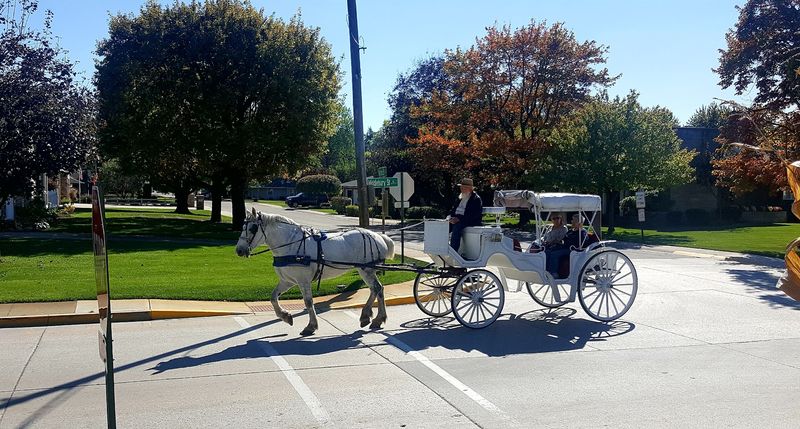
Traffic in Shipshewana can include a horse-drawn buggy, and that detail changes the whole rhythm of the place. The town brings together rural traditions, busy shopping, and a street scene that rarely looks quite like anywhere else.
Amish life is part of the area’s identity, and visitors notice that quickly in the transportation, clothing, and pace of movement around town. At the same time, shops and markets draw steady crowds looking for food, crafts, furniture, and all kinds of unexpected finds.
That combination gives Shipshewana its special tension. Old-fashioned travel shares space with modern tourism, and the result is a town that asks people to slow down while still giving them plenty to explore.
It helps to arrive with patience. Roads may move differently, parking can be busy, and a quick errand can turn into a longer look at how the community functions day to day.
For many visitors, the most memorable part is not any single purchase. It is the sight of buggies rolling past storefronts while shoppers carry bags and search for the next stop. The contrast is immediate and concrete.
There is also a lesson in paying attention to local habits. Shipshewana works best when guests respect that they are entering a place shaped by real traditions, not a stage set built only for tourism.
That awareness makes the town more interesting. The appeal comes from the meeting of lifestyles, economies, and expectations, all visible within a short stretch of streets and nearby roads.
Shipshewana may look small on a map, but it offers a bigger experience than many larger towns. Everyday Indiana life blends here with buggy wheels, market energy, and a strong sense of place.
9. Alexandria
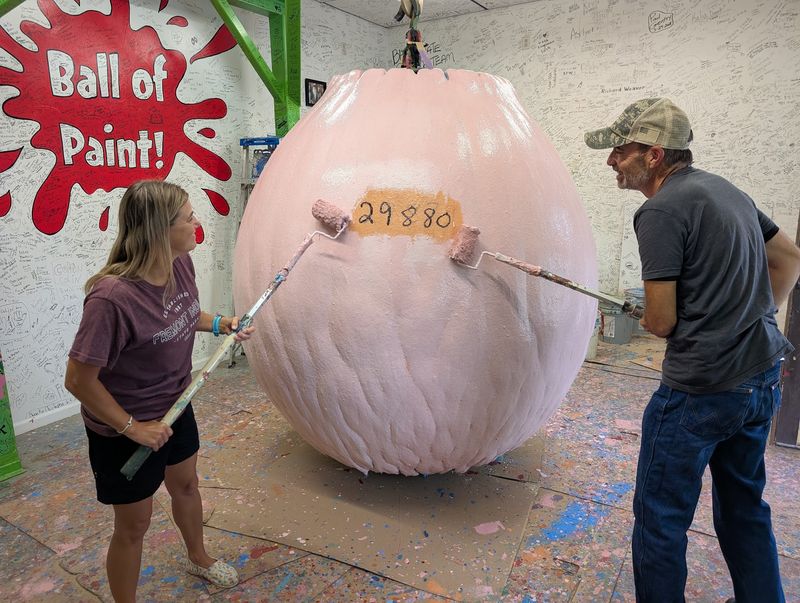
A painted ball does not sound like the start of an international curiosity, yet that is exactly the road Alexandria took. Near town, a very simple idea kept growing until it became the World’s Largest Ball of Paint.
Layer after layer transformed the original object into a huge, colorful sphere. Each coat added more size, more texture, and more story, proving that repetition can turn an ordinary action into a bizarre landmark.
The attraction works because the concept is so easy to understand. No one needs a long explanation. It began with a baseball and paint, and then people just kept going.
That simplicity is part of the charm. Some unusual attractions depend on complicated legends or expensive construction. This one is funny, visual, and based on a small act repeated with commitment.
Visitors often respond to the texture as much as the size. Thick layers of dried paint create a surface that looks almost geological, like a bright man-made planet built from years of color instead of rock.
It also says something about American roadside culture. People have long enjoyed giant objects, odd records, and places that make them stop the car just to say, “Wait, what is that?” Alexandria has one of those stories in memorable form.
Families can use the attraction as an easy conversation starter about accumulation and scale. A tiny beginning can become enormous over time, whether the subject is art, collections, habits, or community traditions.
Alexandria itself may appear modest, but the giant painted sphere nearby gives it a playful claim to fame. In a state full of practical towns, that oversized ball of color lands as a very cheerful surprise.
10. New Harmony
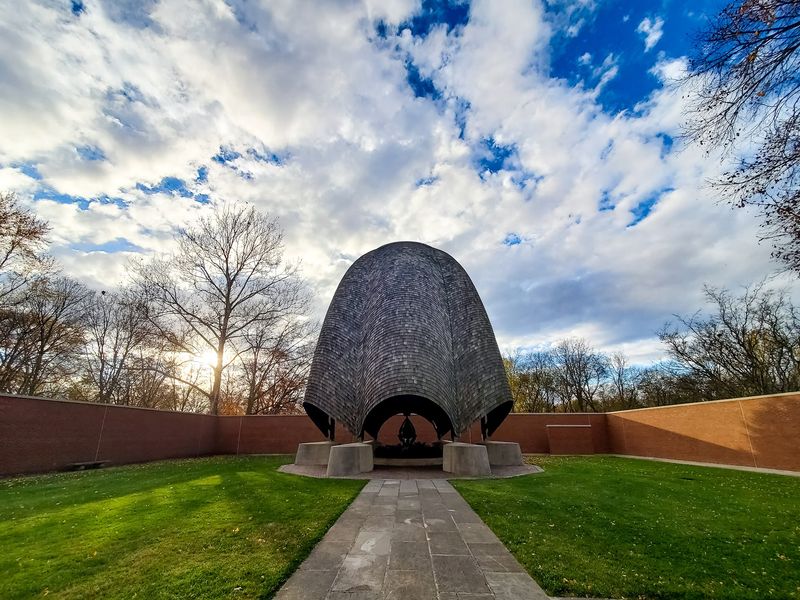
Quiet streets do not usually suggest bold social experiments, but New Harmony has exactly that kind of past. Few places this peaceful were chosen not once but twice as testing grounds for utopian ideas.
The Harmonists established a community here in 1814. Later, in 1825, Robert Owen launched another communal experiment, bringing a different vision for how people might live, work, and learn together.
That history gives New Harmony unusual depth. Instead of growing only through ordinary town patterns, it became a place where people tried to redesign society itself.
Even when those ambitions did not last in the form originally intended, they left behind an intellectual and architectural legacy that still shapes the town. Visitors can sense that New Harmony was built to serve ideas, not just daily convenience.
The story is useful because it shows how communities can become laboratories for hope. People came here believing that life could be organized in better, fairer, or more thoughtful ways, which is a pretty big dream for a small Indiana town.
Travelers do not need a deep background in reform movements to appreciate the setting. It helps to ask basic questions: How did people hope to live together? What rules or values were they trying to improve? Why is building an ideal community so hard?
Those questions make the town richer than a quick photo stop. New Harmony invites reflection, but it does so through streets, buildings, and spaces that remain approachable rather than overwhelming. Plenty of towns preserve history. New Harmony preserves ambition.
That difference gives the place a distinctive voice, one rooted in experiment, debate, and the enduring human habit of imagining a better way to live.
11. Crawfordsville, Indiana
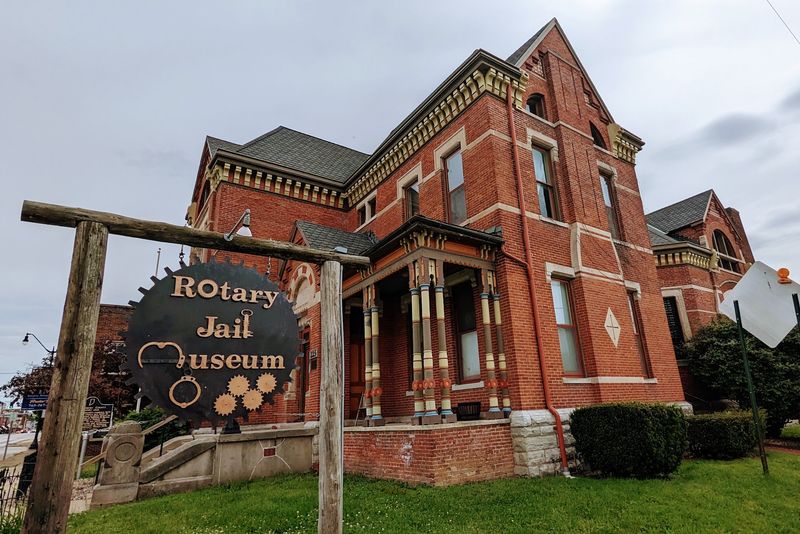
Downtown Crawfordsville looks respectable and familiar until one building introduces a much stranger chapter. Tucked into the city is a Victorian jail designed around a rotating cell block, which is about as unusual as local history gets.
Built in 1882, the Rotary Jail used 16 wedge-shaped cells arranged around a central shaft. The entire block could rotate, and its restored mechanism still turns today, making it the only operational example of its kind.
That fact alone grabs attention, but the design is also a window into old ideas about security and control. Instead of a standard row of cells, the structure used movement as part of the building’s function.
Visitors often react with a mix of curiosity and disbelief. A rotating jail sounds like fiction from a steampunk novel, yet here it stands in a traditional Indiana college town.
The building shows how inventive, and sometimes unsettling, older engineering could be. Practical needs were met with dramatic mechanical solutions, and the result now seems both impressive and a little eerie.
Crawfordsville gains a lot from that contrast. Nice streets, everyday shops, and ordinary routines surround a structure that feels almost impossible until seen in person.
For younger readers or families, the jail can spark strong questions. Why would anyone build cells this way? How did it operate safely? What did prisoners and guards think about the rotating design?
Those questions keep the site lively in the mind. It is not only an old building but a machine, a legal space, and a reminder that history can be clever in ways that seem deeply strange now.
Crawfordsville may present itself as a normal college town, yet the Rotary Jail makes sure no visit stays ordinary for long.
Share this story