A lighthouse rises above beach grass while officers’ homes face a quiet bay. An old iron village sits among pitch pines.
Along a former canal, stone locks and weathered mills interrupt miles of green towpath. New Jersey has an unusual talent for placing its best architecture and biggest historical stories inside landscapes that are worth exploring on foot.
These 12 walks go well beyond a lap around the park. Some pass grand estates and formal gardens; others follow rivers, waterfalls, military batteries, workers’ cottages, or buildings left behind by once-powerful industries.
Most can be adjusted to fit the day, whether that means an easy hour on level paths or a longer outing with woodland trails attached. Bring comfortable shoes, allow time to read the signs, and resist the urge to hurry.
The pleasure here comes from watching the setting change one chapter at a time—from wild shoreline to brick terminal, or from forest path to mansion lawn.
1. Fort Hancock and Sandy Hook Lighthouse Walk – Middletown
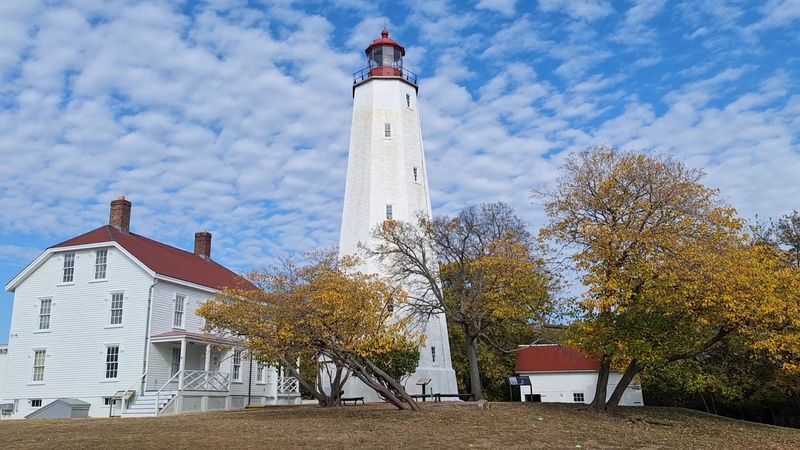
Salt air, rusting gun batteries, and a row of handsome yellow-brick homes make the northern end of Sandy Hook feel like several destinations stitched together. Begin near the Sandy Hook Lighthouse, which has been guiding ships since 1764 and is the oldest operating lighthouse in the country.
Its simple stone tower stands beside the former keeper’s quarters, creating a compact architectural snapshot from long before the surrounding military post took shape.
From there, walk into Fort Hancock, where officers’ quarters face Sandy Hook Bay and old barracks, weapons-testing structures, and defensive batteries reveal the peninsula’s strategic past.
The paved roads and Multi-Use Path make it easy to build a mostly level route, while short detours lead toward beaches, dunes, maritime forest, and views across the water to New York City. Battery Potter and other surviving fortifications supply the most dramatic contrasts: thick concrete walls surrounded by windblown coastal vegetation.
Lighthouse tours and access to historical buildings follow limited schedules, so check ahead if going inside matters to you. The Fort Hancock lots are generally the most convenient starting point and remain free even when seasonal beach-parking fees are being collected elsewhere on Sandy Hook.
Plan on two or three hours if you want to examine the batteries, walk Officers’ Row, and still leave time for the shoreline.
2. Liberty State Park and Central Railroad Terminal Walk – Jersey City
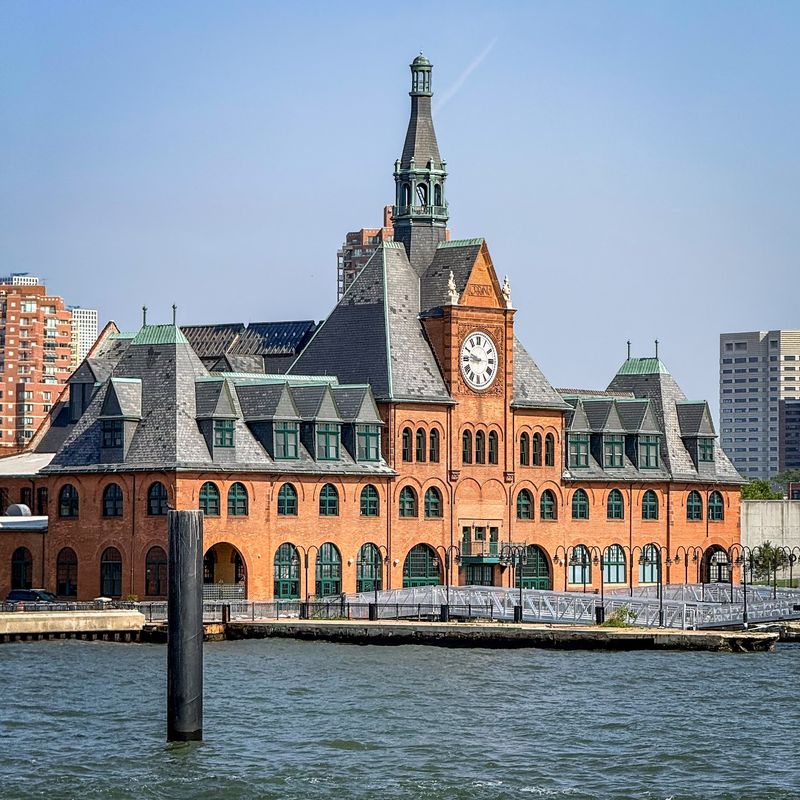
Few walks change scale as quickly as this one. One minute, you are watching egrets work the edge of a tidal marsh; the next, the Statue of Liberty is filling the horizon beyond a broad waterfront promenade.
Liberty State Park occupies land once dominated by rail yards and maritime traffic, and the red-brick Central Railroad of New Jersey Terminal is the key to understanding that transformation.
Millions of immigrants who entered through Ellis Island continued their journeys through this terminal, boarding trains or ferries bound for new lives across the country.
Start near the terminal and examine its arched façade, clock tower, and surviving train sheds before following the Hudson River Waterfront Walkway toward the Empty Sky 9/11 Memorial. Continue past lawns and coves for open views of Manhattan, Ellis Island, and New York Harbor.
For a quieter natural counterpoint, head toward the park’s interior and the Richard J. Sullivan Natural Area, where salt marsh, mudflats, and native vegetation support migratory birds.
The main waterfront paths are broad, paved, and easy to navigate, making this a strong choice for strollers, wheelchairs, and mixed-age groups. Parking is available within the park, and the light rail stops close enough to make the outing possible without a car.
Come early on a clear morning, when the skyline is sharp and the promenade still has breathing room.
3. Paterson Great Falls Historic District Walk – Paterson
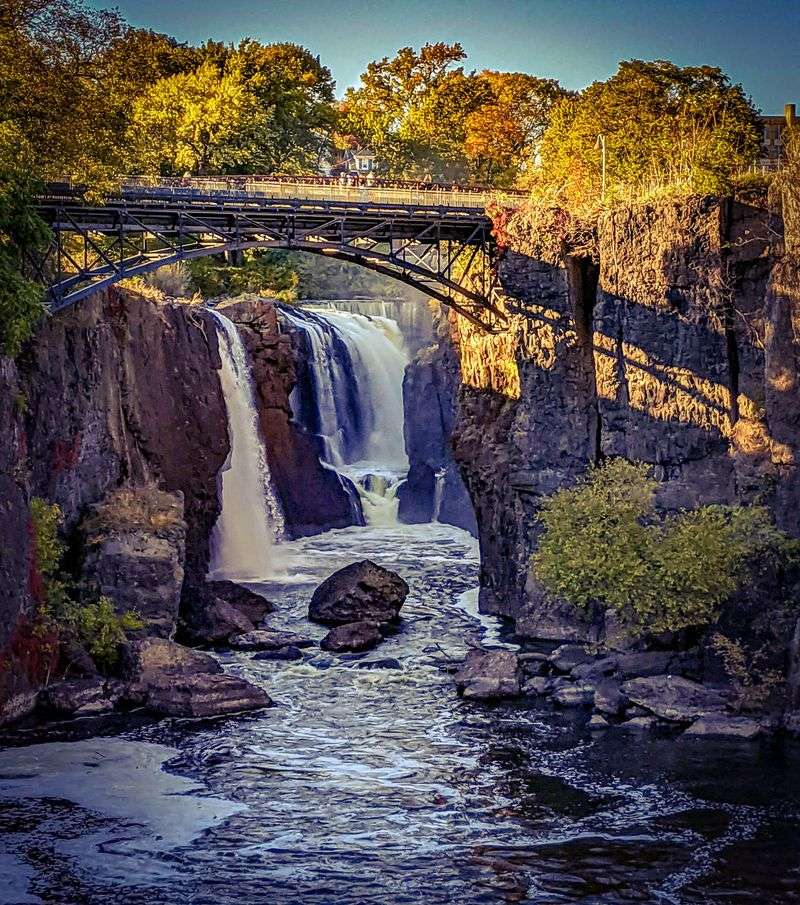
The Passaic River does not politely trickle through Paterson. It drops roughly 77 feet over a wall of ancient basalt, throwing mist into a district of brick mills, stone raceways, bridges, and factories.
That force is precisely why Alexander Hamilton backed the creation of Paterson as America’s first planned industrial city in the 1790s. A short walking route can begin at Overlook Park, where the main viewing platform delivers the broadest look at the falls.
Continue toward Mary Ellen Kramer Park for another angle, then follow the streets and paths through the surrounding historic district. The remaining mill buildings and raceway system show how river power drove silk production, locomotive construction, and other industries that shaped the city.
Nearby Hinchliffe Stadium adds another layer: the restored Art Deco venue was once a major home for Negro Leagues baseball.
This is an urban historical walk rather than a conventional hike, but nature remains impossible to ignore—the waterfall supplies the soundtrack, the river bends through the industrial landscape, and peregrine falcons sometimes appear above the gorge.
Free parking near Overlook Park is limited, particularly on weekends, so arriving early saves frustration. Ranger-led walks are offered when staffing permits and are worthwhile for decoding structures that can otherwise look like disconnected ruins.
Even without a tour, allow at least 90 minutes to circle the main overlooks and inspect the district.
4. Batsto Village and Batsto Lake Trail – Hammonton
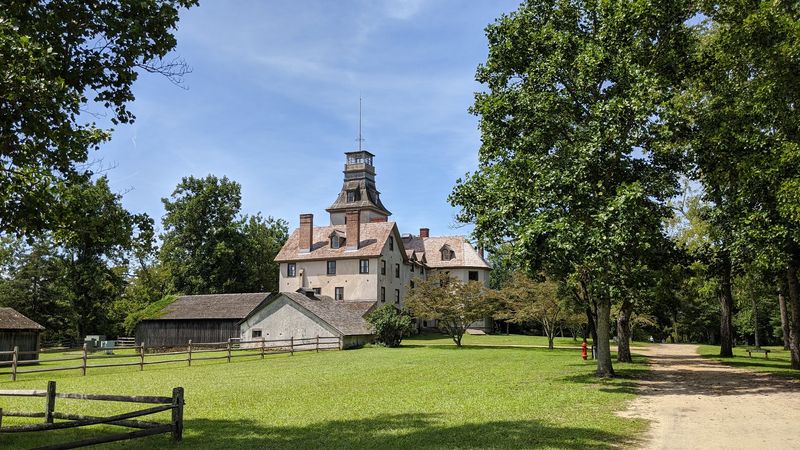
Deep in the Pine Barrens, a 32-room mansion stands among workers’ cottages, a gristmill, a general store, and one of the country’s oldest operating post offices. Batsto began as an ironmaking center in 1766, later turned to glass, and eventually became part of industrialist Joseph Wharton’s estate.
The surviving village is unusually complete, which makes walking its sandy lanes feel less like visiting a single museum and more like entering an entire company town. Start at the visitor center, then follow the history trail past the mansion, sawmill, barns, carriage house, and other structures clustered around the old industrial core.
The architecture ranges from modest work buildings to the mansion’s much grander Italianate-influenced profile, neatly illustrating who held power here. After exploring the village, pick up the Batsto Lake Trail for an easy woodland loop beside tea-colored water.
Pitch pines, cedar swamps, sandy soil, and the quiet lake replace the brick and timber of the settlement without requiring a drive to another trailhead. The complete loop is about four miles, but shorter walks along the lakeshore are easy to arrange.
Mansion tours and demonstrations are scheduled rather than constant, so check the calendar before making them the centerpiece of your visit. Autumn brings excellent color, though the green-and-copper landscape has a moody appeal in every season.
5. Allaire Historic Village and Pine Creek Trail – Wall Township
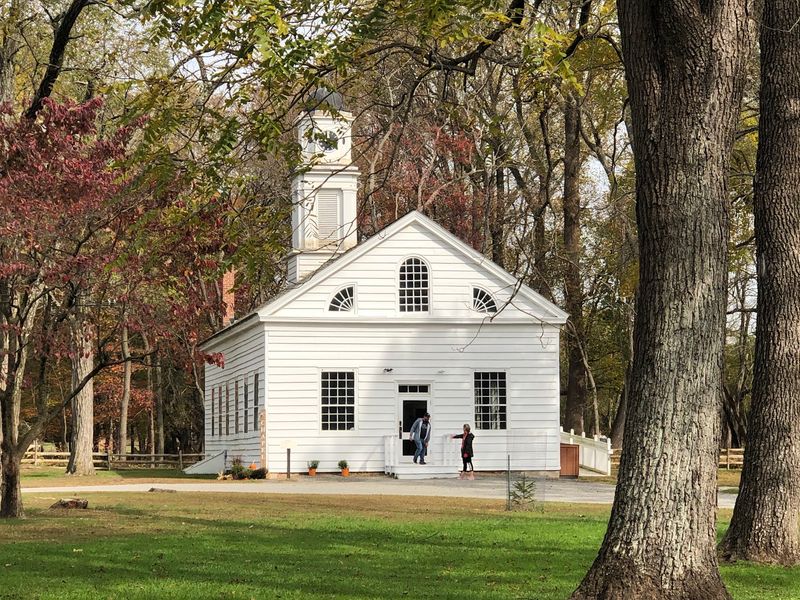
A blacksmith’s hammer may be the first clue that this is not an ordinary park walk. Allaire Historic Village preserves the Howell Works, a 19th-century community where locally sourced bog iron was turned into pipes, stoves, and other goods.
Its brick row houses, workshops, general store, church, and imposing Big House gather around a grassy center that is ideal for wandering without a fixed route. Look closely at the buildings before heading toward the park’s natural side; their differences reveal how a self-contained industrial settlement functioned before the Civil War.
Living-history programs sometimes add working craftspeople, demonstrations, and open interiors, but the village remains interesting even on quieter days. From the historic core, continue onto nearby woodland paths or toward the Manasquan River, where pine and hardwood forest soften the transition from industry to nature.
Despite its name, the Pine Creek Railroad is a historic narrow-gauge railway attraction rather than the principal walking trail, and its seasonal train rides make a fun addition for families.
Hikers who want more mileage can use the marked multiuse trails in the larger state park, though cyclists and horseback riders may share portions of the network.
Most of the village itself is easy underfoot, while forest routes can become muddy after rain. Arrive when the village buildings are scheduled to open if historical interpretation is the priority; come later for a quieter walk through the grounds.
6. Ringwood Manor and Grounds Walk – Ringwood
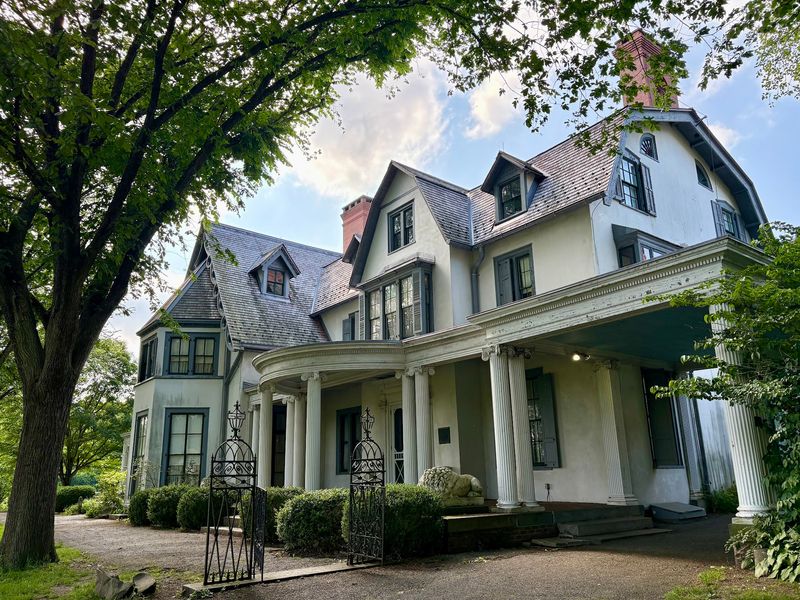
Iron shaped Ringwood long before its lawns, gardens, and rambling manor suggested country-estate elegance. The property served generations of ironmasters, including the Ryerson, Cooper, and Hewitt families, and supplied material connected to both the Revolutionary War and America’s industrial expansion.
Today, the white-painted manor house sprawls across the landscape in a wonderfully irregular fashion, reflecting additions made over many decades rather than one tidy architectural plan.
A self-guided walk around the grounds passes formal gardens, broad fields, old outbuildings, iron objects, a cemetery, and traces of the industrial community that once operated here.
The contrast is the point: refined domestic architecture sits inside rugged Highlands terrain built on hard labor and natural resources. Several hiking routes begin near the estate for anyone who wants to extend the outing into Ringwood State Park.
The trails quickly become rockier and more demanding than the lawns, with forest, streams, and glacially shaped ground replacing the cultivated landscape. A relaxed circuit of the estate can fill an hour, while adding a trail turns the visit into a half-day trip.
The grounds are open throughout the year, but interior tours, carriage-barn exhibits, and special programs follow their own schedules and may be affected by restoration work. Summer weekend parking fees may apply.
Wear proper shoes if leaving the estate paths; North Jersey rocks have a knack for appearing exactly where a casual walker least expects them.
7. Skylands Manor and New Jersey Botanical Garden Walk – Ringwood
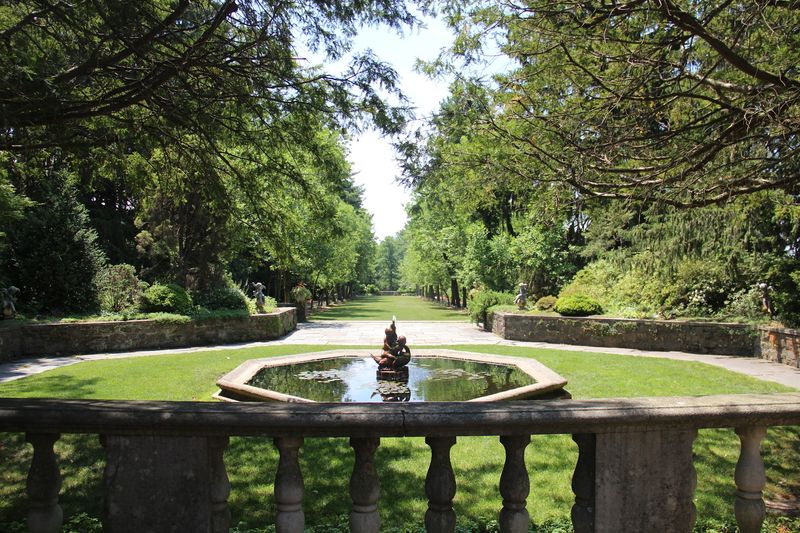
The granite walls and leaded windows of Skylands Manor would look convincing in the English countryside, yet the surrounding gardens unmistakably belong to the New Jersey Highlands. Built in the 1920s in Tudor Revival style, the manor anchors the state’s official botanical garden, where formal design gradually loosens into woodland.
Begin near the house, taking in its stonework, chimneys, and asymmetrical roofline before exploring the terraces and garden rooms nearby. From there, follow the paths through seasonal collections that include lilacs, peonies, magnolias, crabapples, annual displays, and native plants.
The most satisfying route does not rush between flower beds. It drifts from clipped lawns and stone steps into quieter areas where trees, ponds, and forest edges take over.
That progression reveals how carefully the former private estate was designed to frame both architecture and landscape. Admission to the garden is free, though parking fees may be charged on summer weekends and holidays.
The grounds are extensive enough for several return visits, especially since spring blossoms, summer borders, and fall foliage create completely different walks. Manor interiors are generally accessible only through scheduled tours or events, so the exterior and gardens should be the main plan.
Pick up a map before setting out, and allow at least two hours. Comfortable shoes are useful even on the gentler paths, as the property includes slopes, steps, and enough tempting side routes to stretch a “quick stroll” considerably.
8. Jockey Hollow and Wick House Trail – Morristown
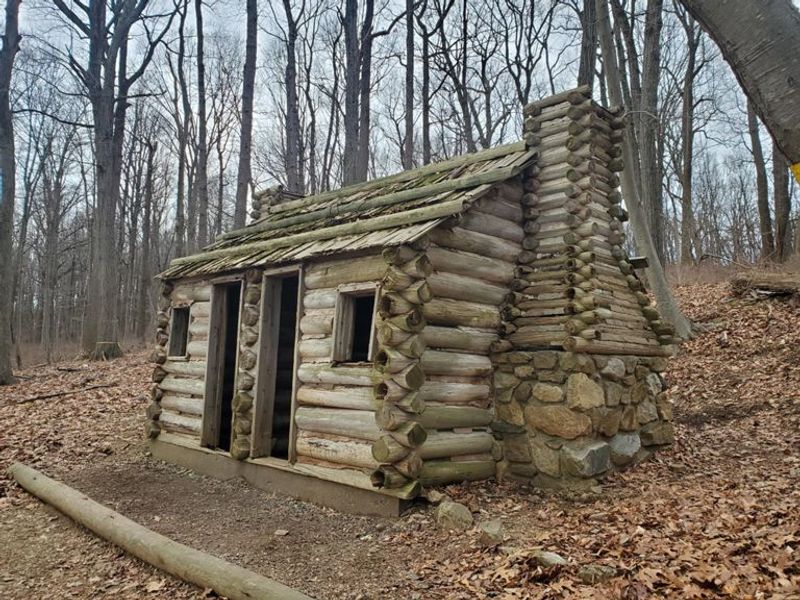
Winter is built into the story at Jockey Hollow. More than 10,000 Continental Army soldiers camped here during the brutally cold winter of 1779–1780, cutting timber, building huts, and enduring shortages while snow buried the hills.
The landscape has recovered, but the preserved Wick House and reconstructed soldier huts give the hardship a physical scale that dates and plaques cannot. Begin near the visitor center and Wick Farm, where the 18th-century farmhouse represents the civilian world drawn into the army’s encampment.
Then use the Yellow Trail or Tour Road to reach the hut sites, passing hardwood forest, rolling ground, and open fields along the way. The replica cabins are deliberately plain and cramped; standing among them makes it easier to imagine entire brigades spread across the surrounding slopes.
Several color-marked trails allow visitors to adjust the walk. The Yellow Trail connects major historical points, while the Red and Green trails emphasize streams and springs.
Longer routes reach quieter woods, ponds, and views across the park. Parking is available near the visitor center, Wick House, huts, and other trail access points, so families can shorten the route without missing its essential landmarks.
Trail surfaces vary, and the hills are more noticeable than they look on a map. Give yourself two or three hours, especially if the Wick House or visitor exhibits are open.
9. Waterloo Village and Morris Canal Walk – Stanhope
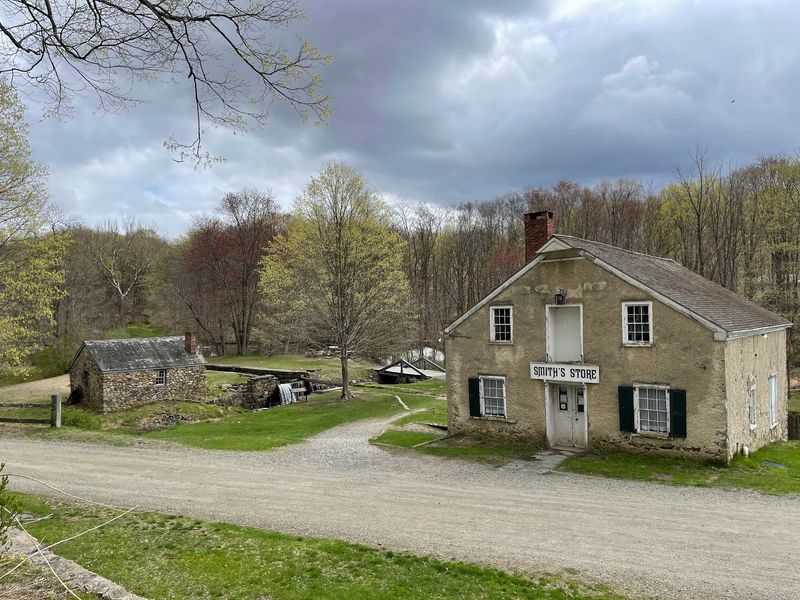
Water once carried loaded canal boats directly through this peaceful village at the edge of Allamuchy Mountain State Park.
During the 19th century, Waterloo was a busy stop on the Morris Canal, a remarkable transportation system that hauled coal and iron across northern New Jersey using locks and inclined planes to conquer steep changes in elevation.
The canal has gone quiet, but its course still organizes the landscape. Walk past the restored inn, general store, church, blacksmith shop, gristmill, and workers’ homes, then follow the water and nearby Musconetcong River into greener surroundings.
Weathered stone, timber buildings, and old mechanical features give the village an appealingly practical character; this was infrastructure and commerce, not an ornamental estate. The Winakung area also interprets Lenape history, extending the site’s story far beyond the canal era.
Birds, river vegetation, and forested hills now occupy spaces once dominated by cargo and industry, making the natural setting part of the experience rather than background scenery.
The grounds can be explored during daylight hours, while museums, demonstrations, and building interiors generally operate on more limited seasonal schedules.
Flat village paths suit an easy outing, and longer trail connections are available for walkers who want to continue into the state park. Bring water and a snack, since on-site services can be limited.
Two hours covers the village comfortably; add more if a canal museum or guided program is available.
10. Duke Farms Estate Walk – Hillsborough
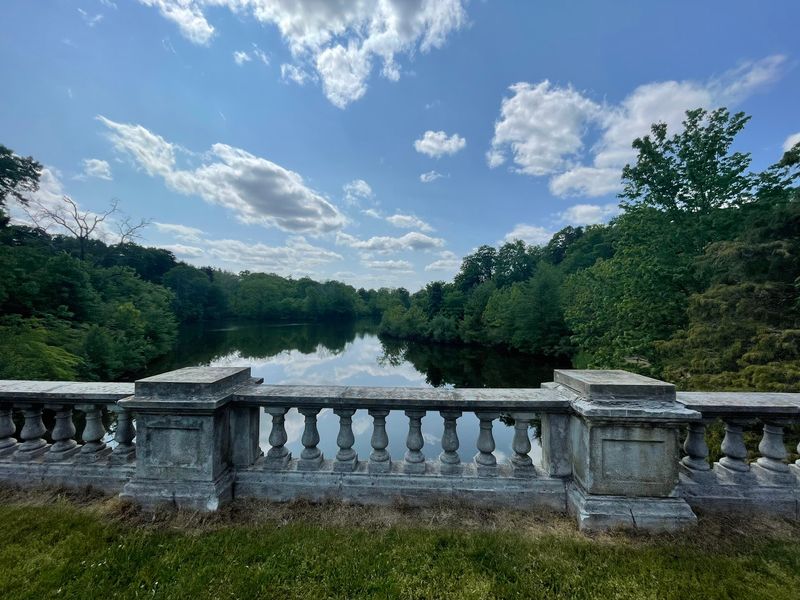
A stone farm barn, an orchid-filled glasshouse, woodland lakes, and the unfinished foundation of a mansion all belong to the same enormous Hillsborough estate.
Tobacco heiress Doris Duke inherited the property created by her father, James Buchanan Duke, and spent decades reshaping it through architecture, horticulture, conservation, and occasionally very large ideas.
Visitors now enter through the historic Farm Barn before choosing among roughly 20 miles of roads and paths. A strong first-time route connects the Orchid Range, the Coach Barn, landscaped lakes, woodland, and the ruins of the proposed mansion that became known as the Old Foundation.
The buildings do not form a single architectural theme, which is part of the fun. Functional stone structures, ornate greenhouse design, and monumental remnants appear between meadows and restored habitat, keeping the walk visually unpredictable.
Wildlife is not incidental here: the estate supports birds, pollinators, and extensive conservation work, so binoculars are worth carrying. Because the property covers thousands of acres, decide on priorities before leaving the orientation area; trying to see everything on foot can turn a leisurely outing into an endurance test.
Trails are generally open Tuesday through Saturday, with the estate closed on Sundays and Mondays to give its ecosystems time to recover. Saturday parking may require an advance pass, and hours vary seasonally.
The Farm Barn Café is useful for a post-walk lunch when open, but carrying water is essential.
11. Historic Smithville Park and Rancocas Creek Trails – Eastampton
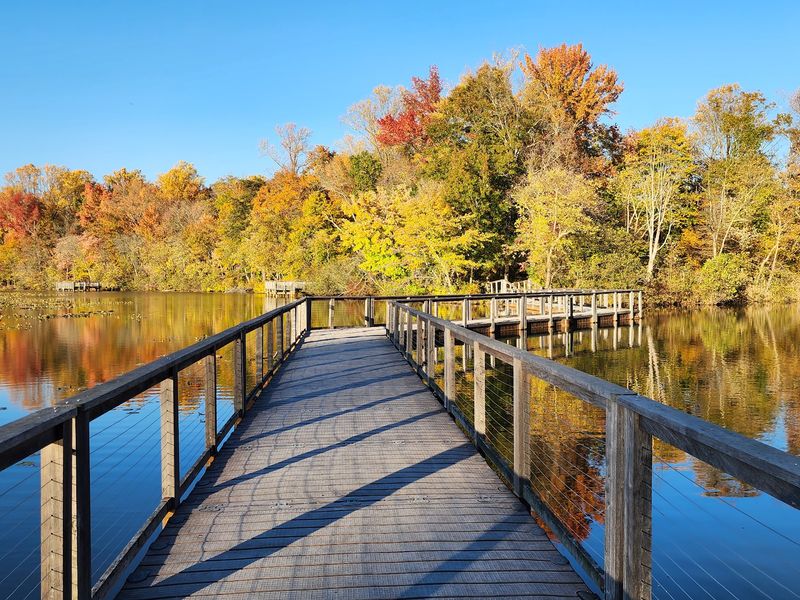
The floating trail across Smithville Lake supplies the playful moment, but the mansion overlooking the water provides the plot. Historic Smithville grew around an industrial complex that produced woodworking machinery, and businessman Hezekiah B.
Smith transformed both the factory and surrounding community during the 19th century. His elaborate mansion, with its bold silhouette and richly layered design, stands apart from the mills, workers’ housing, schoolhouse, and other practical buildings connected to village life.
Begin near the mansion and follow the paths through the historic core before heading toward the lake and wooded trails. The park’s boardwalks and floating bridge place walkers directly over the water, where turtles, herons, and changing reflections slow the pace.
Beyond the lake, trails enter Smith’s Woods and follow sections of the Rancocas Creek landscape, creating an easy mix of architecture and nature without requiring strenuous climbing. Interpretive signs help connect surviving structures to the factory town that once operated here.
Mansion interiors are accessible through scheduled tours rather than daily drop-ins, but the exterior and park grounds still make a complete visit. Parking and entry to the county park are free, and picnic areas make it simple to extend the afternoon.
Allow about two hours for the central historical area and lake paths, or longer if exploring the woodland trail network. After wet weather, expect muddy patches away from the paved and boardwalk sections.
12. D&R Canal Towpath and Historic Lambertville Walk – Lambertville
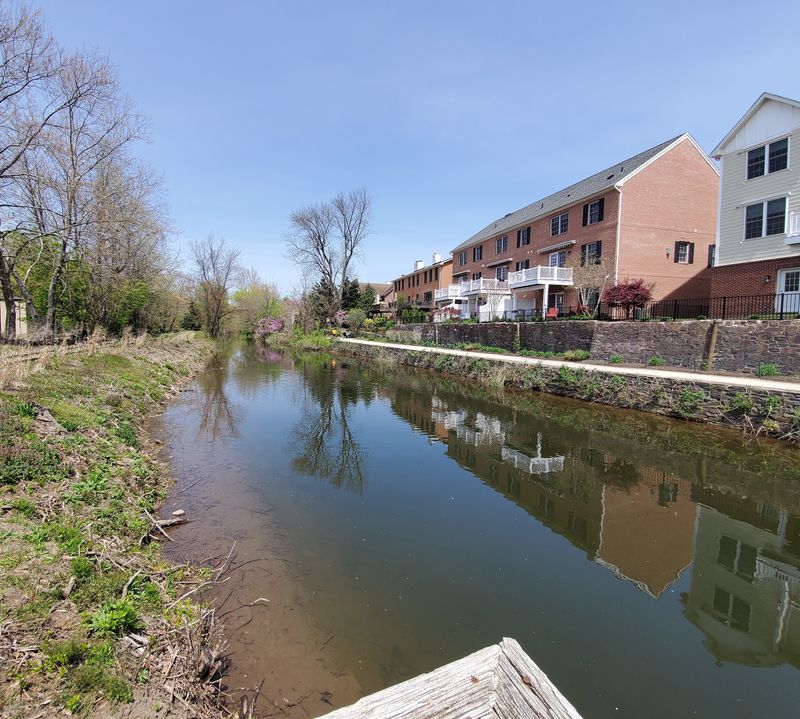
Start beside the canal, where the level towpath slips behind Lambertville’s busier streets and immediately changes the tempo. Mules once walked this route pulling freight boats along the Delaware and Raritan Canal, moving coal and other goods between the Delaware River and central New Jersey.
Today, the crushed-stone path runs beside calm water, wooded banks, locks, old industrial buildings, and backyard gardens. Walk north or south for as long as time allows, then return through Lambertville’s historic street grid for the architectural half of the outing.
Bridge Street and Union Street are lined with brick storefronts, painted row buildings, former factories, churches, and houses that reflect the city’s growth as a river and canal town. The combination works because nothing feels artificially assembled: transportation, industry, commerce, and the Delaware River all shaped the same compact place.
For an extra view, walk toward the bridge and look along the river before looping back downtown. The towpath is almost entirely flat, though its stone surface can be soft or muddy after heavy rain, and cyclists share the route.
Parking in central Lambertville is largely metered and fills quickly on busy weekends, so an early arrival is worth the alarm. Choose a turnaround point based on time rather than mileage, then save at least an hour for the town streets.
This is one walk where coffee, antiques, architecture, and canal wildlife fit together without requiring the car again.
Share this story