A child’s voice in an empty nursery. Footsteps climbing a staircase after the doors have been locked.
The faint perfume of a woman who died decades ago. New Jersey’s oldest buildings come with plenty of unsettling stories, and some are repeated too often to dismiss with a nervous laugh.
These are not seasonal attractions filled with masked actors and rubber skeletons. They are former prisons, ironmasters’ estates, Revolutionary War sites, Victorian hotels, and grand family homes where visitors and staff have reported things they cannot easily explain.
A few openly welcome paranormal investigators, while others treat their ghost stories as folklore best heard during a lantern-lit tour. Either way, their documented histories provide more than enough darkness.
From a notorious jail in Mount Holly to elegant Cape May mansions whose former residents may never have checked out, these 15 places reveal the eerier side of the Garden State’s past. Bring an open mind—and pay attention when the floorboards creak.
1. White Hill Mansion – Fieldsboro
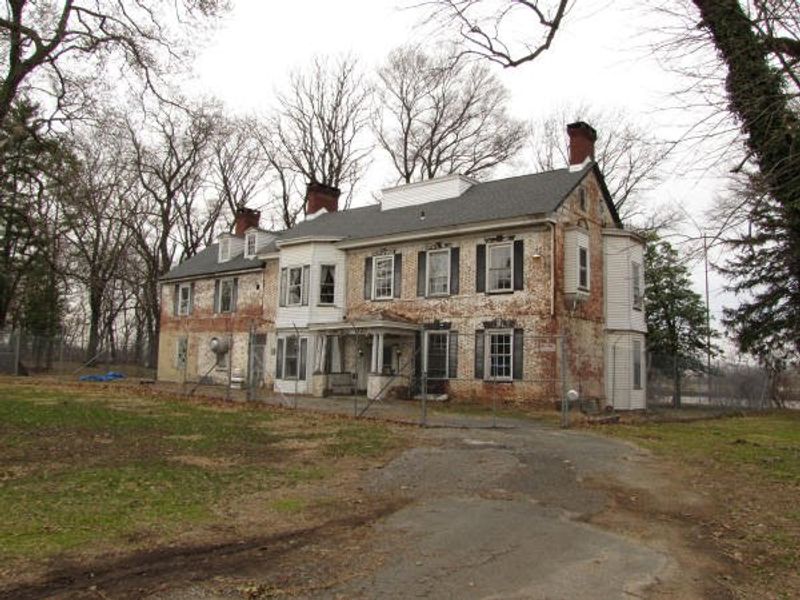
Perched above the Delaware River, this Fieldsboro mansion already has the right setting for a ghost story: old brickwork, dim rooms, narrow passages, and a history stretching back to the early 1700s.
The Field family established the estate, and its later lives included periods as a restaurant and private residence.
Restoration work has exposed architectural layers from different eras, making a walk through the building feel like moving backward through time.
Paranormal investigators and volunteers have reported shadowy figures, unexplained footsteps, disembodied voices, and sounds resembling children at play when no young visitors were present.
The nursery is frequently mentioned in stories of activity, while other reports involve doors moving and equipment reacting in otherwise empty rooms. White Hill does more than tolerate its supernatural reputation.
The nonprofit caring for the property offers candlelight experiences, public ghost hunts, and private investigations alongside daytime history tours. That makes it one of the state’s most approachable destinations for anyone who wants more than a spooky story told from the sidewalk.
Because restoration is ongoing, entry is generally through scheduled guided programs rather than casual wandering. Book ahead, wear sensible shoes, and do not expect polished museum perfection.
The unfinished edges, exposed history, and occasional unexplained noise are precisely what make White Hill so compelling.
2. The Spy House – Port Monmouth
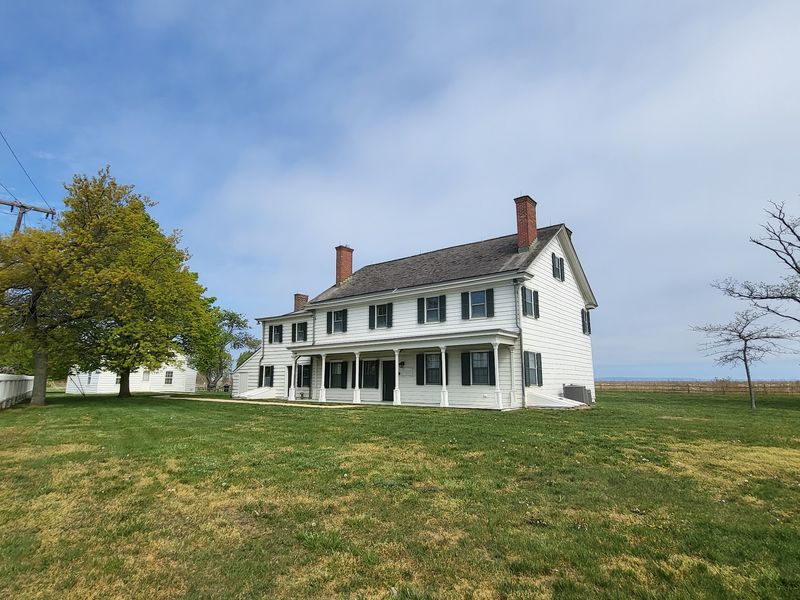
Salt air and old timber create enough strange noises on their own, but generations of visitors believe something more lingers inside this weathered Port Monmouth landmark.
Officially called the Seabrook-Wilson House, the building sits beside Sandy Hook Bay in Bayshore Waterfront Park and dates in part to the 18th century.
Its famous nickname comes from a tale that patriots watched British ships from the property during the Revolutionary War. Historians have challenged that story, finding no solid evidence that the house operated as the waterfront tavern described in popular lore.
The ghosts, however, have proved harder to remove from local imagination. Stories collected during the property’s museum years describe uniformed soldiers, a woman in old-fashioned clothing, unexplained voices, and figures watching from upper windows.
At one point, enthusiasts claimed the house held more than 20 spirits. Whether those tales reflect genuine encounters or the storytelling of an enthusiastic former caretaker, they helped turn an endangered farmhouse into a beloved local curiosity.
Today, the attraction is as much about the building’s documented Bayshore history as its paranormal reputation. Visitors can explore the surrounding beach and marshland even when the house is closed, but interior access is limited and seasonal.
Check the park schedule before making a special trip, and treat the nickname as folklore rather than settled Revolutionary history.
3. Proprietary House – Perth Amboy
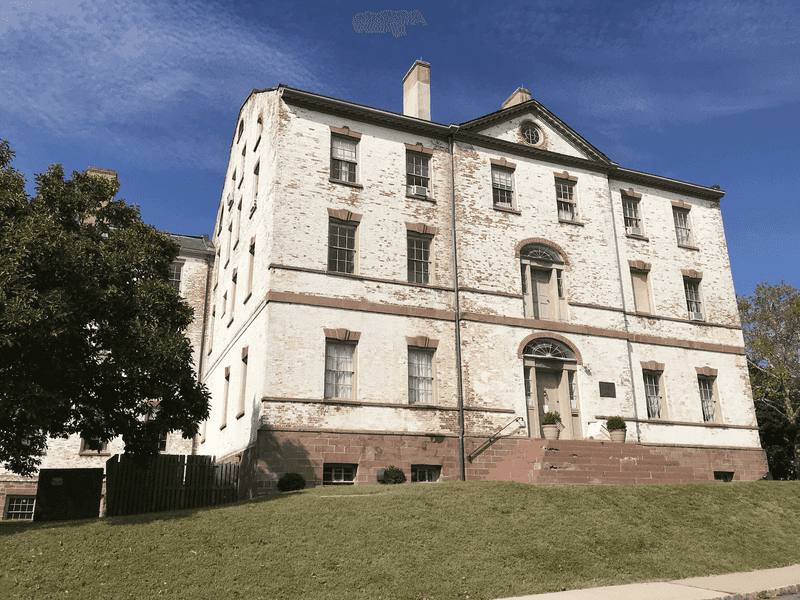
Benjamin Franklin’s son once occupied this Perth Amboy mansion, although the two men stood on very different sides of the American Revolution. William Franklin served as New Jersey’s final royal governor and moved into the newly completed house in 1774, only to be arrested after independence erupted.
That clash of family, politics, and revolution gives the property a dramatic history before the ghost stories even begin. Paranormal accounts often focus on a small figure known as the Boy in Blue, reportedly seen on upper floors or darting through rooms.
Visitors and volunteers have also described a woman in period clothing, footsteps where no one is walking, voices, cold patches, and objects behaving oddly.
The mansion’s basement, which served various purposes during the building’s long and sometimes difficult life, carries a particularly uneasy reputation.
Proprietary House later became a hotel, private residence, and boardinghouse before preservation efforts rescued it. Today, its restored rooms interpret colonial government and the complicated Franklin family story, while seasonal programs lean into its supernatural side.
Regular guided tours are usually offered on selected days, and haunted lantern events appear around fall. The location near Perth Amboy’s waterfront makes it easy to combine with a walk through one of New Jersey’s oldest cities.
Even without a spectral encounter, standing inside America’s only surviving royal governor’s mansion delivers a satisfying shiver of its own.
4. The Hermitage – Ho-Ho-Kus
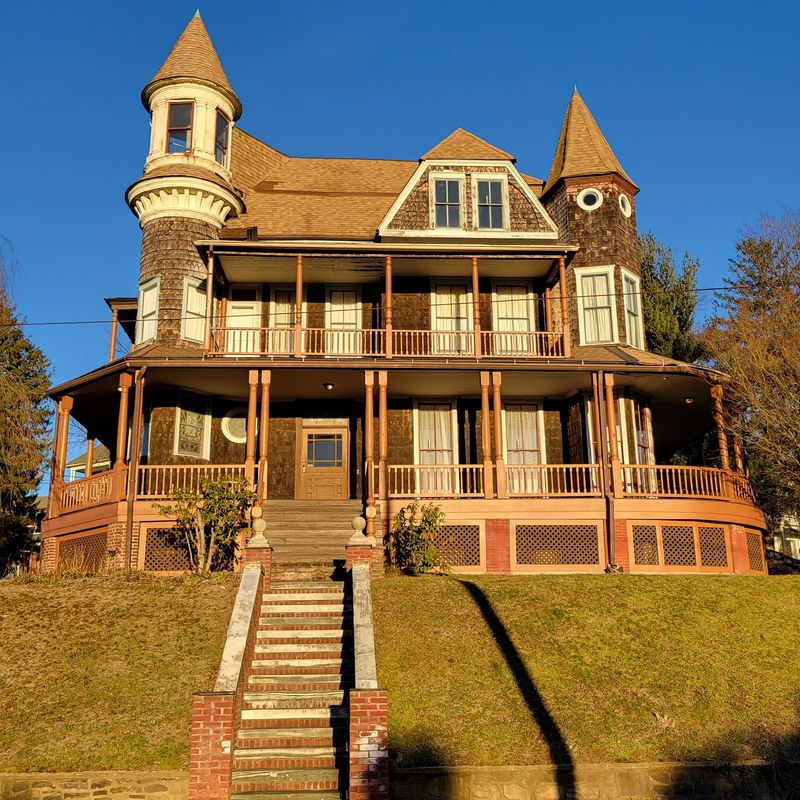
The most romantic episode in this Ho-Ho-Kus estate’s history may also be the source of its most persistent ghost story. During the Revolutionary War, the earlier house on the property welcomed prominent figures including George Washington and Alexander Hamilton.
In 1782, Aaron Burr married Theodosia Prevost there, beginning a marriage cut short by her death less than a dozen years later. Some visitors believe Theodosia remains connected to the site, though she is only one of several presences reportedly sensed inside.
Accounts have included a woman appearing at an upper window, voices in empty rooms, footsteps, sudden cold, and organ music despite no visible musician.
The current Gothic Revival mansion, completed in the mid-19th century, gives those stories a suitably dramatic stage.
Pointed details, shadowed halls, family possessions, and rooms shaped by generations of the Rosencrantz family make it feel more intimate than a conventional museum. The property remained in that family for more than 160 years, leaving behind an unusually rich collection of furnishings and personal history.
Guided tours provide the best way inside, while occasional seasonal events explore the estate after dark. Do not arrive expecting a theatrical haunted house; the experience is quieter and more intriguing than that.
The real pleasure lies in noticing the domestic details—and wondering whether everyone connected to them truly left.
5. Emlen Physick Estate – Cape May
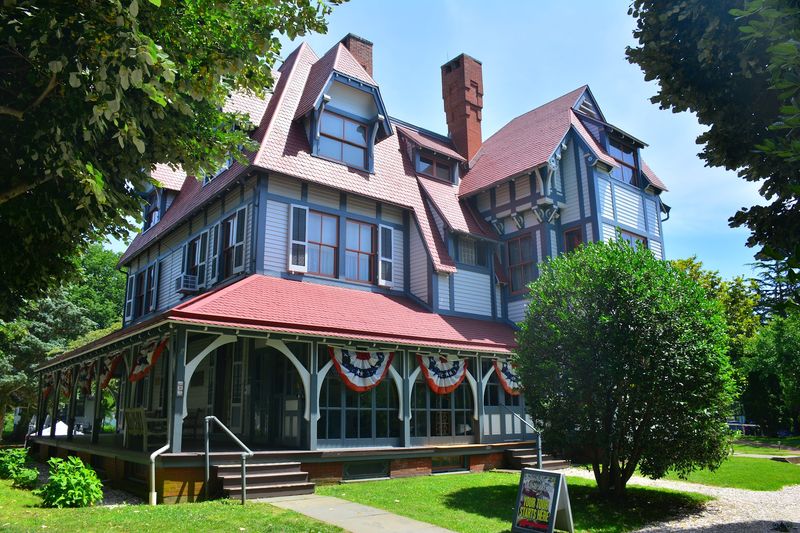
Recorded voices are part of the tour at this Cape May landmark, so visitors are not simply asked to accept a guide’s word that something unusual has happened.
Staff members and investigators have gathered audio, photographs, and reports of unexplained activity inside the 1879 mansion, which is widely considered the centerpiece of Cape May’s haunted reputation.
Dr. Emlen Physick shared the house with his widowed mother, Frances, and two aunts, Emilie and Isabella. Today’s ghost stories include footsteps, shadows, voices, and the sensed presence of former residents—as well as phantom dogs that may recall Dr. Physick’s fondness for his pets.
The building is equally memorable in daylight. Architect Frank Furness gave it an unconventional Victorian design with oversized chimneys, projecting bays, and details that look more muscular than delicate.
Inside, period rooms reveal how a wealthy Cape May household functioned beyond the beachfront hotels. Several tour formats explore the supernatural side, including programs that discuss Victorian Spiritualism and share alleged electronic voice phenomena captured in the house.
Those specialized tours can sell out during fall, so advance tickets are smart. The estate also has a carriage house, museum shop, and restaurant, making it easy to linger after the tour.
Of all New Jersey’s paranormal stops, this is one of the easiest to experience without sacrificing historical substance for cheap scares.
6. Ringwood Manor – Ringwood
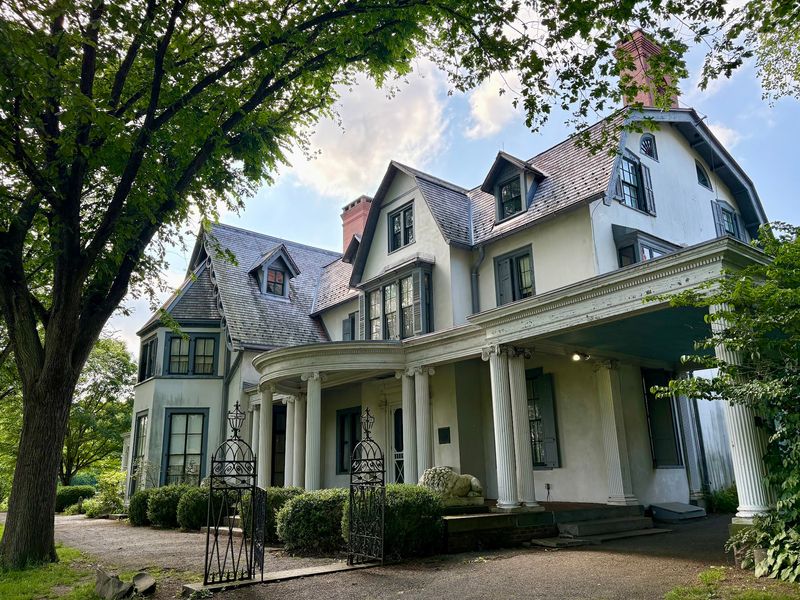
Iron, wealth, war, and family tragedy all accumulated on this northern New Jersey estate long before ghost tales became part of its identity. Ringwood’s furnaces supplied metal across generations, while owners including Robert Erskine and the Cooper-Hewitt family shaped the sprawling property.
Erskine served as George Washington’s mapmaker during the Revolution and is buried on the grounds, which stretch into the forests of Ringwood State Park.
The manor itself grew through repeated additions rather than one tidy building campaign, resulting in a rambling house filled with corridors, unexpected turns, servants’ spaces, and rooms from different periods.
That irregular layout gives every sound somewhere mysterious to travel. Stories associated with the estate include apparitions, strange lights, footsteps, voices, and the sense of unseen company in both the house and surrounding landscape.
Rather than presenting these accounts as proven fact, seasonal evening programs weave local legends and old superstitions into a long, lantern-lit exploration of the site.
These events often combine indoor rooms with outdoor walking and may continue toward the historic cemetery, so sturdy footwear matters.
Daytime mansion tours concentrate on art, industry, and the families who lived here, while the grounds can be enjoyed more casually. Visit in autumn, when the woods darken early and the old iron estate looks ready to keep a few secrets.
7. Gabreil Daveis Tavern Museum House – Glendora
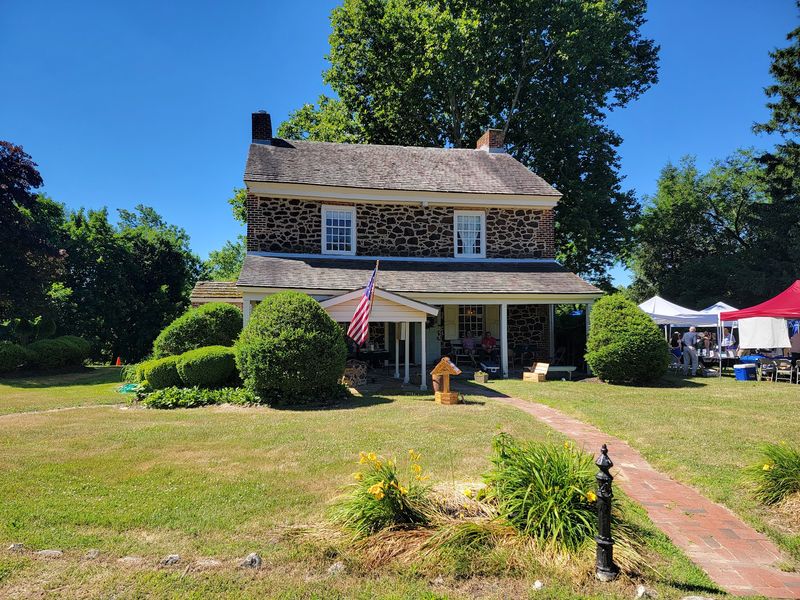
Low ceilings and thick walls tell you immediately that this Glendora building was designed for a world very different from modern suburban New Jersey. Constructed in 1756 near a busy colonial route, the tavern served travelers moving between Philadelphia and the shore.
During the Revolutionary War, it was used as a hospital, tying the house to a period of injury, disease, and uncertainty that naturally fuels later ghost lore. Visitors, caretakers, and paranormal teams have reported footsteps, knocks, shifting shadows, unexplained voices, and abrupt temperature changes.
Some accounts describe activity near the attic and upper rooms, while others center on the building’s former hospital use. None of that needs embellishment; simply imagining wounded soldiers arriving at an isolated 18th-century tavern supplies enough unease.
The house is now a small museum furnished to reflect its colonial past, with guides explaining domestic life, travel, medicine, and local wartime history. It is typically open on limited Sunday afternoons during much of the year, so checking the current calendar is essential.
Admission has traditionally been free or donation-based, making it an easy addition to a South Jersey history day. The property’s appeal comes from its scale: this is not a grand mansion built to impress.
It is a compact, workaday survivor where every floorboard, hearth, and cramped staircase feels close enough to touch—and close enough for something unseen to touch back.
8. Hancock House – Hancocks Bridge
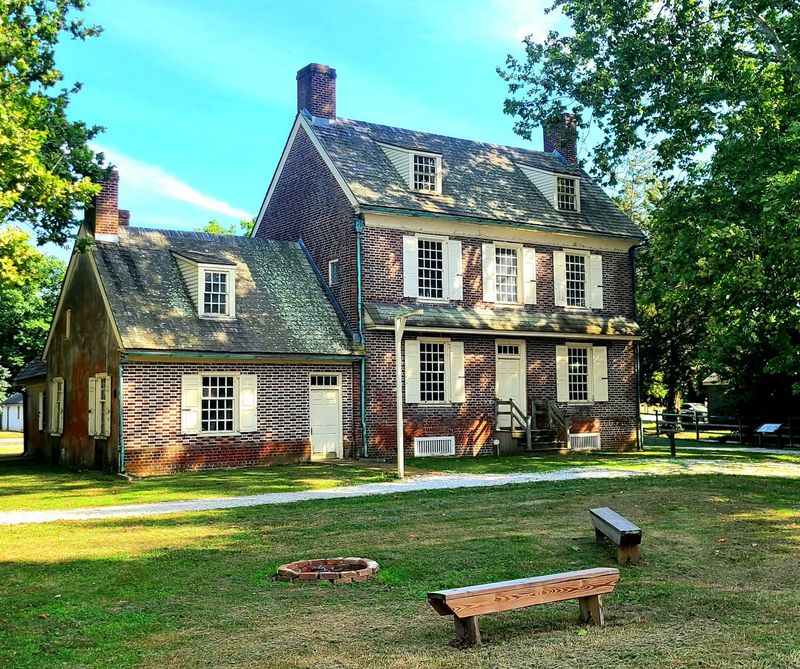
A violent attack in March 1778 permanently changed this handsome brick house near the marshes of Salem County. Local militia members had gathered inside when Loyalist troops, serving with British forces, approached during the night.
The attackers reportedly promised mercy, then stormed the building with bayonets, killing and wounding men in what became known as the Hancock House Massacre. Judge William Hancock, a civilian and Loyalist sympathizer, was among those fatally injured in his own home.
With a history that grim, supernatural stories were almost inevitable. Visitors have claimed to hear groans, hurried movement, voices, and the clatter of conflict in otherwise quiet rooms.
One enduring legend involves bloodstains that supposedly resisted attempts at removal, though it belongs to the site’s folklore rather than its confirmed physical record. What is beyond dispute is the weight of the documented event.
The house still stands near the route followed by the raiding force, surrounded by a landscape open enough to imagine how exposed its occupants must have felt.
Operated as a state historic site, it offers scheduled tours and programs focused on the massacre, colonial architecture, and the region’s Revolutionary history.
Hours can be limited, so verify access before driving into this rural corner of South Jersey. Even in full daylight, the rooms make the past feel uncomfortably close.
9. Burlington County Prison Museum – Mount Holly
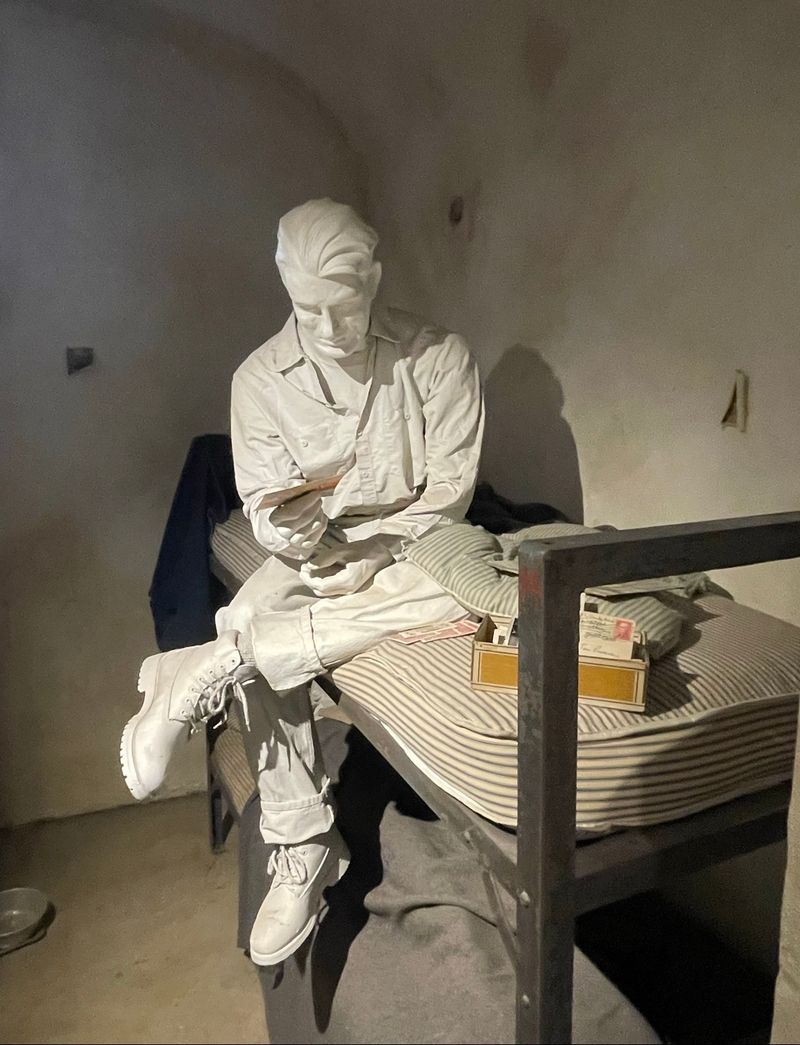
There is no need to manufacture menace inside a stone jail that confined people for more than 150 years. Built in 1811 and used until 1965, the former Burlington County Prison still contains barred cells, heavy doors, inmate graffiti, narrow passageways, and spaces associated with punishment and execution.
Architect Robert Mills designed the building with reform-minded ideas about ventilation and security, but the reality of confinement remains written across its walls.
Paranormal reports include footsteps in vacant corridors, voices from empty cells, sudden cold, shadowy movement, and the feeling of being touched when no one is nearby.
Investigators have repeatedly visited the museum, and its haunted reputation has become an acknowledged part of the visitor experience rather than a whispered afterthought.
Guests can even rent a spirit box for a self-directed attempt at communication, although skeptics may find the surviving graffiti and criminal history more affecting than any burst of radio static.
A regular visit allows plenty of time to examine the cells, stories of escapes, and accounts of former prisoners. Audio tours add context, while an escape game provides a lighter challenge in an otherwise severe setting.
Seasonal evening ghost tours are especially popular and usually require advance planning. Located in central Mount Holly, the museum is easy to pair with the town’s historic streets—assuming you feel like walking through another old building afterward.
10. The Flanders Hotel – Ocean City
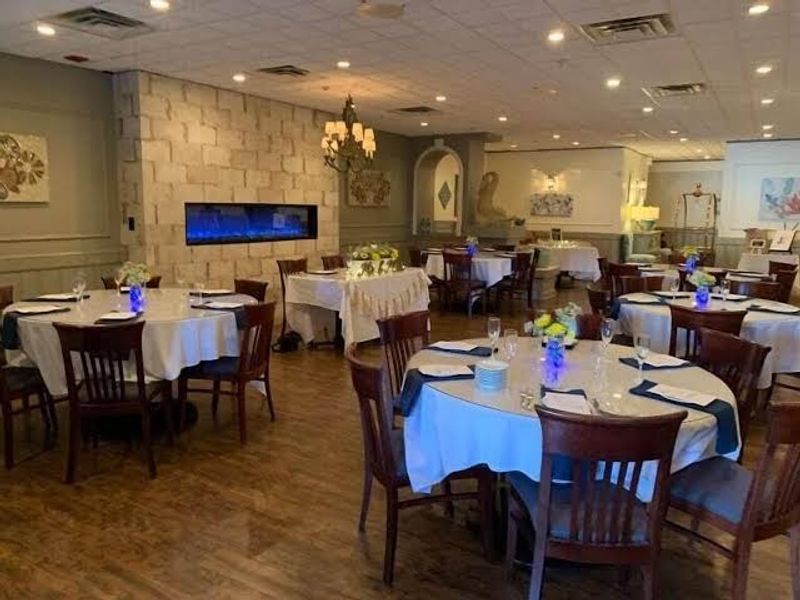
Emily has become such a familiar part of this Ocean City hotel’s identity that the dining room bears her name. She is described as a young woman with long brown hair and a white dress, sometimes appearing in hallways before vanishing through a wall.
Other stories credit her with laughter, singing, loosened lightbulbs, turning doorknobs, and playful disturbances on several floors. A portrait created from witness descriptions hangs inside the hotel, giving its best-known alleged resident a face.
Unlike the threatening figures attached to darker locations, Emily is generally portrayed as cheerful and sociable—a spirit who seems pleased that the grand seaside building remains busy.
The Flanders opened in 1923 and survived a devastating 1927 Boardwalk fire, thanks in part to its concrete-and-steel construction.
Its Spanish Mission Revival design, ornate public spaces, and old-fashioned scale still set it apart from newer Shore lodging. Guests stay in suites with kitchens and can dine, attend high tea, or simply step onto the Boardwalk from a prime central location.
That makes this the rare paranormal hotspot where spending the night requires no flashlight, waiver, or tolerance for dusty ruins. Summer brings crowds and higher rates, while the quieter off-season better suits anyone hoping to hear unexplained footsteps.
Whether Emily appears or not, the vintage corridors do much of the haunting work themselves.
11. The Union Hotel – Flemington
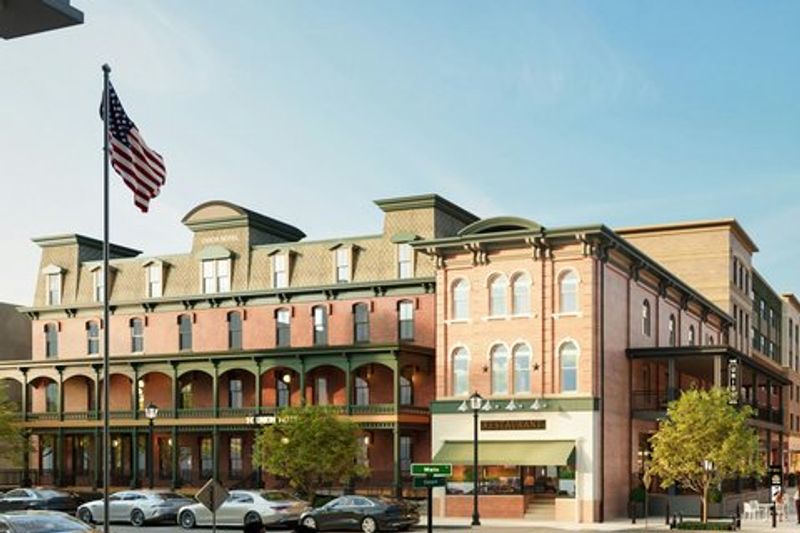
During the 1935 trial of Bruno Richard Hauptmann, reporters packed Flemington and turned its streets into a national media circus. The Union Hotel stood directly across from the courthouse, placing it at the center of the frenzy surrounding the kidnapping and death of Charles Lindbergh’s infant son.
That connection has long overshadowed the building’s earlier history, but it also feeds its reputation for lingering tension. Former workers have reported children’s voices, flickering lights, unexplained movement, and the unnerving sight of shoes apparently climbing a staircase without anyone wearing them.
Other stories describe a presence felt in office spaces after hours. The hotel’s long closure and years of redevelopment debate only made it look more mysterious to passersby.
Today, the historic façade remains an essential part of Flemington’s Main Street, while the surrounding courthouse district continues to draw visitors interested in the famous trial. Because access and redevelopment conditions can change, this is not a place to assume you can enter solely to search for ghosts.
Check the latest operating information and respect any restricted areas. Even an exterior stop offers plenty to consider: the courthouse, hotel, and compact streets make it easy to picture the crush of photographers and spectators who once overwhelmed the town.
Here, the haunting is as much about a traumatic national memory as any apparition reportedly roaming the stairs.
12. Batsto Mansion – Hammonton
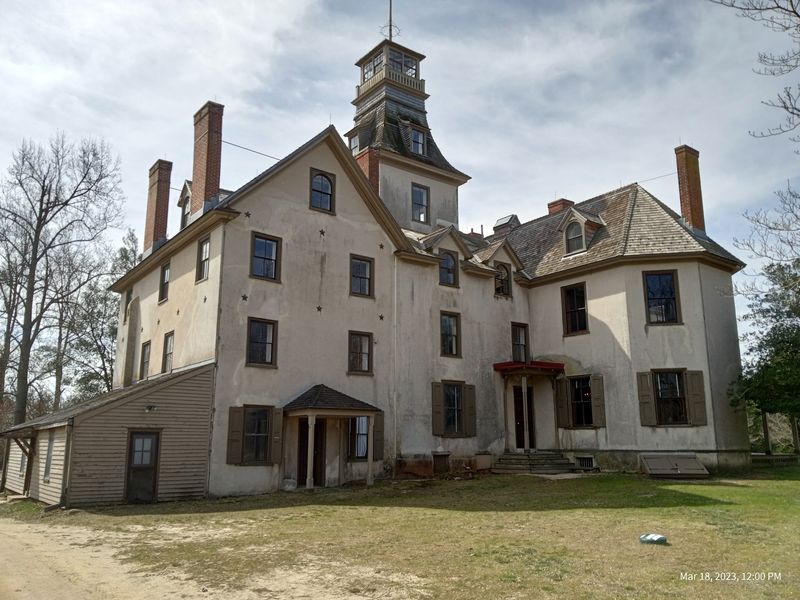
Silence behaves differently in the Pine Barrens. At Batsto Village, it settles over workers’ homes, the old post office, industrial buildings, and the large mansion that watched over a once-busy company town.
Iron production began here in the 1760s, using bog ore, charcoal, and waterpower to create household goods and supplies for the Revolutionary cause.
The Richards family expanded the operation, while industrialist Joseph Wharton later transformed the estate and remodeled the mansion into the imposing building seen today.
Reports of unexplained footsteps, figures, voices, and sudden cold have attached themselves to the mansion and village over the years. Some legends connect the activity to former owners or workers; others blur into the wider supernatural reputation of the surrounding Pinelands.
Batsto does not need a dramatic apparition to feel otherworldly. After the day’s visitors thin out, its scattered buildings and dark tree line suggest a settlement paused rather than abandoned.
Guided mansion tours usually run on a limited schedule and take visitors through furnished rooms that reveal the contrast between the owners’ comfort and workers’ lives below. Tickets are inexpensive, but tour groups are small and availability should be confirmed before traveling.
Leave additional time for the free village grounds and nearby trails. A calm afternoon here can become wonderfully eerie the moment the wind drops and the woods stop making noise.
13. Shippen Manor – Oxford
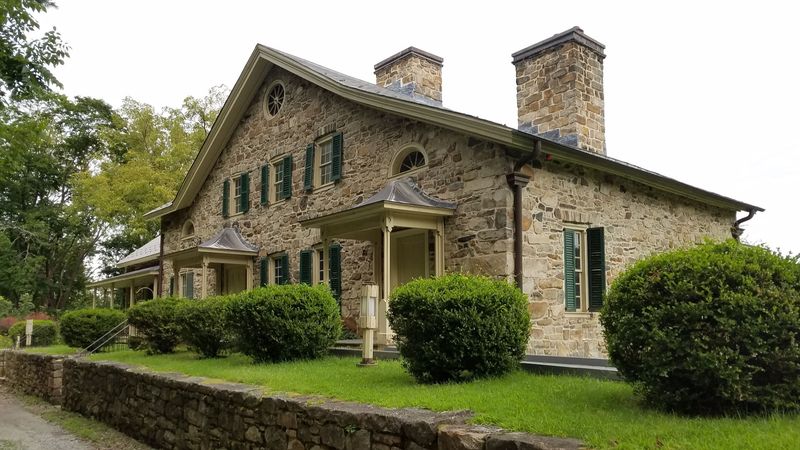
Before Oxford became a quiet Warren County community, smoke and heat from its iron furnace dominated the landscape. Shippen Manor was built for the ironmasters who controlled that operation, placing privilege uphill from the labor, noise, and danger below.
The 18th-century stone mansion later passed through several prominent families and now serves as a museum interpreting the region’s industrial and domestic history.
Its paranormal reputation comes from local accounts of shadowy shapes, unexplained footsteps, cold areas, and figures in period clothing.
Some stories describe a woman appearing inside or near the manor, while others suggest that former workers and residents remain attached to the property.
The museum itself does not conduct or endorse paranormal investigations; its mission stays firmly focused on documented history, education, and preservation.
That distinction makes the folklore more interesting, not less. Visitors are left to decide what belongs to the building’s past and what has grown through years of retelling.
Public tours are generally offered on selected Sundays from spring through December, with special programs appearing on the calendar. Admission is free, although donations support the collection.
Parking immediately beside the manor is limited, and most visitors use nearby street parking unless accessible space is required. Approach this one as a historical visit with a supernatural footnote.
The old furnace landscape, stone rooms, and sparse schedule create an understated eeriness that no staged scare could improve.
14. Stephen Crane House – Asbury Park
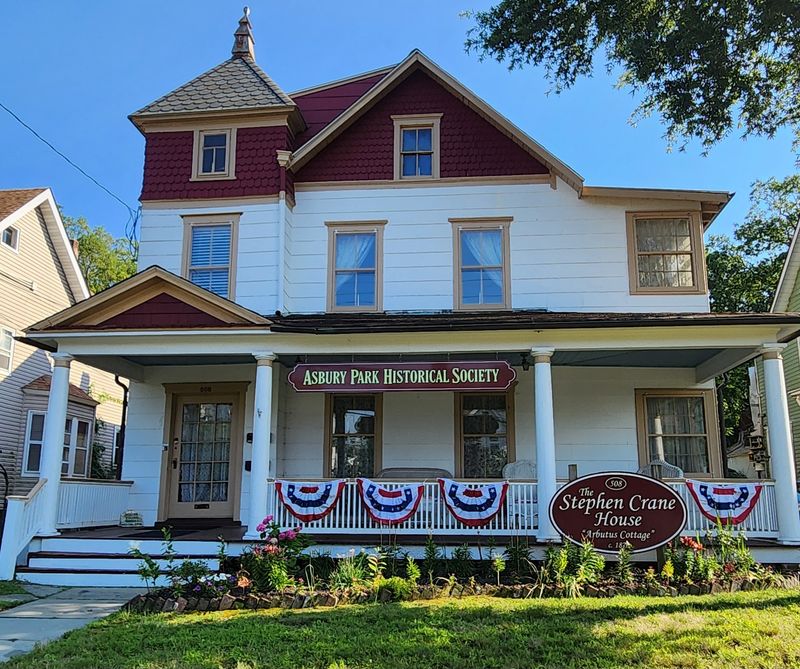
Long before The Red Badge of Courage made him famous, Stephen Crane spent part of his youth in this modest Asbury Park house with his mother and siblings.
The family moved there during the 1880s, when the young resort city was developing rapidly and Crane was observing the people, tensions, and street life that would later sharpen his writing.
The house now preserves that literary connection through cultural programs, readings, exhibitions, and occasional tours. Its quieter rooms also carry a reputation for unexplained activity.
Visitors and caretakers have described footsteps, voices, movement, and the sensation of another person occupying a supposedly empty part of the building. Some stories associate the activity with Crane’s mother, Mary Helen Peck Crane, a prominent temperance advocate who ran a boardinghouse there.
Others leave the identity of the presence open. That uncertainty suits a writer known for finding unease beneath ordinary scenes.
Compared with Asbury Park’s vast Convention Hall or weathered Casino building, the house is intimate and easily overlooked, which makes its paranormal lore feel almost private. Access varies according to events and scheduled programming, so do not expect daily museum hours.
Plan around an announced opening, then continue through the city’s downtown or toward the Boardwalk. The contrast between a calm residential house and Asbury Park’s louder attractions gives this stop its peculiar power.
15. The Southern Mansion – Cape May
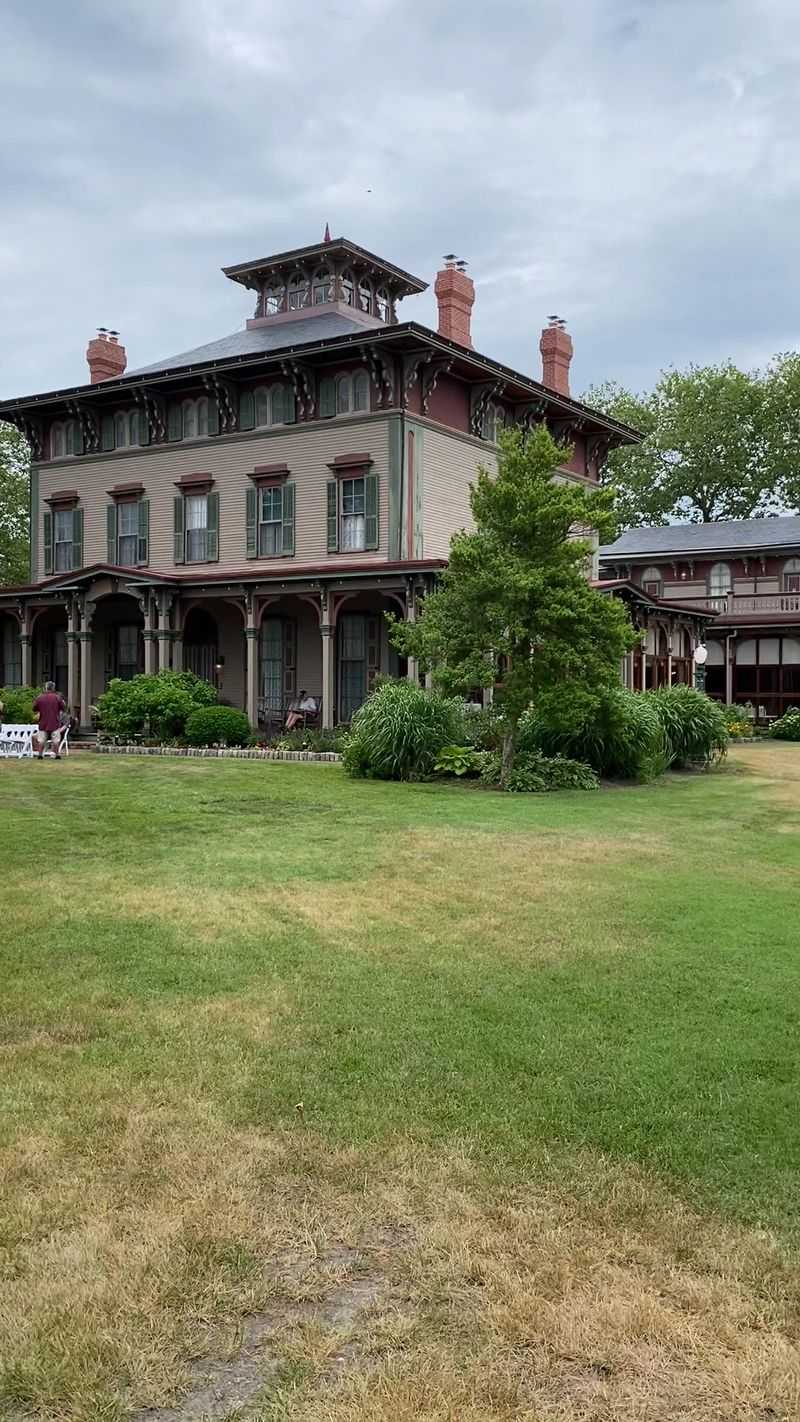
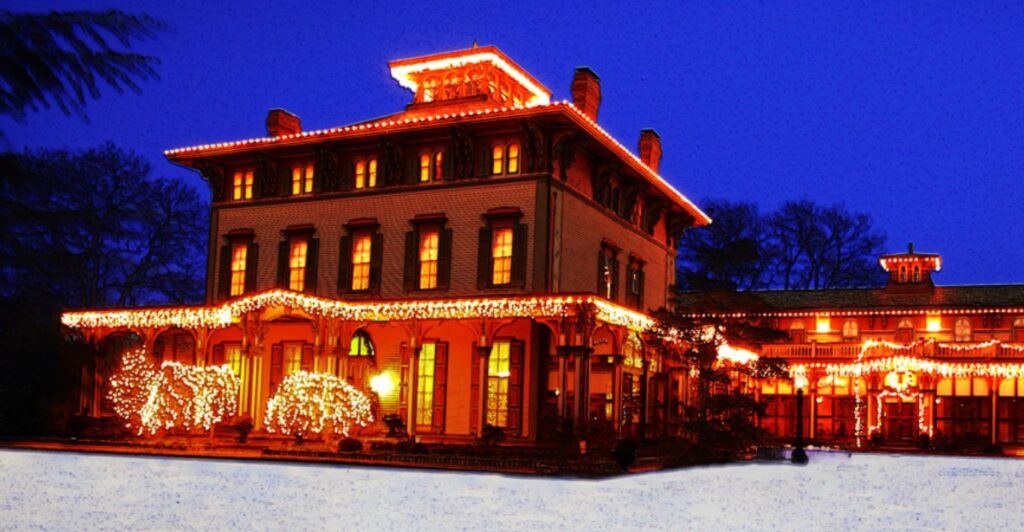
A trace of perfume in an empty corridor is the signature encounter associated with this magnificent Cape May property. Built in the 1860s as a summer residence for Philadelphia industrialist George Allen, the Italianate mansion was designed for entertaining on a grand scale.
Its high-ceilinged rooms, elaborate furnishings, broad verandas, and expansive gardens still communicate wealth without needing much imagination. The spirit most often linked to the house is Ester, a later family resident remembered as someone who loved the property and its social life.
Guests and employees have reported perfume, rustling fabric, laughter, cold spots, a woman in period dress, and the feeling of a gentle touch. A male figure in Civil War-era clothing has also appeared in some accounts.
Interestingly, stories of activity reportedly increased after an extensive 1990s restoration brought the long-neglected mansion back to life. If Ester truly stayed behind, perhaps she simply approved of the renewed dinners, weddings, and conversation.
The building now operates as an upscale bed-and-breakfast, giving curious travelers the chance to remain after daytime visitors leave. Historical tours may also provide access without an overnight reservation, depending on the schedule.
This is not Cape May’s most menacing haunting, but it may be its most elegant. The possibility of sharing breakfast with a former resident only adds to the appeal.
Share this story