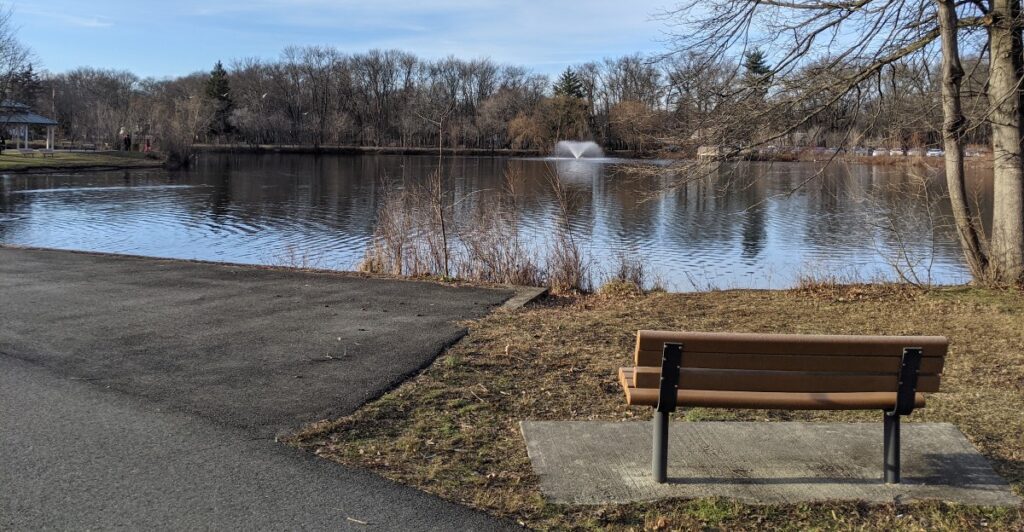
An old stone tower stands beside the Saddle River near Route 4, close enough to one of Bergen County’s busiest roads to make its setting a little surprising. Follow the park’s pathway north, and another interruption awaits: a waterfall that gives walkers and cyclists a good excuse to stop counting miles.
Those two landmarks belong to Saddle River County Park, a connected stretch of riverside recreation running through six New Jersey towns. Its five main park areas bring together ponds, playgrounds, picnic spots, and a paved trail that lets you decide how ambitious the afternoon should be.
You can come for a short waterfall walk, spend an hour circling a pond, or keep moving between communities without returning to the car. The pleasure is in that flexibility.
A simple neighborhood stroll can pick up a little history, a change of scenery, and an unexpectedly satisfying soundtrack along the way.
Saddle River County Park Links Six Towns With One Scenic Trail
Five park areas, six towns, and approximately six miles of connecting pathway give this Bergen County favorite a layout worth understanding before you arrive. The 577-acre park stretches through Ridgewood, Glen Rock, Fair Lawn, Paramus, Saddle Brook, and Rochelle Park, following the Saddle River and its tributary brooks.
Its main areas are Wild Duck Pond, Glen Rock, Dunkerhook, Otto C. Pehle, and Rochelle Park.
That distinction explains the numbers: five refers to the major recreation areas, while six describes the municipalities connected by the route. Think of the park as a series of places to spend time, joined by a trail that makes the spaces between them part of the outing.
A playground visit can become a riverside walk. A bike ride can include a stop at a historic tower.
You can start with one modest plan and extend it without having to pack everyone back into the car. The connected layout also makes the park useful for people with different ideas of a good afternoon.
Someone training for a longer walk can cover ground while another visitor chooses a shorter route and settles in with lunch. There is no requirement to experience the whole system in one go, and trying to do everything can actually distract from its smaller pleasures.
For a first visit, pick one landmark and one park area rather than treating the town names as a checklist. The waterfall and Dunkerhook make a sensible pairing, while a pond-centered outing suits anyone who prefers a clearly defined destination.
Keep in mind that a linear trail creates a return journey: walking three miles away from your starting point usually means walking three miles back. That arithmetic tends to become especially interesting when children begin asking about snacks.
A Riverside Path Makes Walking and Biking Part of the Fun
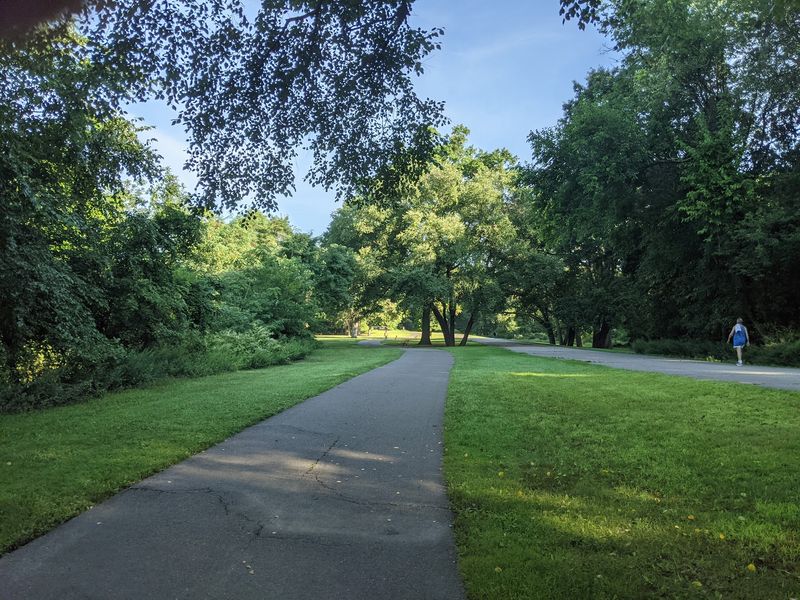
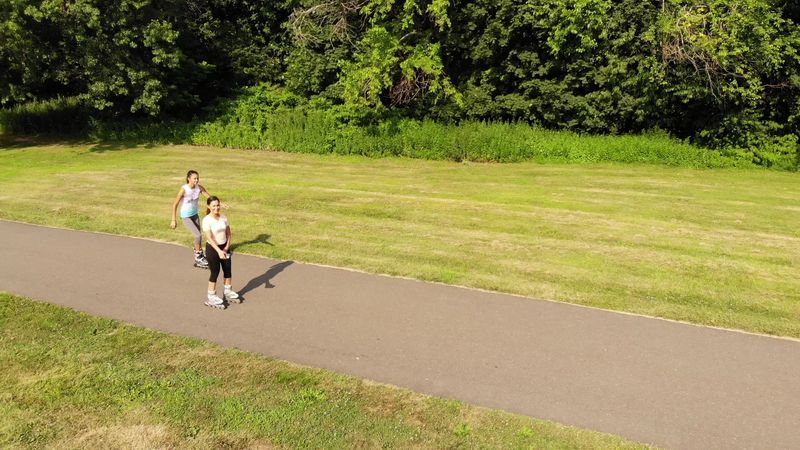
Bring a bicycle, walking shoes, or a stroller, and the main pathway offers a straightforward way into the landscape. The paved bicycle and pedestrian route follows both the Saddle River and Ho-Ho-Kus Brook, connecting the northern and southern park areas and passing beneath Route 4.
Pond loops add opportunities to vary the outing without committing to the full connecting route. That surface changes the character of the visit.
You can enjoy a wooded river corridor without planning around the footing of a rocky hiking trail, although pavement does not mean every stretch has the same grade or conditions. Comfortable shoes still earn their place, particularly if your quick look at the waterfall turns into a longer exploration.
Walking gives you time to notice the water between the trees, pause at a bridge, and watch the scenery change gradually. Cycling makes the connected layout more apparent because you can cover the distance between recreation areas sooner.
Neither approach needs to be treated as an athletic event. A leisurely ride with a few stops fits the place just as comfortably as a purposeful morning walk.
Since the route serves several kinds of visitors, a little awareness goes a long way. Keep right, leave room for passing, and move off the pavement when stopping to check directions or take a picture.
Cyclists should announce themselves before passing and give walkers enough time to respond. A family spread across the entire path may be having a lovely conversation, but everyone else still needs a lane.
For an easy first outing, choose a turnaround time instead of a mileage goal. Walk for twenty or thirty minutes, then retrace your route, allowing extra time for anything that catches your attention.
It keeps the afternoon manageable while leaving room for the park’s most persuasive argument for continuing: the next bend in the river.
The Dunkerhook Waterfall Gives You a Reason to Slow Down
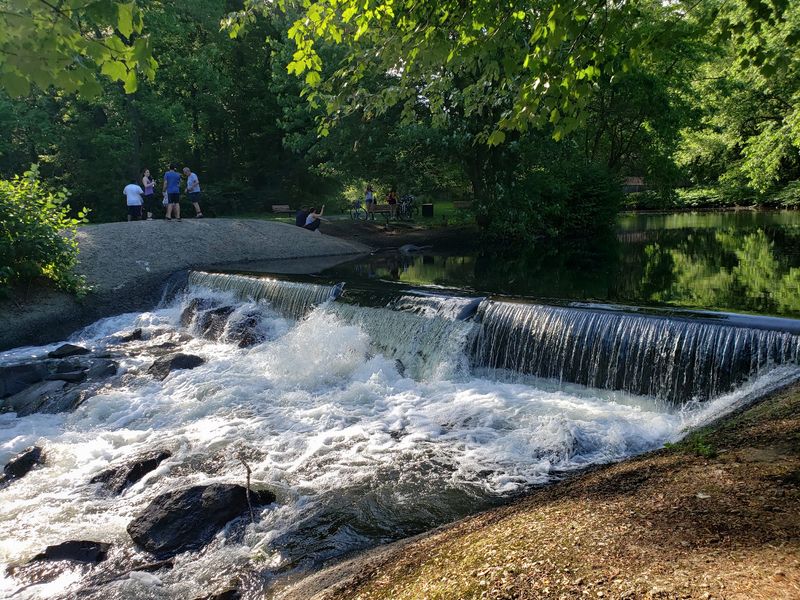
The sound of moving water provides a welcome change from bicycle tires and footsteps. In the Dunkerhook section, the waterfall adds a distinct stopping point to a route that otherwise encourages you to keep moving.
It is especially appealing as part of a walk, when the shift from traveling beside the river to watching it tumble becomes the small event around which the outing takes shape. Dunkerhook spans Paramus and Fair Lawn, with access associated with Paramus Road and Dunkerhook Road.
Continuing north through this section brings you toward the falls, beyond which the pathway branches toward Wild Duck Pond in Ridgewood and the Glen Rock area. That fork matters more than it might seem.
Once you have stopped at the water, you can decide whether to continue toward another destination or turn back before the walk grows longer than intended. Take a moment to check the route rather than automatically following whichever group happens to be ahead of you.
The waterfall works well as a destination for visitors who like a walk to have a particular reward. Children have something concrete to look forward to, photographers have a reason to put the phone away until they arrive, and anyone less enthusiastic about exercise can call the whole thing a waterfall visit.
Everybody gets their preferred explanation. Give yourself time to watch rather than simply collect a photo.
Notice how the current changes as it approaches and leaves the drop, and how the sound differs from the quieter stretches elsewhere along the route. Water levels and recent weather can affect the experience, so avoid expecting identical conditions on every visit.
Stay on established paths and keep clear of slippery rocks and the water’s edge. The enjoyable part is watching the river do its work, without adding an unplanned wet-shoe chapter to the afternoon.
Easton Tower Brings a Touch of 1899 to the Riverbank
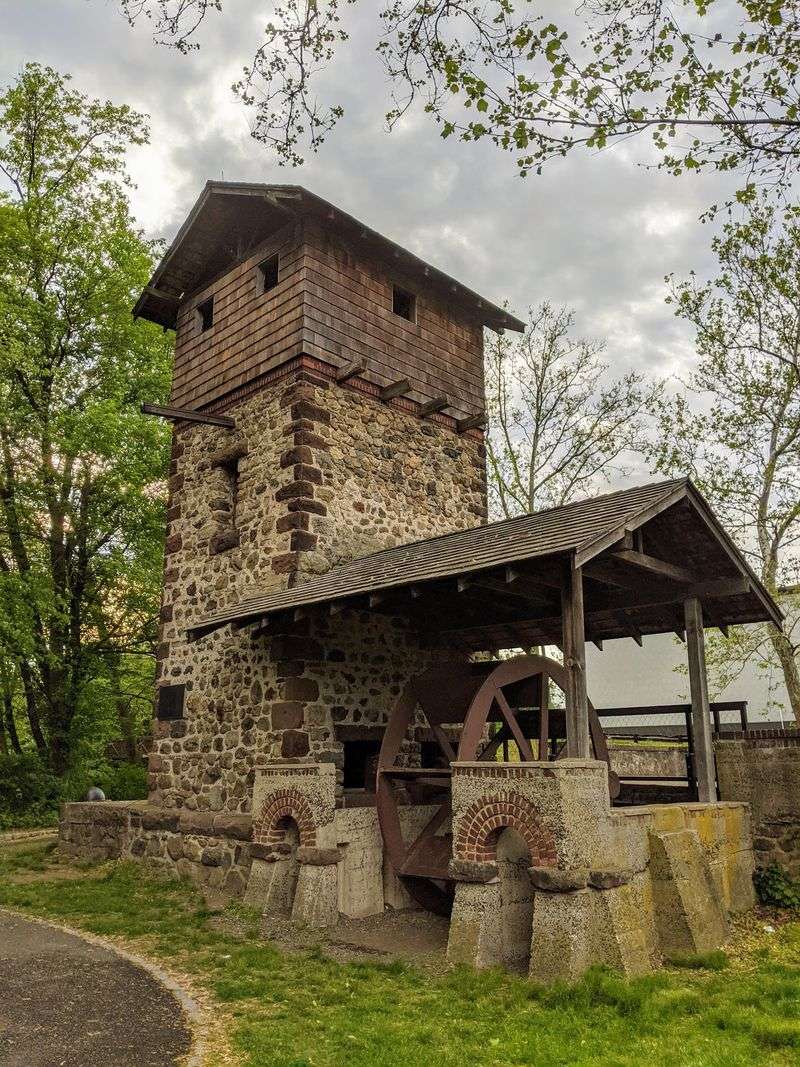
A structure associated with an elegant private estate now sits beside a route used for everyday walks and bicycle rides. Easton Tower was built in 1899 as part of Edward Easton’s landscaped estate in Paramus.
Its original purpose included pumping water to irrigate the property, giving a practical job to a building that now catches attention largely because of its appearance. The roughly twenty-foot tower combines stone masonry with a timber upper portion and a gabled roof.
A surviving feature of Easton’s estate, it underwent a county restoration in 2008. Those details help explain why the landmark deserves more than a passing glance.
Look at the contrast between the heavier stone base and the wood above it, then consider the amount of care given to a structure with a water-management function. It offers a glimpse of a property where utility and ornamental design were closely connected.
Although the tower is often called a mill, its estate-pumping history gives you a more accurate picture of what you are seeing. The building belongs to the southern end of the Dunkerhook area, near Route 4, making it a separate stop from the waterfall farther north.
Treat the two as destinations along a route rather than assuming they stand together in one small clearing. Plan your distance before deciding to include both on foot.
The nearby roadway is part of the setting, too. This is a historic remnant within a developed suburban landscape, and that proximity gives the tower much of its interest.
Cars move through modern Bergen County while the old structure remains beside the river. For photographs, try a wider view that includes its surroundings as well as a closer look at the masonry and roofline.
The broader scene tells the story particularly well: an estate feature from another century sharing space with an ordinary afternoon in the park.
Ponds and Playgrounds Turn a Walk Into a Full Afternoon
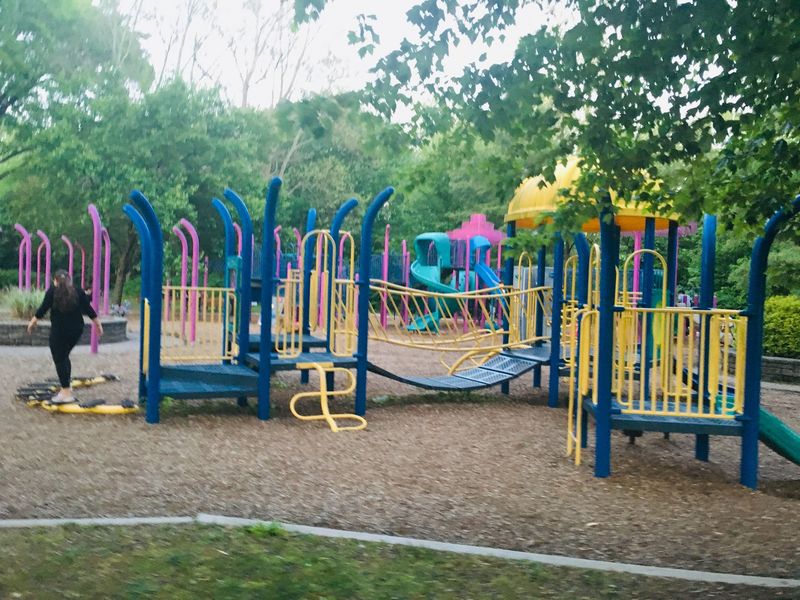
A playground can settle the question of how long a family stays more effectively than any carefully planned itinerary. Across the park’s five main areas, places to play and picnic give the pathway useful destinations beyond its best-known landmarks.
You can build the day around walking, then leave enough time for the activity everyone suddenly decides is essential once they arrive. In Ridgewood, the Wild Duck Pond area includes an accessible playground and an off-leash dog area.
Glen Rock combines its pond with a playground and tennis courts, while the Otto C. Pehle area in Saddle Brook offers a three-quarter-mile loop around its pond.
That pond loop is particularly useful when you want an outing with a clear beginning and end. A defined circuit is easier to explain to younger walkers than “we will see how far we get,” and it gives you a way to stretch your legs without choosing a distant turnaround point.
Add a snack break, and a relatively short walk can comfortably occupy more of the afternoon. The different recreation areas also make repeat visits easy to vary.
One day can revolve around the waterfall; another can be mostly playground time with a walk attached. Dog owners may choose their starting point around the designated dog area, while visitors carrying a picnic can prioritize somewhere convenient to eat.
There is little advantage in hauling every possible piece of equipment along the trail. Decide whether the main purpose is walking, cycling, playing, or lunch, then pack accordingly.
A small bag with water and something to eat is often more useful than an ambitious setup that has to be carried back. For a larger gathering, check arrangements for reservable facilities in advance.
A casual picnic and an organized event have different needs. The park’s variety is most enjoyable when the afternoon has room to unfold without turning each stop into another item to complete.
Choosing Where to Start Your Saddle River Adventure
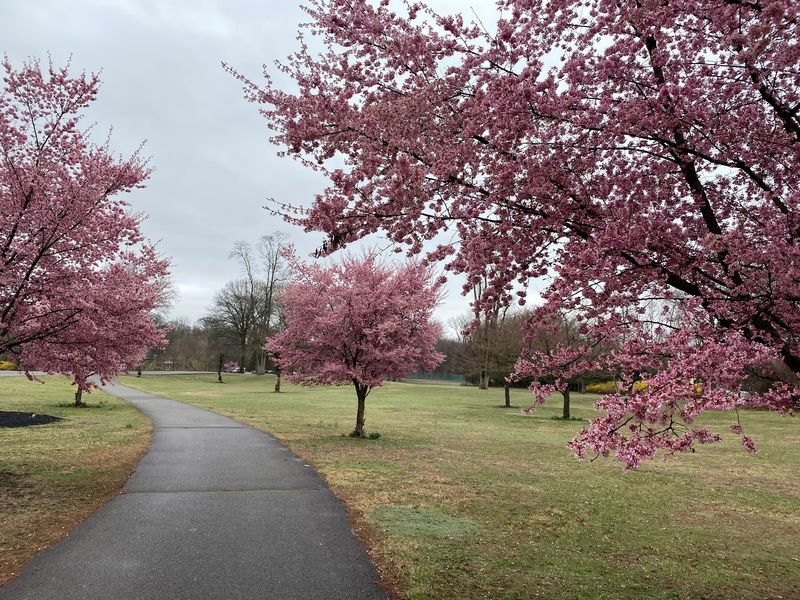
The most useful planning decision happens before you put the park’s name into your navigation app. Choose the area that matches what you actually want to see, because arriving at one end of this connected system does not put every attraction a few minutes from your car.
For a waterfall-focused outing, begin with Dunkerhook. For the historic tower, look specifically for the Easton Tower location near Route 4 and Paramus Road.
Ridgewood’s Wild Duck Pond area is reached from East Ridgewood Avenue, Glen Rock’s area is associated with Prospect Avenue, and the Otto C. Pehle section sits along Saddle River Road in Saddle Brook.
Rochelle Park’s southern access is on Railroad Avenue. Once you have chosen an entrance, look at a park map and decide whether the outing will be a loop or an out-and-back.
Save the map to your phone so you can consult it at junctions without relying on memory. A quick photograph of the entrance sign can also help keep the correct park-area name handy.
Rochelle Park offers an appealing southern alternative for visitors who want a riverside walk without organizing the day around the northern landmarks. From Railroad Avenue, the route follows the river for approximately a mile toward a footbridge, with an option to loop back on the Saddle Brook side.
Allow more time than the walking distance alone suggests. Taking a picture, watching the water, and stopping for a drink all belong in the estimate, especially when the purpose is an enjoyable afternoon rather than a brisk workout.
Daylight makes the scenery easier to appreciate and the route simpler to follow. After heavy rain, check for local notices before committing to a riverside outing.
A good first visit can remain pleasantly modest: one starting point, a manageable stretch of trail, and time to linger beside the water before returning to the car.
Share this story