A rock that looks unremarkable in daylight can become the most interesting thing in your bag once it passes under ultraviolet light. That possibility is the draw at Franklin Mineral Museum, where an old mining dump doubles as a collecting ground and visitors can take their discoveries home.
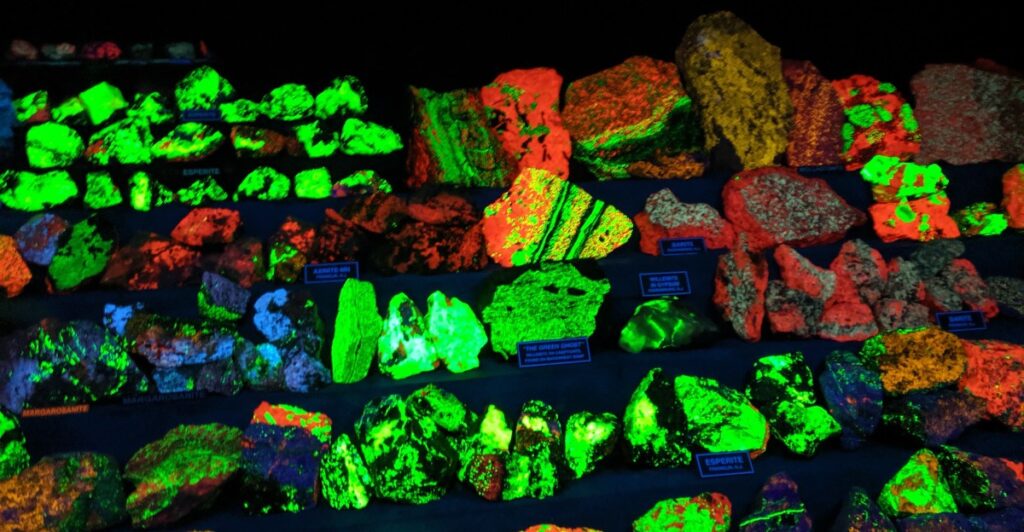
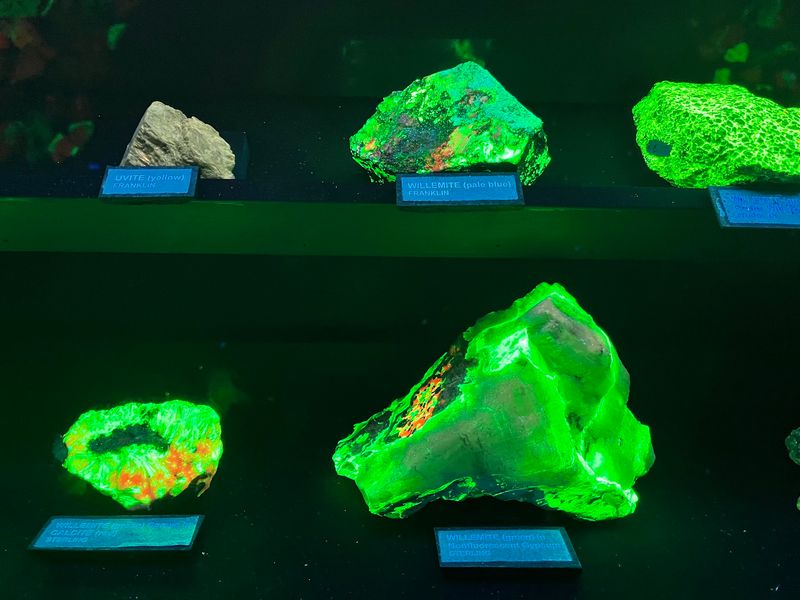
Located in Sussex County, the museum pairs its outdoor rock hunt with exhibits explaining why this corner of New Jersey matters so much to mineral collectors. Inside, specimens glow in vivid colors.
Outside, you get to search through the material yourself, wondering whether the next piece deserves a closer look. It is a wonderfully specific kind of outing, somewhere between a museum visit and an afternoon spent investigating the ground.
You do not need to arrive knowing your willemite from your franklinite. A little patience, sensible shoes, and a willingness to inspect ordinary-looking rocks will get you started on your own collection.
Franklin Mineral Museum Reveals New Jersey’s Colorful Mining Past
Long before visitors arrived with collecting bags, zinc was the reason people paid attention to Franklin. The town and nearby Ogdensburg supported major mining operations, and their unusual mineral deposits continue to interest researchers and collectors.
Franklin’s mine brought up its final ore in 1954, but the community was determined to preserve more than memories of the industry. Local collectors formed the Franklin-Ogdensburg Mineralogical Society in 1959, and the Franklin Kiwanis Club helped turn the idea of a museum into a community project.
The doors opened on October 9, 1965. That history gives the place a clear purpose.
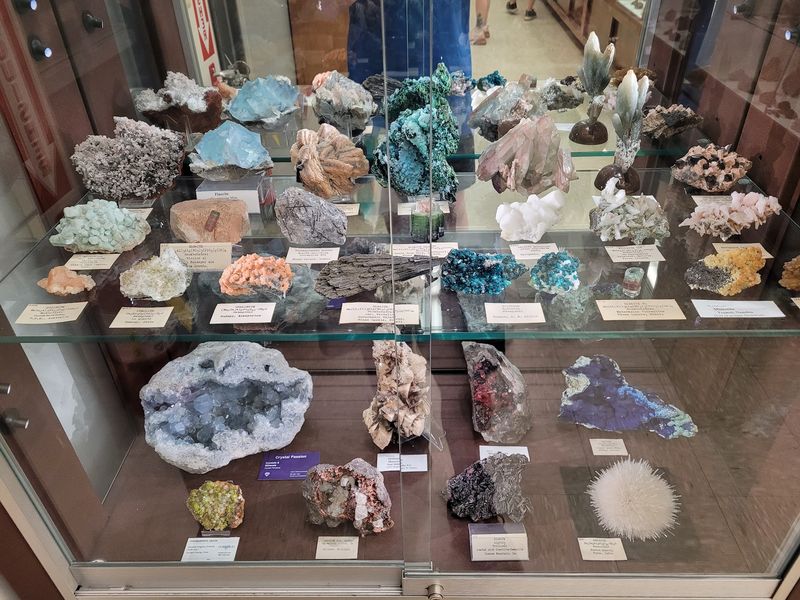
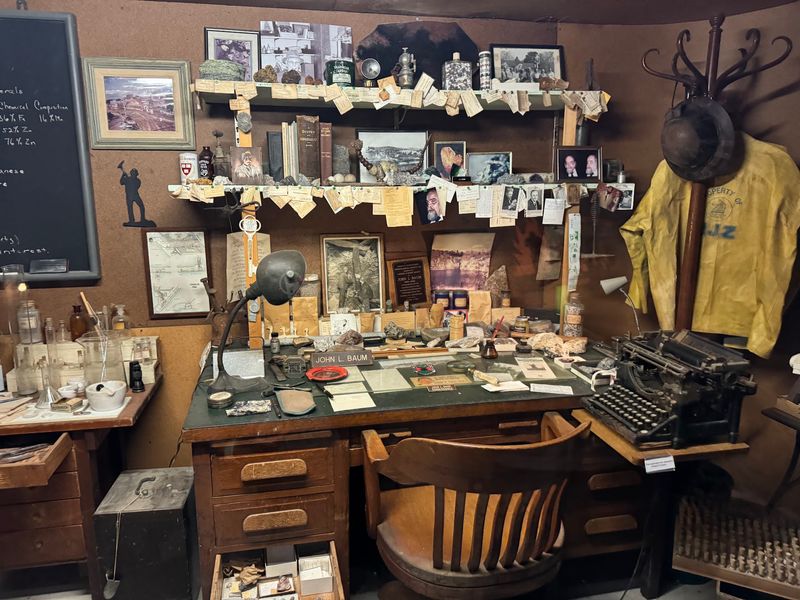
These specimens belong to a story about local work, scientific discovery, and people who understood that the town’s geology deserved attention even after mining ended. Start in Baum Hall, the local mineral room named for New Jersey Zinc Company geologist John L.
Baum. More than 4,000 specimens from the surrounding mining district are displayed here, including examples of the zinc ore minerals willemite, franklinite, and zincite.
The sheer number encourages a slower look. Pick a few specimens rather than trying to absorb every label, and notice how different minerals can occur together in one piece of rock.
That small exercise gives the outdoor search some direction. A name that seemed unfamiliar five minutes earlier becomes something you might recognize, or at least something you can ask about.
There is also pleasure in discovering how much complexity fits into a single local subject. You could drive through Franklin without guessing what made its rocks famous.
Here, the evidence is arranged at eye level, and the town begins to look different before you have even stepped onto the collecting ground.
Ordinary Rocks Put on a Brilliant Show Under Ultraviolet Light
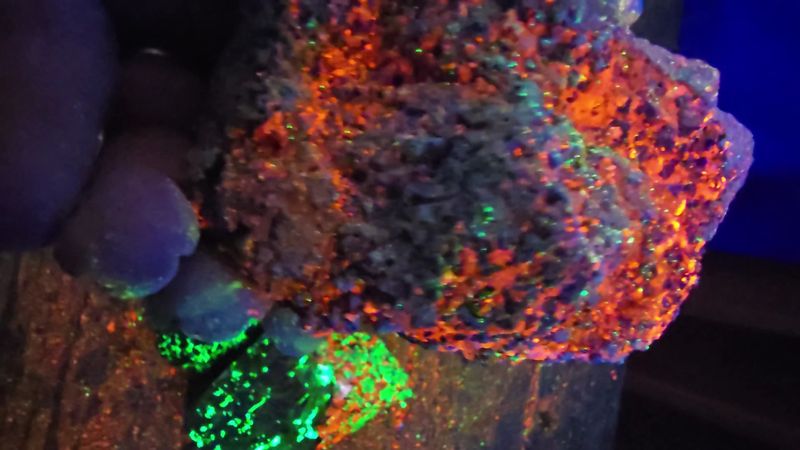
Red, green, orange, yellow, and blue are probably not the colors you expect from an afternoon devoted to mining history. In the fluorescent mineral room, they are the reason to stop and stare.
The main display stretches 32 feet, with specimens ranging from pieces that fit in a hand to examples measuring as much as two and a half feet. Under ultraviolet illumination, their fluorescent minerals produce a striking spread of color.
Smaller cases across the room show less common examples from the area, offering collectors another chance to compare what they have found with identified specimens. More than 90 fluorescent mineral species have been documented in the Franklin-Ogdensburg area, and many are represented here.
Give yourself time to look beyond the brightest patch. One specimen can hold several areas worth examining, and following their boundaries makes the display more interesting than a quick glance at the whole wall.
Think of it as looking at a landscape in miniature. Where does one color stop?
Does another appear in small scattered spots or across a broad surface? Those are useful questions even when you cannot name the minerals involved.
Fluorescence also gives the collecting experience a satisfying uncertainty. Daylight does not reveal everything you want to know about a prospective find, so picking up a rock is only the beginning of evaluating it.
The museum’s mineral guidance makes another useful point, too. Fluorescent color can help with identification, but it should be considered alongside other characteristics; color alone can lead to mistakes.
You can enjoy the visual surprise without pretending to have solved every scientific question. For a first visit, simply noticing that a familiar-looking material can behave in an unfamiliar way is plenty.
It makes the next pile of rocks considerably harder to walk past.
The Buckwheat Ore Dump Turns Visitors Into Rock Collectors
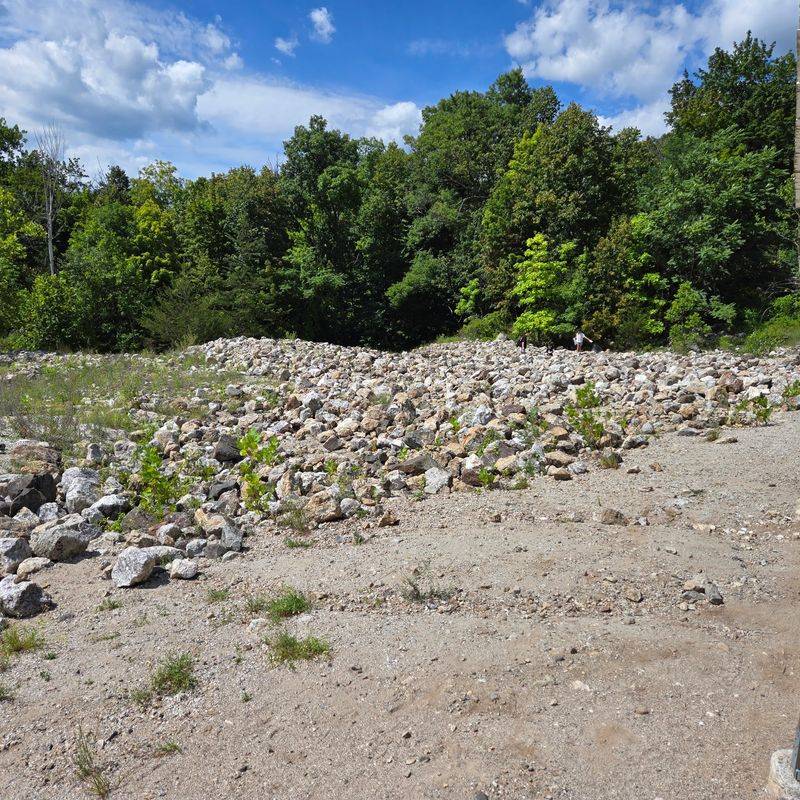
The name sounds industrial because the place was industrial. The Buckwheat Dump began as a disposal area for unwanted rock from the New Jersey Zinc Company’s mine.
Today, its approximately three and a half acres are the museum’s main collecting ground, giving visitors access to material with a long history of mineral discoveries. Collectors have searched here for decades, yet the dump continues to reward close examination.
Getting down to it involves an unpaved ramp descending roughly 60 feet below the museum’s level. Once you are looking at the ground, resist the urge to treat the outing like a race to fill a bag.
Choose a manageable patch and inspect a few pieces carefully. Turn them over, compare their surfaces, and look for differences in texture or the way contrasting materials sit together.
A rock that attracts your attention is worth investigating even if you cannot immediately explain why. The appeal lies in making those choices yourself.
Museum cases show specimens someone else selected; out here, you decide what deserves a second look. There is no promise that a particular mineral will turn up, which makes curiosity a better goal than a rigid shopping list.
This is also an activity that does not require an elaborate equipment purchase. Hand-sized pieces are available, and the museum says tools are unnecessary and are not supplied.
An upper collecting area provides an alternative for visitors who cannot reach the lower dump. For beginners, working with loose pieces is a sensible way to keep attention on observation.
You can spend more time comparing rocks and less time worrying about technique. Before long, a piece you might have ignored at the start becomes a candidate for the testing shed.
The afternoon develops its own small rhythm of looking, choosing, and wondering what the light will reveal.
Testing Your Finds Is Half the Fun Before Taking Them Home
Finding a promising piece is satisfying. Discovering what it does under the right light adds another layer entirely.
The museum has an identification shed equipped with shortwave mineral lamps, allowing visitors to examine specimens for fluorescence. That facility connects the outdoor hunt with the indoor displays in a very direct way.
You have seen what selected specimens can look like; now you can investigate material you chose yourself. Keep your expectations open.
Not every interesting rock will produce a brilliant fluorescent response, and a piece that stays visually quiet can still deserve a place in your collection. Compare your candidates rather than judging them against the largest, brightest museum specimens.
Which one has the most appealing pattern? Which shows a detail you missed outside?
Which would help you remember the experience most clearly? There is no need to make every choice about rarity.
For a first collection, a few pieces you can distinguish from one another are more useful than a heavy assortment that all looks the same. Fluorescence is an identification clue rather than a complete answer, and the ultraviolet wavelength matters when comparing responses.
If you plan to buy a lamp for home use, ask which equipment suits the specimens you are taking away instead of assuming any blacklight will give the same result. A simple note can make the collection more meaningful later.
Record the collecting location and date, and keep any confirmed mineral names with the appropriate pieces. Photographing a find under ordinary light and during the permitted viewing process can also help preserve what caught your attention.
Back home, that record turns a small rock into a specific memory. You know where it came from, what you noticed first, and why it earned room in the bag.
A Mine Replica and Hands-On Activities Keep the Discovery Going
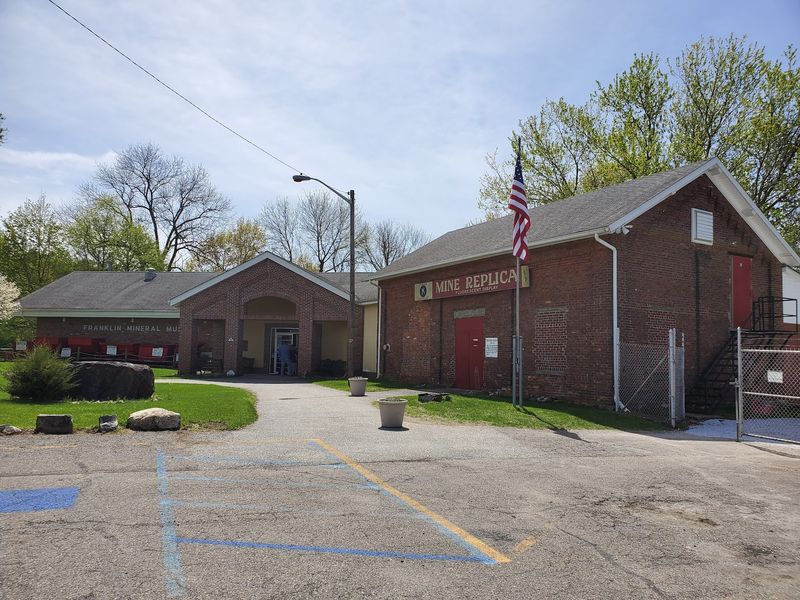
One of the museum’s most revealing exhibits began as a practical tool for miners. Its life-size mine replica was originally constructed by the New Jersey Zinc Company for safety training.
It now occupies the original engine house, built in the late nineteenth century to supply steam power for mining at the Buckwheat pit across the road. The exhibit demonstrates methods used in Franklin’s mines, adding a human dimension to the mineral displays.
After examining specimens, it is useful to think about the effort required to bring material to the surface. The replica gives that thought something concrete to attach to.
It also changes the pace of a visit, especially for anyone who has reached their limit for reading labels. Moving between the collecting ground, mineral rooms, and mining exhibit allows different interests to take the lead for a while.
Younger visitors have additional ways to participate. Gem panning involves washing sand away from purchased mine rough to uncover the material hidden inside.
The fossil dig lets children search through sand, identify their discoveries, and choose a specimen to keep. These activities offer a more contained search alongside the open-ended experience at the dump.
A family can decide which approach suits its children rather than expecting everyone to enjoy the same task for the same length of time. There is no need to turn every discovery into a lesson on demand, either.
Looking closely, making a choice, and remembering where something was found are worthwhile parts of the experience. Leave enough breathing room between activities for children to examine what they have collected.
A small specimen can command a surprising amount of attention once it belongs to the person holding it. That ownership gives the museum’s subject a life beyond the exhibit case, whether the conversation continues in the car or beside a collection arranged on a bedroom shelf.
What to Know Before Planning Your Rock-Hunting Adventure
The most useful detail to remember is the earlier outdoor closing time. Franklin Mineral Museum, at 32 Evans Street, operates from April through November, with regular hours of 11 a.m. to 4 p.m.
Wednesday through Friday, 10 a.m. to 5 p.m. Saturday, and 11 a.m. to 5 p.m.
Sunday. Outdoor activities finish one hour before the museum closes.
Arriving with plenty of time gives you room to browse, collect, and test specimens without watching the clock through the best part of the visit. Regular combined admission for exhibits and collecting currently costs $25 for adults and $20 for children ages 3 through 16.
It includes a collecting bag and two pounds of rocks per person; additional weight costs $2 per pound plus tax. Prices can change, and special events have separate rates.
Wear closed-toe shoes with dependable grip. The lower collecting ground has uneven surfaces and a steep approach.
Children cannot use tools, and anyone using permitted rock hammers must follow the museum’s wraparound-goggle rules for everyone nearby. For a straightforward first outing, loose-rock collecting keeps the preparation simple.
Bring drinking water, dress for the weather, and leave room in your day for a break. The grounds have picnic space, including a sheltered pavilion, so a packed lunch is a practical addition.
Think about the journey home, too. A small box or other sturdy container can keep chosen pieces together, with notes tucked alongside them.
You may arrive expecting the brightest display to be the highlight, then find yourself most attached to a modest specimen you selected outdoors. Its appeal is personal.
You remember the patch of ground, the decision to pick it up, and the moment it looked different beneath the lamp.
Share this story