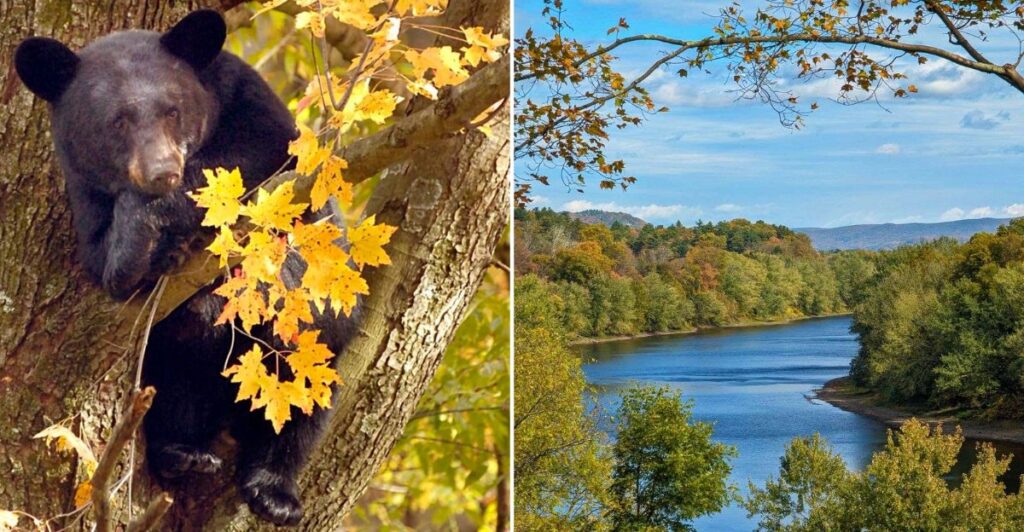
A tipped trash can or a bear crossing a quiet road can make fall feel a little wilder in Pennsylvania. Black bears spend autumn searching for food before winter, and that search sometimes brings them close to homes, cabins, campgrounds, and hiking trails. Knowing where people and bear habitat meet can help you enjoy the season while keeping your family, pets, and local wildlife safer. The counties below have forests and communities where bear awareness matters, but one detail needs to be clear: the information provided does not establish that any of them has more bear activity than usual this fall. No dated county reports, sighting totals, or comparisons with earlier years were supplied.
Treat this article as a practical guide to places where fall encounters are possible, not a verified ranking of increased activity. For current conditions, check Pennsylvania Game Commission notices and local updates before heading out. From Laporte and Wellsboro to Milford and Wilkes-Barre, the setting changes, but the main lesson stays simple. Bears follow food, and easy meals around people can create problems. Loose garbage, birdseed, outdoor pet food, fallen fruit, and greasy grills can attract a visitor that would otherwise keep moving through the woods. Each county section pairs local surroundings with useful steps for homeowners, campers, and walkers. You do not need to fear every rustle in the leaves. A little planning, a respectful distance, and careful food storage can make a big difference when Pennsylvania’s autumn scenery brings people and bears into the same outdoor spaces.
1. Sullivan County: Woodland Awareness Around Laporte
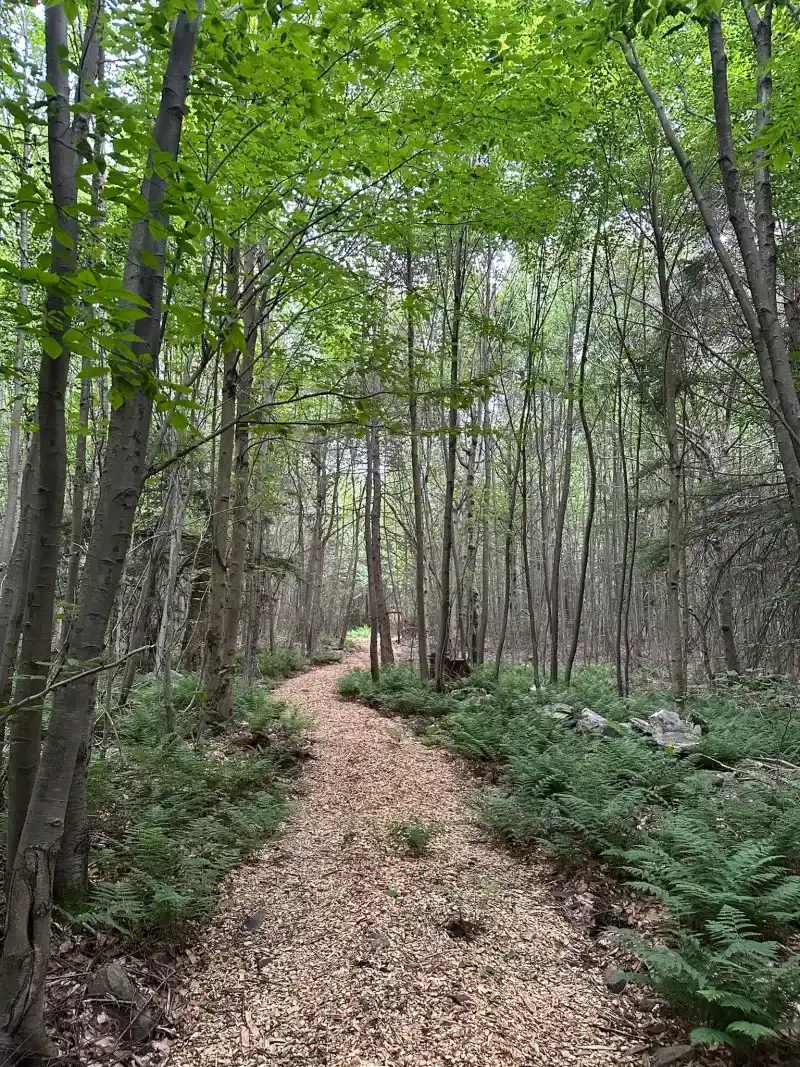
A quiet cabin morning can change quickly when the garbage lid lands in the driveway.
Around Laporte, wooded hills and scattered homes create places where black bears may find food without traveling far from cover.
Sullivan County includes parts of Loyalsock State Forest, along with rural roads and forest recreation areas.
Those surroundings make bear awareness sensible during fall, when bears spend considerable time feeding before winter.
They do not, by themselves, prove that sightings have increased this season.
Start your prevention plan at the trash can, not at the tree line.
Keep household waste inside a secure building until collection day, or use a properly secured bear resistant container.
A loose strap or an ordinary plastic lid may not stop a determined bear.
Cabin owners should also check places that are easy to forget.
Clean food scraps from outdoor cooking areas, bring pet bowls indoors, and remove bird feeders if bears are visiting.
Seed scattered beneath a feeder can remain attractive even after the feeder itself disappears.
On woodland walks, keep children nearby and dogs leashed.
Talk normally as you travel, especially where thick brush limits your view.
If you spot a bear, stop approaching and leave it a clear route away.
Never crowd an animal for a photograph, even when it seems relaxed.
Back away slowly without running, and avoid placing yourself between a mother and her cubs.
A cub in a tree may have an unseen adult close by.
For repeated visits around Laporte, contact the Pennsylvania Game Commission for guidance rather than trying to trap or move the bear yourself.
Record the location, time, and behavior from a safe place.
Useful details help wildlife staff distinguish a passing animal from a recurring food problem and give neighbors a clearer picture of what needs attention around their own homes.
2. Clinton County: River Valley Meets Bear Country
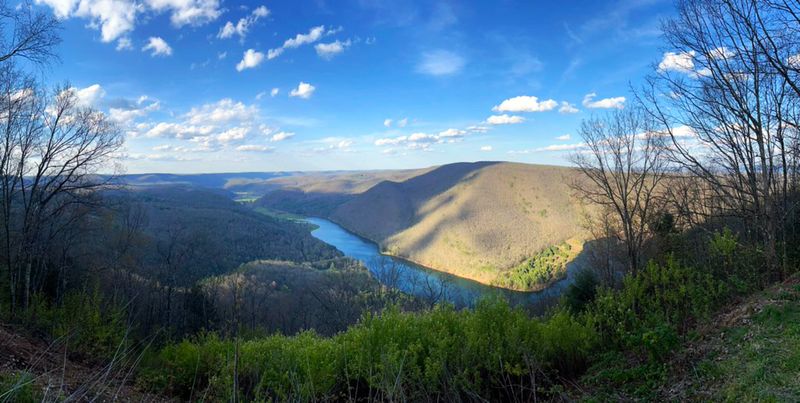
River views can make a place feel open, but the wooded slopes nearby tell another story.
Around Lock Haven, the West Branch Susquehanna River valley sits beside landscapes that offer black bears shelter and natural food.
Clinton County also reaches into large forest areas, including portions of Sproul State Forest.
Someone shopping downtown and someone staying at a remote hunting camp may face very different surroundings.
Bear precautions should match the setting rather than assume every neighborhood has the same risk.
At a campsite, keep meals organized from the moment you arrive.
Store food, garbage, and scented supplies using the campground’s approved method.
Never leave snacks in a tent or assume an unopened package has no smell.
A cooler is useful for keeping lunch cold, but most ordinary coolers are not bear resistant.
Follow posted storage rules, and ask staff about approved containers or available storage facilities.
Clean the picnic table and cooking area before turning in for the night.
Drivers on wooded roads should scan shoulders and reduce speed when visibility drops.
A bear may step out unexpectedly, especially where roadside plants or nearby habitat draw wildlife.
If one crosses, brake safely rather than swerving into opposing traffic.
Back in residential areas, work with neighbors on food sources.
One unsecured trash pile can undermine several households that are doing everything right.
Friendly conversations about collection timing and outdoor feeding often accomplish more than blaming the animal.
No current comparison supplied here establishes an unusual fall increase in Clinton County.
Check Pennsylvania Game Commission updates for specific advisories, and report concerning behavior with an accurate location.
Meanwhile, the practical goal is straightforward: let bears move through the landscape without finding an easy meal that encourages them to return to camps, porches, or backyards near people again and again throughout the autumn season.
3. Bradford County: Farm Edges and Backyard Food
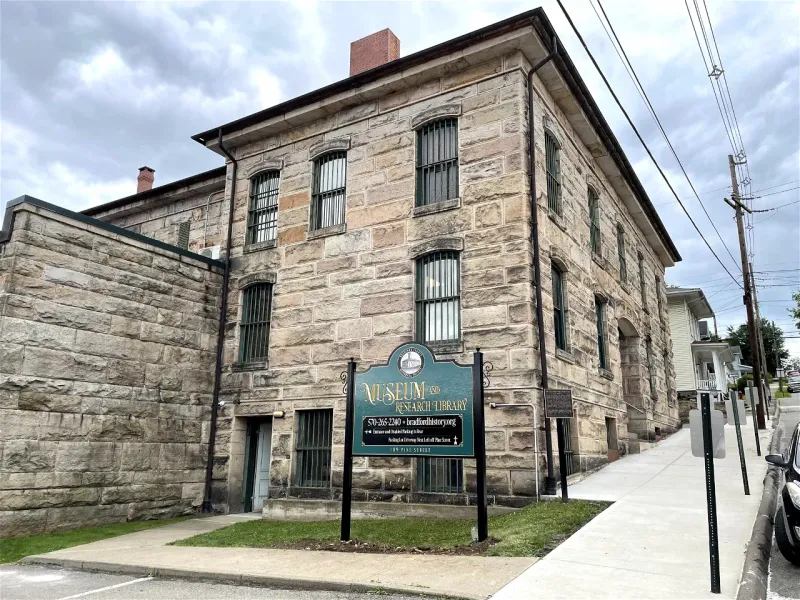
An apple tree behind the house can be more inviting than any welcome sign.
Across Bradford County, farms, wooded ridges, and small communities create a patchwork where black bears may move between natural cover and tempting food.
Towanda sits along the Susquehanna River, with rural country extending beyond town.
A bear appearing near a field or orchard is not necessarily lost.
It may simply be following a feeding route through familiar habitat.
For homeowners, fallen fruit deserves attention during autumn cleanup.
Gather usable fruit promptly and remove spoiled piles instead of leaving them beside the woods.
Do not place meat, grease, or other strongly scented kitchen waste in an open compost heap.
Small farms have additional concerns, including livestock feed, poultry areas, and beehives.
Store feed in secure buildings or suitable containers, and ask wildlife staff about protective measures for vulnerable equipment.
Properly designed electric fencing can help protect certain attractants when installed and maintained correctly.
Children should know what to do before a sighting happens.
Teach them to move toward a safe building, tell an adult, and never approach a bear or cub.
Make the lesson calm and simple rather than turning wildlife into something frightening.
If a bear enters the yard, watch from indoors and bring pets inside when it is safe.
Do not send a dog outside to drive it away.
Chasing can turn a passing visit into a dangerous encounter for both animals and people.
There are no supplied seasonal figures showing that Bradford County is above its normal activity level.
Local observations can still reveal a food problem worth fixing, especially when visits repeat at the same address.
Share practical details with the Pennsylvania Game Commission, then focus on removing the reward that brought the bear close to your home or farm in the first place.
4. Monroe County: Pocono Visitors Need a Food Plan
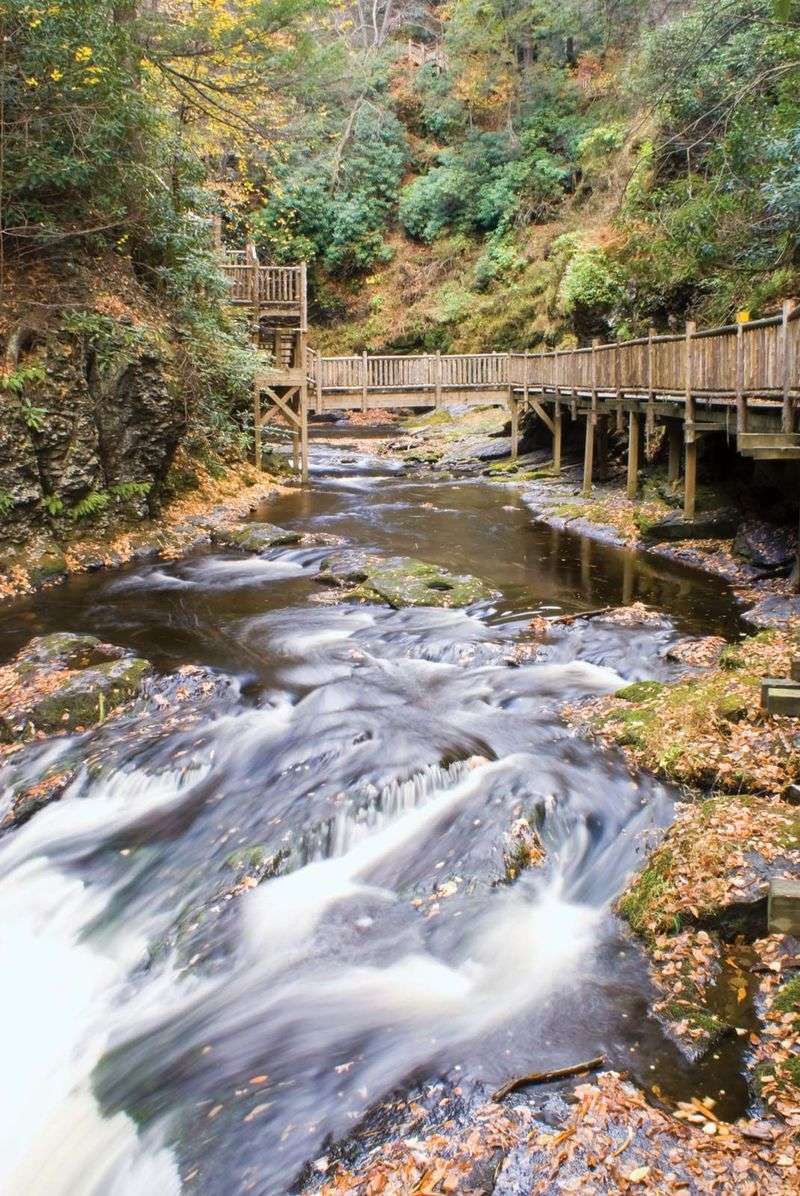
Vacation mode is no reason to leave the snack bag on the porch.
In Monroe County, wooded neighborhoods and popular Pocono destinations put outdoor recreation close to places where black bears can travel and feed.
Stroudsburg offers a busy town setting, while surrounding areas include forests, rental homes, and recreation sites.
That mix means visitors may encounter bear safety rules even when they are not planning a wilderness trip.
Read the property’s instructions before unpacking groceries.
Ask your host where garbage belongs and when it is collected.
If the answer involves an outdoor bin, check that it is designed and secured for local wildlife conditions.
Leaving overflow bags beside a full container defeats even a good storage system.
After a cookout, wipe down preparation surfaces and remove scraps from grill trays.
Bring leftover food inside promptly instead of leaving it for a later cleanup.
A quiet deck can become a feeding stop while everyone gathers around the television.
Families exploring nearby trails should keep their group together.
Give any bear plenty of room, and never approach one because another visitor is taking pictures.
Crowds can block escape routes and make an otherwise avoidable encounter more stressful.
Social media posts need careful reading, too.
Several pictures may show the same animal, and an old video may be shared as if it happened yesterday.
Without dates and reliable comparisons, a busy feed cannot establish an unusual countywide increase.
Current Pennsylvania Game Commission information and notices from the property or park are better starting points for planning.
If a bear approaches occupied areas repeatedly, report the circumstances rather than trying to lure it elsewhere.
The best souvenir is a safe memory of the Poconos, not a close encounter created by accessible trash, an unattended cooler, or a handful of food offered for a photograph.
5. Tioga County: Trail Smarts Near Wellsboro
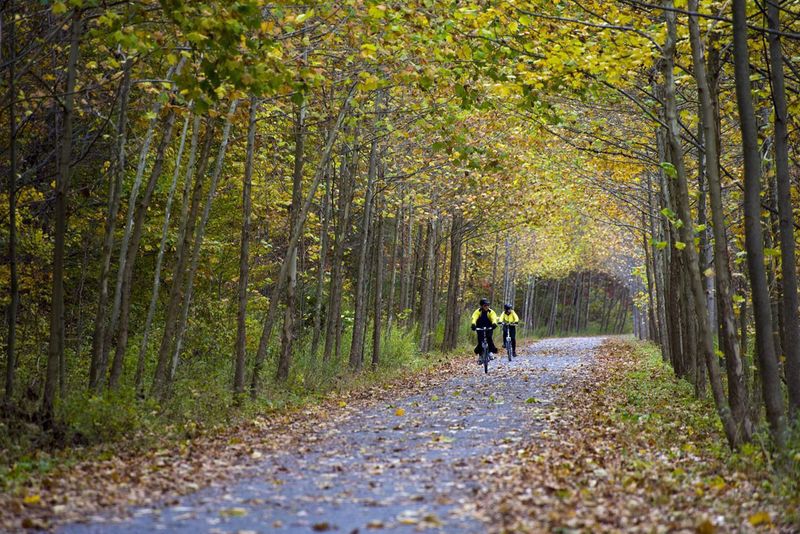
Golden leaves can steal your attention from everything else along a trail.
Near Wellsboro, autumn outings often lead toward Pine Creek Gorge and wooded recreation areas where watching the scenery should go hand in hand with wildlife awareness.
Tioga County’s forests provide places for bears to find cover and seasonal food.
Acorns and other natural foods can influence where animals spend time.
Their availability varies, so a familiar trail does not promise the same wildlife conditions on every visit.
Before leaving, check park notices and choose a route that suits your group.
Tell someone where you are going, carry a charged phone, and remember that reception may be limited.
Bear awareness belongs beside ordinary hiking preparation, not in place of it.
Keep snacks packed when you are not eating, and collect every wrapper after a break.
Never throw an apple core into the brush on the theory that it is natural.
Food left by people can draw animals toward busy trails and picnic spots.
If you see a bear ahead, give it space rather than pushing forward to reach an overlook.
Speak calmly so it recognizes a person, then back away slowly when appropriate.
Do not run, follow it, or try to make it move for your convenience.
Dogs add another reason to stay alert.
Use a leash and avoid letting a pet investigate thick vegetation or chase wildlife.
An excited dog can create trouble that would not have developed between a quiet walker and a distant bear.
Although this guide highlights Tioga County, it does not include evidence of activity above the usual fall level.
Seek dated information from the Pennsylvania Game Commission or the specific recreation area you plan to visit.
Good preparation lets you appreciate the gorge, the changing leaves, and the surrounding woods without treating wildlife sightings as guaranteed attractions.
6. Pike County: Keep Milford’s Wooded Yards Uninviting

A bear does not recognize the line between a wooded lot and a backyard.
Around Milford, forest cover and nearby residential areas can sit close together, making household food storage a useful part of everyday fall routines.
Pike County includes extensive wooded landscapes and portions of Delaware Water Gap National Recreation Area.
Those settings support wildlife, but they also attract people who want cabins, scenic walks, and weekends outdoors.
Sharing the landscape works better when bears find meals away from homes.
Begin with a slow walk around your property during daylight.
Look for spilled seed, exposed garbage, pet dishes, and fallen fruit.
Check beneath decks and behind sheds, where forgotten items may be harder to notice from the kitchen window.
Bird feeding deserves special thought when bears are active nearby.
A feeder holds a concentrated food supply, and spilled seed keeps the attraction going below it.
Remove feeders when necessary and clean the ground rather than simply raising them a little higher.
For residents in wooded developments, shared rules can make prevention easier.
Clear garbage procedures help renters and visitors understand what longtime neighbors already know.
Make instructions specific enough that someone arriving after dark can follow them without guessing.
A bear standing on its hind legs is often trying to see or smell better, not automatically preparing to attack.
Still, behavior should never be treated as permission to approach.
Keep your distance, avoid blocking its path, and retreat to a safe place if needed.
The supplied information does not show an above normal fall trend for Pike County.
Check current wildlife advisories and report repeated visits or threatening behavior to the proper authorities.
If there is immediate danger to a person, call emergency services rather than waiting for an online reply or trying to solve the situation with a camera in your hand.
7. Potter County: Remote Camps Require Careful Cleanup
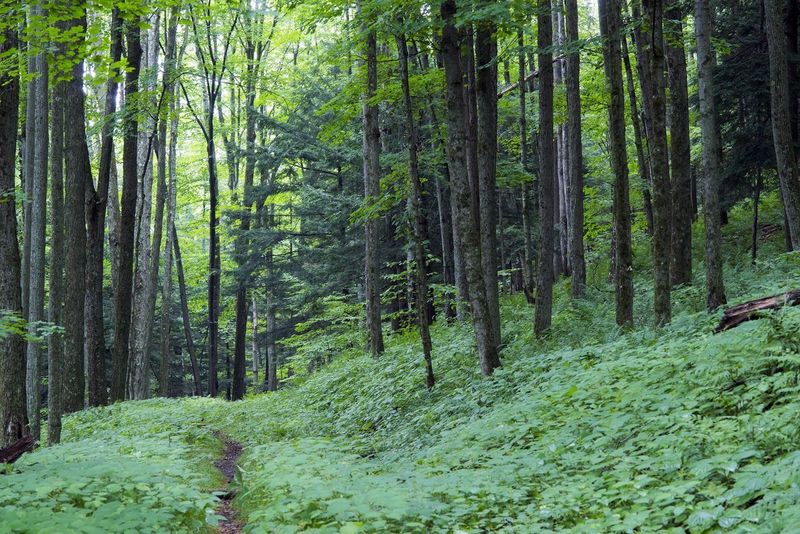
Deep woods do not make a dirty campsite harmless.
In Potter County, a forgotten food bag can attract wildlife even when the nearest busy street feels far away and the evening is wonderfully quiet.
Coudersport serves as a gateway to a county known for forested hills and outdoor recreation.
Nearby public lands include parts of Susquehannock State Forest.
Black bear precautions fit naturally into trips involving cabins, camping, hiking, and hunting.
Before arriving at a seasonal camp, agree on one food storage plan for everyone.
Confusion grows when one person locks supplies away while another leaves groceries outside.
Assign cleanup duties so the last meal of the evening does not become an overnight buffet.
Pack garbage for secure storage and proper disposal, not burial or burning.
Fires do not reliably remove every food odor, and buried scraps can be dug up.
Follow the site’s rules for food, waste, and scented items throughout your stay.
Hunters and other visitors should check current Pennsylvania Game Commission regulations before heading out.
Hunting seasons and land use rules can affect how you plan a walk or camp visit.
Wear the recommended visible clothing and respect any posted restrictions.
A fresh track or disturbed log can be an interesting clue, but it is not a reason to search for a close encounter.
Enjoy signs of wildlife without tracking an animal into cover.
Keep binoculars handy and let distance do the work.
No dated county comparison was provided to confirm unusually high bear activity in Potter County this fall.
Ask local land managers about recent concerns before settling into a remote site.
The farther you are from help, the more valuable simple preparation becomes: secure supplies, know your location, travel with a clear plan, and keep wildlife from learning that people bring dependable meals into the surrounding woods.
8. Wayne County: Small Habits Matter Around Honesdale
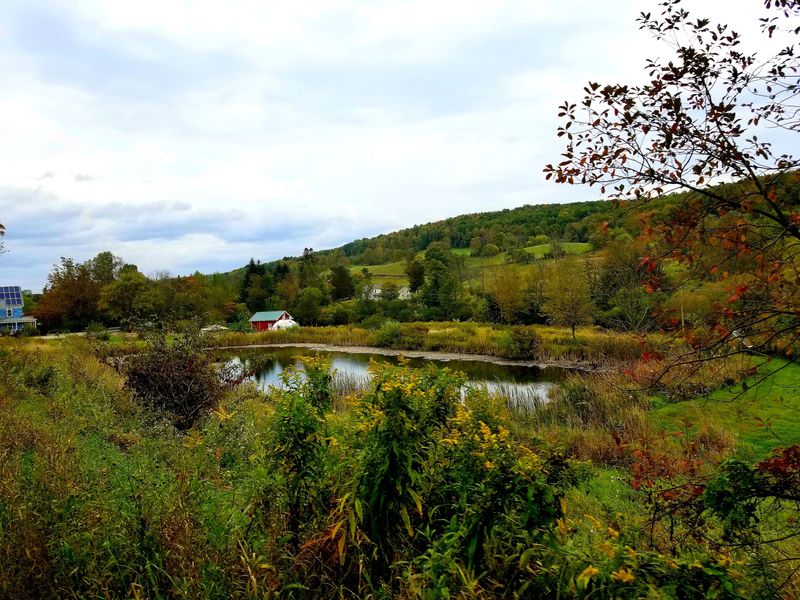
The easiest bear prevention step might happen before you leave for work.
Bringing a pet’s breakfast bowl back indoors removes one small invitation, and small invitations can add up around homes in wooded parts of Wayne County.
Honesdale sits within a broader landscape of rural roads, farms, woodlots, and scattered neighborhoods.
Bears may travel through that mix without being noticed.
A sighting does not automatically mean the animal is living beside the house where it appeared.
Pay attention to patterns rather than a single surprising moment.
Repeated visits near a trash container suggest something different from one bear crossing a field.
Write down dates and locations if problems continue, keeping observations factual and avoiding guesses about the animal’s intentions.
Outdoor pets need a practical plan.
Feed them inside when possible, supervise time outside, and keep dogs from pursuing wildlife.
Check the yard before letting a pet out after a recent bear sighting.
For chicken keepers and gardeners, consider the whole food picture.
Stored feed, kitchen scraps, and ripe produce may matter more than the structure of the yard itself.
Seek advice about suitable barriers instead of assuming a regular garden fence will stop a bear.
Neighbors can help without turning every visit into an alarm.
Share a clear location and useful safety information, but do not gather a crowd around the animal.
People lining the road for photographs can make it harder for wildlife to leave.
There is no verified fall increase established for Wayne County in the supplied material.
Check Pennsylvania Game Commission guidance when you need current information, especially if a bear returns despite attractant removal.
A calmer neighborhood starts with consistent habits, accurate reports, and room for animals to pass through without finding food at every stop along the way between fields, trees, and the next stretch of cover.
9. Lycoming County: Forested Slopes Beyond Williamsport
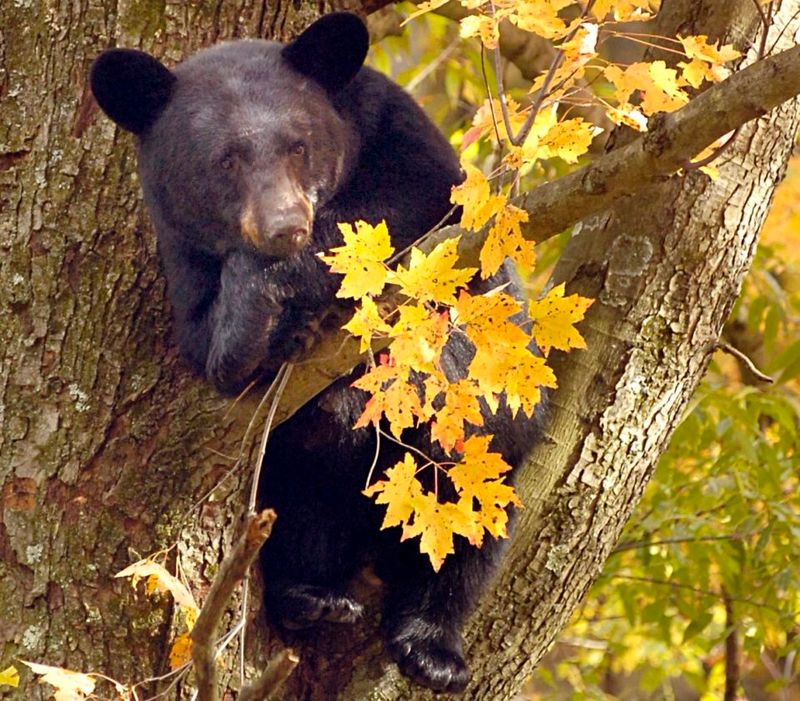
City errands and forest adventures can happen on the same afternoon here.
Williamsport’s developed streets sit within a county that also contains wooded mountains, rural valleys, and portions of public forest land used for outdoor recreation.
That contrast matters when discussing bears in Lycoming County.
Conditions near a remote cabin are not identical to conditions along a busy shopping road.
Avoid treating a countywide label as a precise warning for every block or trail.
At home, look beyond your own garbage container.
Apartment dumpsters, restaurant waste areas, and shared bins can become neighborhood attractions if food is accessible.
Property managers should arrange secure storage and prompt cleanup of spilled waste.
If you notice a bear near a business, stay inside or at a safe distance and notify staff.
Do not try to guide the animal across a parking lot.
Vehicles, crowds, and noise can complicate an encounter that needs space and professional judgment.
Out on forest roads, leave room for wildlife to move away.
Pull over only where it is safe and legal, and remain in the vehicle if a bear is nearby.
Never stop in traffic just to capture a better image.
Autumn recreation also brings changing weather and shorter daylight hours.
Plan your return before dark, carry necessary supplies, and keep food contained during breaks.
Those habits improve a trip even if the only wildlife you see is a squirrel collecting nuts.
The title’s suggestion of unusually high activity cannot be confirmed from the information provided for Lycoming County.
Consult dated Pennsylvania Game Commission notices or local official updates for current concerns.
If reporting an encounter, include the nearest road or landmark and explain what happened, because a clear account is more helpful than a dramatic description that leaves officials uncertain about the location or the animal’s actual behavior.
10. Luzerne County: Bear Awareness Along the Valley’s Edges

A busy valley still has wild edges.
Around Wilkes-Barre, wooded hills and nearby natural areas create a setting where a black bear can occasionally appear much closer to developed streets than residents might expect.
Luzerne County contains both urban neighborhoods and substantial forested terrain.
That variety makes location especially useful when discussing a sighting.
An animal near a wooded trail presents a different situation from one lingering beside a school entrance or crowded sidewalk.
If a bear appears in a developed area, resist the urge to follow it.
Keep children and pets away, watch from a protected place, and allow an open route out.
Do not surround it with vehicles or people hoping for photographs.
School staff, businesses, and neighborhood groups benefit from a simple response plan.
Know whom to contact, where people should wait, and how to share accurate information.
Instructions should discourage crowds rather than send everyone outside to look.
Household prevention remains useful even where sightings are uncommon.
Put trash out as close to pickup as local rules allow, secure food waste, and clean outdoor cooking areas.
If your property borders woods, inspect the boundary for dumped scraps or other attractants.
Walkers visiting county trails should pay attention to posted notices and keep dogs leashed.
Avoid headphones that block awareness of your surroundings.
When wildlife is visible ahead, waiting or turning around can be a better choice than insisting on passing.
No evidence supplied here confirms that Luzerne County has more bear activity than usual this fall.
Use current Pennsylvania Game Commission guidance and official local notices to judge a specific situation.
Report immediate danger through emergency services, and leave wildlife handling to trained professionals.
Respectful distance and fewer food rewards give bears the best chance to leave developed areas without an encounter becoming a problem for the entire neighborhood.
Share this story