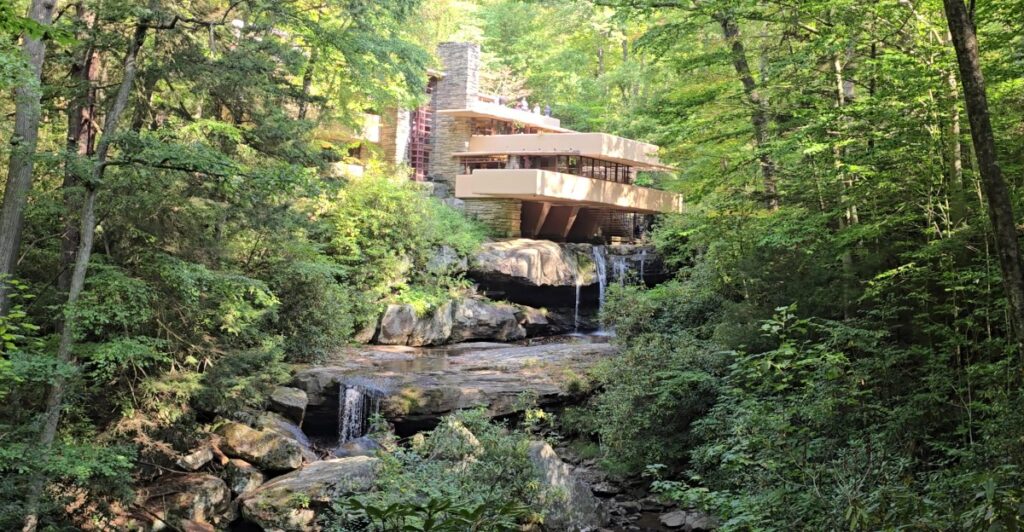
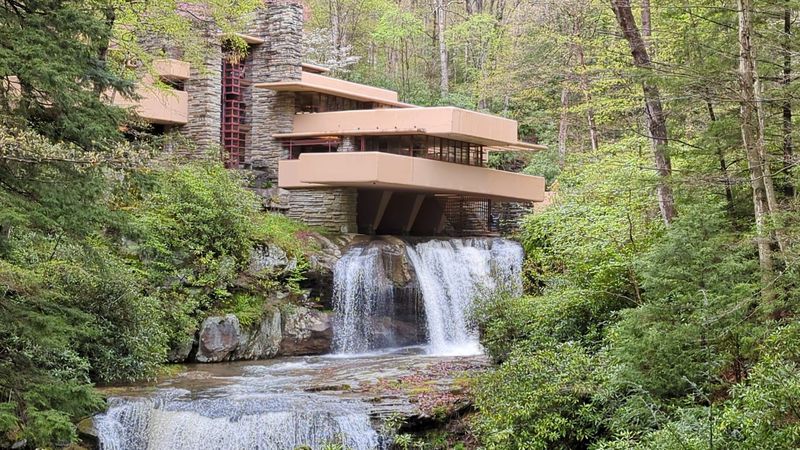
Deep in the wooded hills of Mill Run, Pennsylvania, a remarkable house appears to rise directly from the waterfall beneath it. Fallingwater, designed by renowned architect Frank Lloyd Wright, brings together natural stone, glass walls, and broad terraces that extend over Bear Run. From certain angles, the house seems almost impossible, as though it grew out of the rocky landscape rather than being built on it.
Yet Fallingwater was designed as a family retreat, created to give its occupants a close connection with the surrounding forest and rushing water. Inside, the sound of the waterfall remains part of the experience, while the terraces and windows constantly draw attention back to the landscape. A visit offers a chance to see how architecture can work with nature instead of simply standing beside it, making the house feel like an extension of the valley around it.
1. A Waterfall Beneath the Living Room
Most homes offer a view of nature, but Fallingwater puts moving water directly beneath your feet.
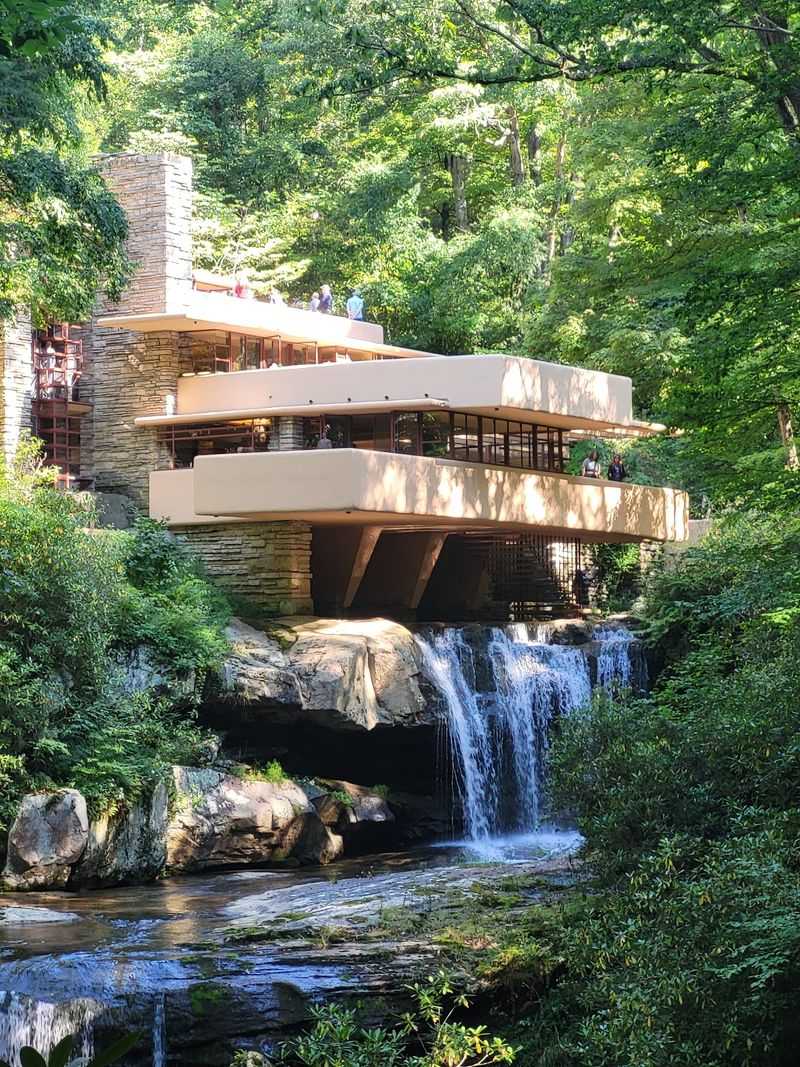
Bear Run flows under the house and spills over rocky ledges below its terraces.
Although the title suggests a river gorge, the setting is a wooded stream valley, with a waterfall that gives the home its name.
Wright placed the building above the falls rather than across from them.
That choice made the sound and movement of water part of daily life for the family who stayed here.
From several spots outside, the house seems to hover between the forest and the stream.
Give yourself time to listen as well as look.
Water levels change with weather, so the falls may sound different from one visit to another.
Stay on marked paths and viewing areas, especially after rain, when nearby stone and sloping ground can become slippery.
The setting deserves your attention before the tour begins.
2. Terraces That Seem to Float
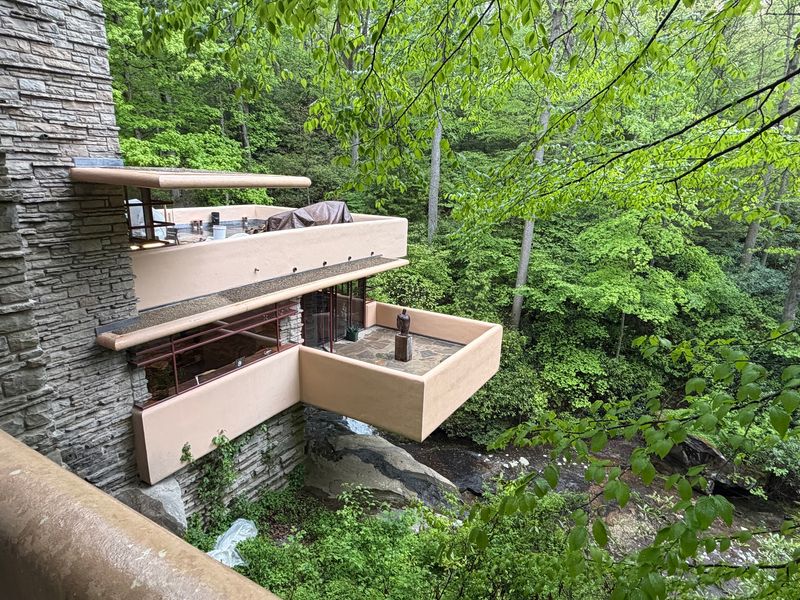
Your eyes may insist those balconies need more support.
Fallingwater’s famous terraces extend outward without columns beneath their outer edges, creating the floating effect that makes the house so striking.
Builders call this type of projection a cantilever.
The terraces are made of reinforced concrete, which combines concrete with steel inside it.
Their broad, flat shapes echo the rock shelves around Bear Run.
Instead of rising like a tower, the home reaches across the landscape in layers.
Look at the building from more than one permitted viewpoint to understand those layers.
A side view reveals how far the terraces project, while the familiar downstream view shows how they fit together.
Their bold design also created lasting maintenance challenges, and major structural work later helped strengthen them.
Ask your guide about that repair story; it adds a useful reminder that remarkable architecture still depends on careful engineering and steady care over many decades.
3. Glass Walls That Pull the Forest Inside
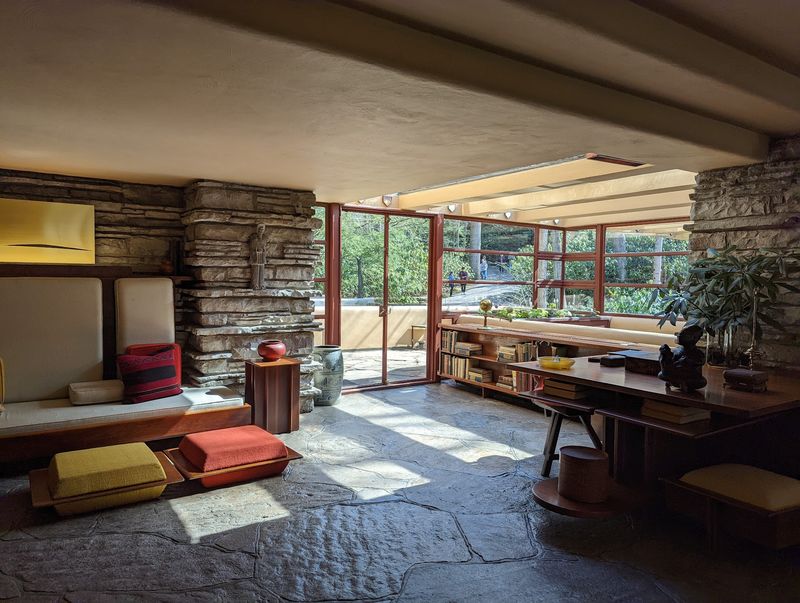
A tree outside can feel almost close enough to join the conversation.
Long stretches of windows frame the surrounding woods, giving Fallingwater its glassy appearance.
Yet the home is not an entirely glass mansion; stone walls and concrete terraces are just as central to its character.
Wright used windows to loosen the boundary between indoors and outdoors.
In some corners, glass meets glass without a heavy solid corner blocking the view.
The result feels open even where ceilings are low and rooms are fairly compact.
During an interior tour, notice where your gaze travels naturally.
You may find yourself looking past furniture toward leaves, rocks, or a terrace beyond the window.
That effect is part of the design, not a lucky accident.
Photography rules vary by tour, so check your ticket details before bringing camera equipment.
Even without taking pictures, watching the changing light across these rooms can make the visit memorable.
4. Local Stone Gives the House Its Roots
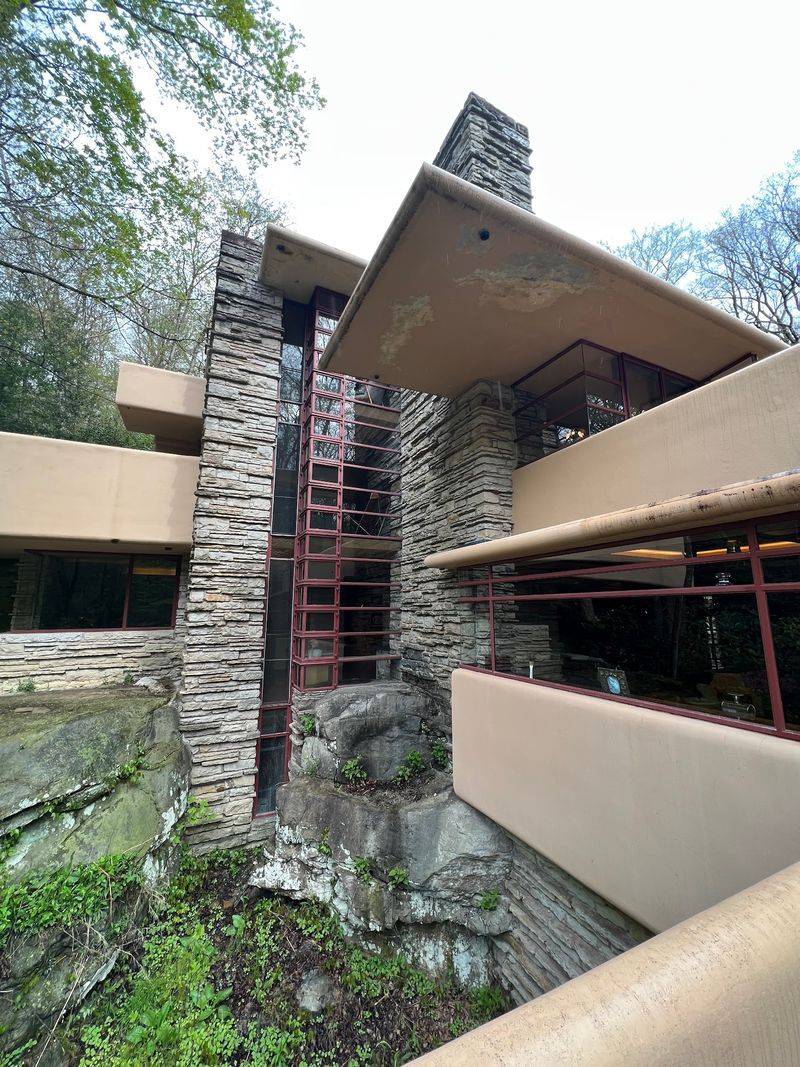
For a building that looks futuristic, Fallingwater has surprisingly earthy bones.
Rough sandstone walls connect it visually to the rocky ground around Bear Run.
Their uneven textures provide a strong contrast to the smooth concrete terraces and clear window glass.
Much of the stone came from the surrounding area, helping the house feel rooted in its setting.
Wright’s approach is often called organic architecture.
In simple terms, that means designing a building to work with its location, materials, and the people using it.
Inside, natural rock near the fireplace helps bring that idea into the main living space.
Watch how stone appears both outside and indoors, tying different parts of the home together.
You do not need architectural training to appreciate the connection.
Follow your guide’s instructions about touching surfaces, since this is a preserved historic house.
Studying the textures with your eyes is enough to reveal how carefully those materials were chosen.
5. A Family Retreat With a Remarkable Story
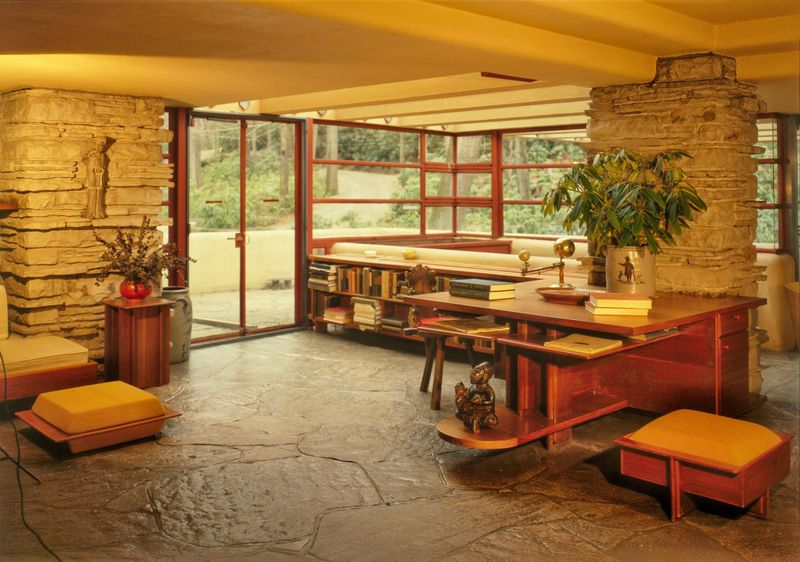
Before it became a famous landmark, Fallingwater was a place to get away from work.
Pittsburgh department store owner Edgar J.
Kaufmann and his wife, Liliane, commissioned Wright to create a country home here.
Their family already knew and loved the Bear Run landscape.
Wright designed the house in 1935, and the main home was completed in 1937.
Its unusual layout offered a fresh way to spend time in the woods, with shared living areas, smaller bedrooms, and terraces reaching toward the trees.
The family connection makes the building easier to understand as a home rather than simply an architectural sculpture.
On a guided visit, listen for stories about how the Kaufmanns used the rooms and entertained guests.
Those details bring warmth to all the stone and concrete.
Their son, Edgar Kaufmann jr., later entrusted Fallingwater to the Western Pennsylvania Conservancy, helping protect the house and its surroundings for future public enjoyment.
6. Small Doorways, Big Moments
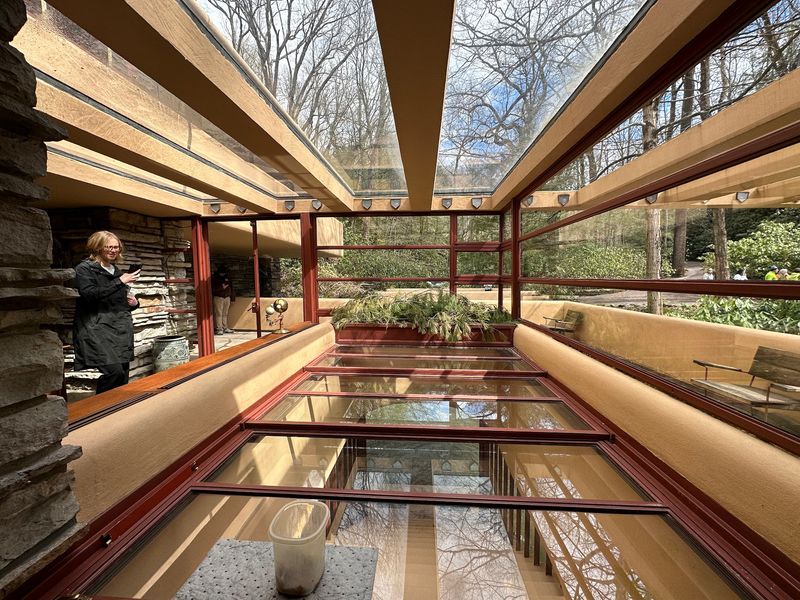
Walking through Fallingwater can feel like watching a scene slowly open up.
Some passages and entrances are narrow or low, while the spaces beyond them feel more generous.
Wright used these shifts to shape how people experienced the house.
The idea is often described as compression and release.
A tighter space draws you inward, then a larger room or outdoor terrace gives you breathing room.
It is a simple physical change that can create a surprisingly strong feeling.
Pay attention to your own reaction as you move between rooms rather than focusing only on furniture or famous views.
The route itself is part of the architecture.
Keep close to your group, watch your footing, and remember that the house includes stairs and changes in level.
Visitors who need extra space or have mobility concerns should discuss tour options with staff beforehand.
Understanding the layout ahead of time helps make the experience more comfortable.
7. Woodland Views Worth Taking Slowly
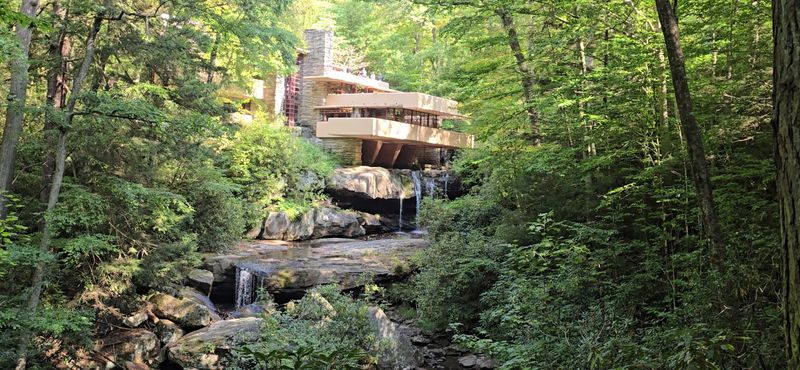
The house does not reveal every detail at once.
Trees hide portions of the building along the approach, and different paths offer different angles.
That slow reveal makes the first full view especially rewarding.
Allow extra time for the grounds rather than rushing away after your tour.
The well known downstream viewpoint shows the terraces stacked above the waterfall, but other permitted areas help you notice the rooflines, stone walls, and forest setting.
Stay within the routes open to visitors and follow posted signs.
Wear shoes with reliable grip because paths can include slopes, gravel, and damp surfaces.
Seasonal changes also affect what you see: summer brings thick greenery, while autumn adds color and bare branches can reveal more of the structure.
Public access and tours vary through the year, so check availability before planning around a particular season.
A quiet pause outdoors often explains Wright’s connection to nature better than any diagram.
8. Guided Tours Reveal More Than the View
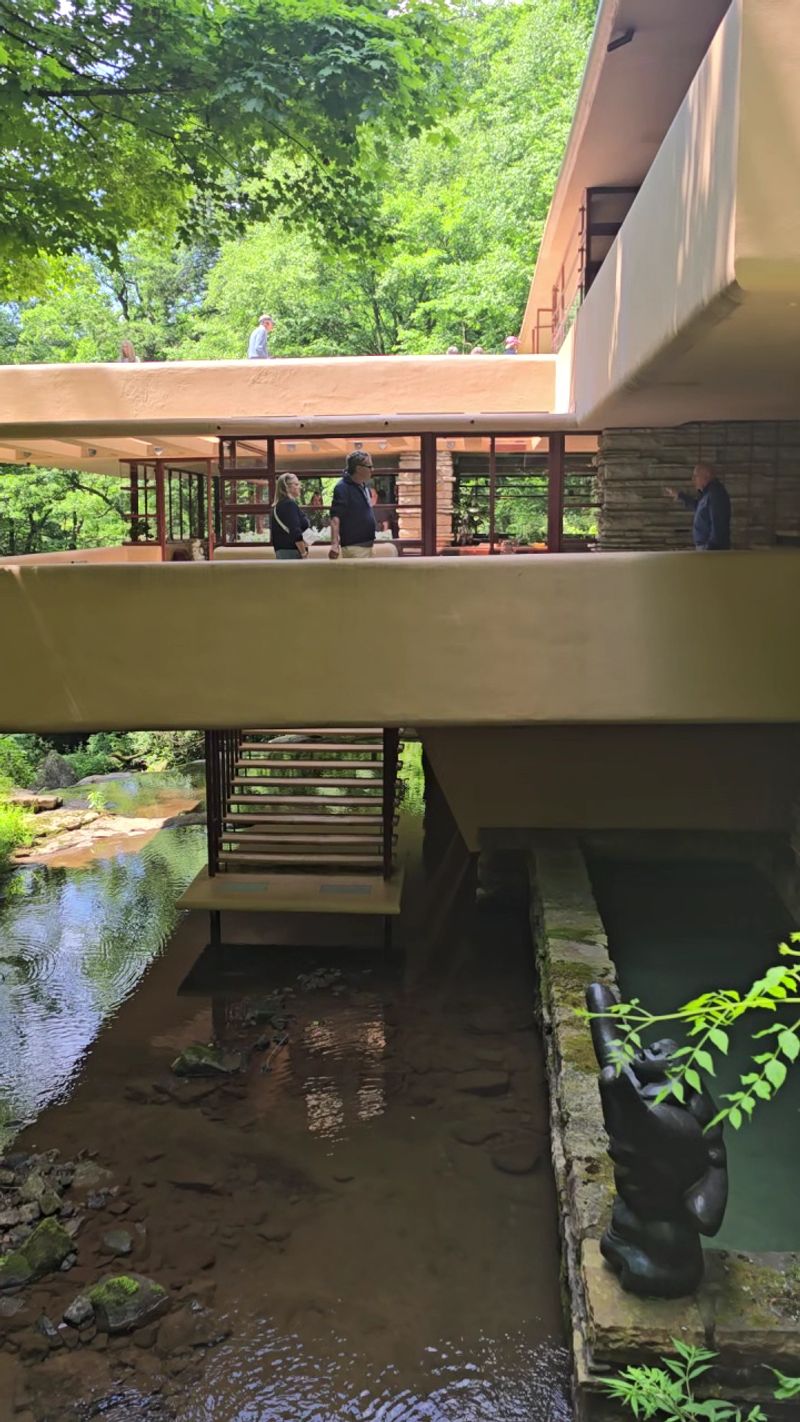
A beautiful photograph cannot explain why every corner looks the way it does.
A guided interior tour adds the stories, design choices, and family details that turn Fallingwater from a famous image into a place you understand.
Compare the current tour options on the official website before buying tickets.
Some visits focus on the grounds, while others include access inside the house, and longer experiences may offer additional detail.
Do not assume every ticket includes the same rooms, photography permissions, or amount of time.
Advance booking is a sensible choice, especially when your travel dates are fixed.
Check age requirements, arrival instructions, and cancellation terms as well.
Bring a question about something that interests you, whether it is the waterfall, furniture, construction, or everyday family life.
Guides can help connect those interests to the building.
Leave room in your schedule for the surrounding landscape so the visit feels like more than a timed walk.
9. A Little Planning Makes the Visit Easier
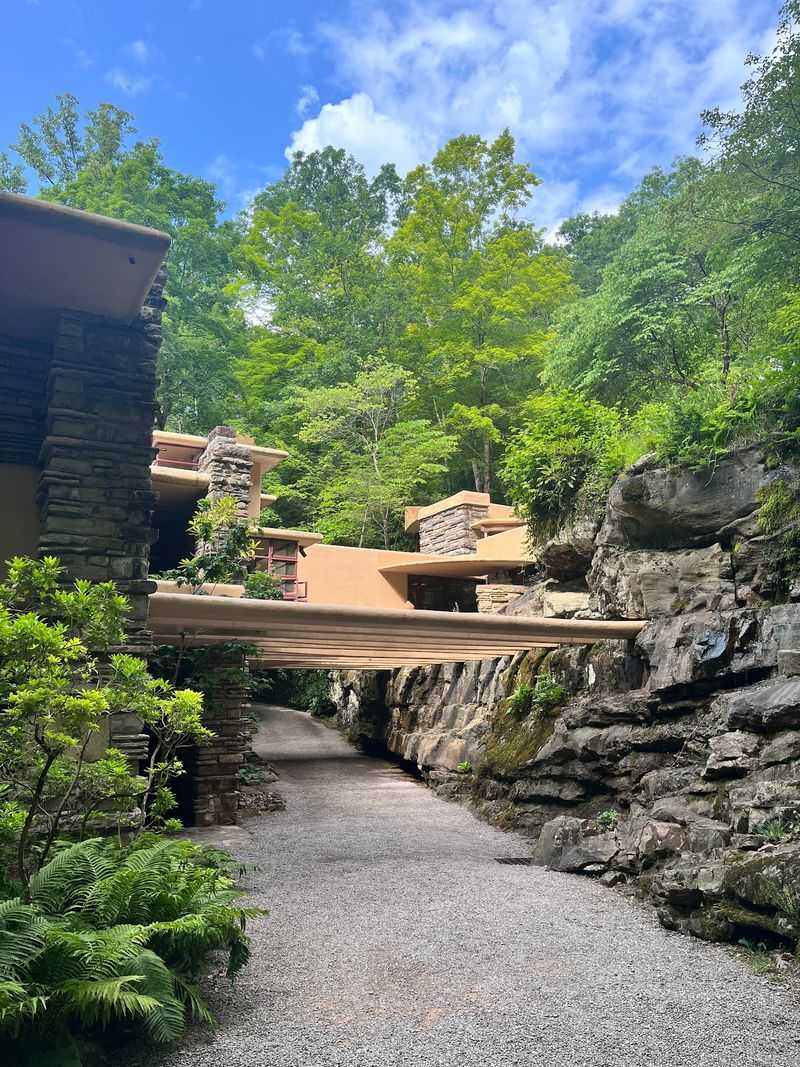
Comfortable shoes matter more here than fancy clothes.
Fallingwater is a historic house in a wooded setting, and visiting can involve walking on uneven paths, climbing stairs, and standing through portions of a tour.
Plan for the physical side of the experience.
The address is 1491 Mill Run Road, Mill Run, Pennsylvania.
Use the official website, fallingwater.org, to confirm directions, current opening dates, ticket availability, and visitor rules.
Listed hours can change with the season, holidays, or special circumstances, so a fresh check is more useful than an old screenshot.
If mobility is a concern, call 724-329-8501 before booking and ask about available assistance, including shuttle arrangements and interior limitations.
A shuttle does not remove the stairs within the house.
Pack for the weather, arrive according to your ticket instructions, and allow time for the visitor center.
Cafe and shop access can provide a break, but confirm their current schedules before relying on them.
10. A World Landmark That Still Needs Care
Even a masterpiece needs repairs, careful cleaning, and people watching over it.
Fallingwater faces moisture, changing temperatures, and the everyday effects of standing above moving water.
Preserving such an unusual building takes ongoing work.
In 2019, Fallingwater became part of the UNESCO World Heritage listing called The 20th-Century Architecture of Frank Lloyd Wright.
That recognition places it within a group of buildings valued for their influence on modern architecture.
Its importance goes far beyond a dramatic photograph.
Visitors help protect the house by respecting barriers, following guides, and leaving historic furnishings undisturbed.
Admission and purchases also support the organization caring for the property.
Before leaving, take one last look at how the terraces, trees, and waterfall fit together.
The most lasting lesson may be surprisingly simple: a bold home can respect its surroundings.
Fallingwater continues to show how thoughtful design can change the way people see both buildings and the landscapes around them.
Share this story