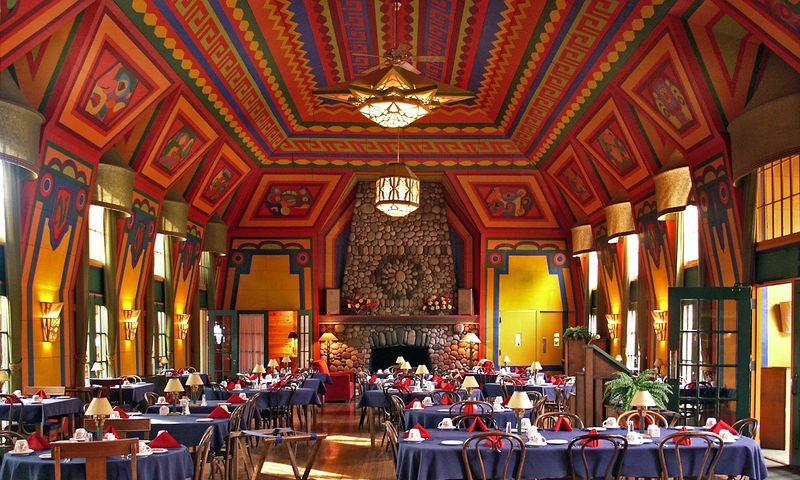
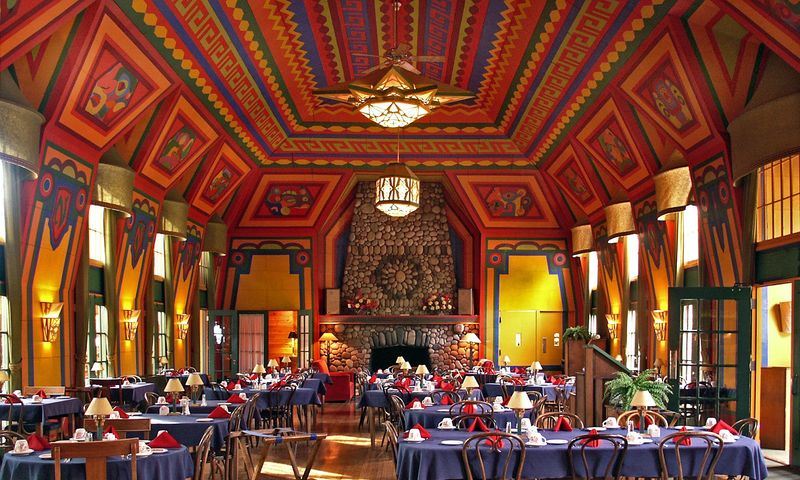
Fifteen miles up the shore from Grand Marais, a building stands that seems to have skipped the last hundred years entirely. Its dining room ceiling is painted in bold colors that rise twenty feet over the tables.
A massive stone fireplace anchors the room like the star of an old movie. There are no TVs in the rooms, no phones, and barely a bar of cell signal.
That might sound like a problem, but for many North Shore travelers it is the whole point. Vintage lovers and history fans keep coming back to this spot on Lake Superior because it feels like a set built for a 1920s film.
The story behind it involves a famous private club, a French artist, and a spot on the National Register of Historic Places. Here is what makes it worth the drive.
A Roaring Twenties Hideaway on the North Shore
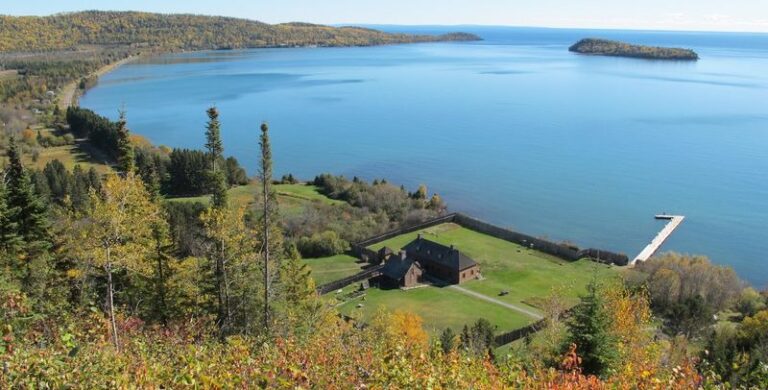
Highway 61 has plenty of scenic stops, but only one of them was built as a club for the wealthy of the 1920s. The Naniboujou Lodge & Restaurant sits at 20 Naniboujou Trail, Grand Marais, MN 55604, in the United States.
The lodge is about 15 miles up the shore from downtown Grand Marais. It rests right off Route 61, beside the Brule River, and faces Lake Superior.
Today it works as a lodge, a restaurant, and a living history lesson all at once. Guests can book a room for the night, while day-trippers can reserve a meal in the famous dining hall.
The building itself is the headliner here. It once housed a well-known gentlemen’s club in the 1920s, and much of that original character remains in place.
The property is also alcohol-free in its approach to lodging, smoke-free throughout, and kid-friendly. Free parking makes arrival simple, which is good news after a long drive up the shore.
Folks who collect old things often say the best finds are the ones you can step inside. This one has a front door, a lake view, and nearly a century of stories waiting behind it.
The Club That Started It All
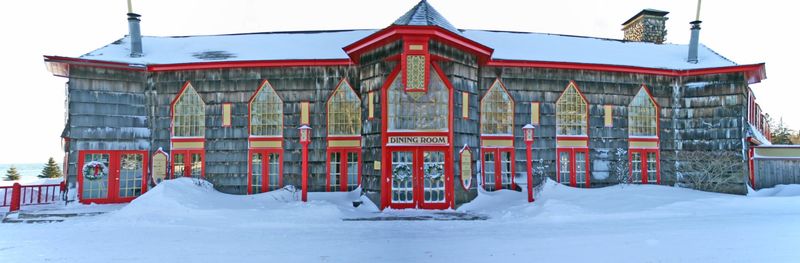
Back in the Jazz Age, a group of wealthy members wanted a private retreat on Lake Superior. The result was a grand club, and this lodge is the building they left behind.
Its later chapters took it in new directions. Documents kept inside the lodge describe how the property changed hands over the decades, including a period under missionary ownership.
History buffs can read those papers on site and trace the story for themselves. It is a nice bonus for anyone who likes context with their architecture.
In 1982, the lodge was added to the National Register of Historic Places. That listing helped secure its place as one of the most talked-about historic buildings on the North Shore.
History comes up again and again when people talk about this place. It is easily the most common topic among guests, ahead of the fireplace, the food, and the hiking.
Family ownership is part of the modern story too. Members of the owner’s family, including grandchildren, have worked the dining room and the gift shop area in recent seasons.
Old clubs rarely survive a full century, so this one has earned a little bragging rights.
What the Name Naniboujou Means
Few lodge names come with a legend attached. In Cree, Naniboujou refers to a spirit of the outdoors and woods.
The figure is a powerful but kind cultural hero who appears often in traditional storytelling. The name fits a building tucked between a river, a forest, and the biggest of the Great Lakes.
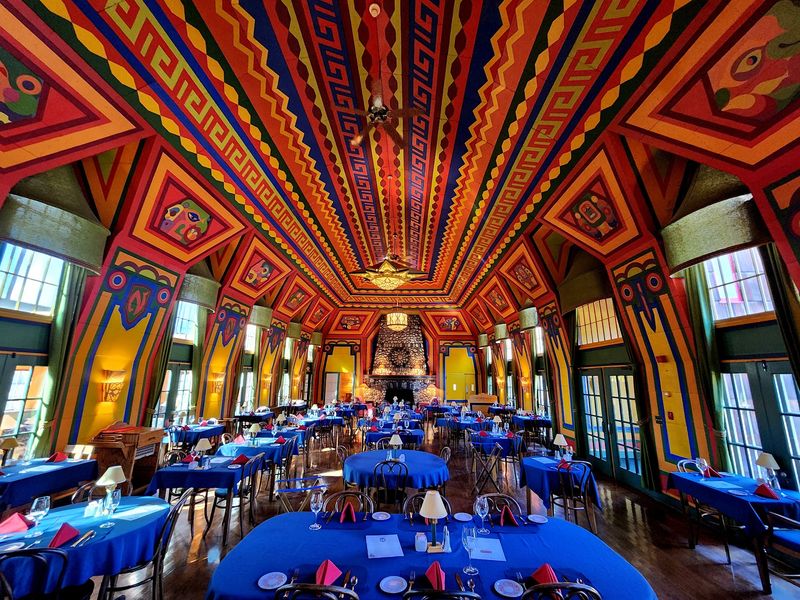
Cree-inspired designs show up across the property. They cover the walls and the domed ceiling of the dining room, and many smaller accents echo them elsewhere.
Some guests point out that these designs come from Cree tradition rather than from the Native nations of northern Minnesota. Others note that the club’s original history had little connection to Indigenous communities beyond the name and the artwork.
Those are fair points to keep in mind. The lodge is best understood as a 1920s artistic vision, not as a Native cultural site.
Knowing that background makes a visit richer. It turns the colorful walls into a conversation about history, art, and how places get their names.
A good name starts a story, and this one keeps people asking questions long after checkout.
A Dining Hall Fit for the Big Screen
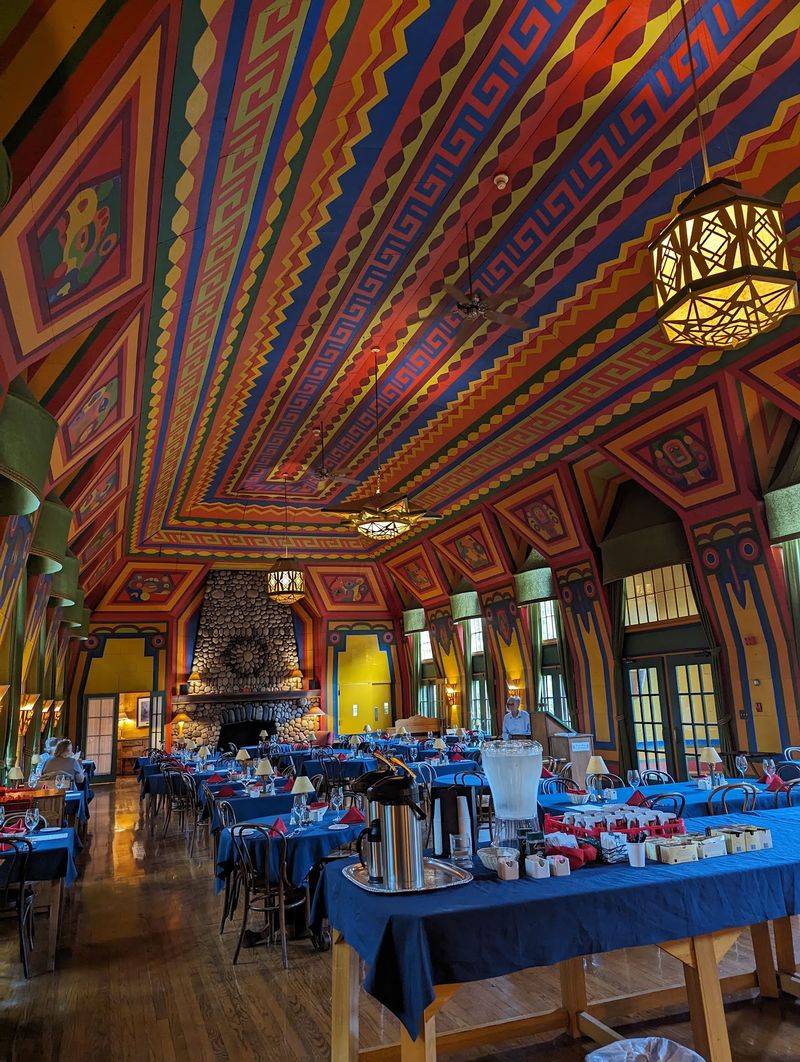
Most restaurants pick one bold color. The dining hall here seems to have picked all of them.
French artist Antoine Goufee painted the walls and the twenty-foot-high domed ceiling with vivid Cree-inspired patterns. The effect is so striking that many people book a meal just to sit under it.
The room is often called an artist’s dream. Guests describe it as joyful, classy, and lovingly maintained after all these decades.
Some even compare the whole place to the moody, offbeat world of Twin Peaks. That says plenty about how unusual the space feels compared with a typical lakeside restaurant.
For vintage collectors, this is the main event. It is a rare chance to see 1920s decorative work still in daily use instead of behind museum glass.
Photographers should plan extra time. Even guests who arrived hoping for lunch on a day it was not served were welcomed to tour the room and take pictures.
The ceiling may be twenty feet up, but it tends to steal the spotlight from everything at table level.
The 20-Foot Stone Fireplace
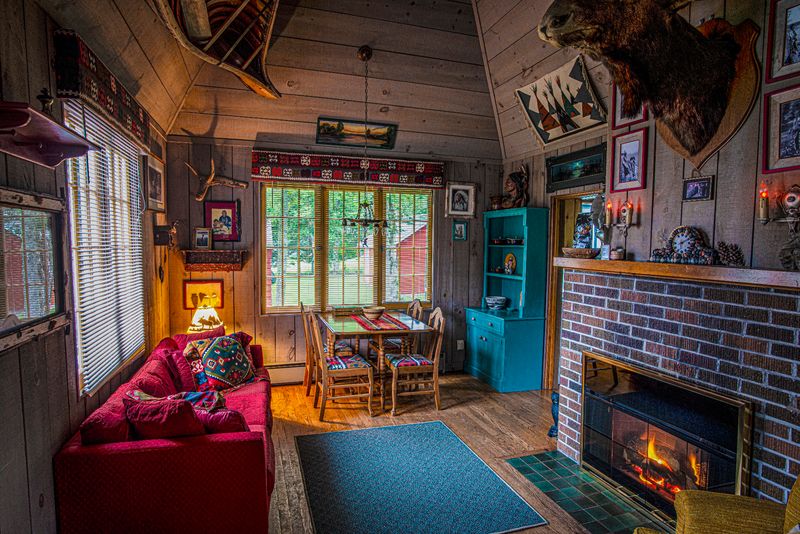
Some fireplaces are decorations. This one is architecture.
Rising 20 feet high, the stone fireplace anchors the elaborate dining hall. It is the second most mentioned feature after the lodge’s history.
Couches sit nearby for lounging, and more seating spreads across the great hall. On a gray day, it becomes the natural gathering spot for guests with a book or a puzzle.
The scale matches the ambition of the original club. Its builders clearly wanted members to feel they had arrived somewhere important.
Rainy afternoons are when it earns its keep. Lake Superior weather can change by the half-day, and a seat near the hearth is a good backup plan for any forecast.
Many rooms also offer their own fireplaces, so the theme carries upstairs. Guests who love a good fire can enjoy one in the morning, the evening, and everywhere in between.
Call it the lodge’s original screen time, long before anyone thought to put a TV on the wall.
Rooms Without Screens
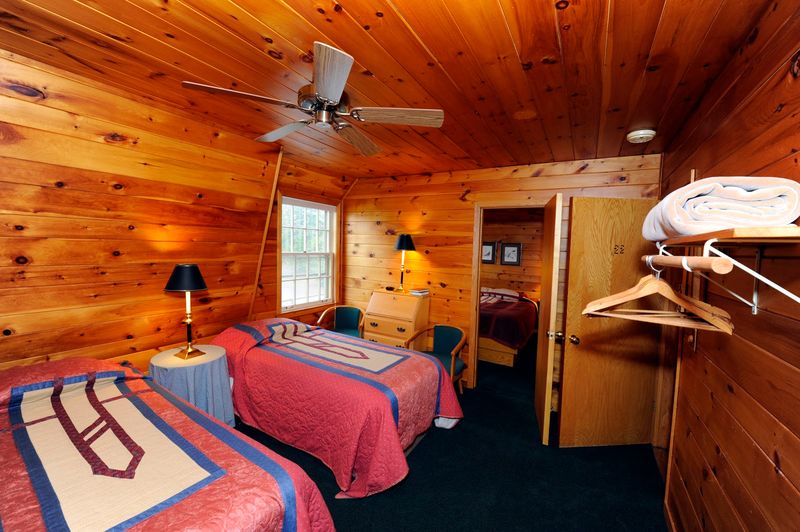
Here is a lodge that took the phrase unplug and built a business around it. Rooms come without TVs or phones, and cell service is not provided.
Wi-Fi availability is spotty at best, so it pays to check the website before arriving. Several guests found no usable signal for major carriers inside the building.
The rooms themselves are basic. Each has a private bathroom, and most have a fireplace, knotty pine paneled walls, or both.
Some rooms sleep up to four guests, which helps families and small groups. Bathrooms may have a shower rather than a tub, and fixtures have been updated in recent years.
Views can stretch across rolling lawns and trees down to the lake. A fan is available, and the lakeside climate means air conditioning is rarely a concern.
One honest heads-up involves the walls. They are thin, so light sleepers may want earplugs.
Those small trade-offs come with the territory of a 1920s building. In exchange, guests get a genuine break from the buzz of everyday life, which is getting harder to find anywhere.
Meals Under the Painted Dome
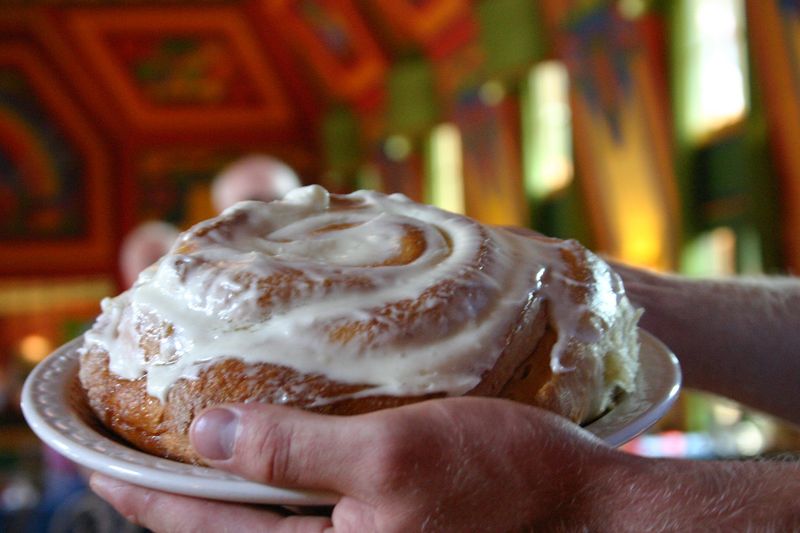
Dinner reservations here come with a ceiling that does most of the talking. Still, the meals matter, and the lodge serves American fare in its historic hall.
Breakfast tends to get the warmest feedback. Pancakes with bacon, fresh coffee, and orange juice show up often, and wild rice is a frequent topic too.
Opinions on dinner are more mixed. Some find it thoughtfully prepared, while others call it good but not fabulous and feel the price leans high.
Personal choice can be limited, since meals often follow a set plan rather than a long menu. Gluten-free options are available, but guests with dietary needs should confirm details well ahead.
Lunch service has been paused recently due to staffing challenges. Non-guests have been asked to call ahead to reserve a meal.
A small selection of drinks has also appeared on the menu in past years. Afternoon tea service has been offered in the solarium too.
Plenty of diners agree that the setting alone makes the reservation worthwhile. The best advice is simple: come hungry for history, and treat the food as a pleasant side dish.
Beach, Library, and a Telescope
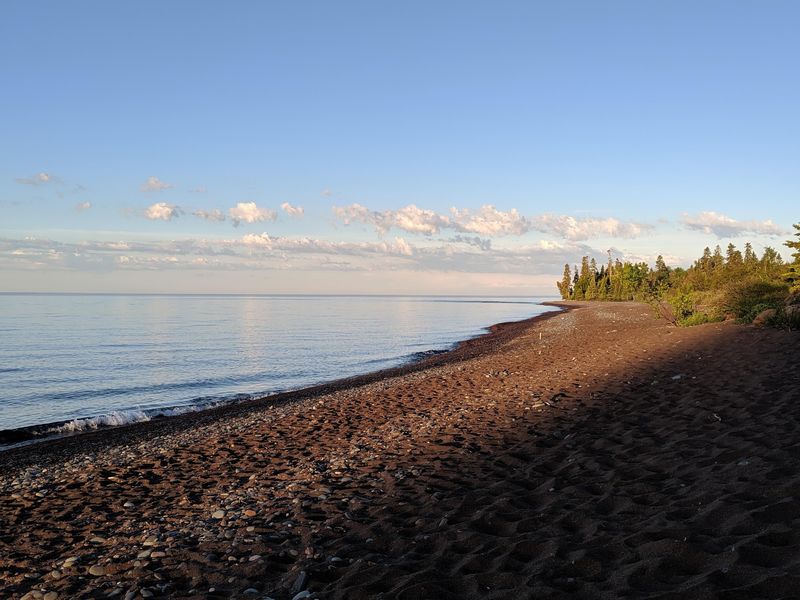
Leaving the dining hall does not mean the fun stops. The grounds stretch toward Lake Superior with plenty to do at a slow pace.
A private beach runs along the shore. Its long pebble and sand strip forms a spit at the mouth of the Brule River, creating a sheltered eddy that is ideal for skipping stones.
Outdoor chairs and tables are scattered near the beach and on a balcony. Horseshoe pits add a dose of old-fashioned competition.
A deck with a telescope lets guests scan the lake. Lake Superior shows a different mood almost every day.
Inside, a library offers books, and there are puzzles and games for group downtime. Tea and coffee are on hand too.
The solarium has a small balcony that makes a cozy reading perch during rain. Anglers can rent fishing gear right at the lodge.
For crafters and puzzle fans, this is a dream setup with zero distractions. Bring a project, grab a chair, and let the afternoon go nowhere in particular.
Trails Across the Road
Hikers, take note. The lodge sits almost directly across the road from state park land.
Judge C.R. Magney State Park is listed about 6 miles away by road, yet its trails feel close enough to reach on foot.
The famous Devil’s Kettle is a short walk away.
Good hiking within walking distance is a recurring point of praise. It makes the lodge a handy base for exploring the river and nearby woods.
Long-distance hikers have found it useful too. Some leave their vehicle at the lodge, hire a shuttle to a trailhead on the Superior Hiking Trail, and hike back over several days.
Arriving at a fireplace and a real bed after miles of trail food is a strong reward. The lodge’s calm pace fits well with a hiking trip.
Autumn draws plenty of North Shore explorers. Any season works, though, as long as boots are packed.
Trails lead out, and the lodge pulls everyone back in by suppertime.
Is It Your Kind of Throwback?
Not every getaway needs a spa menu and a streaming lineup. This one offers something rarer: a peaceful pause inside a 1920s landmark.
The lodge suits vintage collectors, history lovers, hikers, and anyone craving quiet. It also welcomes kids and pets, and it is accessible.
The small staff earns steady praise for kindness and hard work. Many guests mention feeling right at home from the moment they arrive.
It is less ideal for travelers who need strong connectivity or a wide range of meal choices. Thin walls and limited menus are part of the trade.
Planning is simple. Book rooms or meal reservations through the official website, call ahead if dining as a non-guest, and confirm current meal service before driving up.
Many guests return year after year, some even to the same room. One longtime visitor finally checked it off a childhood wish list.
Old-school is the house style here, and that is exactly the appeal. For anyone who loves things built to last, this lakeside time capsule is well worth the trip up Highway 61.
Share this story