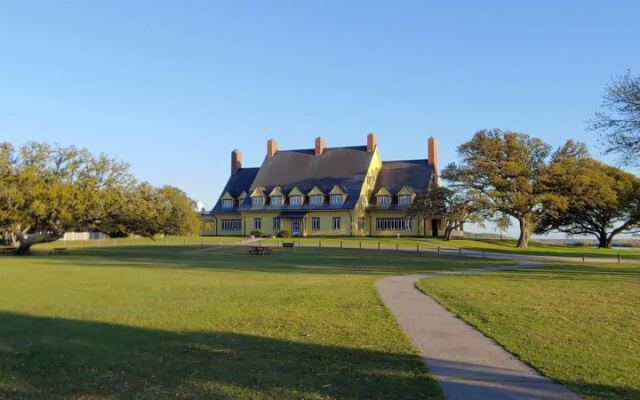
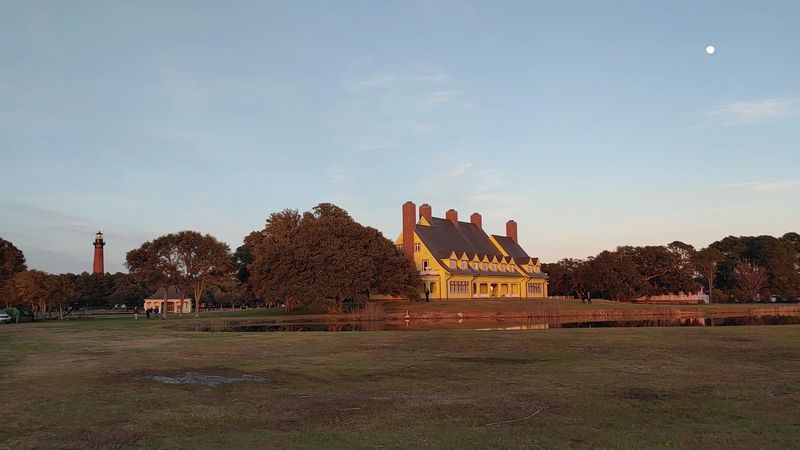
Way up at the northern tip of the Outer Banks, past the last stoplight most beach traffic ever reaches, a bright yellow mansion sits on the edge of Currituck Sound. It was built in the 1920s as a lavish winter retreat, then sat empty and crumbling for decades before a North Carolina county decided it was worth saving.
Today the house is open for tours on weekdays, the lawn turns into one of the best sunset spots on the coast, and a red brick lighthouse waits just down the path. Add the wild horses that roam the beaches north of town, and Corolla offers a full day that feels like three trips in one.
Keep reading for the story behind the house, what the self-guided tour actually covers, the best time to show up, and the practical details that can save a wasted drive.
A Yellow Mansion on the Sound
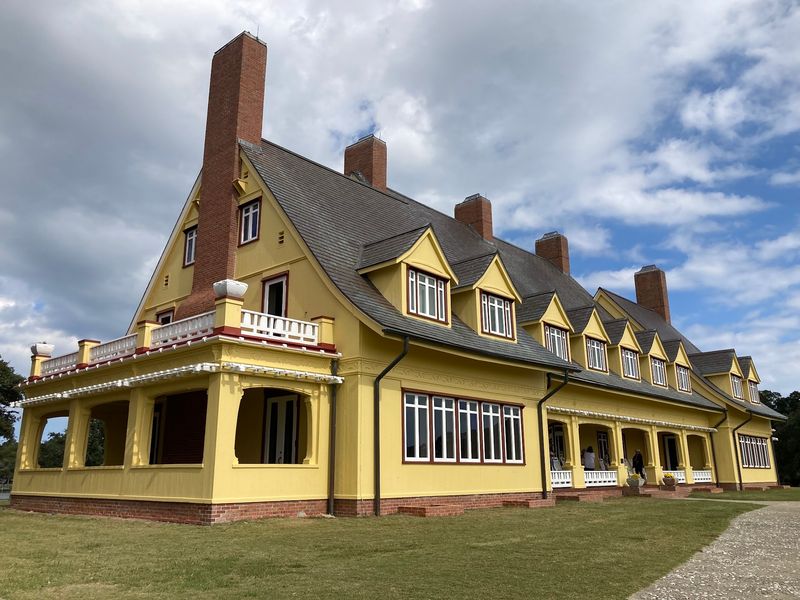
Some road trips end at a beach, but this one ends at a front door built nearly a century ago.
The Whalehead Club sits at 1100 Club Rd, Corolla, NC 27927, in the northern Outer Banks of North Carolina, United States. It is a restored 1920s mansion on the shore of Currituck Sound, now listed as a historical landmark and run as a public site with tours and open grounds.
The location matters. Corolla sits at the far northern end of the paved road in Currituck County, so the drive itself feels like a small adventure for anyone coming from the Piedmont or the mountains.
The house is the star, but it does not stand alone. Pathways and boardwalks link the property to the Currituck Beach Lighthouse and the Currituck Maritime Museum, which turns a single stop into a compact historic district.
That setup makes it easy to plan a whole day around one parking spot.
The grounds work as a public park, so a stroll, a picnic, or a sunset visit does not require a tour ticket. The house itself, though, is where the real story begins, and that story has a few surprising twists.
Built for a Gilded Winter Escape
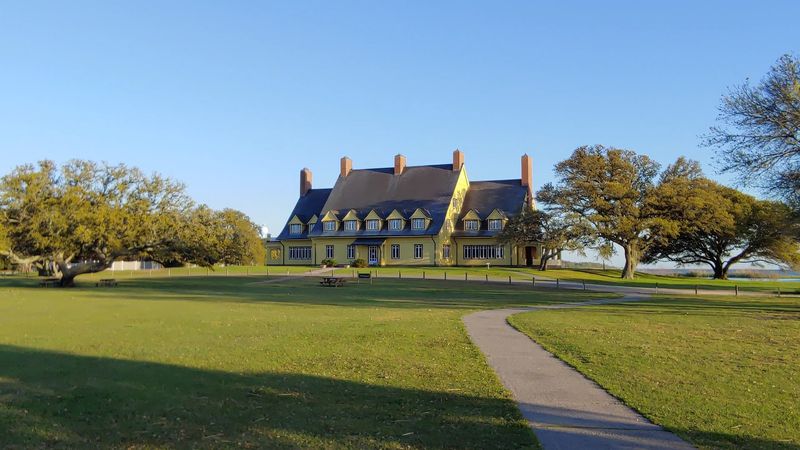
Long before Corolla had rental houses and beach traffic, a wealthy couple chose this stretch of marsh for a hunting retreat.
The Whalehead Club began in the 1920s as a hunt club, and the scale of the place shows that money was not much of a concern. The interior is packed with ornate details and fine woodwork that point to a builder who wanted the best of everything.
The real draw for many people is not just the architecture. It is the story of the couple who built the mansion and the privileged lives they led on this remote shore.
Their connection to Newport, Rhode Island, runs through the house. One of the most talked about features is the dining room, which was taken apart in the family’s original home in Rhode Island and reassembled here.
That detail alone tells you a lot about the ambitions behind the project.
The tour lays out how the couple lived and how the house functioned day to day. By the end, the building feels less like a museum and more like a window into a very particular slice of 1920s American life on the North Carolina coast.
Decades of Neglect, Then a Comeback
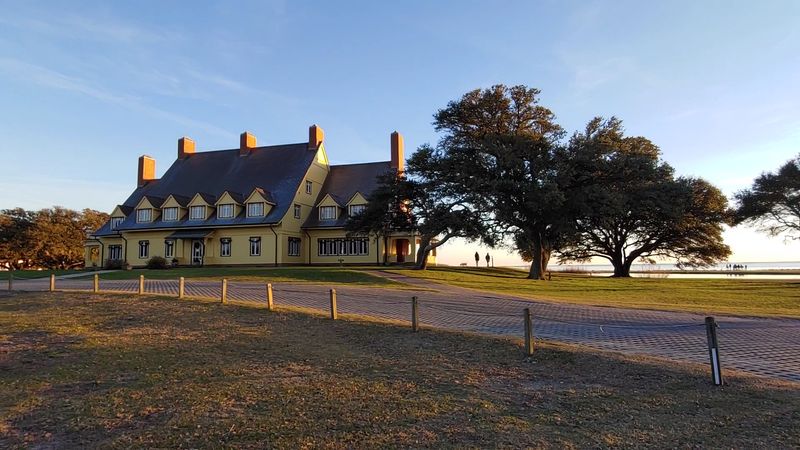
Here is the part of the story that surprises a lot of first-timers: this mansion almost did not make it.
After its years as a private retreat, the house went through several different uses. Each chapter added to its history, and the tour covers those later years as a compelling tale of its own.
Eventually the building sat abandoned for decades. It slid into serious disrepair, and for a long stretch the future of the property looked uncertain.
Then Currituck County stepped in. The county took over the dilapidated structure and renovated it back to its original design, a project that took real commitment from the local community.
That effort is a big reason the place resonates with North Carolinians today. It is a homegrown preservation win, not a far-off museum funded by strangers.
The restored rooms aim to mimic the original home as closely as possible. Furnishings are vintage, and the detailing is meant to reflect what the house looked like in its prime.
Knowing the backstory changes how the tour feels. Every polished banister and intact window becomes a small reminder that this landmark was very nearly lost for good.
Behind the Walls: Plumbing, Elevators and Call Boxes
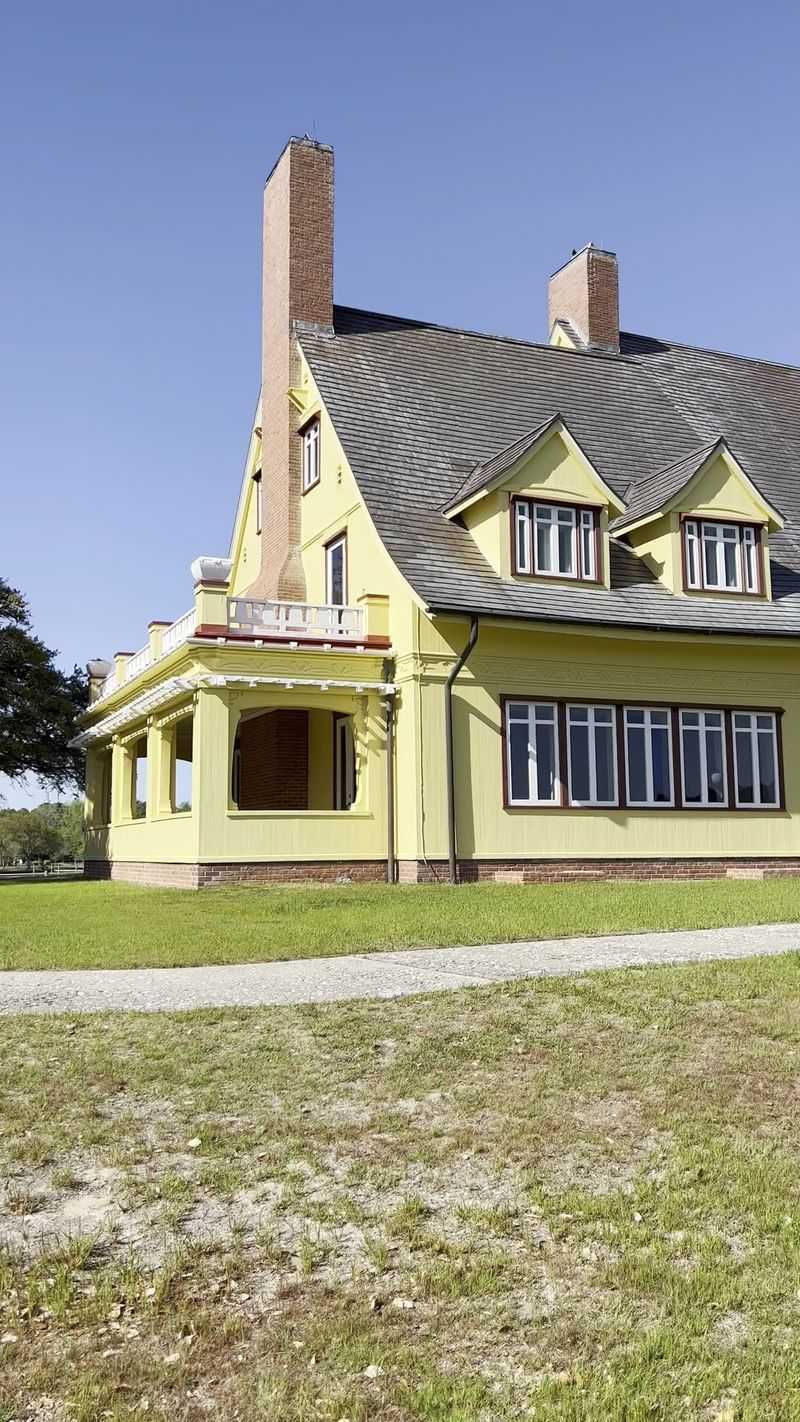
Fancy wallpaper is nice, but the hidden machinery of a 1920s mansion is where things get genuinely interesting.
The Whalehead tour gives real attention to how the house actually worked. Expect to see sophisticated 1920s plumbing, an elevator, and some notably narrow hallways that hint at how staff moved through the building.
The servants’ side of life gets its own spotlight. The tour explains how household staff lived and worked, and a servant call box is one of the details pointed out along the way.
On some tours, the electrical panel has even been opened so people can see the original systems up close. For anyone who loves the behind-the-scenes logistics of old estates, that is a rare treat.
A quirky surprise awaits many guests too. The inside is much larger than it appears from the outside, so the rooms keep coming.
These practical details balance out the glamour. They show that a luxury retreat on a remote sound needed serious engineering to function, and they make the house feel like a working home rather than a stage set.
History buffs and tinkerers may find this the most memorable stretch of the visit.
An iPad, Your Own Pace, and No Cameras
Leave the phone in your pocket, because this tour runs on a different kind of screen.
The Whalehead house tour is self-guided, with information delivered through an audio tour on an iPad. Volunteers and staff help direct people through the rooms, and they are known for being friendly and well informed.
The format lets you linger. You can take your time in each room, read about the artifacts, and move on when you are ready instead of keeping pace with a crowd.
One rule catches people off guard: no photos are allowed inside. Video, touching, and loud voices are also off limits.
Some guests wish they could snap pictures of the decor. Others appreciate that the rule keeps attention on the house, the story, and the setting rather than on a camera roll.
Plan for about an hour if you want to absorb the details. Because of the quiet, hands-off atmosphere, the tour may suit older kids and adults better than restless little ones, and some families recommend it for children 14 and up.
Bring curiosity, and save the photo session for the lawn outside.
Sunset on Currituck Sound
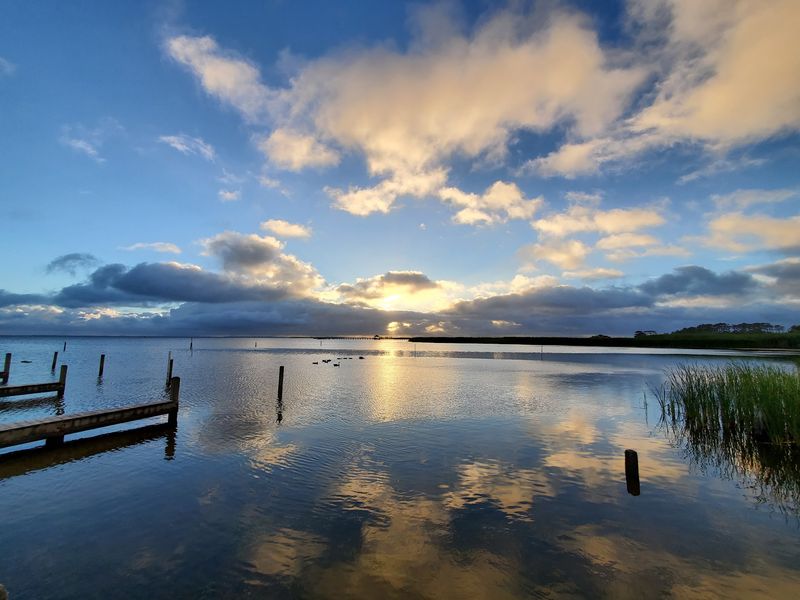
Ask locals when to visit, and many will skip the tour hours entirely and point to the end of the day.
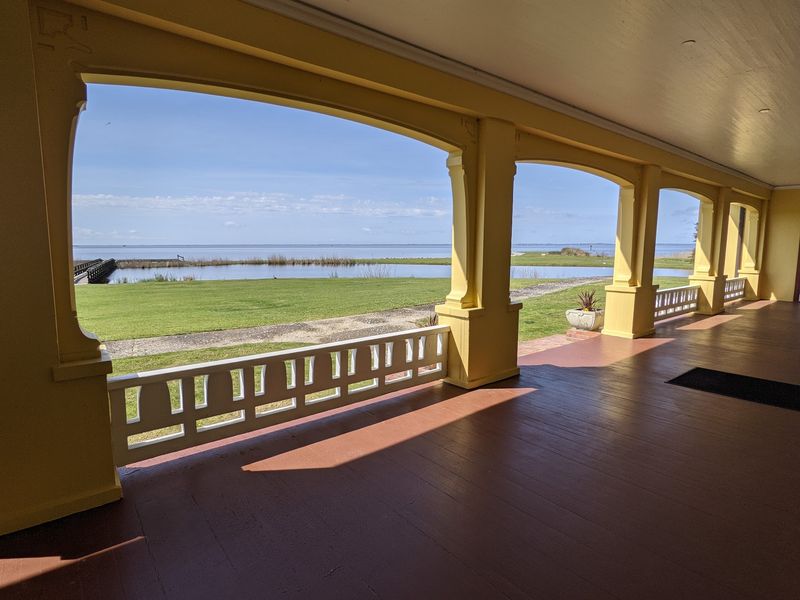
Sunset is the single most celebrated part of the Whalehead grounds. The property faces west across Currituck Sound, which sets up a clear view as the sun drops over the water.
The house tour may be closed by then, but the public grounds remain a gathering spot. People walk the paths, sit by the water, and line up photos with the mansion or the lighthouse in the frame.
A few practical notes help. The site can be very windy, so a light jacket is a smart idea even in warmer months.
Corolla is also an easy place to walk or bike, and arriving on two wheels can save the hassle of hunting for parking during busy beach weeks.
For families staying in the northern Outer Banks, this is a low-key evening plan that costs nothing. Longtime Outer Banks regulars have made it a ritual for decades, coming back trip after trip just for this view.
It may become a tradition for you too.
Herons, Eagles and a Line in the Water
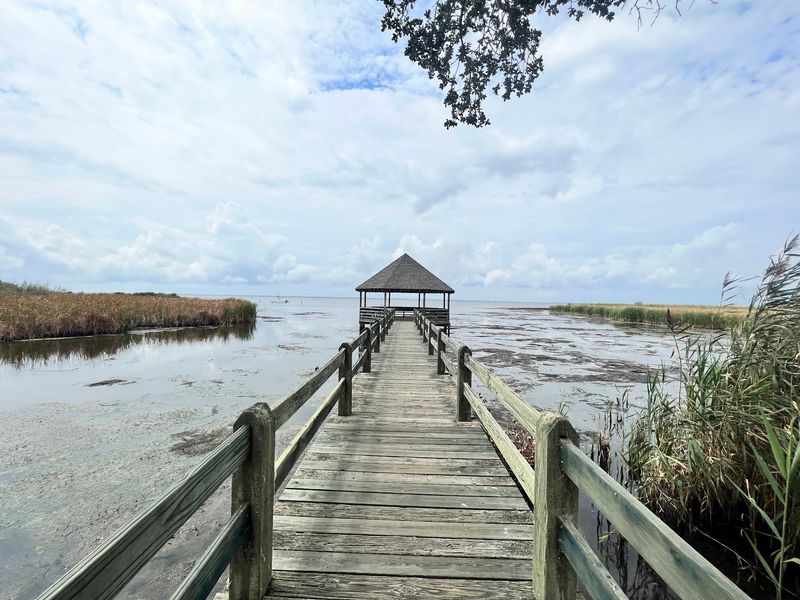
Bird lovers, pack the binoculars, because the marsh around the mansion is busy.
The edges of Currituck Sound attract plenty of wading birds. Great egrets and blue herons are common sights, especially around sunset, and a bald eagle has been spotted in the area too.
The grounds are built for lingering. A dock stretches toward the water, and the park supports walking, paddling, fishing, and picnicking in a public setting.
Crabbing is a favorite pastime here as well. It is a simple, hands-on activity that keeps kids busy while adults enjoy the view.
There is also a playground, which makes the park a handy stop for families with younger children who might not be ready for the quiet house tour.
Clean restrooms are another perk. That may sound minor, but anyone who has spent a long day on the Outer Banks with kids knows how much it counts.
The wildlife and water access give the property a second identity beyond the mansion. Even on days when the house is closed, the shoreline offers plenty to do for a few relaxed hours.
Lighthouse Steps and Wild Horses Nearby
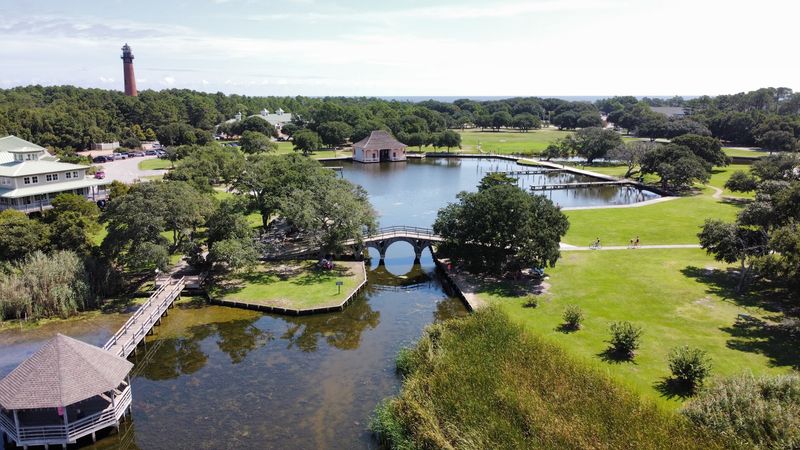
The mansion is only one-third of the day trip promised in that headline.
The Currituck Beach Lighthouse sits within walking distance of the Whalehead grounds, connected by paths and boardwalks. Its unpainted red brick tower is visible from the property, and it frames many sunset photos taken on the lawn.
The lighthouse is known for its 220-step climb to the top. It is operated separately from the mansion, so check its own schedule before you count on making the ascent.
The Currituck Maritime Museum is part of the same walkable cluster. Pairing all three makes for an easy historic loop without moving the car.
Then there are the horses. Corolla is famous for the wild horses that roam the beaches north of town, where the paved road ends.
Seeing them typically means booking a guided tour or driving the four-wheel-drive beach area, and the rules there are strict about keeping a respectful distance.
Stack a morning house tour, an afternoon lighthouse climb, and a horse outing together, and the northern Outer Banks can fill a single packed, memorable North Carolina day.
Weddings, Holidays and After-Dark Tales
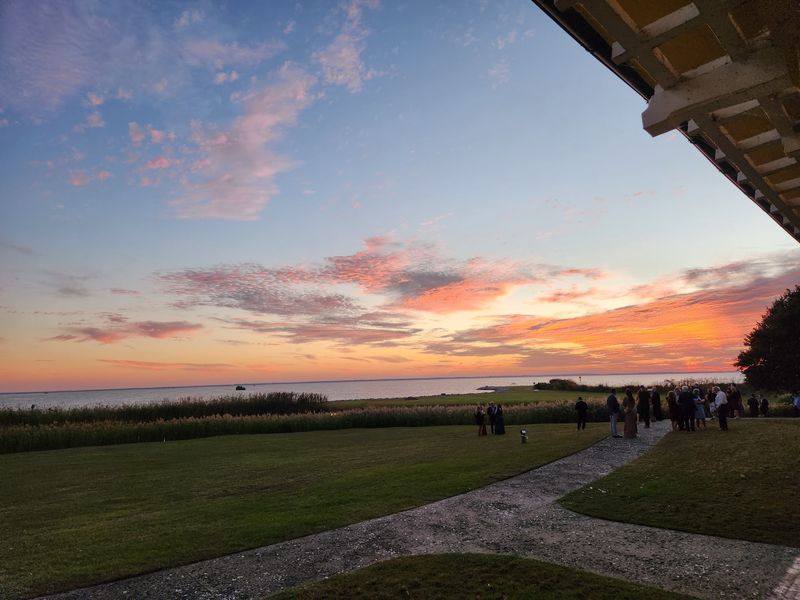
Not every gathering at the Whalehead is about history lessons.
The property hosts events, including weddings and receptions. Couples use the lawn, the sound views, and the mansion backdrop for photos, and a picnic pavilion on the grounds can also be rented.
Event staff earn praise for flexibility. When plans shift, such as a lawn location needing a change, the team has been known to communicate clearly and help with transportation around the park.
Holiday tours add a seasonal layer. Guides are described as entertaining and full of facts, and some holiday guests have left with small goodies handed out at the exit.
Ghost tours come up from time to time as well. It makes sense for a house with such a long, layered past, though schedules and availability are best confirmed directly with the site.
These special programs give North Carolina residents a reason to come back more than once. A summer sunset, a winter holiday tour, and an evening of spooky stories each show a different side of the same old house.
Variety may be the property’s quiet secret.
Timing, Tickets and a Fair Verdict
A little planning goes a long way with this one, because the calendar is not what most beach-goers expect.
The house is open Monday through Friday from 9 AM to 4 PM. It is closed on Saturday and Sunday, which surprises plenty of weekend travelers.
Tour admission is modest, generally in the range of 5 to 7 dollars, with adult tickets around 7 dollars. Weekday afternoons tend to be calmer inside the house.
Expectations matter too. Most people leave delighted, while a few feel the tour is better suited to a shorter stop than a full-day plan.
The smart move is to treat the mansion as the anchor of a bigger outing. Add the lighthouse, the maritime museum, a sunset on the dock, and perhaps a wild horse excursion, and the drive to Corolla pays off nicely.
For more details, the Northern Outer Banks tourism site keeps a listing for the property.
This rescued 1920s retreat on Currituck Sound proves that some of North Carolina’s best stories sit right at the end of the road, waiting for a weekday visit and a little curiosity.
Share this story