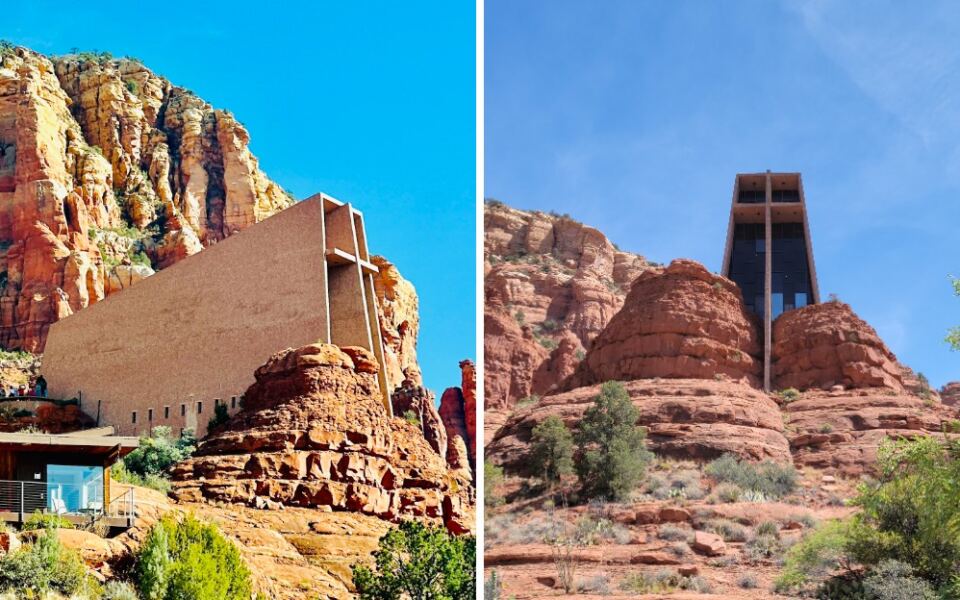
A skyscraper in New York gave a young sculptor an idea, and a world war nearly erased it. Decades later, that idea ended up wedged between two red rock spires about two hours north of Phoenix. It costs nothing to walk inside, and the story behind it is stranger than most Arizona day trips.
Here is how a city tower, a canceled European plan, and a lot of patience turned into one of the state’s most famous free stops.
1. A Cross Rising From the Red Rocks
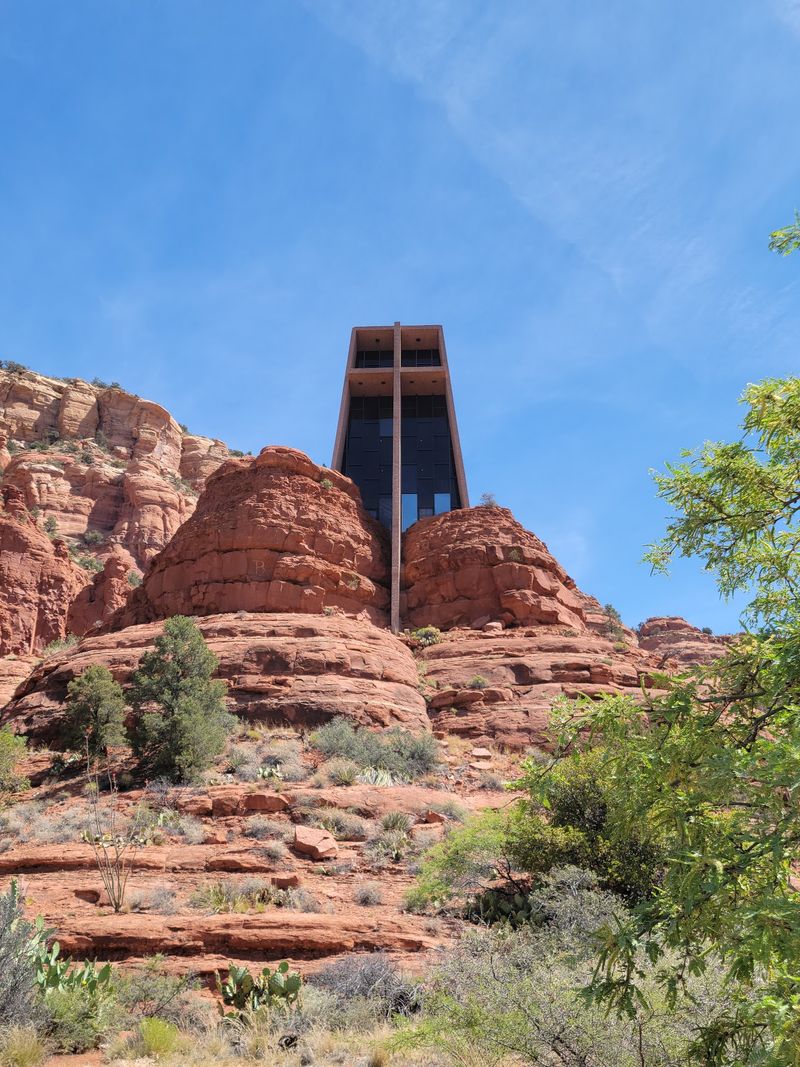
Some landmarks hide down dirt roads. This one sits in plain sight on a hillside south of town, with a giant cross framing its entire front wall.
The Chapel of the Holy Cross stands at 780 Chapel Rd, Sedona, AZ 86336, in the United States. It is an active Catholic church and also one of the most recognizable buildings in the Verde Valley region.
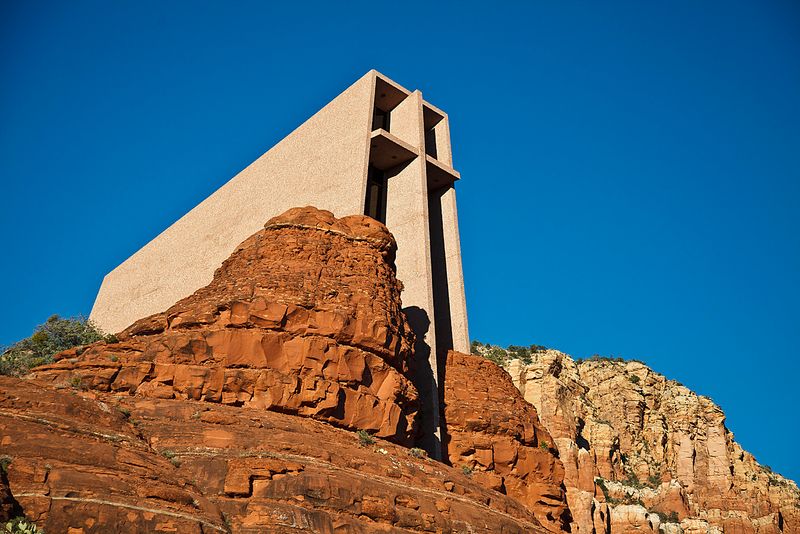
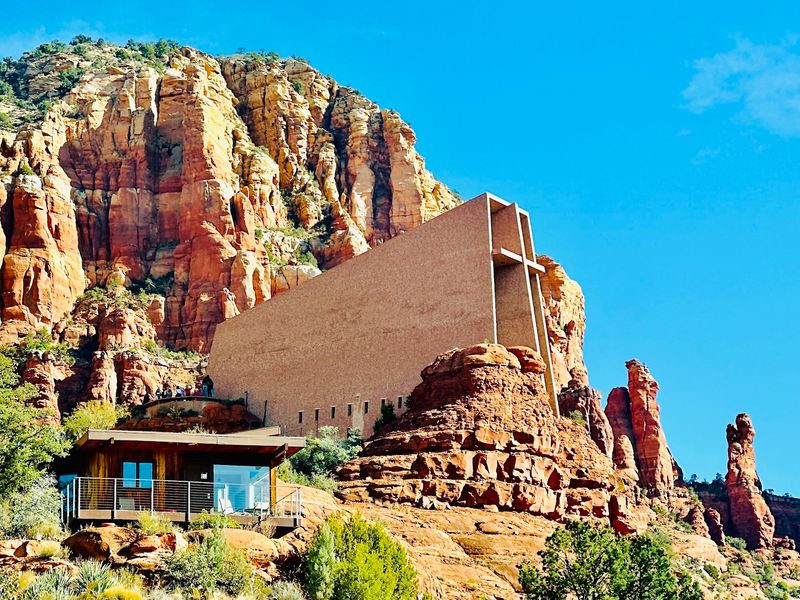
The structure dates to the 1950s, and its modern lines set it apart from the adobe missions many Arizonans picture when they think of desert churches. Instead of a bell tower, the design leans on a single soaring cross built right into the facade.
Getting there from the Valley usually means about a two hour drive up I-17, then a turn toward the Village of Oak Creek and Sedona. From Tucson, plan on a longer haul, which makes it a solid overnight pairing with other Red Rock Country stops.
The best part for budget-minded locals is simple. Entry is free and no tickets are needed, so the only real cost is gas and maybe a souvenir.
That is the place in a nutshell. The far more surprising part is how a building in the Arizona desert started with a tower in Manhattan.
2. The Skyscraper That Sparked an Idea
Back in the early 1930s, sculptor Marguerite Brunswig Staude looked at the newly finished Empire State Building and saw something nobody else did. In the tower’s steel framing, she saw the outline of a cross.
That moment planted a long-term goal. She wanted to build a church where the cross was not decoration hung on a wall but the backbone of the building itself.
Her concept treated architecture the way skyscraper engineers did, with structure on full display. The cross would carry the design visually from top to bottom.
It was an ambitious plan for any era. For a sculptor in the Depression years, it was downright bold.
Staude did not rush to the desert right away, though. Her first serious attempt aimed for a city thousands of miles from Arizona, and history had other ideas.
Fans of the chapel often mention its “amazing story,” and this is where it begins. A New York skyline and a single creative spark set off a chain of events that took more than two decades to finish.
Keep that skyscraper in mind as the tale moves overseas. The road from Manhattan to Sedona took a long detour through Europe first.
3. A War Changes the Blueprint
Plans were drawn, a site was picked, and then the world fell apart. Staude’s first version of her cross church was meant for Budapest, Hungary, and she worked with Lloyd Wright, son of Frank Lloyd Wright, on the early design.
World War II stopped the project cold. Building a modern church in Central Europe became impossible as the conflict spread across the continent.
Many people would have let the dream go at that point. Staude shelved it instead and kept the vision alive for years.
The war is the second key character in this story. Without it, the chapel might sit along the Danube today rather than above the Arizona high desert.
When the idea came back to life, it came back closer to home. Staude’s family had ties to Arizona, and the red rock country offered a setting no city could match.
The shift turned a European urban project into a desert landmark. It also explains why the finished chapel feels designed around a view rather than a street.
So the war did not end the plan. It moved it about 6,000 miles west and gave it a far more dramatic backdrop.
4. Built Into the Rock Itself
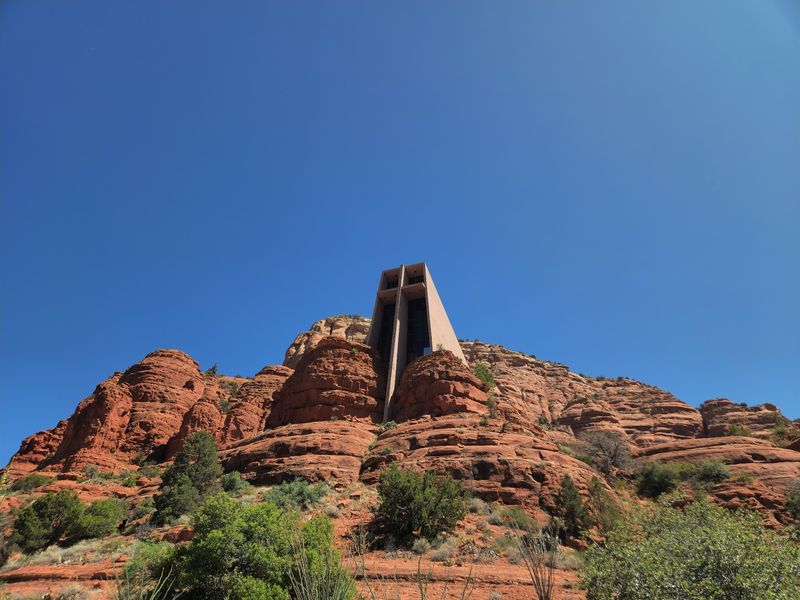
Construction finally wrapped up in 1956, and the result looks as if it grew out of the hillside. The chapel is set between two red rock spires, with its walls tucked into the stone.
That integration is the detail people talk about most. The architecture blends into the surroundings so well that it does not pull attention away from the landscape.
The design is simple and restrained. Clean concrete lines and that towering cross do most of the work.
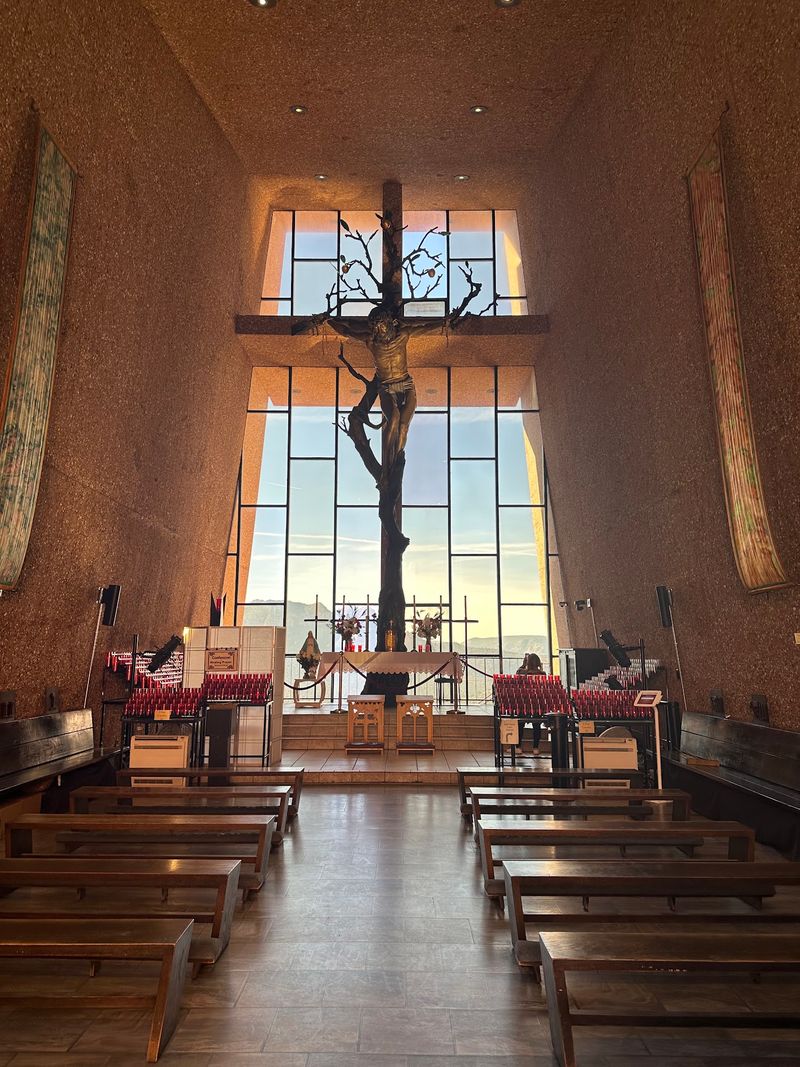
Inside, the space is small. The pews hold roughly 30 people at most, so this is not a grand cathedral.
A large window wall behind the altar opens onto the valley. The view through it becomes part of the worship space, which was always the point.
Engineering a building onto a steep butte in the 1950s was no small task. The fact that it still stands as an active church decades later speaks to how carefully it was placed.
For architecture buffs, this is the payoff of the whole story. The skyscraper idea of structure as the statement finally found its home on a rock ledge in Sedona.
5. Brass Footprints and a Watchful Figure
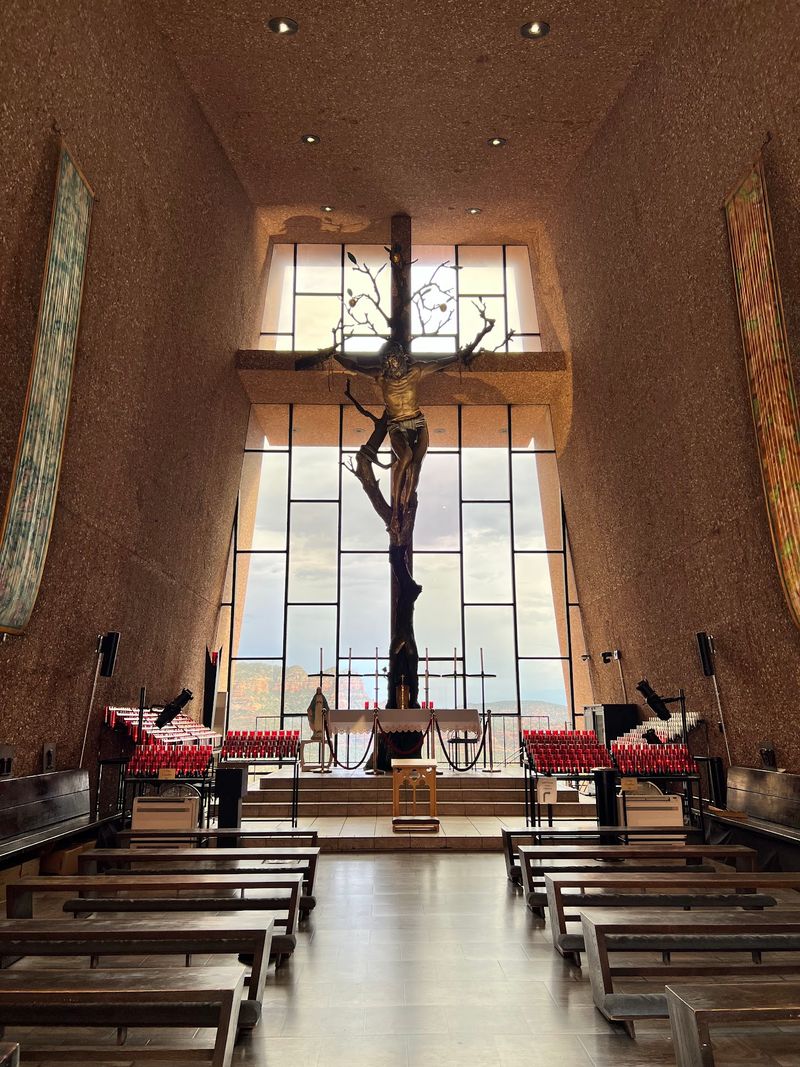
Here is a tip worth the drive alone. Head to the front row and look down for a set of brass footprints on the floor.
Standing on them lines you up with the eyes of the Christ figure on the cross. Many people describe the effect as genuinely moving.
The figure is set against the large window, with a tree visible behind it. That pairing of art and landscape is one of the most photographed views inside.
Candles are part of the experience too. A small votive costs $1, while a larger five day candle near the front runs $5.
Payment works through a kiosk that takes cash or credit. Candles are not always available later in the day, so arriving earlier on a weekday improves your chances.
Outside on the path, statues line the way up toward the entrance. Some people also point out a rock formation nearby that appears to show Mary holding Jesus.
Quiet is the expected behavior here, whatever your beliefs. Plenty of people come simply to sit for a few minutes before heading back into the busy day.
6. Views That Steal the Show
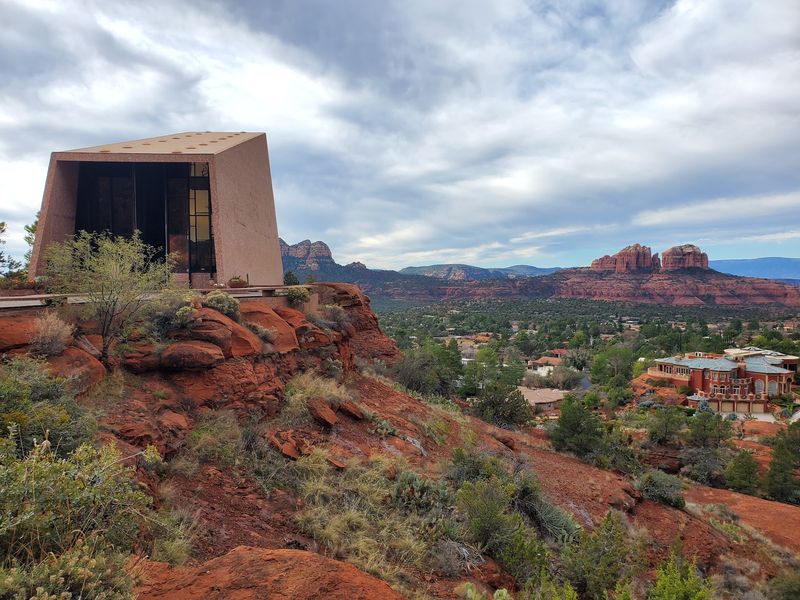
Plenty of people come for the chapel and end up spending half their time on the terrace. The setting atop the buttes delivers wide, panoramic views across the Sedona area.
From the outside walkways, you can look out over red rock formations, the town below, and the surrounding mountains. It is an easy spot for photos without any serious hiking.
The overlook works well for groups with mixed fitness levels. Grandparents, kids, and casual photographers can all get the same big view.
Breezes are common up on the ridge, and summer storms can roll in fast. Afternoon thunderstorms during monsoon season may cut a visit short, so morning trips make sense in the hotter months.
Some people also link the site to Sedona’s famous vortex lore. Whether or not that interests you, the location clearly draws travelers from all over the world for prayer and reflection.
Bring a camera and leave a little time after the interior visit. Walking around the outside of the chapel is where many of the best angles show up.
Consider it a free scenic overlook with a landmark attached. Not many places in Arizona can offer both for zero dollars.
7. The Parking Puzzle and the Golf Cart Rescue
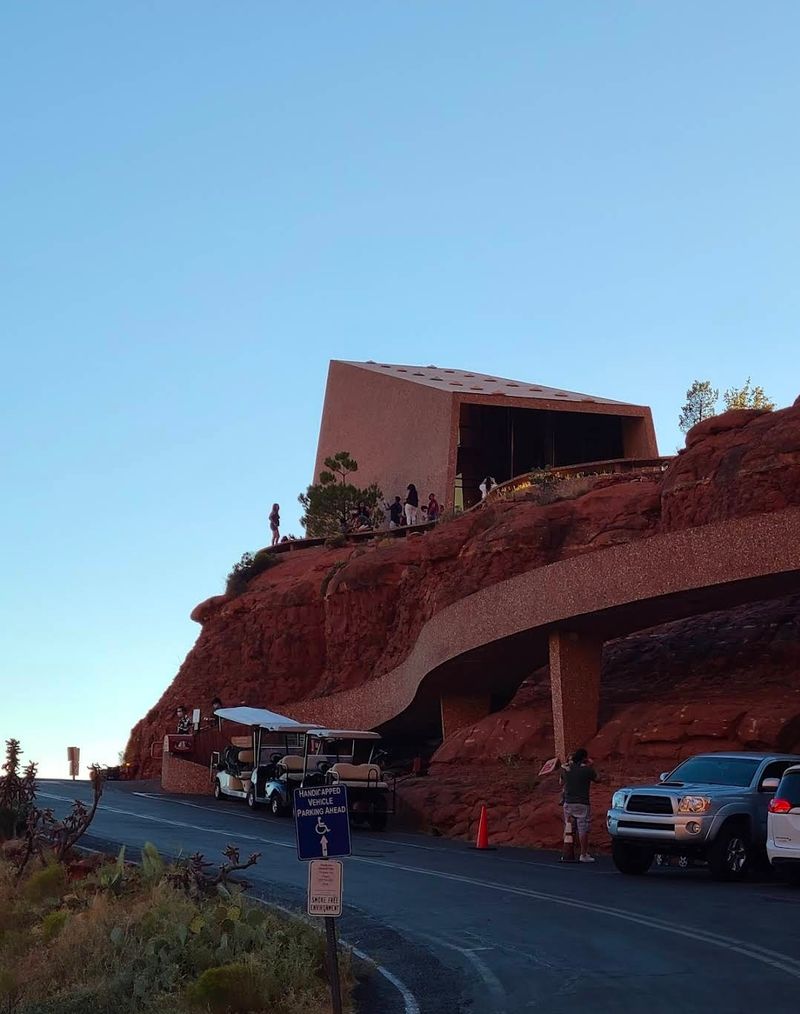
Finding a parking spot is often the hardest part of the whole outing. The road up is steep and winding, with parking along the shoulder and a couple of lots.
Lots open at 9 AM, and on busy mornings they fill almost immediately. Arriving around 10:30 AM can mean waiting 15 minutes or more for a space.
A key insider move is to keep driving past the first lot. More parking sits further up the hill, closer to the chapel.
If you do end up at the bottom, help is close. Staff run free golf cart shuttles up the hill and back down, and drivers often share trail and parking tips on the way.
There is also a handicap lot at the top. Loaner wheelchairs and walkers are available, and the chapel itself is wheelchair accessible.
The surrounding paths and the hillside are more limited for mobility. Dropping someone off near the top is a smart option.
No sidewalk runs along the access road, so keep kids close beside active traffic. Restrooms are porta potties near the lower parking area, with none at the chapel.
8. Hours, Costs, and a Basement Surprise
Good news for planners: the schedule is refreshingly consistent. The chapel is open daily from 9 AM to 5 PM, every day of the week.
Admission is free. The only optional costs are candles at $1 or $5 and whatever you pick up in the shop.
Speaking of which, there is a gift shop tucked one level below the chapel. A narrow staircase leads down to it.
The shop carries souvenirs and plenty of Catholic keepsakes. It can get tight and crowded, so it may be easier to browse during quieter hours.
An information booth near the entrance offers background for anyone who wants more of the history. It pairs nicely with the story of the skyscraper and the war.
Most people spend about an hour from parking to leaving. That makes it easy to combine with lunch in town or a nearby trail.
Timing matters more than money here. Weekday afternoons can be calm, while Sunday afternoons, weekends, and holidays draw big crowds, and before noon is the classic sweet spot.
9. Worth the Climb for Valley Day-Trippers
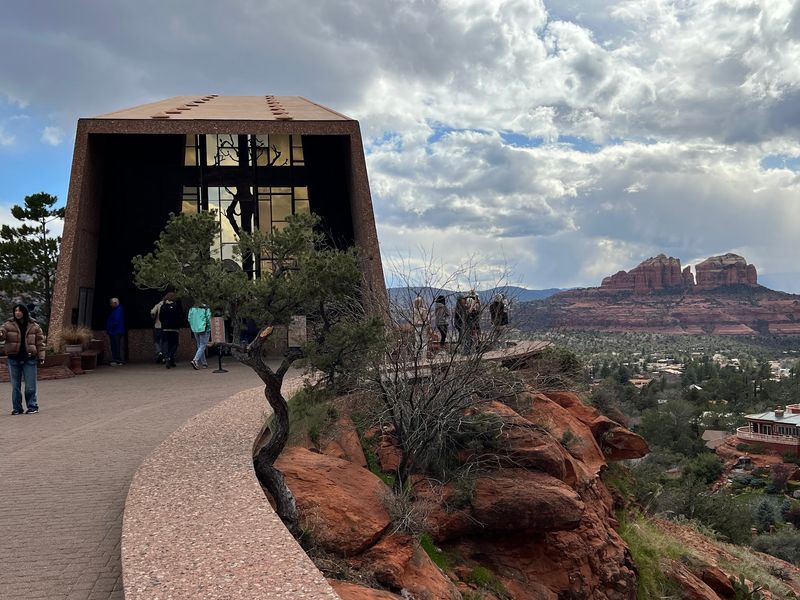
Few free stops pack this much backstory into a single hour. A skyscraper idea, a wartime delay, and a 1956 build on a rock ledge all come together in one compact visit.
The chapel suits a wide mix of people. Faithful pilgrims, architecture fans, photographers, and families with grandparents in tow can all get something out of it.
A short hike from the lower lots adds a little adventure. Trails also lead toward the chapel for those who want to stretch the outing.
It does require some patience. Parking can test your nerves, the gift shop gets cramped, and peak hours bring a crowd.
Still, the payoff is hard to argue with. Standing on those brass footprints and then stepping out onto the terrace is a memorable combo for zero dollars.
For Phoenix locals, it makes an easy Saturday escape in fall and winter, or an early summer morning trip to beat the heat. Tucson folks can fold it into a longer weekend up north.
Go early, go curious, and leave room for the story. This little chapel was a quarter century in the making, and it rewards anyone willing to make the drive.
Share this story