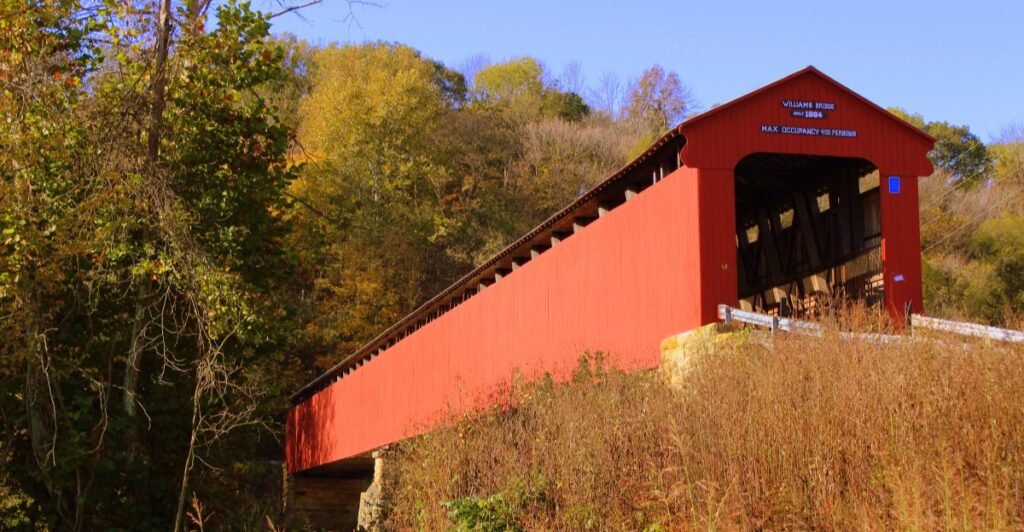
A long red bridge stretching across the East Fork of the White River makes an unexpected sight among the quiet hills of Lawrence County. Built in the 1880s, the Williams Covered Bridge holds the distinction of being Indiana’s longest surviving single-span covered bridge, preserving a remarkable piece of the state’s transportation history.
Vehicle traffic is gone now, leaving visitors free to walk through its wooden interior and enjoy the river views at a slower pace. The peaceful setting makes the experience feel even more removed from modern travel. For history lovers exploring Indiana’s back roads, this impressive old bridge is a detour worth taking.
A Red Giant Rising Over the White River
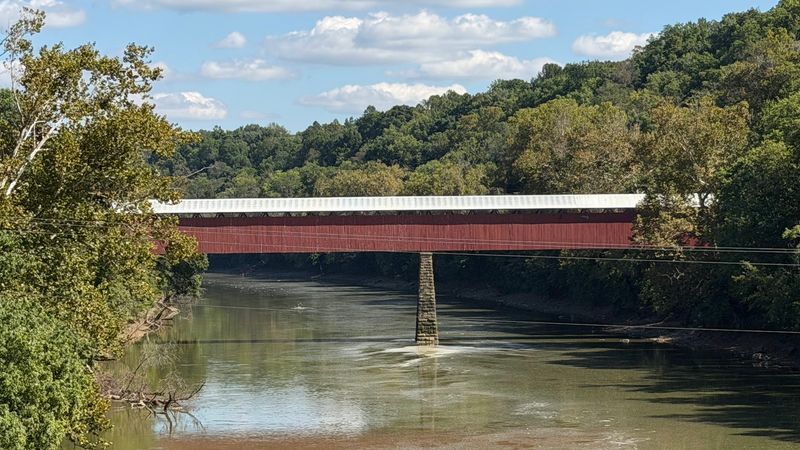
Picture a barn so long it seems to stretch forever, then set it high above a moving river. That is the first view of the Williams Covered Bridge, and it catches almost everyone off guard. The structure looks far bigger than most people expect from a small-town landmark.
The best first look actually comes before you ever park. Heading southwest out of the town of Williams on the highway, the bridge appears through the trees, sitting across the East Fork of the White River like a painted ship docked in the woods. From that distance, you see its full length at once, and the size really sinks in.
Scale is the whole story here. The bridge stretches roughly 375 feet, and it sits tall above the water, with deep sides and a peaked roof that shade the long wooden deck. Many covered bridges in Indiana are short enough to cross in a few steps. This one asks for a real walk.
Color adds to the drama. The weathered siding stands out sharply against summer greens, autumn golds, and the gray-brown of winter branches. On a bright day, the river below picks up the sky and makes the whole scene look even wider.
Another angle worth trying comes from the newer road bridge downriver. From there, you can see the old span lined up across the water, with its roof and supports showing clearly. This view is great for photos because it frames the bridge with the river in front of it.
Take a minute at each viewpoint before rushing up close. Distance lets you understand the bridge as one complete piece of design, not just a series of boards.
Once you have that picture in your head, walking inside becomes a lot more interesting, since you will know exactly how far that dim wooden tunnel runs across the river.
Built in 1884 With Clever Engineering
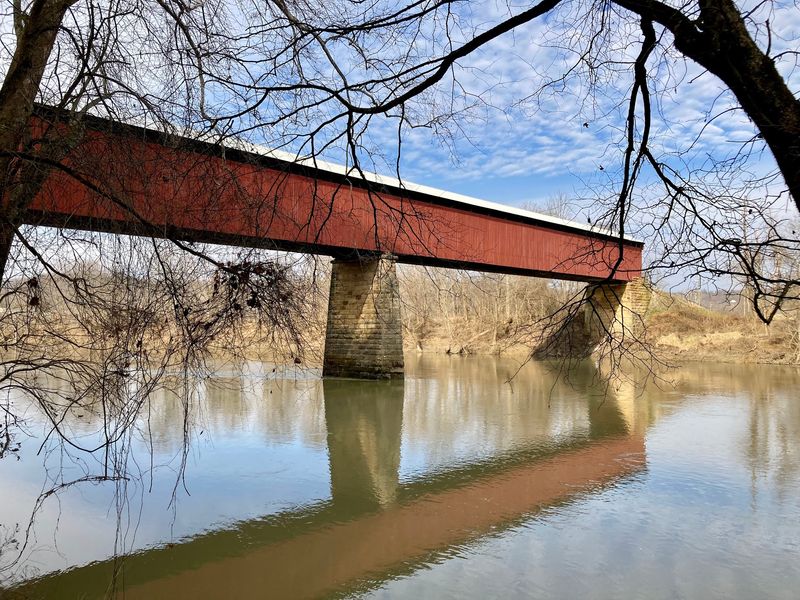
Back in 1884, when horses and wagons ruled Indiana roads, builders faced a tricky problem. The East Fork of the White River was wide, and crossing it without extra supports in the middle took serious skill. Their answer is still standing today.
The Williams bridge uses a Howe truss design, a system of heavy wooden beams arranged in crisscross patterns with iron rods running up and down. Wood handles the pushing forces, while the iron rods handle the pulling. Working together, they let the bridge carry weight across a long distance with a single main span and no crowded row of piers underneath.
Look up and to the sides once you step inside. The timbers are thick and chunky, bolted together in repeating shapes that march down the length of the bridge. Counting the sections is a fun way to feel how far the structure goes.
So why the roof and walls at all? Covering a wooden bridge was never just about looks. Rain, snow, and sun break down bare wood fast, so builders protected the truss with siding and a roof.
A covered bridge could last many decades longer than an open one, and this bridge proves the idea worked. For much of its life, the bridge carried real traffic, connecting farms and families on both sides of the river.
Today it is closed to cars, which helps protect those old timbers from heavy modern vehicles. That change turned it into a walking space where you can study the craftsmanship up close.
Quick fun fact: Indiana once had hundreds of covered bridges, and only a fraction survive. Among those still standing, Williams holds the record for the longest single span in the state, making it a true standout in a place famous for these structures.
Walking the Wooden Tunnel
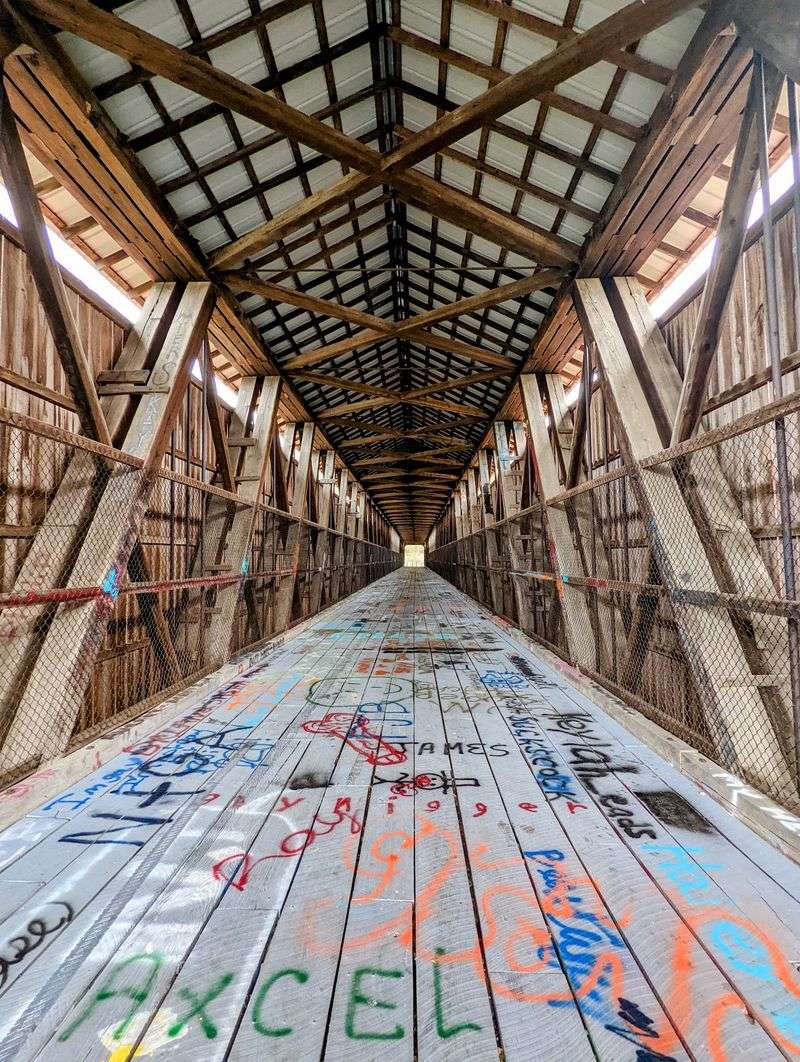
Step off the gravel, and the light changes instantly. Inside the bridge, the bright day shrinks to a glowing rectangle at the far end, and your footsteps start to echo on the boards.
Walking the full length takes a few relaxed minutes, and it is the best way to understand the bridge. The deck is wide, built for wagons, so there is plenty of room to wander, stop, and look around. Kids tend to love the tunnel effect, where the far opening seems to stay small for a surprisingly long time.
Sound plays a big role here. Beneath the planks, the White River keeps up a steady rush, especially after rain. Birds call from the trees outside, and wind sometimes whistles through gaps in the siding. With no traffic crossing, those natural sounds take center stage.
One thing to know ahead of time: the sides are mostly closed, so there are not many window openings for looking out over the river. The payoff is inside, with the long lines of timbers and the play of light and shadow. For river views, save your camera for the banks and the downstream bridge.
Wear shoes with decent grip. Old boards can be uneven, and after wet weather they may feel slick. Watch young children near the edges and around any loose spots.
A slow walk works better than a quick dash. Pause in the middle, where the bridge sits highest over the water, and simply listen for a moment. Then keep going to the far end, turn around, and look back.
From that spot, the whole wooden tunnel lines up in perfect perspective, with daylight framing the entrance where you started.
The Graffiti Problem Nobody Can Ignore
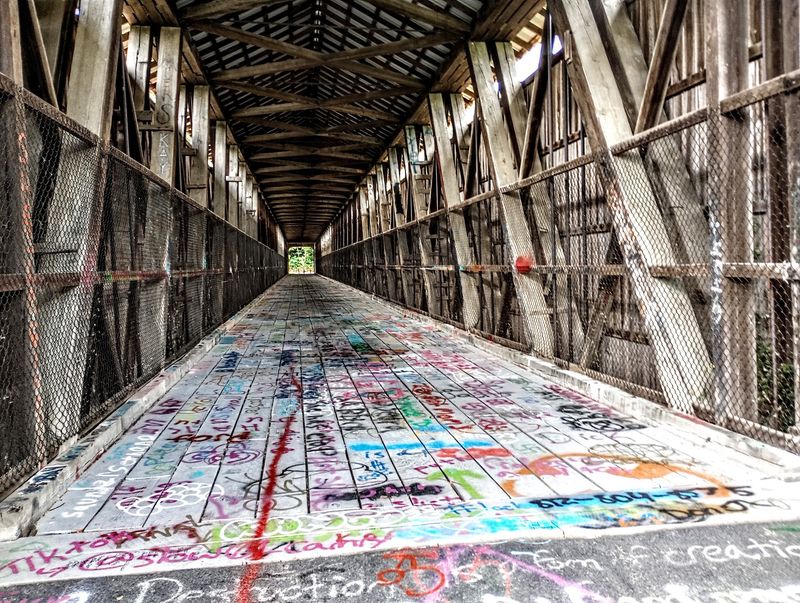
Honesty time. The Williams Covered Bridge has a graffiti problem, and any visitor will notice it within seconds of walking inside.
Spray paint covers large parts of the interior walls, from names and dates to messages that are definitely not family friendly. Crews have cleaned and painted over the outside more thoroughly than the inside, so the exterior now looks much tidier from the road. Inside, though, layers of bright tags still cover the old wood.
Parents should plan for this. If your kids are old enough to read, some of the words might lead to awkward questions in the car afterward. A quick heads-up before walking in can help, or you might choose to focus younger kids on counting beams or listening to the river.
Trash has also been an issue at times, especially around the pull-off area. Bringing a small bag to pack out your own litter, and maybe a few extra pieces, is an easy way to help.
Why does this matter so much? A structure from 1884 is irreplaceable. Paint soaks into old wood and can trap moisture, and harsh cleaning can damage the surface. Every new tag makes the job of preserving the bridge harder and more expensive.
There is a silver lining, oddly enough. The graffiti shows that people keep coming here, generation after generation, and local residents clearly care about the bridge. Many who grew up visiting it want it cleaned and protected.
The best thing any visitor can do is simple: leave no marks, report fresh damage to county officials, and share photos that show the bridge at its best. Respectful visits build the case for better upkeep.
Scenic Back Roads Through Lawrence County, Indiana
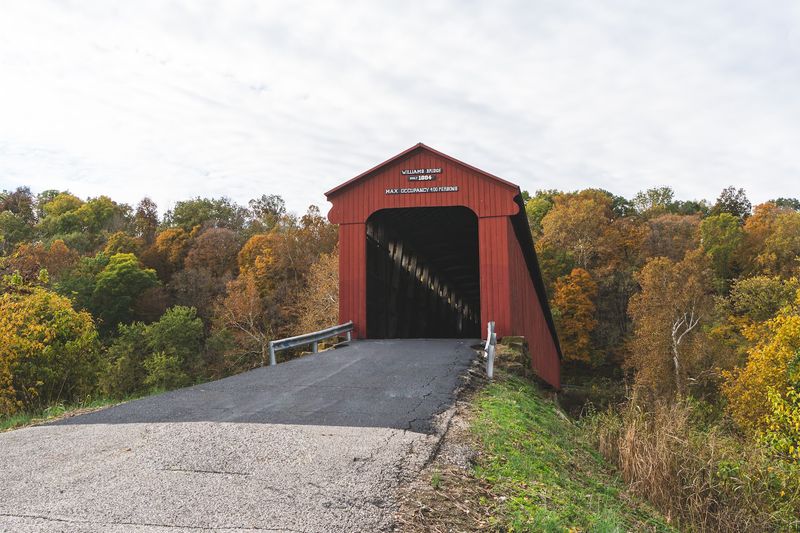
Half the fun happens before you arrive. The roads leading to Williams wind through some of the prettiest countryside in southern Indiana, full of hills, farm fields, and thick woods.
A popular route starts in Bedford, the county seat. From there, drivers head toward Williams Dam, a low dam on the White River where water spills in a wide, foamy sheet. Stopping at the dam for a few minutes makes a nice warm-up before seeing the bridge just downstream.
Motorcyclists love this area for good reason. The curves are smooth and fun without being scary, and traffic stays light on most days. Cyclists and weekend drivers will find the same easy pace, with little of the rush found on bigger highways.
Here is an important tip. Some GPS apps try to send drivers straight across the covered bridge, which is closed to cars. That route leads nowhere.
Instead, turn left onto the road right before the modern bridge over the White River, which brings you to the parking area.
Parking itself is simple but small. A gravel lot sits on the north side of the bridge, with room for only a handful of vehicles. On busy days, you may need to wait a few minutes for a spot.
Services are limited near the bridge, so fill your gas tank and grab snacks in Bedford before heading out. Restrooms are not something to count on at the site either.
Consider building a loop. Combine the bridge with Williams Dam, a drive through nearby small towns, and lunch back in Bedford. That turns a quick photo stop into a full half-day adventure on quiet country roads.
When to Go for the Best Light and Colors
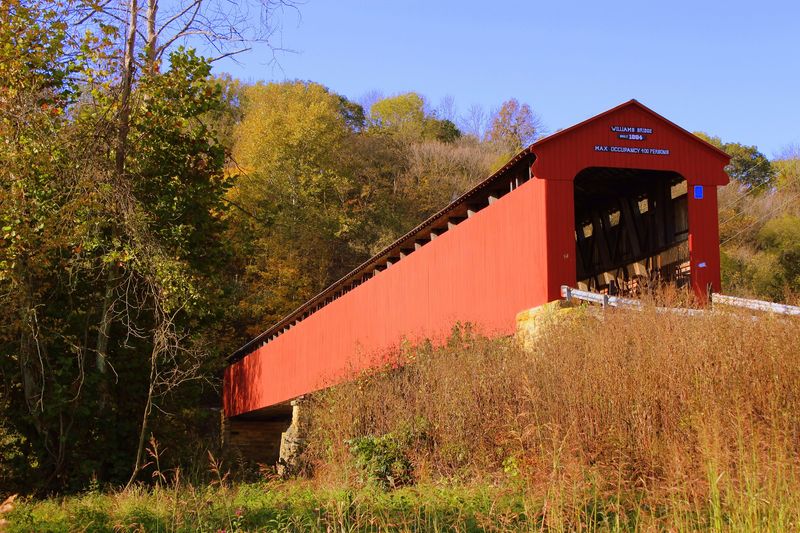
Timing can completely change the look of this bridge. Late spring and fall are the standout seasons, each with its own style.
In spring, the riverbanks turn bright green, wildflowers pop up along the edges, and the White River often runs full and loud. The fresh leaves frame the bridge nicely without hiding it. Mornings can be cool and misty, which gives photos a soft, dreamy glow.
Fall is the showstopper. The hills around Williams light up in orange, red, and gold, and the bridge sits right in the middle of all that color. October weekends tend to be the busiest, so an early visit helps you snag parking and enjoy quieter moments.
Summer works too, but come prepared. Heat and humidity can be intense, and bugs love the river area. The shaded interior of the bridge offers a nice break from the sun, though.
Winter brings a different mood. With the leaves gone, you can see the entire structure more clearly from the road, and a dusting of snow on the roof makes a striking picture. Watch for icy spots on the gravel and wooden deck.
Light matters as much as season. Early morning and late afternoon give warm, angled sunlight that shows off the texture of the wood. Midday sun can feel flat and harsh in photos.
Special events can make a visit unforgettable. During the total solar eclipse in April 2024, a small group gathered at the bridge to watch the sky go dark over the river. Rare moments like that prove this spot can be a stunning backdrop for more than just ordinary sightseeing.
Why This Bridge Deserves Your Detour
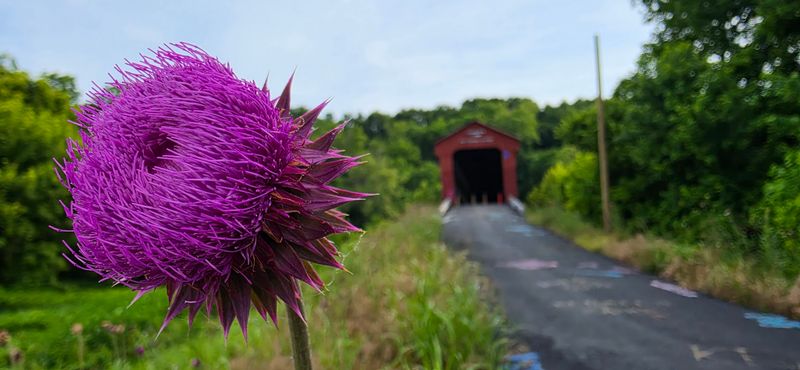
Plenty of states have covered bridges. Only one bridge in Indiana can claim the longest single span, and it sits quietly on a country road most travelers never find.
That record alone makes the trip meaningful. Standing inside, you are walking across a piece of 1880s engineering that has survived floods, harsh winters, and more than a century of change. Few places let you touch history so directly, with your own feet on the boards.
The setting helps too. Instead of crowds and gift shops, you get a river, trees, a trail nearby, and a small parking lot. You can spend twenty minutes or two hours, depending on how much you like to explore and snap photos.
Yes, the graffiti is frustrating. Still, the bones of the bridge remain strong and impressive, and cleanup efforts on the outside show that people are working to protect it. Visiting respectfully helps show that the bridge matters to the public.
Families can turn the stop into a hands-on history lesson. Ask kids to guess how long the bridge is, then walk it together and count steps. Talk about how wagons once rolled across these same planks.
Photographers get strong material from several angles, including the highway approach, the downstream bridge, and the long interior view. Riders and road-trippers get curvy scenic routes on the way in and out.
Pair it with Williams Dam and a meal in Bedford for a relaxed outing. Bring water, good shoes, and a trash bag, then take your time. The river will be running below, and that long red span will be waiting.
Share this story