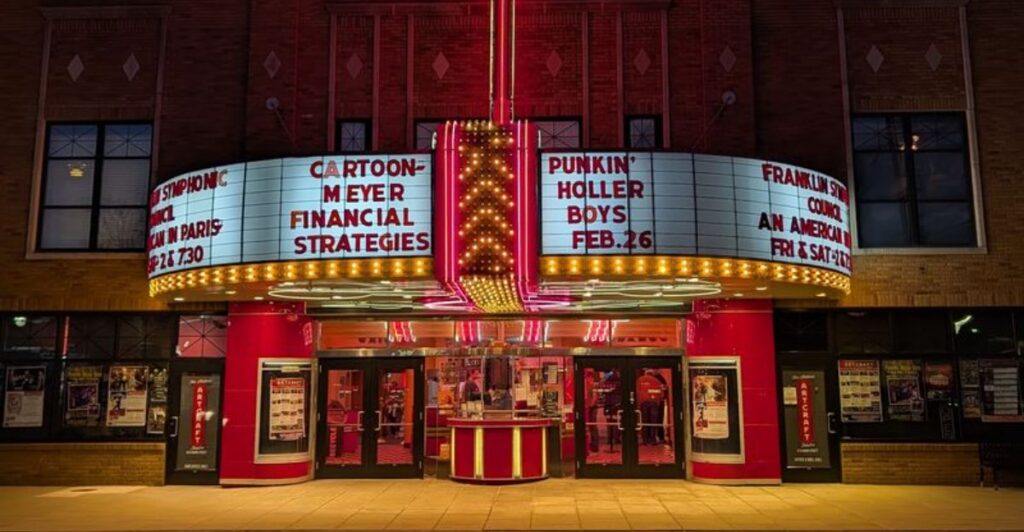
Movie night gets a glamorous throwback at the Historic Artcraft Theatre in Franklin. Beneath its glowing marquee, this beautifully preserved Indiana landmark trades the anonymous multiplex experience for Art Deco details, vintage atmosphere, and traditions that make simply taking your seat feel special.
Classic films and community events keep the theater lively, but the building itself is enough to command attention before the screen lights up. Every carefully preserved detail recalls an era when going to the movies was an occasion worth dressing up for. Spend an evening here, and the Roaring Twenties can suddenly feel much closer than a century away.
Main Street Glamour Under the Marquee
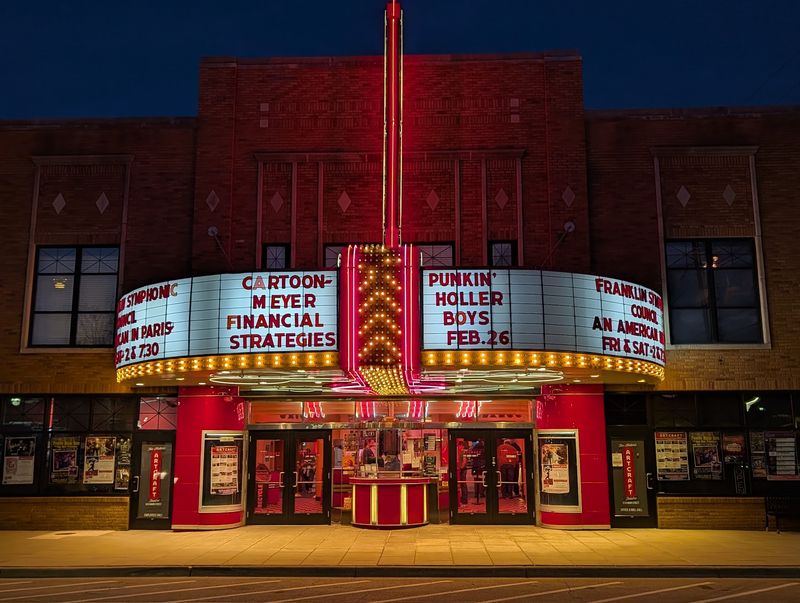
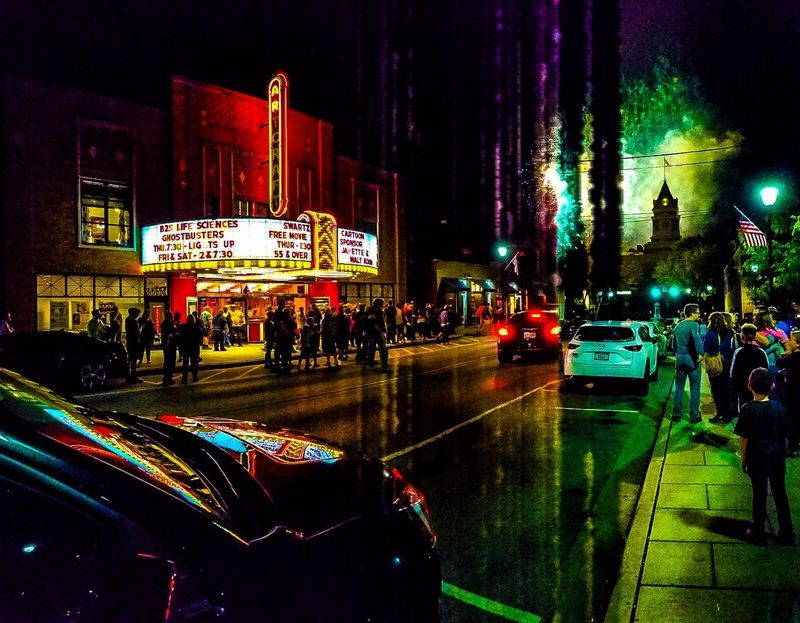
Night falls a little differently when a theater marquee starts glowing over Main Street. At The Historic Artcraft Theatre, the outside sets the mood before the ticket is even in hand. Bright lights, bold lines, and a polished vintage look give the building a dressed-up presence that fits the title of a grand old movie palace.
The front of the theater brings together showmanship and small-town warmth in one quick glance. It does not sit quietly on the block. The sign shines, the entrance pulls attention forward, and the whole facade creates the kind of welcome that makes a regular evening feel like an occasion.
That first visual punch matters because so many old theaters have lost their street power. Here, the exterior still works as part of the event. It turns arrival into a moment, which is a big reason the place carries that Great Gatsby comparison so well.
Art Deco style is known for clean shapes, rich colors, and a sense of celebration, and this theater uses those traits well. Nothing about the building looks careless or thrown together. The effect is neat, bright, and theatrical without becoming stiff.
Franklin’s downtown setting helps even more. Instead of being buried in a giant parking lot, the Artcraft belongs to the street around it. That gives the theater an older rhythm, where dinner, a walk, and a film can all connect into one outing.
For first-time visitors, arriving a little early is the smart move. It gives time to enjoy the lights, take photos, and notice how the theater anchors the block. Before the movie even starts, the Artcraft has already done one important job. It has made the night feel special.
A Movie Palace Built for Old-School Showmanship
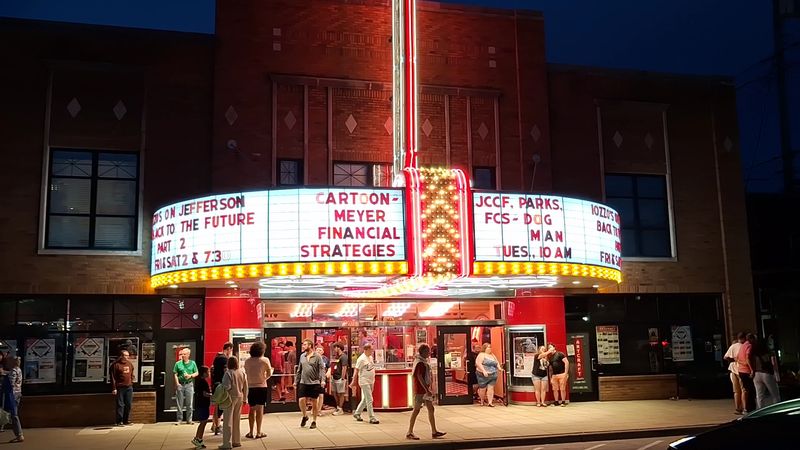
Some theaters are only rooms with screens. The Artcraft works more like a stage set for the whole night, where the building itself is part of the show. Inside, the restored space carries the bold, stylish spirit that made early movie houses feel grand.
The look is colorful and polished, with details that lean into its historic character instead of hiding it. Art Deco touches give the room shape and rhythm. The design feels formal enough to be exciting, yet relaxed enough for families, date nights, and afternoon matinees.
That balance is harder to create than it seems. A historic theater can sometimes feel fragile or overly serious, but the Artcraft avoids that trap. The space looks cared for and lively, not frozen behind glass.
Much of the charm comes from scale. The auditorium is big enough to feel impressive, which adds a sense of occasion once the lights dim. At the same time, the room keeps a community feeling, so the crowd becomes part of the experience instead of background noise.
The stage area also hints at a broader life beyond film. This is not a box built for one purpose only. Its layout supports the idea that entertainment once happened in many forms under one roof, and the building still carries that flexible energy.
Anyone hoping for slick multiplex sameness will notice right away that this place plays by different rules. That is the point. The Artcraft gives moviegoing back some ceremony, and the room itself helps deliver it.
Choosing a seat a bit early is worthwhile here because the interior deserves a slow look. Scan the walls, take in the lighting, and notice how the space frames the screen. Before a single frame of film appears, the theater has already started telling its own story.
Reel-to-Reel Magic and the Joy of 35mm
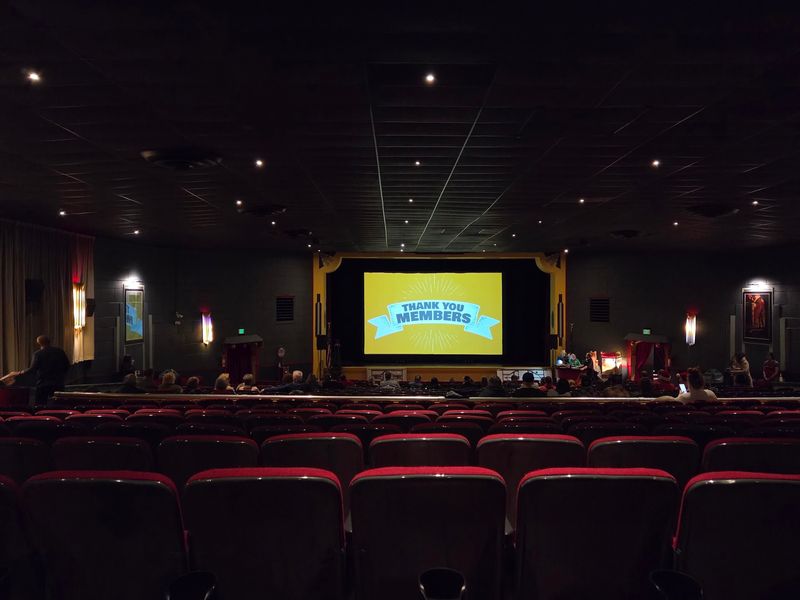
Digital projection is sharp and smooth, but it rarely feels personal. At the Artcraft, classic movies shown in 35mm bring back the look and texture that many film lovers miss. The picture can carry a softer, older quality, and that is part of the appeal rather than a flaw.
Watching a movie this way changes expectations in a good way. Instead of chasing perfect modern polish, the theater leans into a format tied to Hollywood’s earlier years. That choice fits the building, the programming, and the old-movie spirit better than a generic presentation ever could.
The experience starts before the feature. A cartoon often plays first, which adds a lively note and reminds the crowd that moviegoing used to be a fuller event. That extra piece shifts the pace of the evening and gives the show more personality.
Then comes the main attraction, often a classic title or a well-loved older favorite. Seeing those films on a big screen matters because many were made for communal viewing, not for phones, tablets, or half-watched living room nights. Laughter lands differently in a crowd. So do songs, suspense, and applause.
The Artcraft also keeps some of the little traditions that make the program feel ceremonial. A short welcome can frame the event, and the schedule often offers the kind of titles people know across generations. That makes it easy for grandparents, parents, and kids to share the same movie without anyone feeling left out.
For viewers used only to modern theaters, the Artcraft offers a useful reset. It shows that cinema was once as much about presentation as content. Here, the format, the pre-show touches, and the setting all work together.
That old reel-to-reel spirit gives the evening texture. The screen is still the focus, but the process of getting there becomes memorable too. In Franklin, the movie does not simply begin. It is presented.
Popcorn, Cartoons, and Traditions That Refuse to Hurry
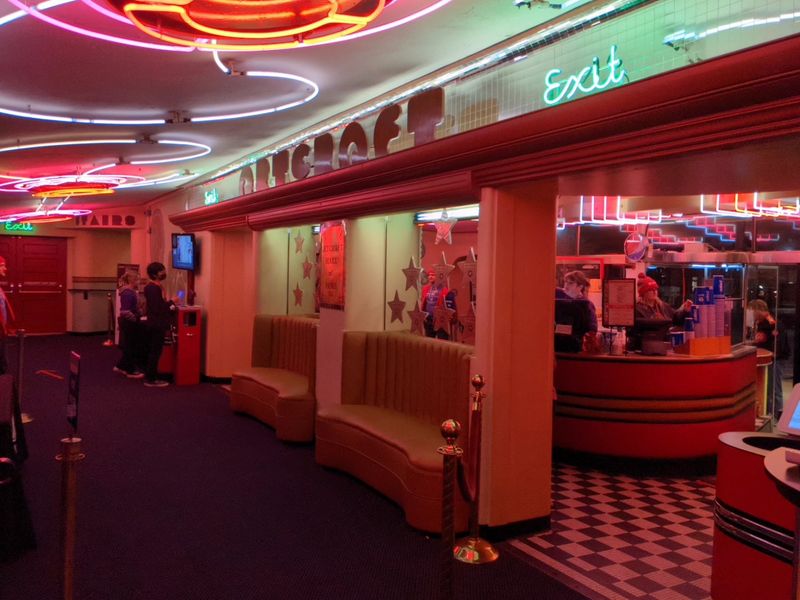
Every theater sells snacks, but few build them into the rhythm of the night as neatly as the Artcraft does. Fresh popcorn is part of the draw, and it comes with the kind of local pride that makes a simple treat feel tied to the town. That small detail turns concessions into more than an afterthought.
The popcorn has earned real attention for good reason. It is often described as a standout, and the theater’s connection to locally grown corn gives it a rooted, Franklin-specific identity. In a world of copy-and-paste multiplex food, that local touch adds character with every bucket.
Then there is the pace of the pre-show. Instead of endless ads and loud reminders to buy more, the Artcraft often uses cartoons, announcements, and playful extras to set the tone. The whole sequence feels human and live, not automated.
That slower buildup changes how the audience settles in. Families have time to find seats, talk, and enjoy the room before the feature starts. Children get a fun warm-up, older guests get a familiar throwback, and everyone meets the movie on common ground.
Even practical details work in the theater’s favor. Concession prices are often seen as refreshingly reasonable compared with chain theaters, which makes it easier to say yes to popcorn, candy, or a drink without turning movie night into a budget headache. For groups, that difference matters.
There is also a nice lesson here about why old-fashioned routines still work. A cartoon before the film and a snack worth looking forward to may sound small, but those touches shape the whole evening. They help the event unfold instead of rush.
Arrive hungry and arrive on time. The Artcraft is one of those places where the minutes before the feature are not filler. They are part of the reason the theater stands apart in the first place.
Franklin, Indiana Keeps the Story Alive
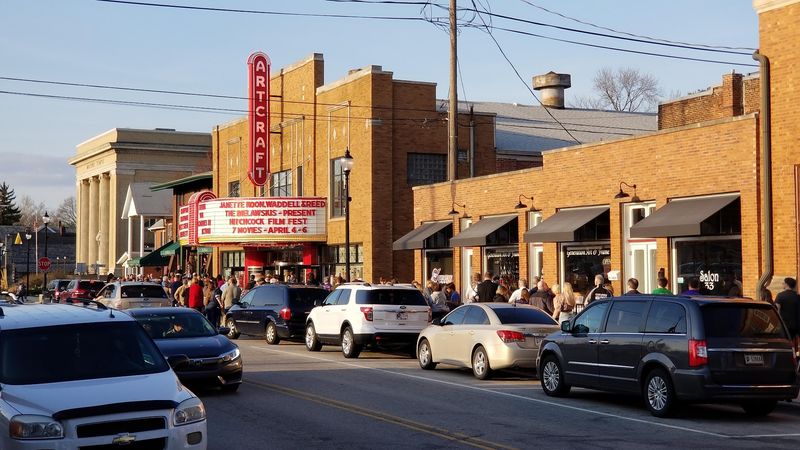
Buildings survive for many reasons, but great old theaters last because a town decides they matter. The Artcraft is not standing in Franklin by accident. Its continued life says a lot about local care, civic pride, and the belief that historic places should still be used, not just admired from a distance.
The theater’s story includes decline and restoration, which gives the building extra weight in the community. That background helps explain why the Artcraft feels active instead of decorative. It was brought back with purpose, and now it serves as a working part of downtown life.
That purpose shows up in how the venue is used. Classic films are central, but the calendar also stretches into live music, author events, themed nights, bingo, and other gatherings. The building is not trapped in one era. It honors its past while making room for the present.
There is a practical side to that flexibility too. A historic theater that hosts different events has more ways to bring people through its doors. That creates a healthier future for the building and keeps the space familiar to more than one generation.
The Artcraft also benefits from being woven into Franklin’s identity rather than isolated from it. Downtown theaters once worked as social anchors, and this one still does. A show here can connect with dinner, shopping, or a casual walk, giving the whole district more energy.
That local bond matters more than fancy language ever could. It means the Artcraft is not only preserved architecture. It is a living venue with a role in everyday community life, which is much harder to create than a pretty restoration.
Anyone curious about why the theater feels so warm should look beyond the screen and toward the town around it. Franklin has kept this place useful, visible, and loved. That is how an old movie house becomes more than a backdrop. It becomes part of civic memory in motion.
How to Plan the Best Night at the Artcraft
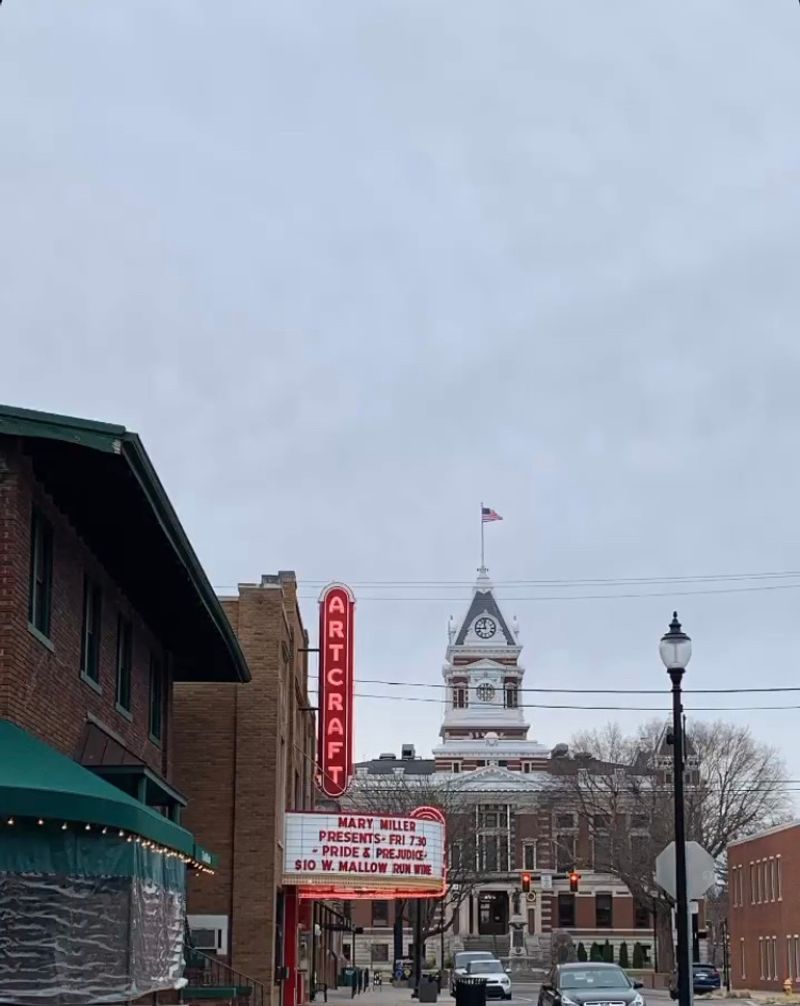
A little planning goes a long way at the Artcraft because the experience is fuller than a standard movie run. The best approach is to treat the outing as an evening in downtown Franklin, not just a quick stop for a film. That mindset helps visitors notice more and rush less.
Start by arriving early. Extra time makes room for parking, picking up snacks, and enjoying the marquee before heading inside. It also helps first-time guests settle into the older style of the theater, where the pre-show can be part of the fun rather than dead time to skip.
Checking the schedule ahead is smart because the venue offers more than classic movies. There may be family titles, seasonal favorites, concerts, special events, or author appearances depending on the date. Picking the right program can shape the whole tone of the visit.
Movie choice matters here in a different way than at a multiplex. A holiday screening may bring a crowd ready to sing along or laugh together, while a classic film can feel more nostalgic and relaxed. Even the time of day changes the mood, with matinees offering a softer pace and evening shows leaning more festive.
Budget planning is easier than many people expect. Ticket and concession prices are often noted as reasonable, which makes the Artcraft a strong option for families, couples, or anyone tired of oversized theater bills. That lower pressure can make the night feel more carefree.
It also helps to stay open to the theater’s traditions. The event may include live announcements, a cartoon, or other touches that break from modern movie habits. Leaning into those moments usually makes the visit better, especially for newcomers.
For the smoothest night, think simple: arrive early, bring a little curiosity, and let the old-school pacing work. The Artcraft rewards visitors who give it time. That is when the building, the program, and the downtown setting lock together in the most satisfying way.
Why the Artcraft Outshines the Multiplex Routine
Modern multiplexes are built for convenience. The Artcraft is built for occasion. That difference explains almost everything about why a night here lands with more personality than a standard trip to a chain theater.
At many newer cinemas, the goal is speed and sameness. Buy the ticket, pass the screens, watch the previews, and leave. The Artcraft offers another model, one where the building matters, the pre-show matters, and even the snack counter has its own place in the story.
The theater also gives older movies the kind of home they deserve. Instead of treating classic films like leftover content, it presents them with care. The room, the traditions, and the format all support the idea that these titles are still meant to gather a crowd.
There is a social advantage too. Shared laughter at a cartoon, a recognizable holiday film, or a beloved musical hits differently in a historic auditorium than in a half-distracted modern space. The audience becomes more connected to the event, which lifts the energy without needing flashy gimmicks.
Practical value adds to the appeal. Reasonable tickets and concessions remove one of the biggest complaints people have about moviegoing today. Families can enjoy the night without doing mental math at every step, and couples can have a charming date without the usual price shock.
Most of all, the Artcraft offers contrast. It stands for a slower, more intentional kind of entertainment in a time when so much feels disposable. That is where the Great Gatsby comparison clicks.
Not because the theater is pretending to be a film set, but because it still understands glamour as part of public life. Some places show movies. The Historic Artcraft Theatre stages an evening.
By the time the lights come up, the difference is hard to ignore. Franklin’s grand old screen house turns a familiar activity into a richer, brighter, and far more distinctive night out.
Share this story