Somewhere in the back of a tiny Manhattan shop, dough is still being stretched by hand across long tables, the same slow way it was done before your grandparents were born. No machines rolling it out.
No factory sheets pulled from a freezer box. In a city where storefronts change faster than subway schedules, one family has kept this craft going since 1923.
That kind of staying power is rare, and it says a lot about what New York still holds onto when it really matters. The story behind this bakery stretches across five generations, a building the family reportedly owns, and a counter that feels like a time capsule.
Keep reading to find out where it is, what makes it special, when to go, and a few handy tips that can save you a wasted trip across town.
1. A Blue and White Doorway on Ninth Avenue
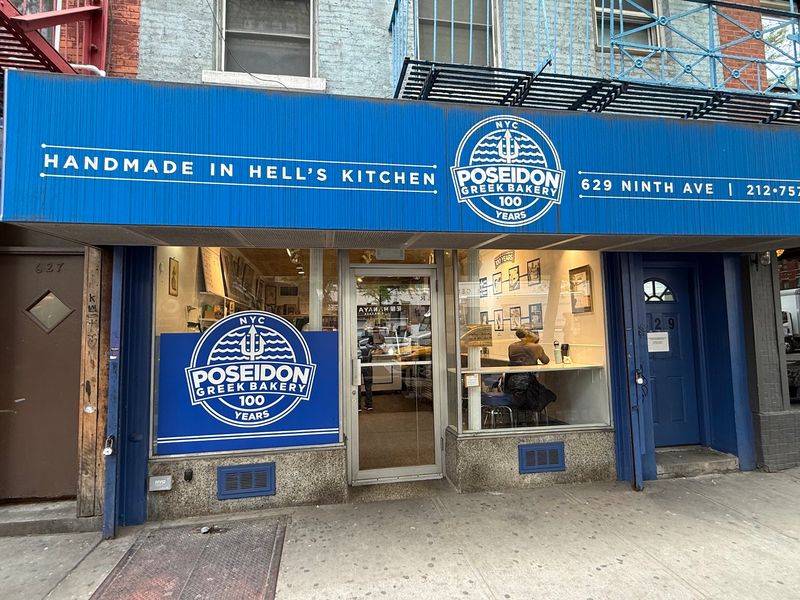
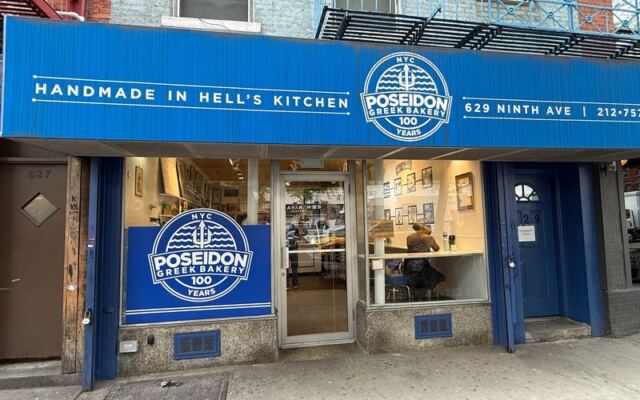
The address is easy to miss if you are rushing toward a show. Poseidon Greek Bakery sits at 629 9th Ave, New York, NY 10036, in the Hell’s Kitchen neighborhood of Manhattan, New York, in the United States.
It is a bakery, plain and simple, and it has never tried to be anything else. The shop focuses on sweet and savory goods built around phyllo, the paper-thin dough that defines so much of Greek baking.
Hell’s Kitchen is packed with new cafes, quick lunch spots, and places that seem to open and close within a single season. Against that backdrop, this little shop stands out simply by still being here.
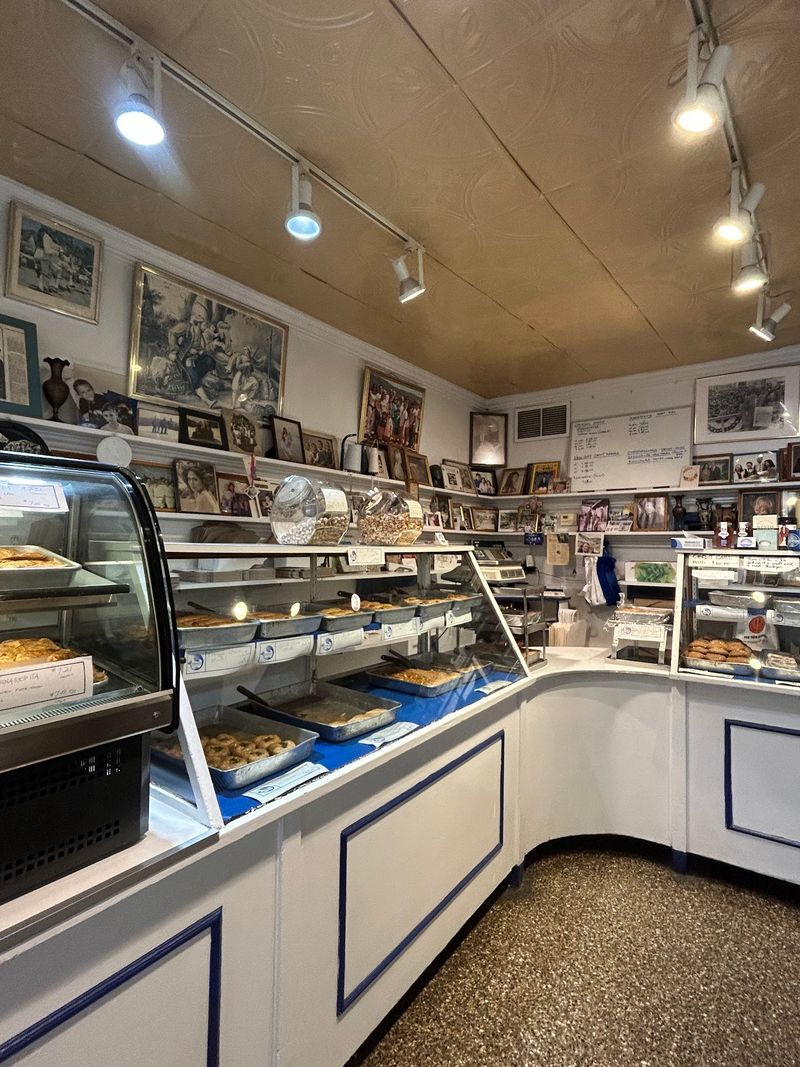
The storefront is small, and the room inside is tiny. Regulars describe it as decorated in blue and white, the colors most people connect with Greece.
There is no grand lobby or flashy sign trying to grab your attention from a block away. The appeal is quieter than that, and it rewards people who slow down long enough to walk through the door.
For outer-borough folks heading into Midtown, it makes a fine detour before or after an errand. Just know the hours first, because this is not an all-day, every-day kind of place.
2. Born in 1923 and Still Counting
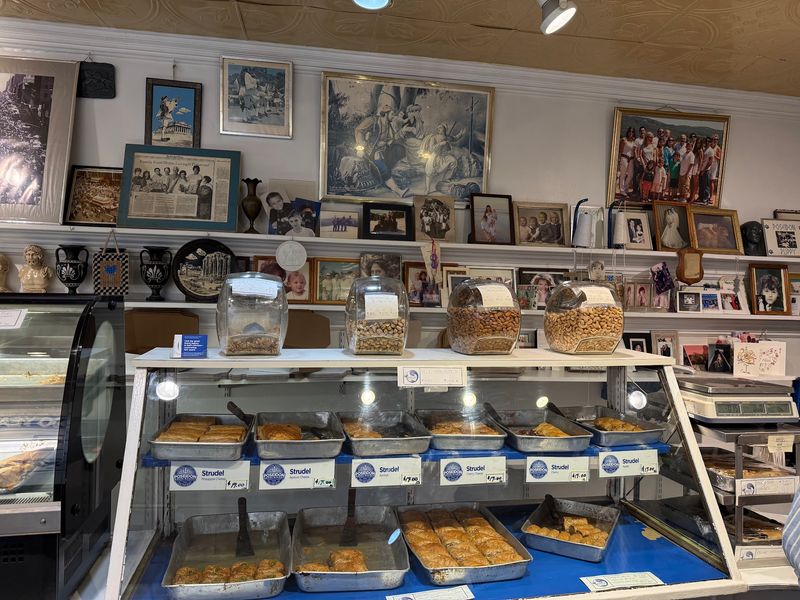
Few New York businesses can say they opened while silent films were still the big thing at the movies. Poseidon has been family run since 1923, which makes it more than a century old.
The bakery celebrated its centennial in 2023. That milestone came as a single family-owned operation, which is almost unheard of in Manhattan.
The shop has reportedly been at its current Ninth Avenue location for more than 60 years. Before that, the business had other chapters, and the walls inside help tell that story.
A hundred years is a long time to keep doing one thing well. Rents have risen, neighborhoods have shifted, and entire blocks have been rebuilt around shops like this one.
Through all of it, the family kept baking. That continuity is the real headline here, more than any single item in the case.
For New Yorkers who grew up with a corner bakery that is now a phone store, this place is a reminder. Not every good thing in the city has been swapped out for something faster and shinier.
The next chapter of the story takes place in the back room, where the real work happens.
3. Phyllo Made the Hard Way
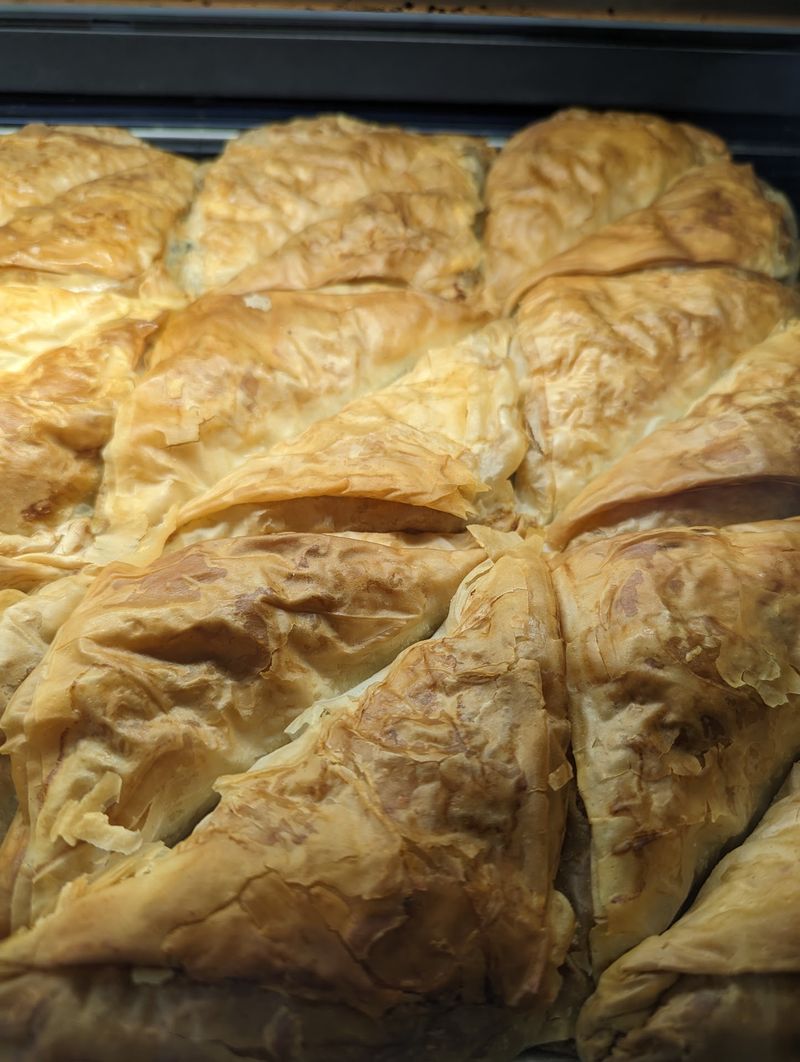
Most bakeries today buy phyllo in boxes. Poseidon reportedly still makes its own dough by hand, stretching it out on tables in the back of the shop.
That is a big deal. Phyllo is famously thin, and making it from scratch takes time, patience, and practice that usually gets passed down rather than learned from a book.
Handmade phyllo is the foundation for nearly everything in the case. The sweet pastries and the savory pies both start with these sheets.
People who stop in often point to the dough as the standout. Many describe it as fresh and crisp, with layers that hold up well.
It would be far easier to cut corners. Machine-made dough is cheaper, faster, and available from plenty of suppliers.
The family has chosen the slower route for generations, and that choice shapes the whole identity of the shop. In a city that loves shortcuts, this is a bakery that seems almost stubborn about doing things the long way.
Good stubbornness, though. The kind worth crossing a borough for.
4. Five Generations Behind the Counter
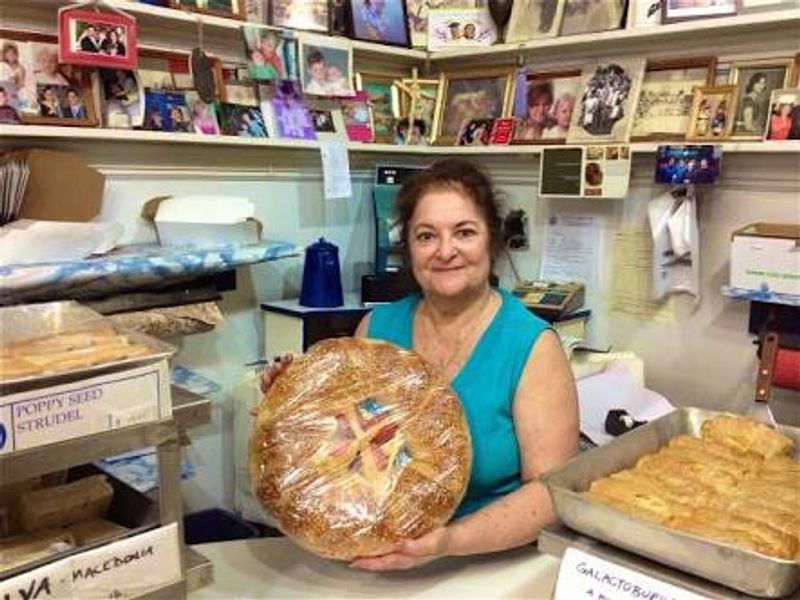
Family businesses rarely make it past the third generation. At Poseidon, the current owner is reportedly the fifth generation of his family to bake here.
That is a legacy measured not in years but in lifetimes. Recipes, techniques, and habits have been handed down from one set of hands to the next.
The owner is often described as kind and passionate about both the baking and the history of the shop. He is known to enjoy talking about how the business came to be.
The people working the counter get similar praise. Staff are frequently called friendly, helpful, and happy to explain what each item is.
That last part matters more than it sounds. Many first-timers walk in not knowing Greek pastries well, and a patient explanation goes a long way.
Even folks who walk away less impressed by the baking tend to agree that the owner is a sweetheart. Warm service seems to be part of the family recipe too.
In an era of order screens and tap-to-pay kiosks, a real person telling you the story of what you are buying feels like a small luxury.
5. Walls That Tell the Family Story
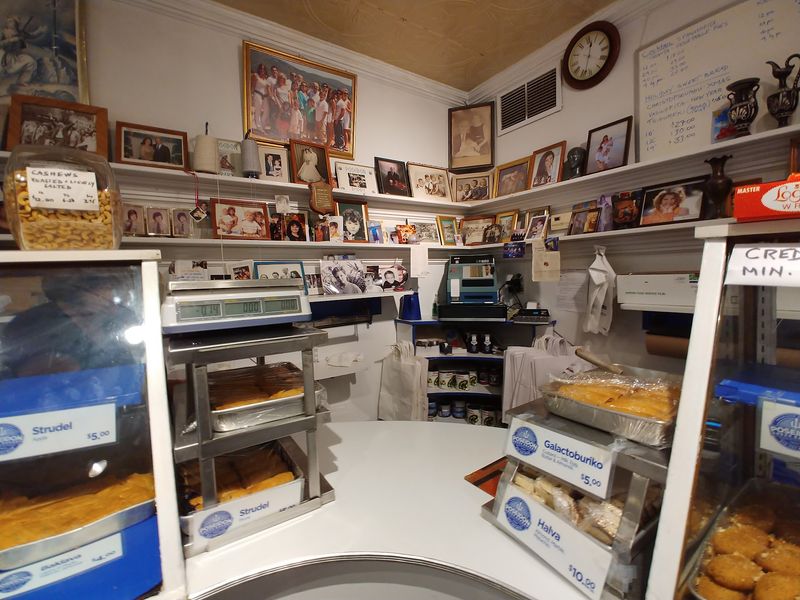
Some museums would envy the decor. Inside Poseidon, the walls are lined with family photos and paintings that trace how the business grew over the decades.
The shop history is reportedly painted right on the wall. It turns a quick pastry run into a short lesson on immigrant New York.
None of it feels staged. People who come in often say nothing here looks designed for social media, and that is exactly the charm.
The photos show faces from different eras, connecting today’s counter to the family members who started it all. For many customers, reading the wall is half the fun.
It also gives the place a strong sense of identity. You do not need a brochure to understand that this is a family operation with deep roots.
For anyone whose own grandparents arrived in New York with a trade and a dream, this wall may hit close to home. It is a reminder that the city was built by small shops just like this one.
Spend a minute looking around before you order. The story is free, and it makes everything else in the shop make more sense.
6. Old Register, Handwritten Signs
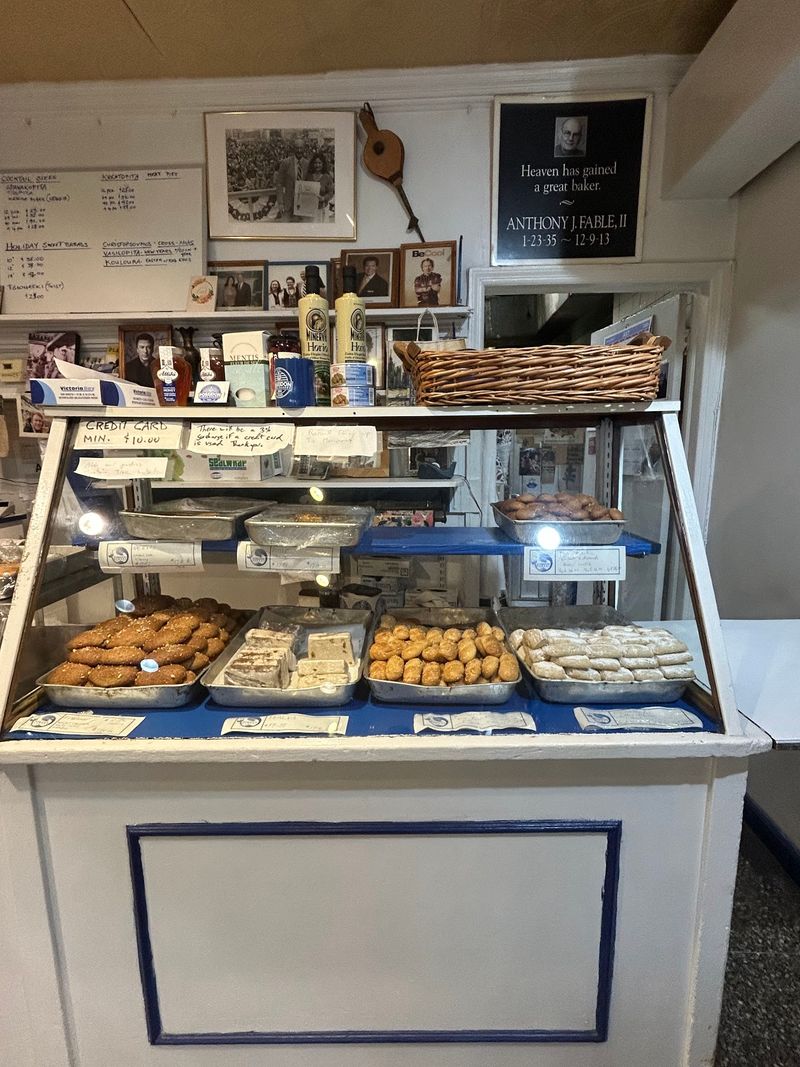
A time capsule is the phrase that keeps coming up. The shop reportedly still has an old register and handwritten signs, details that feel like they belong to another New York.
These small touches add up. Together they create the feeling of stepping back several decades without leaving Ninth Avenue.
Nothing here seems built to chase trends. There is no menu board flashing specials and no rotating seasonal theme.
Instead, the shop keeps what works. Many longtime fans see that as the whole point.
It is fair to say the bakery’s survival has a practical side too. The family reportedly owns the building, which helps explain how a small, traditional shop has outlasted so many neighbors.
Owning the space means fewer pressures from rent hikes that have pushed other heritage businesses out of Manhattan. It allows the family to keep doing things their way.
That combination of ownership and old-school habits is part of why the shop still exists in its current form. Plenty of New Yorkers hope it stays preserved for another hundred years.
7. Sweet Trays Built on Phyllo
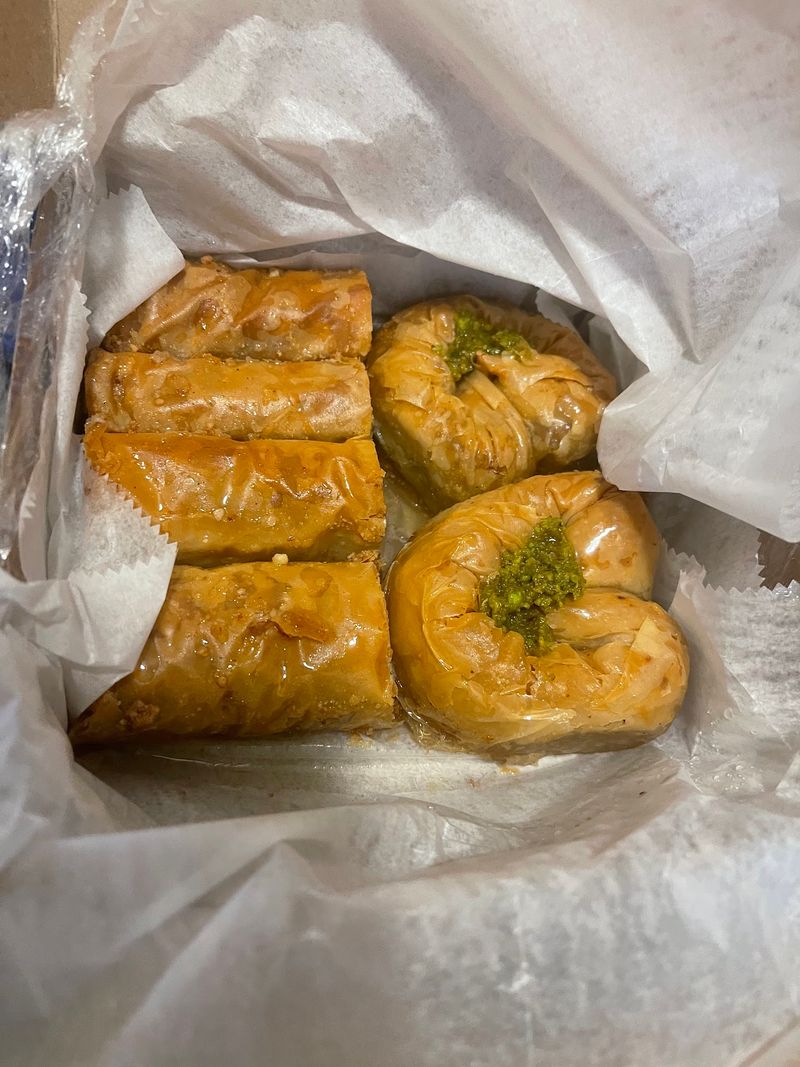
The glass case is where decisions get hard. Poseidon offers a wide range of sweet pastries, many of them layered with that handmade phyllo.
Some are syrupy and rich, while others lean toward custard or cheese fillings. There are also strudels, including fruit and cheese versions that regularly get mentioned as favorites.
Opinions on sweetness vary. Some people find certain pastries very sweet, while others say the selection is balanced and not overly sugary.
That split is worth knowing before you go. If you prefer lighter treats, ask the counter staff to point you toward options with less syrup.
One popular piece of advice from fans is simple. If you cannot decide, get a little of everything.
Items are priced by the piece rather than by weight, which makes it easy to build a mixed box. That approach also helps first-timers sample without committing to a big tray of one thing.
The sweet side of the menu may be the most famous part of the shop. Still, savory fans have plenty to look forward to in the next section.
8. The Savory Side of the Case
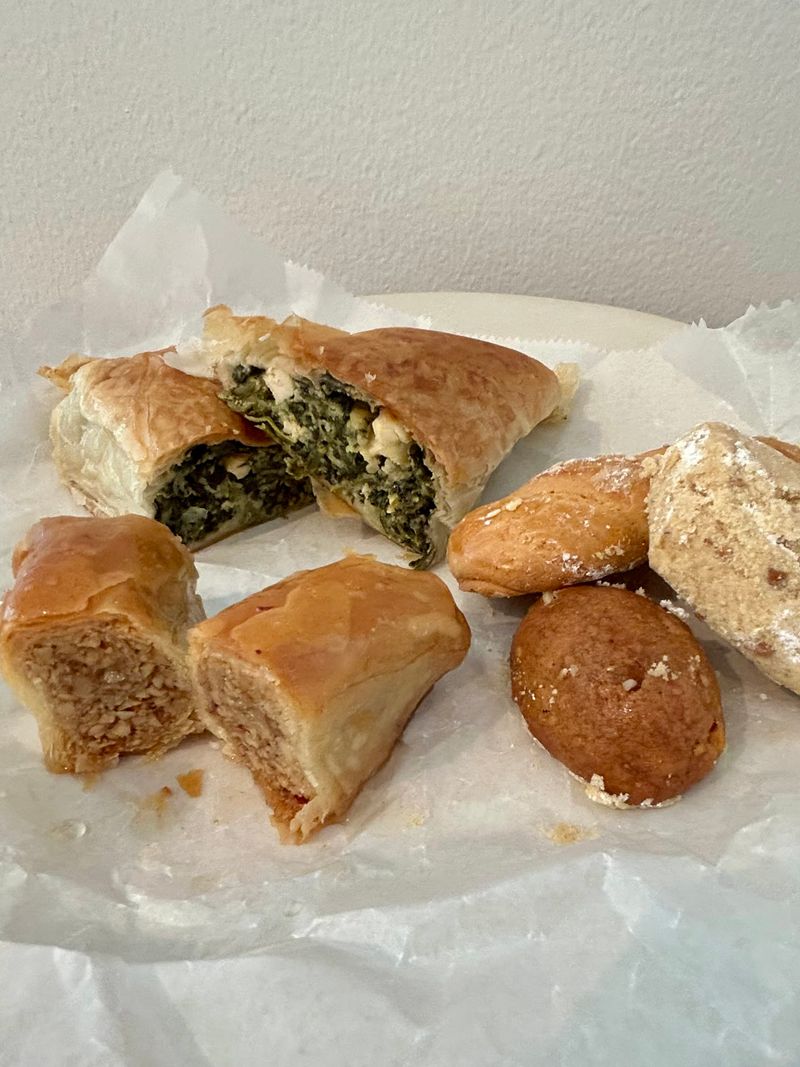
Not everything here is dessert. Poseidon also turns out a lineup of savory phyllo pies, and several of them are vegetarian.
Fans often praise how generously these pies are filled. Words like no skimping come up again and again.
There are cheese-based options, greens-based options, and at least one meat version that has earned strong praise. That variety makes the shop a solid stop for an early lunch or an afternoon snack.
One practical note is worth sharing. The pies are reportedly not heated when ordered, so they are usually served at room temperature.
Some customers wish they could get them warm and crisp on the spot. If you prefer them hot, consider taking them home and warming them yourself.
Vegetarians in particular tend to appreciate the selection. Finding several meatless savory options in one small Manhattan shop is not always easy.
A sweet and savory combo box makes a strong case for itself. Grab a little of each and you have covered both sides of what this family does best.
9. Coffee, Kept Classic
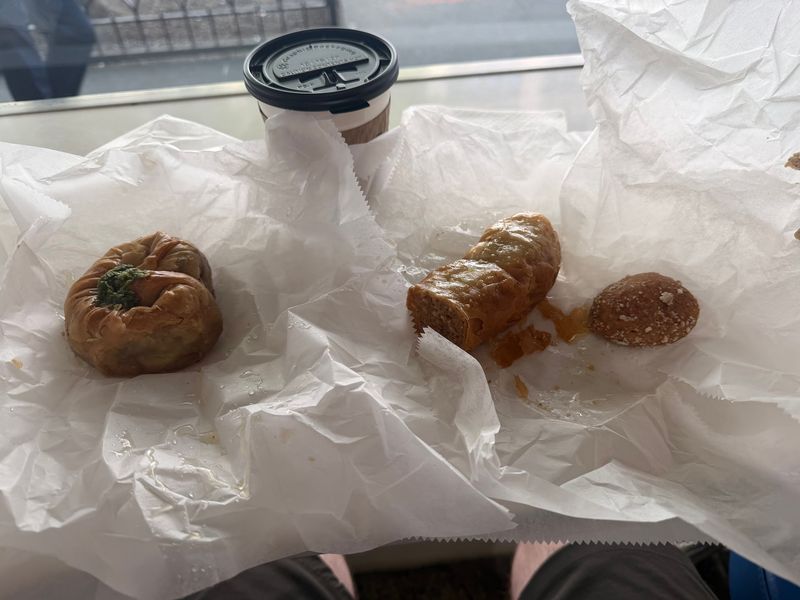
Here is something many people do not expect. Along with the pastries, Poseidon serves coffee, including cappuccino drinks.
Do not walk in hoping for a long list of custom options, though. The shop reportedly does not offer skim or non-dairy milk choices.
That fits the overall personality of the place. It is not a trendy cafe, and it does not pretend to be one.
Some fans of Greek coffee culture have noticed a gap in the lineup. The iced espresso drinks popular in Greece are reportedly not on the menu.
For most people, though, a straightforward coffee alongside a phyllo pastry is more than enough. It turns a quick stop into a short, relaxed break from the Midtown rush.
The coffee here plays a supporting role. The baking is clearly the star, and the drinks simply keep it company.
Think of it as the kind of cup your grandparents might have ordered. Plain, dependable, and served without a lecture on bean origins.
10. A Taste of Home for Immigrant Families
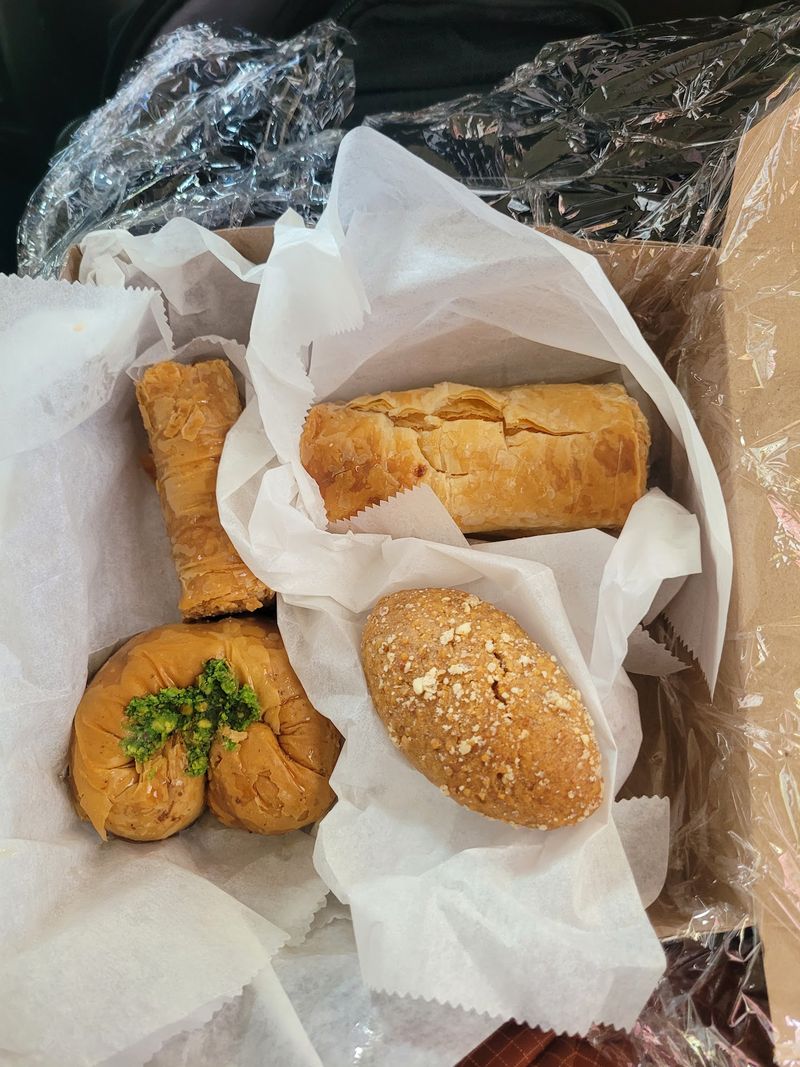
For some customers, a visit here feels like a trip to a relative’s kitchen. People from Greek and other Balkan immigrant families often say the pastries remind them of what they grew up with.
That connection runs deep. Recipes kept the same way for generations can bring back strong memories for families who carried those traditions across an ocean.
Not everyone agrees on authenticity, and that is worth being honest about. Some people raised in Greece say the versions here differ from what they know back home.
That difference may come from a century of baking in New York. Recipes that arrived in the 1920s may have evolved in their own direction over time.
Either way, the shop holds a special place for many families across the five boroughs. It is the kind of spot people bring visiting parents to, or stop at before a holiday gathering.
Non-Greek customers are welcome too, and many say this has become their favorite bakery. No family tree is required to enjoy a little history in a paper box.
11. Who Will Love It Most
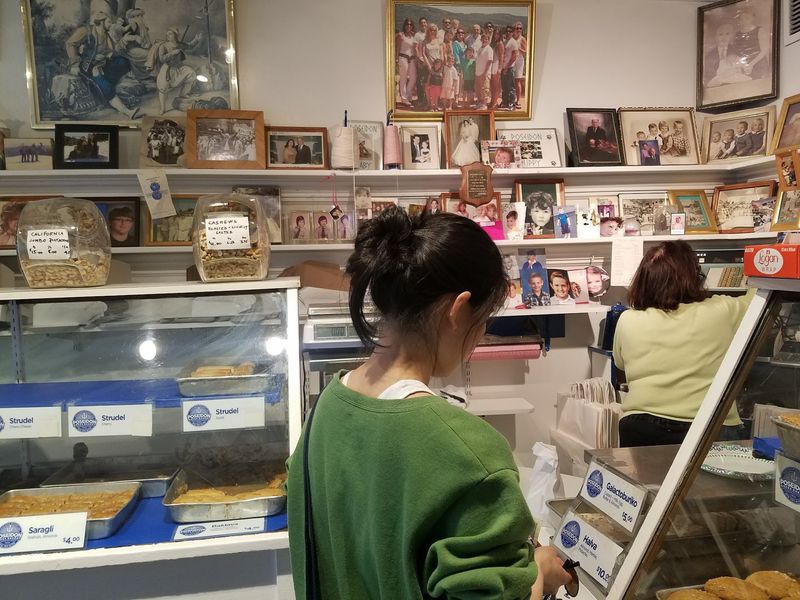
Not every shop suits every person, and that is fine. Poseidon tends to win over people who care about history, tradition, and handmade baking.
Folks who are tired of look-alike cafes often call this a welcome change. It is an authentic stop rather than another trendy spot.
It is also great for anyone bringing treats to a coworker, a boss, or a family get-together. A box from a 100-year-old family bakery carries a story along with it.
On the other hand, it may not be ideal for everyone. Those who prefer lighter, less sweet desserts may find some items too rich.
Some customers also feel the prices run on the high side. Budget-minded shoppers might want to pick a few favorites instead of loading up.
Because the shop is tiny, it works best as a grab-and-go stop. Do not plan on a long sit-down session with a big group.
Curious first-timers who ask questions usually have the best time. The staff seems to enjoy helping new faces find something they will like.
12. Cash, Cards and the Ten Dollar Rule
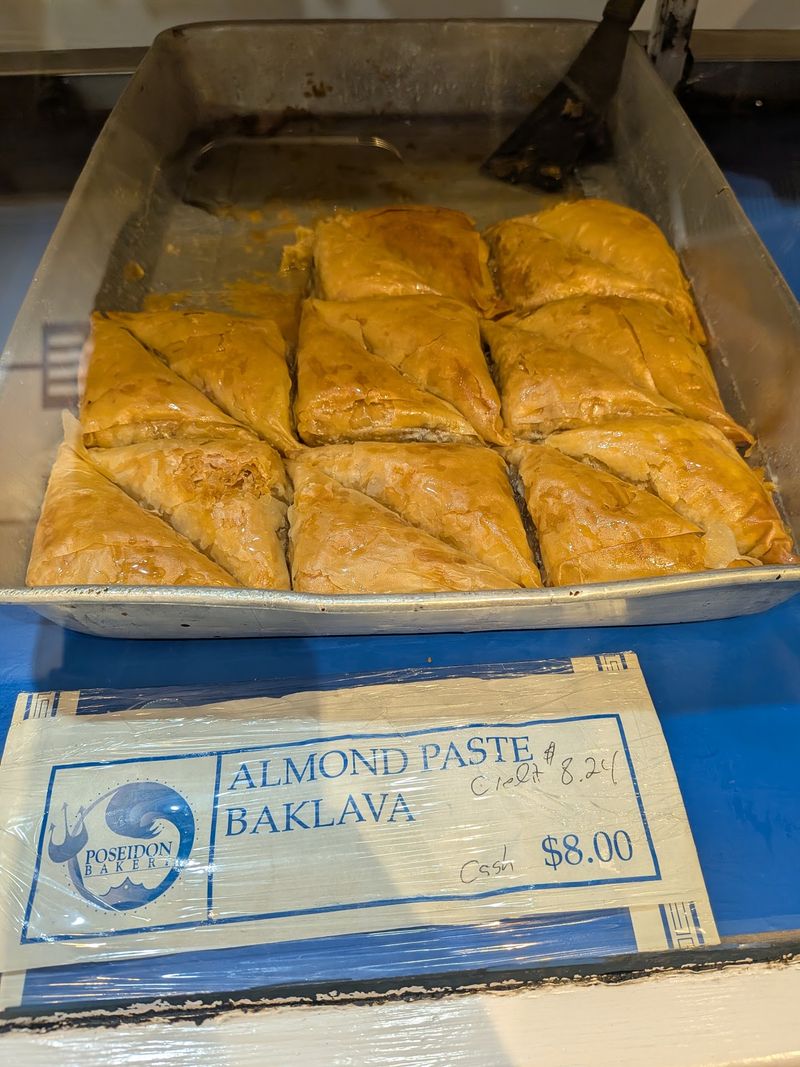
Bring a little cash, just in case. Poseidon reportedly has a $10 minimum for card payments.
That is a common rule at small, family-run shops, where card fees add up fast. Still, it can catch people off guard if they only planned on one pastry.
The easy fix is to round out your order. Grab a mix of sweet and savory pieces, and you will probably clear the minimum without trying.
Pricing is set by the piece instead of by weight. That makes it easier to see what each item costs before you commit.
Some customers feel the shop is pricey, so it helps to set expectations. You are paying for handmade phyllo and a family operation in Manhattan, not a supermarket bakery.
Prices can change over time, so check at the counter rather than relying on old numbers. The staff can also help you build a box that fits your budget.
A little planning keeps the whole visit smooth. Nobody wants to be the person counting coins while the line waits.
13. Timing Your Trip Right
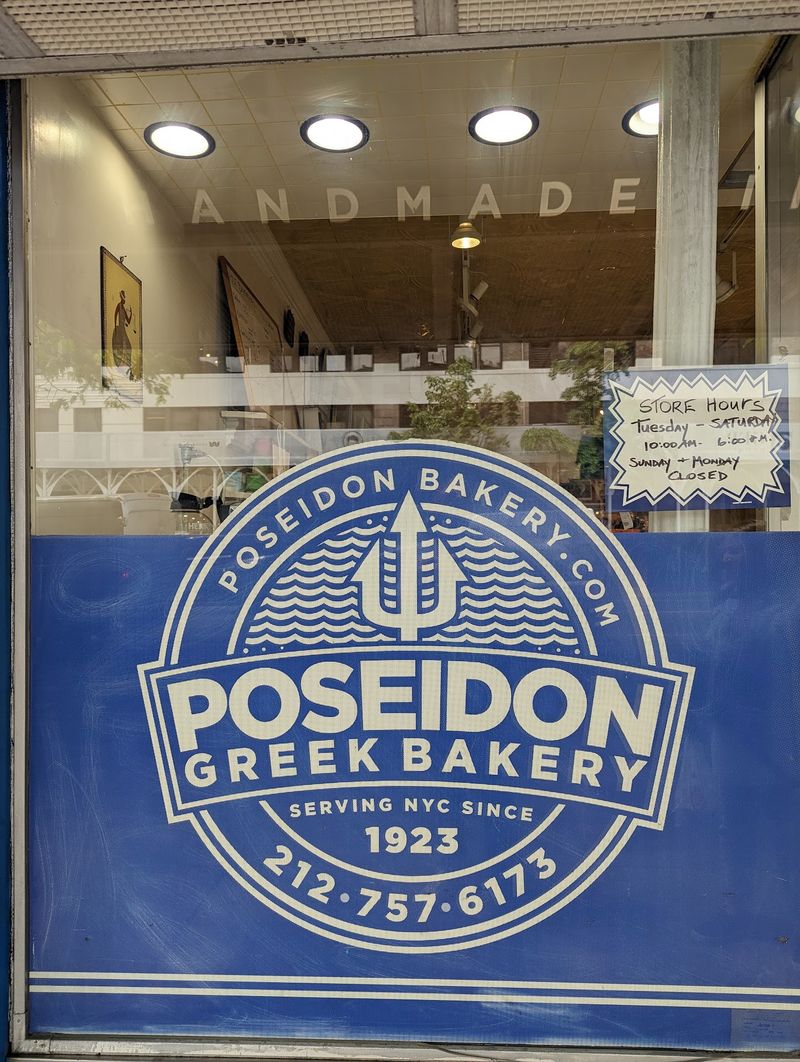
Hours here are short and specific, so plan ahead. Poseidon is open Tuesday through Saturday from 10 am to 6 pm.
The shop is closed on Sundays and Mondays. That catches a lot of weekend wanderers by surprise.
There has also been at least one report of the shop being closed during listed hours. Calling ahead or checking the bakery’s website before a long trip is a smart move.
For people coming from Queens, Brooklyn, the Bronx, or Staten Island, the location in Hell’s Kitchen is convenient to Midtown transit. A weekday visit can pair nicely with other errands in the area.
Saturday is the only weekend day the shop is open. If you are heading into the city for a show or a museum, build in a stop before 6 pm.
Earlier in the day may give you the widest selection, though availability can vary. Popular items may sell out as the afternoon goes on.
Upstate readers making a rare trip into Manhattan should keep these hours front and center. Missing them by a day would be a tough way to end a long drive.
14. Why the Old Ways Still Matter
A century is a long time to keep a promise. Poseidon has spent more than a hundred years stretching dough by hand and keeping a family business going in one of the toughest cities on earth.
Not every pastry will win over every person. Some find the treats too sweet or too pricey, and that is part of an honest picture.
Still, what the shop represents is hard to argue with. Five generations, a building still in family hands, and a back room where phyllo is made the slow way.
New York has not handed every good thing over to self-checkout and chain counters. Small places like this prove that tradition can survive when a family decides it is worth protecting.
So check the hours, bring a little cash, and ask the staff for a recommendation. Then take a minute to read the family story on the wall.
You may walk out with a box of pastries. More likely, you will walk out with a bit more pride in the city that kept this place standing for a hundred years.
Share this story