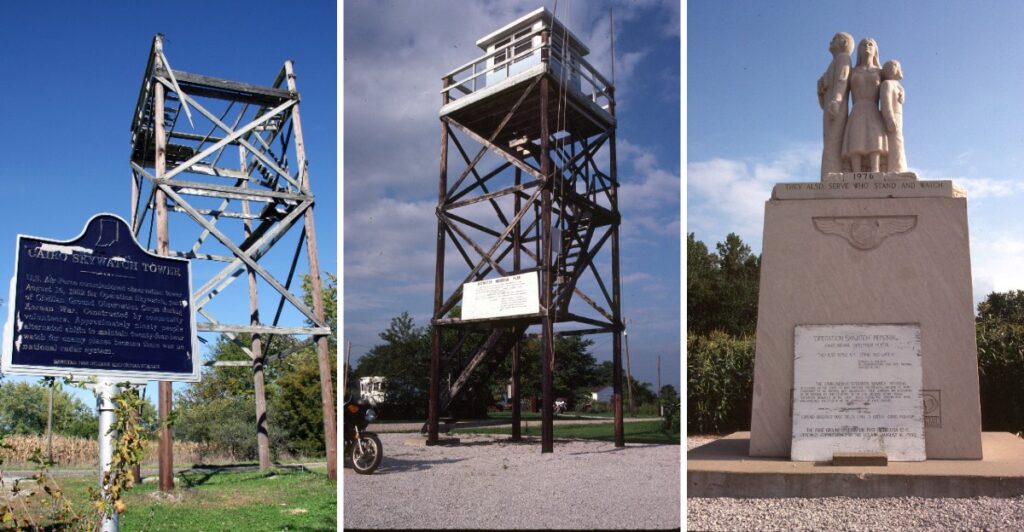
A weathered wooden tower rising above Indiana farmland hardly looks like a relic of national defense. Yet the Cairo Skywatch Tower north of West Lafayette recalls a tense chapter of the Cold War, when civilian volunteers watched the skies for potentially hostile aircraft.
Decades later, the surviving structure stands as an unusual reminder of how ordinary communities participated in the country’s early-warning efforts. There are no massive fortifications or dramatic military displays here, which makes its quiet rural setting even more striking. For history lovers traveling Indiana’s back roads, this modest lookout offers a fascinating glimpse into an era when watching the horizon carried much higher stakes.
A Wooden Giant Rising From Tippecanoe County Farmland
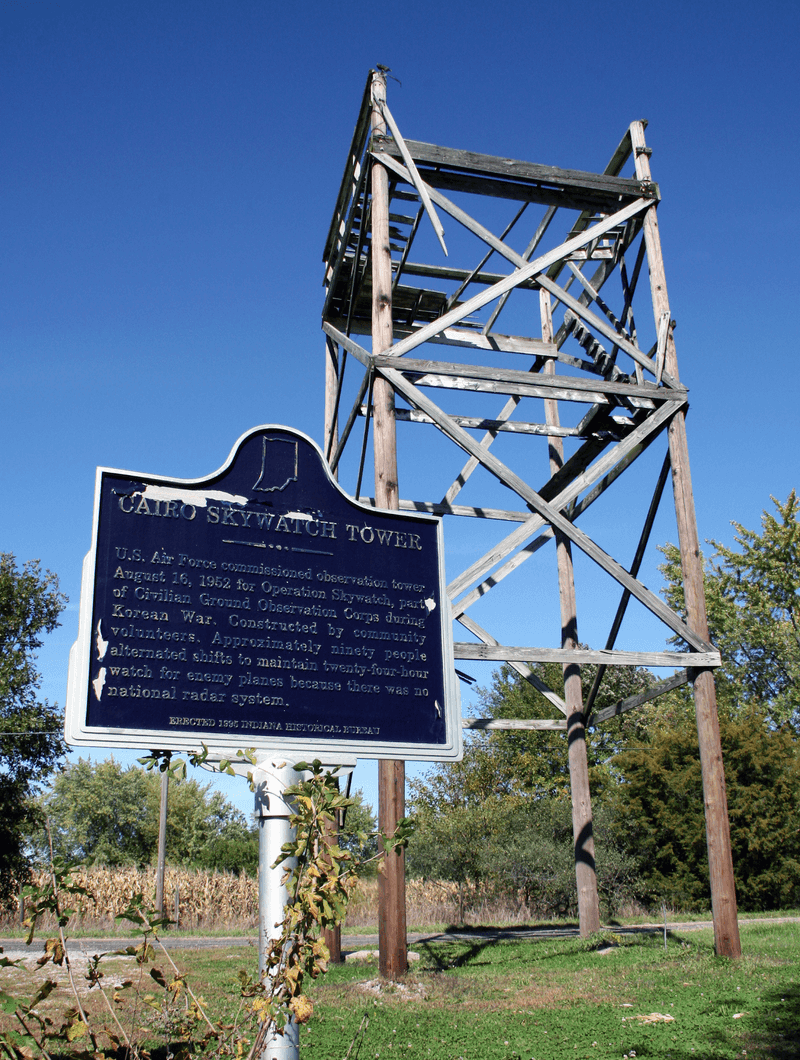
Corn rows run flat to the horizon, a gravel shoulder hums under the tires, and then a tall timber frame pokes up against the sky. That sudden vertical line is the first clue that you have reached the Cairo Skywatch Tower. Out here, almost nothing else stands that tall except grain bins and trees.
The setting is a big part of the surprise. The tower sits along County Road 850 North in the small community of Cairo, a short drive north of West Lafayette and Purdue University. There is no gift shop, no parking garage, and no crowd. You simply pull over and look up.
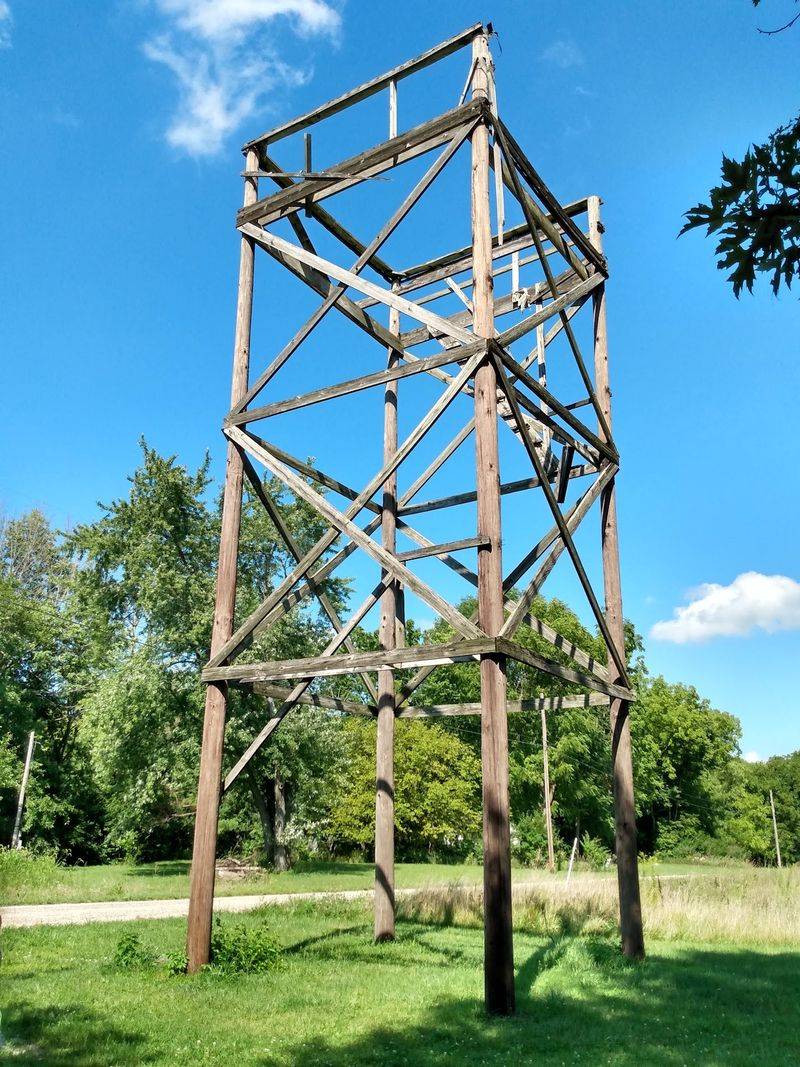
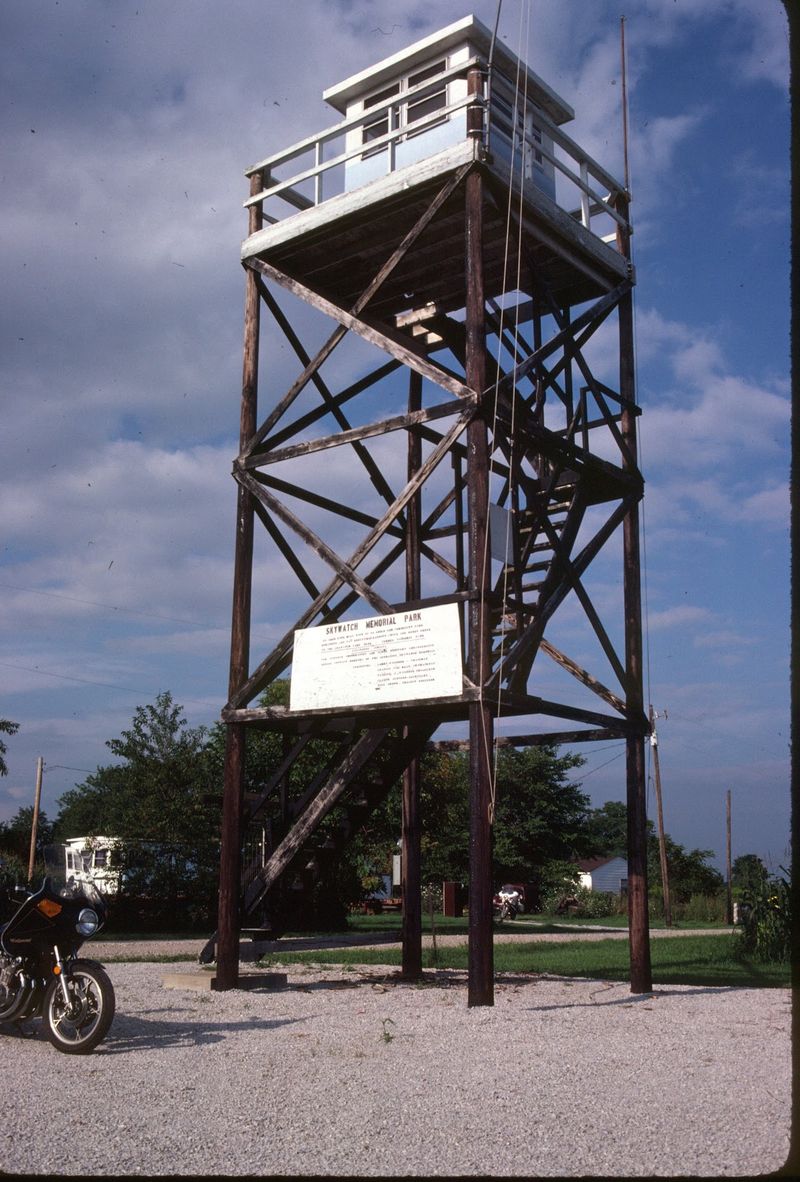
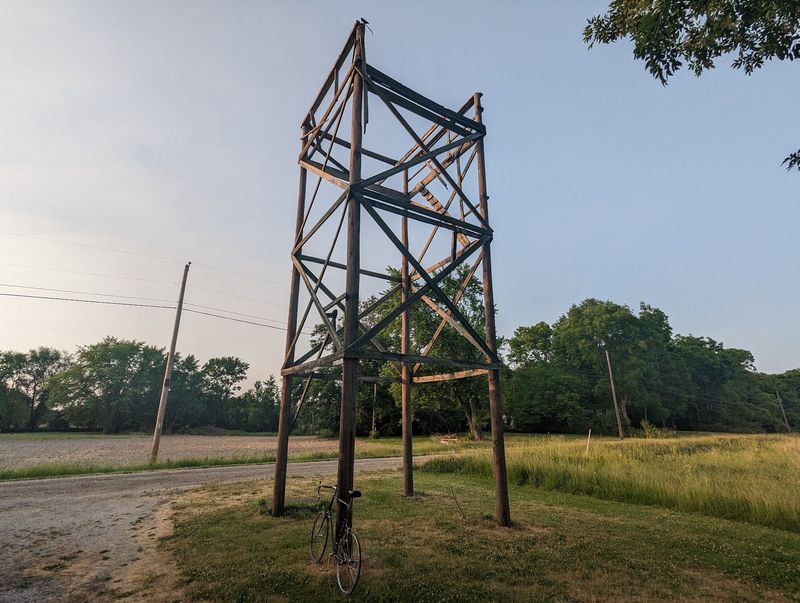
Up close, the structure looks almost skeletal. Wooden legs and cross braces form a lattice that climbs toward a small platform at the top. Sun and rain have turned the lumber a soft gray, and you can spot cracks and worn edges where decades of Indiana weather have left their mark.
Flat land was exactly the point. A lookout in open country gave watchers a clear view of the sky in every direction, with no hills or buildings blocking the horizon. Standing at the base, you can still sense how wide that view must have been from the platform above.
Photographers love the contrast here. A cloudy sky makes the old timbers look dramatic, while a clear blue day turns the tower into a crisp silhouette. Sunset paints the fields gold and throws long shadows from each wooden beam.
Give yourself a minute to walk around the whole base before snapping pictures. Every side shows a slightly different pattern of braces, and the angle from the road looks nothing like the view from the field edge. It is a small site, but it rewards slow looking.
Eyes on the Sky During the Cold War
Picture 1952. Radar systems of the time had blind spots, especially for planes flying low. The United States worried that enemy bombers could slip through, so the government turned to regular citizens for help.
That effort was called the Ground Observer Corps. Volunteers across the country watched the skies and reported every aircraft they saw. The Cairo tower was one of their posts, and it was built in 1952 as part of that program.
Here is a fun detail that trips people up. The group was the Ground Observer Corps, not a ground observation group. Nobody was watching the ground.
These were observers standing on the ground, or on a tower, watching the air.
Once a plane appeared, a volunteer would note its direction, its type if possible, and how many engines it had. Then the report went by phone to a filter center, where staff tracked flights and passed along anything suspicious. It was a simple system, but it worked like a giant human radar net.
Shifts ran around the clock at many posts. That meant farmers, shop owners, teachers, and teenagers took turns on the platform through hot summer afternoons and freezing winter nights. Their training included learning to recognize aircraft shapes by their outlines.
By the late 1950s, better radar had arrived, and the program wound down. The Ground Observer Corps was officially shut down in 1959. Most of the towers built for it were torn down or simply rotted away.
So when you look at the Cairo tower, you are seeing a physical piece of a national defense plan that depended on neighbors. It stands as proof that ordinary people once felt their small town had a real role in keeping the country safe.
The Neighbors Who Built and Staffed It
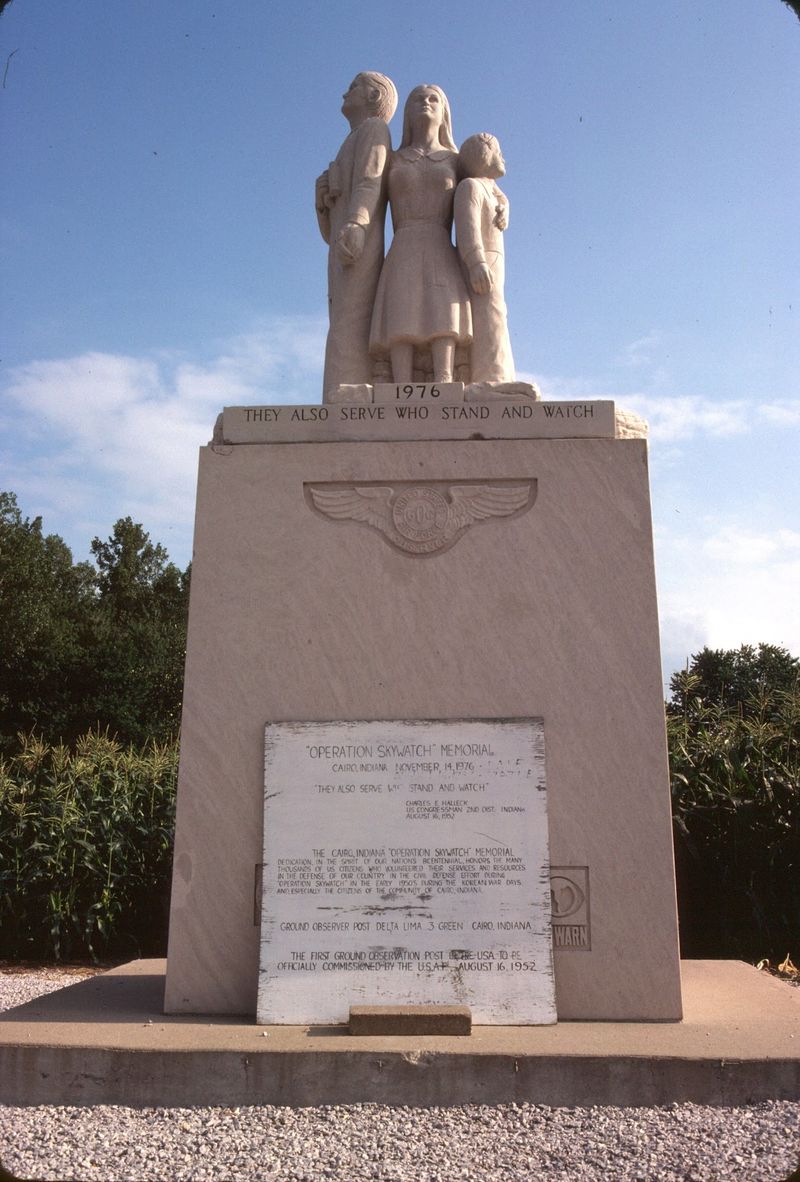
Small towns tend to answer the call quickly, and Cairo was no exception. Local residents came together to help raise the tower, and community members then signed up to take shifts watching the sky. It was a hometown project with a national purpose.
That local connection gives the site its heart. The people who climbed these stairs were not soldiers in uniform. They were families from nearby farms and homes who gave up hours of their free time to scan the clouds.
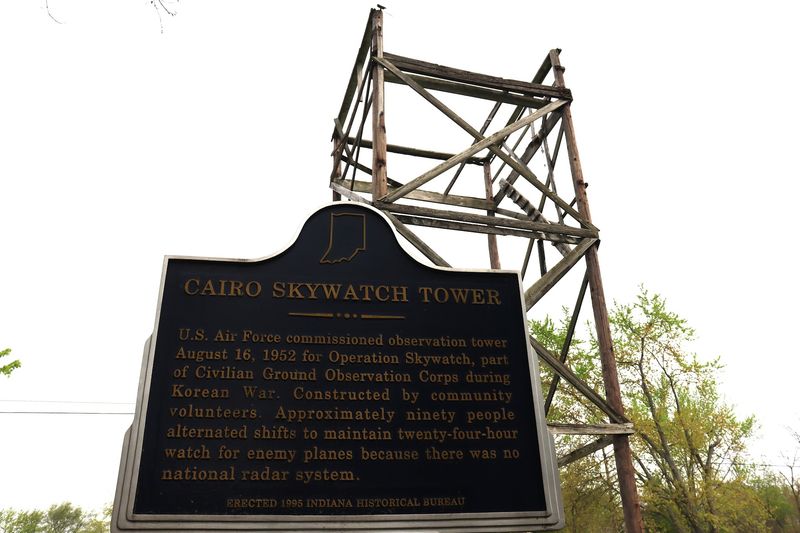
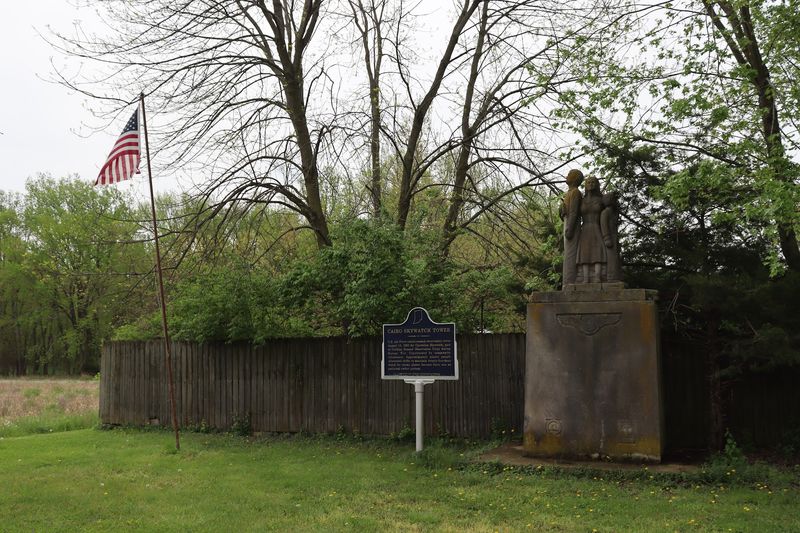
Records tied to the tower note that it was dedicated in 1952 in a public ceremony. The site earned a spot on the National Register of Historic Places in 1984, a sign that historians saw real value in keeping it standing. A marker near the tower helps explain its role.
Think about what a shift might have looked like. A pair of volunteers climbed up with a notebook, binoculars, and maybe a thermos of coffee. They listened for engines as much as they looked, since sound often reached them before a plane came into view.
Kids from the area grew up hearing about these watches. Some families still pass the story down, and grandparents bring grandchildren to the spot to explain what used to happen there. That kind of history lesson hits harder when the actual tower is right in front of you.
Before you go, try asking older relatives if they remember the Cold War drills or skywatch programs. You might be surprised by the stories that come out.
Many people who lived through the 1950s have clear memories of air raid sirens, school drills, and news about bombers. Bringing those stories with you turns a quick roadside stop into a conversation across generations.
Last One Standing in the Region
Thousands of observation posts once dotted the country. Some were just rooftops or backyard sheds, while others were purpose-built towers like this one. Very few made it through the decades since.
Wood is the main reason. Timber that sits outside for seventy years faces rain, snow, ice, bugs, and blazing summer heat. Without constant care, most of these wooden lookouts simply collapsed or were taken down for safety.
The Cairo tower beat those odds, and that is why it is often described as one of the last surviving wooden skywatch towers of its kind in the region. Its listing on the National Register helped draw attention to its rarity. For history fans, finding one still upright is a real treat.
Look closely at the details. Notice how the legs angle inward as they climb, making a wide, sturdy base. Check out the bolts and joints where beams meet, since those connections carried the weight of people and equipment for years.
Be honest with yourself about its condition, though. The tower is showing its age, and some parts look worn or fragile. Climbing is not something visitors should try, and it is smart to admire the structure from the ground.
That wear actually makes the visit more meaningful. You can see history slowly changing in real time. Each season adds new weathering, which is a strong reminder that places like this do not last forever without help.
Plenty of visitors leave hoping to see a restoration someday. If you care about preserving it, look into local historical groups in Tippecanoe County. Supporting their work, even by sharing the tower’s story, helps keep rare landmarks like this on the map instead of in old photographs.
Turning a Quick Stop Into a Mini History Lesson
Ten minutes. That is roughly how long many people spend here, and honestly, that is fine. The magic comes from how you use those minutes.
Start with a game. Before reading the marker, ask everyone in your group to guess what the tower was used for. Answers like fire watching or bird spotting are common, and the real answer usually sparks surprise and plenty of questions.
Next, read the historic marker together. Then stand at the base and imagine you are on duty in 1953. Look up at the sky and try to spot any planes passing over, since aircraft from nearby airports sometimes fly through the area.
Teenagers especially tend to get curious here. Why would the government need regular people to watch for bombers? What was the Cold War really about? These questions open up easy talks about history, fear, science, and how technology changed over time.
Bring a pair of binoculars if you own them. Scanning the horizon the way volunteers once did makes the experience feel hands-on. Kids can also try sketching airplane outlines, the same skill observers practiced to identify aircraft.
For younger children, keep it simple. Explain that neighbors took turns being lookouts, a little like playing a watchful game of hide-and-seek with the sky. That picture helps them understand why the tower was built so tall.
Wrap up with a photo of your group in front of the tower. Later, look up pictures of other Ground Observer Corps posts online and compare them. You will quickly notice how few still exist, which makes your snapshot a little more special. Short visit, big conversation. That is the sweet spot for this place.
Timing Your Visit and Finding the Spot
GPS will get you close, but keep your eyes peeled. The tower sits along W 850 N in rural Tippecanoe County, north of West Lafayette, and it is easy to drive past if you are chatting in the car. Slow down as you get near and watch for the wooden frame above the fields.
Parking is informal. There is no large lot, so pull safely onto the shoulder or the small area near the site, and stay clear of farm equipment. Tractors and grain trucks use these roads, especially during planting and harvest seasons.
Timing matters more than you might expect. Spring brings green fields and fresh air. Late summer surrounds the tower with tall corn, while fall adds golden stalks and crisp weather that make for excellent photos.
Winter visits have their own mood. Bare fields stretch wide, and the gray tower stands out sharply against snow. Just dress warmly, since wind moves freely across this flat land.
Golden hour is a favorite for photographers. The low sun lights up the texture of the wood. Night drives are also popular, since the dark countryside and starry sky give the tower a spooky, dramatic outline, but bring a flashlight and stay careful along the road.
Services are limited out here. There are no restrooms or snack stands at the site, so plan a stop in West Lafayette or Lafayette before or after. Pairing the visit with a trip to Purdue University or downtown Lafayette makes for a full day.
Respect the space too. Stay on public areas, do not climb the structure, and leave nothing behind. Keeping the site clean helps protect this fragile piece of history for future visitors.
Why This Quiet Roadside Relic Beats Flashier Attractions
No ticket booth. No loud music. No line. For some travelers, that might sound like a letdown, yet the Cairo Skywatch Tower wins precisely because it offers something bigger attractions rarely can.
Here, history is raw and unfiltered. Museums often place objects behind glass with neat lighting. This tower stands exactly where it was built, in the same fields, under the same sky its volunteers once watched.
Silence plays a role too. With traffic light and neighbors spread far apart, you hear wind in the grass, birds, and maybe a distant tractor. That calm makes it easier to picture observers straining to catch the drone of a far-off engine.
Cost is another plus. Visiting is free, which makes it an easy add-on for families, students, and road trippers watching their budget. Purdue students looking for a break from campus can reach it in a short drive.
The tower also connects local and national history in one frame. A small farming community stepped up during a tense moment for the entire country. Few places show that link so clearly, especially with an original wooden structure still standing.
Then there is the clock ticking on its survival. Weather keeps working on the old timbers, and nobody can promise how long it will last in its current shape. Seeing it now means witnessing a rare Cold War relic while you still can.
Plan it as part of a scenic country drive, bring curious minds, and give the old lookout a respectful look. Few spots in Indiana pack this much story into one weathered frame of wood, sitting quietly beside a county road and waiting for someone to look up.
Share this story