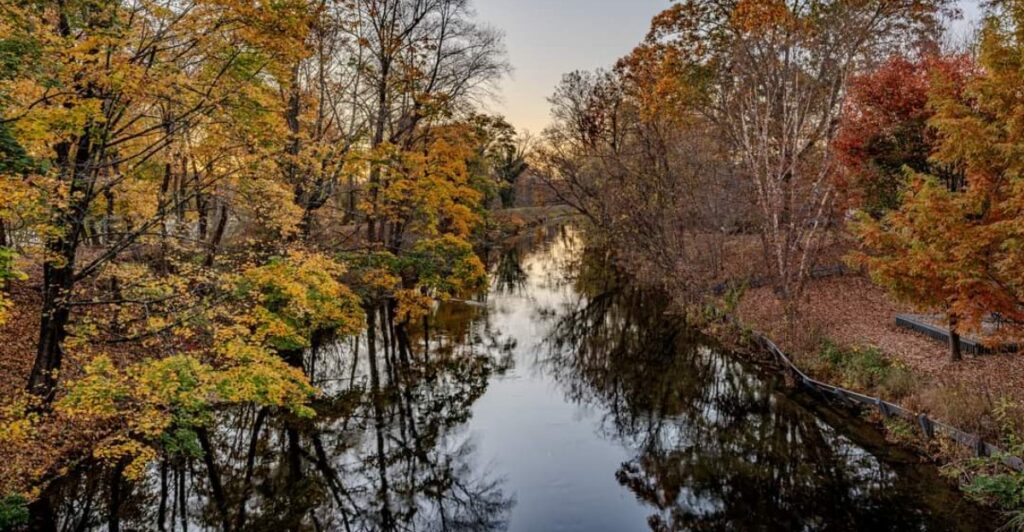
A canal on one side, the Delaware River on the other, and a stone mill waiting just up the road. Along Route 29, a quick drive has a habit of becoming an entire afternoon.
You stop to look at the water, wander into an antique shop, and suddenly lunch seems like a sensible next move. The Delaware River Scenic Byway runs approximately 34 miles from Trenton to Frenchtown, linking Revolutionary history, wooded recreation areas, and river towns with personalities of their own.
Its appeal comes from how close everything sits together. You can leave the car for a canal walk, browse Lambertville’s storefronts, and explore Stockton’s old mill complex without turning the day into a complicated itinerary.
Give this road a few generous hours and comfortable shoes. The scenery supplies plenty of reasons to slow down, while the towns make sure you never have to rely entirely on your passenger-seat snacks.
Follow the Delaware River for 34 Scenic Miles From Trenton to Frenchtown
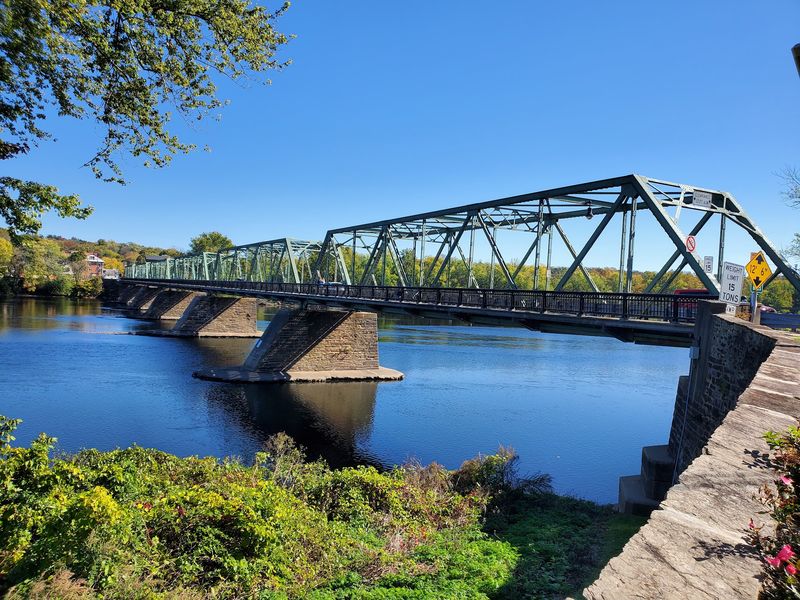
New Jersey designated this stretch its first scenic byway in 1996, and national recognition followed in 2009. Those credentials are useful, but the geography makes the stronger argument.
Beginning at the Route 29 tunnel in Trenton and continuing north to the Uhlerstown-Frenchtown Bridge, the route follows a corridor of riverbanks, canal water, wooded slopes, and historic communities. Trenton provides an urban opening, with the State Capitol along the route, before the surroundings gradually become greener.
That transition is part of the pleasure. You get to watch the landscape change rather than simply arrive somewhere pretty.
Titusville, Lambertville, Stockton, and Raven Rock break up the journey before Frenchtown provides its northern finish. Between them, farm fields and cliffs add variety to the river scenery.
Water is visible for much of the drive, though trees and buildings interrupt the views in places. Those changing sightlines keep the road interesting; a broad stretch of river feels especially rewarding after a wooded section.
Treat the 34 miles as the framework for your day rather than a distance to dispatch. A drive with one short walk is an easy outing, while several town stops can comfortably occupy an afternoon.
Start in Trenton if you want the landscape to unfold from city streets toward smaller communities, or reverse the direction if that suits your starting point. Either way, choose a few places where you actually want to spend time.
Fall brings colorful riverbanks, summer supplies leafy shade, and bare winter branches open views that foliage can obscure. Keep your attention on the road and save the photographs for a proper parking area.
The passenger gets the first look at the scenery; the driver gets a much better look once the engine is off.
Step Into Revolutionary History at Washington Crossing State Park
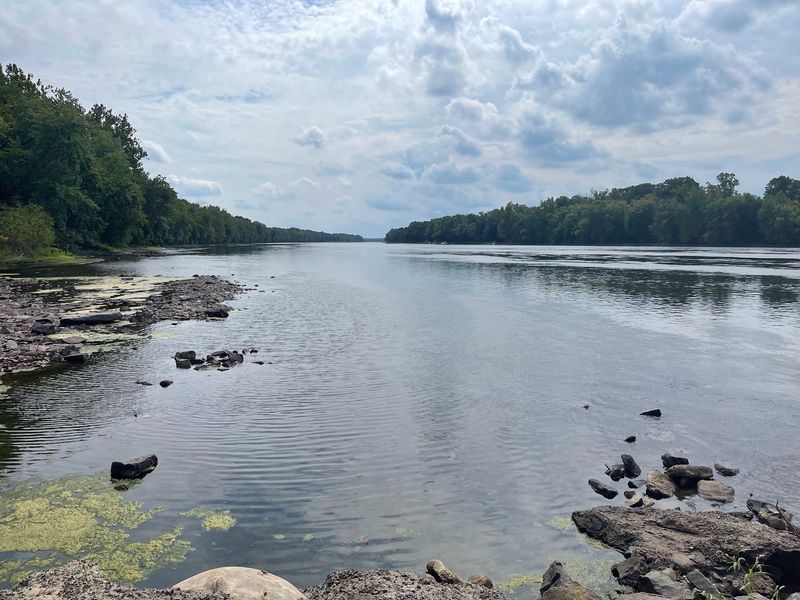
Picture boats moving across this river in darkness, carrying soldiers, horses, and artillery through a winter storm. On Christmas night in 1776, Washington’s army crossed from Pennsylvania to New Jersey before marching toward its surprise attack on the Hessian troops in Trenton the following morning.
Washington Crossing State Park preserves the New Jersey side of that story, approximately eight miles north of Trenton. The location makes the history easier to grasp.
Looking across the Delaware gives you a sense of the physical obstacle the army faced, even when your own visit involves sunshine and a packed lunch. The Johnson Ferry House adds another tangible connection.
This gambrel-roof farmhouse and tavern dates to around 1740 and stands near the river within the park. Its domestic scale is particularly striking beside the importance of the events associated with the crossing.
An ordinary place of shelter and business became part of an extraordinary military operation. Allow time for the grounds as well as the historic buildings.
Wooded trails and picnic areas give the stop room to breathe, especially if someone in your group has a limited appetite for dates and battle maps. You can spend part of the visit considering the crossing and another part simply walking beneath the trees.
That combination works well early in the drive, before the shops and lunch tables farther north begin competing for attention. Comfortable shoes are more useful here than an ambitious schedule.
Historic buildings and interpretive facilities have their own opening arrangements, so check access before making a particular interior visit the centerpiece of your day. The outdoor setting still carries much of the story.
After standing beside the river, the short drive onward feels connected to an actual landscape of movement, decisions, and difficult miles.
Stretch Your Legs Along the Delaware and Raritan Canal Towpath
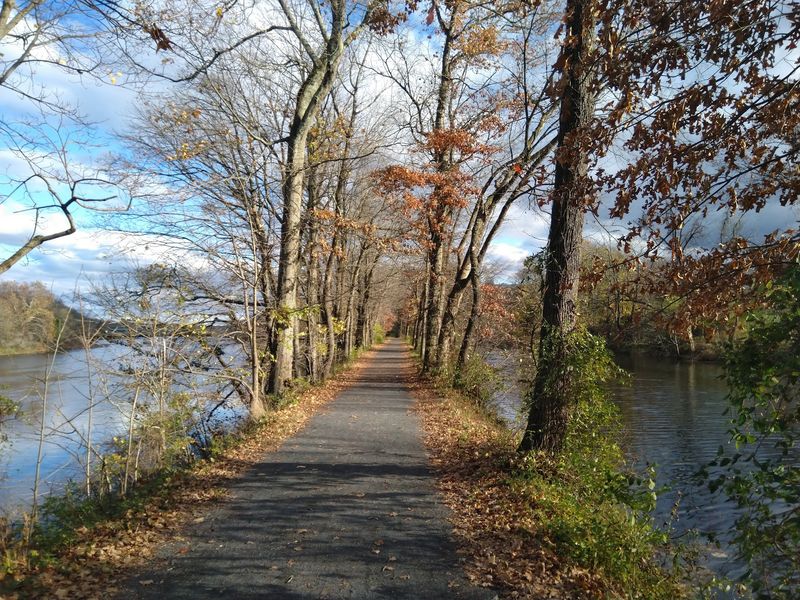
The best change of pace on this road trip requires very little planning. Park at a designated canal access point, step onto the trail, and walk until sitting in the car feels like a distant activity.
The Delaware and Raritan Canal State Park follows much of this river corridor, giving you opportunities to explore the same landscape at walking speed. Its northern route combines canal towpath with former railroad right-of-way, so the character changes as you travel.
Along the feeder canal, narrow water, old structures, and tree-lined stretches offer a different perspective from the broad Delaware nearby. The canal opened in 1834 as part of a transportation system that moved goods across central New Jersey.
What once supported commercial traffic now provides a route for walkers, cyclists, and people who would happily spend twenty minutes watching something move in the water. A short out-and-back walk is a particularly practical choice during a driving day.
Fifteen minutes in one direction and fifteen minutes back gives everyone a useful break without requiring a shuttle, a second vehicle, or negotiations over who retrieves the car. Lambertville, Stockton, and Bull’s Island offer ways to combine trail time with the other stops in this itinerary.
Wear shoes that can handle an outdoor path, especially after rain, and leave space for cyclists to pass. You may find yourself paying attention to details that disappear through a windshield: reflections beneath a bridge, the texture of an old wall, or the way the canal and river occupy different levels of the landscape.
There is no need to turn the walk into a mileage achievement. A bench, a quiet stretch of water, and enough time to notice your surroundings can be the whole purpose.
Back in the car, the road feels different because you have now experienced part of it on foot.
Leave Time for Lambertville’s Shops and Riverside Restaurants
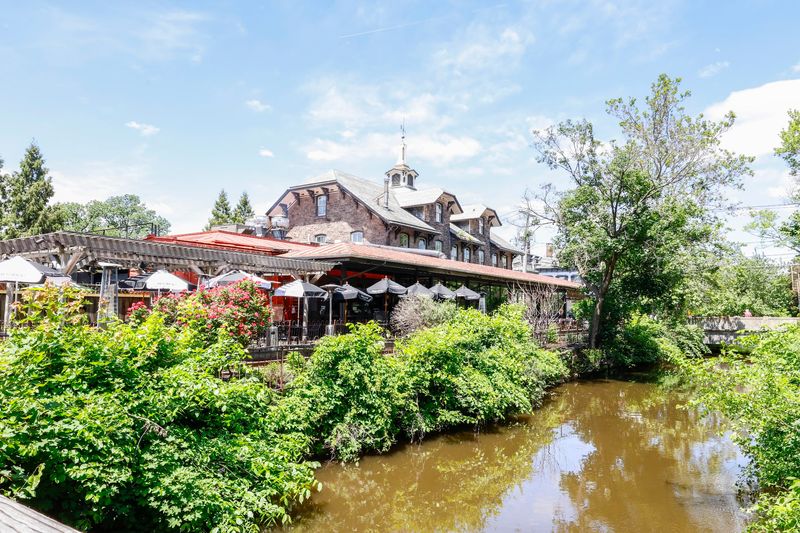
Lunch is a perfectly respectable reason to stop in Lambertville, but it rarely accounts for the entire visit. Bridge, Main, and Union streets place antique shops, galleries, restaurants, and historic architecture within an inviting area to explore on foot.
Federal townhouses and Victorian homes give the streets plenty to look at between storefronts. The trick is to park once and let your curiosity handle the smaller decisions.
Walk a block, investigate a window display, and allow a shop you had never heard of to claim a few minutes. Lambertville has enough variety to make that approach rewarding.
Someone interested in paintings can browse a gallery while another person studies vintage furniture or wonders how an old object might fit into a very modern living room. For a meal with a direct connection to the town’s transportation history, Lambertville Station Restaurant occupies a restored nineteenth-century railway station.
The restaurant opened in 1983, giving the former depot a new purpose after its railroad years. It is a fitting stop during a road trip built around old routes and reused places.
Make a reservation if a meal there is central to your plans, and leave some time around it for wandering. The bridge to New Hope creates another option for a short walk, with Pennsylvania immediately across the Delaware.
You can enjoy the river crossing and return without adding another full town visit to the itinerary. Keeping some limits is useful here, because Lambertville can easily absorb the afternoon you intended to distribute among several stops.
Parking signs deserve a careful read before you disappear into a shop or settle down for lunch. Once that practical detail is handled, the town rewards a relaxed pace.
A browse, a meal, and a little riverside time make a substantial stop without requiring a tightly organized tour.
Explore Stockton and the Historic Buildings at Prallsville Mills
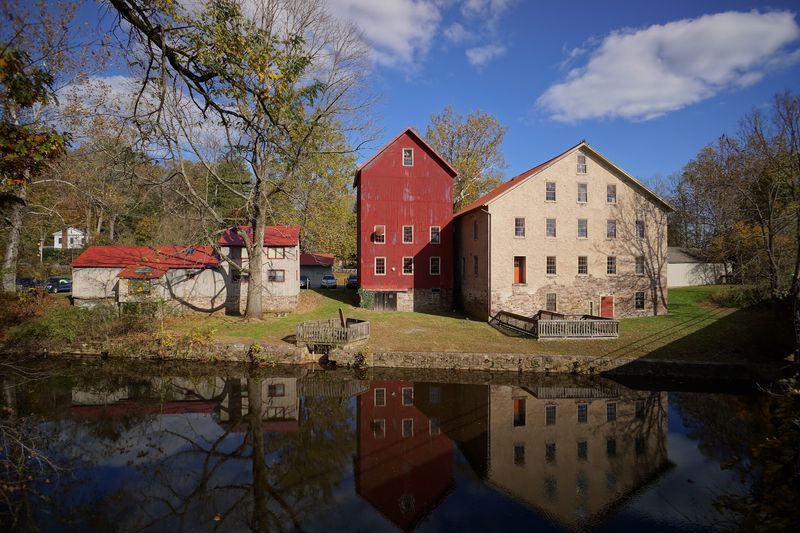
Stockton’s most interesting roadside stop once had serious work to do. At Prallsville Mills, grain, lumber, and linseed oil belonged to the daily business of an industrial community.
Today, the surviving buildings make that working past visible beside the river and canal. The ten-building complex includes an 1877 gristmill, a 1790 linseed oil mill, an 1850 sawmill, and a grain silo dating to 1900.
Those different dates matter. This is a place that developed over generations, with structures added or rebuilt as the needs of the community changed.
Walking among them gives you more to consider than a single preserved building could. You can compare their shapes and materials while thinking about the different jobs each was designed to perform.
The setting also explains why industry gathered here. Waterways and transportation routes were essential to the mills’ success, and their proximity remains one of the most appealing features of a visit.
The Delaware River Mill Society operates the site and sponsors concerts and other programs, keeping the complex involved in community life. Tours and interior access depend on the schedule, so it is sensible to check ahead if you want more than an outdoor look around.
Pair the mills with a little time in Stockton itself. The borough offers a smaller-scale town stop after Lambertville, and the bridge to Centre Bridge, Pennsylvania, adds another connection across the river.
You do not need to repeat the previous town’s shopping-and-lunch routine. A brief walk, a look at the buildings, and time beside the canal give Stockton its own place in the day.
This is also a good point to assess your remaining energy. If everyone is still enjoying the stops, Bull’s Island lies farther north.
If the afternoon has become slower than expected, the mill grounds already provide a satisfying pause before the final stretch.
Make One Last Riverside Stop at Bull’s Island Before Reaching Frenchtown
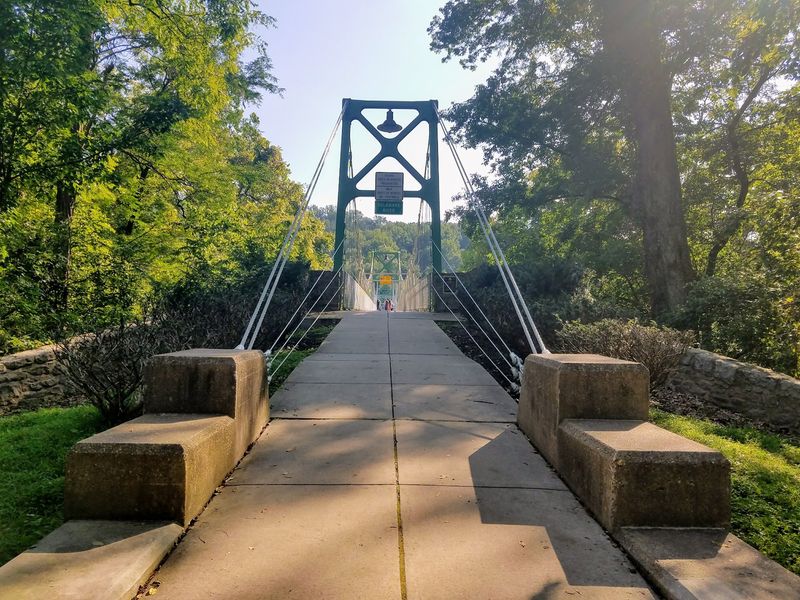
A pedestrian bridge changes the way you see a river. From the road, the Delaware usually appears beside you; at Bull’s Island Recreation Area, you can walk above it and look both upstream and downstream.
The steel suspension footbridge links the New Jersey recreation area with Lumberville, Pennsylvania, making it a memorable stop before the drive continues to Frenchtown. Bull’s Island also has picnic facilities, a playground, access to the canal trail, and boat access to both the river and canal.
That range makes it useful for groups with different ideas about a good afternoon. One person can enjoy a bridge walk while another welcomes a picnic table and a break from moving.
The address is 2185 Daniel Bray Highway, and the grounds give you a straightforward place to trade the car seat for some outdoor time. Keep the visit as simple as the day requires.
A picnic and a look from the bridge can be enough, particularly after several earlier stops. Then continue north through the river corridor toward Frenchtown, where Bridge and Race streets hold a compact collection of shops, galleries, cafés, and restaurants.
The Uhlerstown-Frenchtown Bridge marks the scenic byway’s northern endpoint, so the arrival has a pleasing sense of completion. You have followed the same river through different settings and reached another town shaped by its presence.
Park before deciding how much more exploring belongs in the day. A final stroll through the downtown blocks can be brief, or you can settle in for something to eat before heading home.
After the historic sites and woodland stops, these streets provide a comfortable finish. The river remains close, the bridge gives the view a clear focal point, and thirty-four miles have somehow supplied far more than an ordinary afternoon behind the wheel.
Share this story